Parental Leave Rights: What Kiwi Parents Need to Know

Bringing a new baby into the world is one of life's biggest adventures, but for Kiwi parents, navigating parental leave NZ entitlements can feel like a maze. Whether you're expecting, adopting, or bec...
The Lifetimes NZ editorial team curates, fact-checks, and updates guides on personal finance, property, health, immigration, legal, business, and lifestyle topics relevant to Lifetimes NZ readers. Articles are produced with AI assistance and reviewed by the editorial team before publication.
Bringing a new baby into the world is one of life's biggest adventures, but for Kiwi parents, navigating parental leave NZ entitlements can feel like a maze. Whether you're expecting, adopting, or becoming a permanent guardian, knowing your rights ensures you can focus on those precious early moments without work worries.
We've pulled together everything you need to know about parental leave in New Zealand for 2026, including eligibility, payments, and practical tips straight from official sources. Let's break it down so you can plan confidently.
Understanding Parental Leave in New Zealand
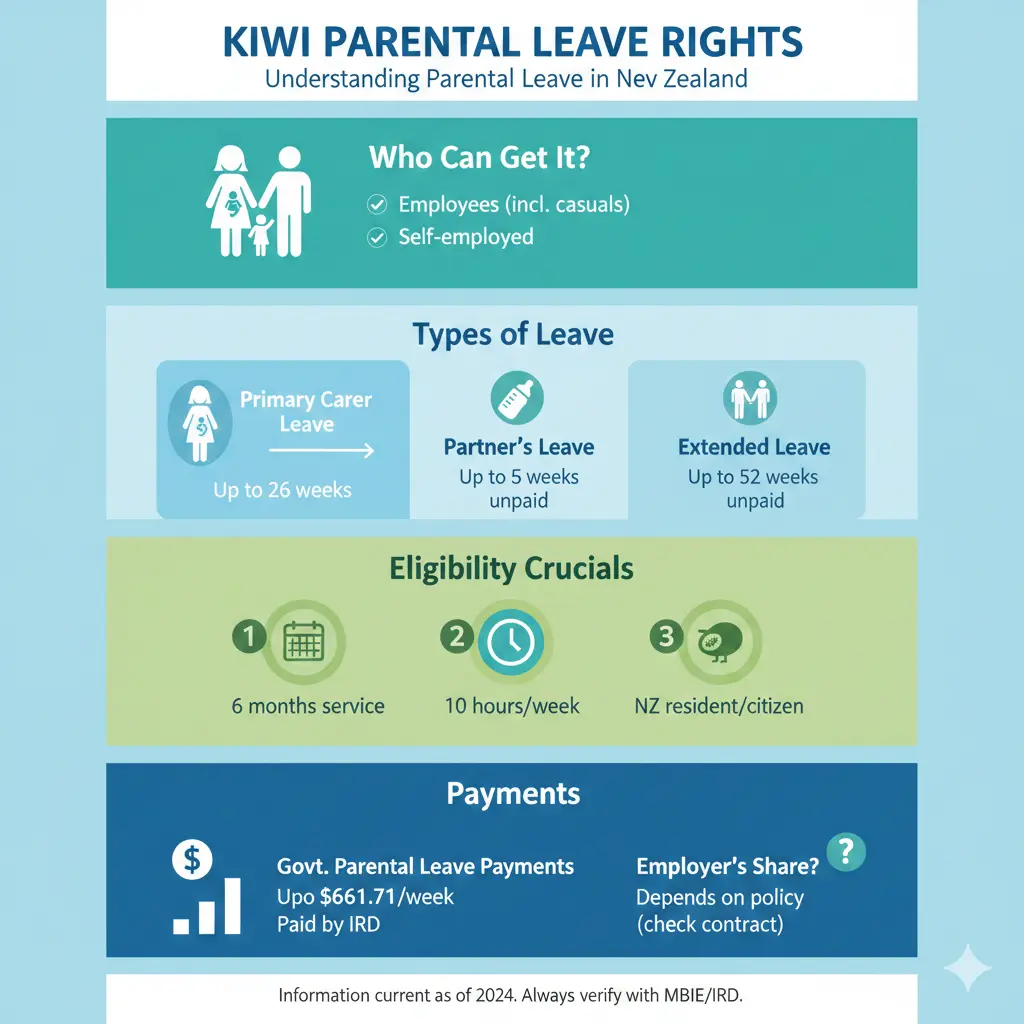
New Zealand's parental leave system offers job-protected, unpaid leave plus government payments to support families. It's designed for birth parents, partners, adopters, and guardians of children under six. The key is meeting work history tests—averaging at least 10 hours a week for your employer.
There are two main employment tests:
- Six-month test: Worked 6+ months before the due date or care start date. Qualifies for 26 weeks primary carer leave (or 1 week partner's leave).
- Twelve-month test: Worked 12+ months. Unlocks 52 weeks total leave (26 weeks primary carer + 26 weeks extended), or 2 weeks partner's leave.
Certain absences like ACC, paid leave, or agreed unpaid leave count towards your hours, making it easier to qualify.
Primary Carer Leave Explained
As the primary carer—typically the birth parent or nominated partner—you get up to 26 weeks of job-protected leave. This starts on the due date (or birth, whichever first) and can begin up to six weeks earlier if needed. For subsequent children, you must have been back at work 6 or 12 months to requalify.
| Employment Test | Primary Carer Entitlements |
|---|---|
| 12+ months, 10+ hrs/week avg | 10 days unpaid special pregnancy leave + 52 weeks total (26 primary + 26 extended) + 26 weeks payments |
| 6+ months, 10+ hrs/week avg | 10 days unpaid special pregnancy leave + 26 weeks primary carer leave + 26 weeks payments |
| Less than 6 months | 10 days unpaid special pregnancy leave only (negotiate carer leave) |
Partner's Leave and Sharing Options
Partners (spouses or de facto) get 1-2 weeks unpaid leave around the birth or care start, plus the option to share leave with the primary carer—up to 52 weeks total if both qualify. Take partner's leave between 21 days before due date and 21 days after, or as agreed.
Pro tip: Nominate your primary carer early with your employer to avoid mix-ups.
Extended Leave for More Family Time
Only for those passing the 12-month test, extended leave adds 26 weeks after primary carer leave, totalling a year off. Parents can split it, giving flexibility for whānau.
Parental Leave Payments: What You'll Get in 2026
Separate from job-protected leave, government payments come via IRD. You need 26 of 52 weeks work history (10+ hours/week avg) before qualifying—across employers or self-employed.
Maximum weekly payment (before tax): $788.66 from 1 July 2025 to 30 June 2026. Payments run 26 continuous weeks; transfer to a partner if sharing care. They stop if you return to work early.
Key rules:
- Work up to 64 'keeping in touch' hours (not in first 28 days post-birth) without losing payments.
- Preterm baby payments don't count against your 26 weeks.
- Annual leave during/after parental leave pays at full salary rate from 2025 changes.
Who Qualifies for Payments?
Beyond birth parents:
- Spouses/partners if primary carer transfers entitlement.
- Adopters, whāngai, or Oranga Tamariki permanent guardians for kids under 6.
- Those taking permanent care if birth mother passes or is excluded (child under 1).
Apply via myIR online—start up to 3 months before due date.
Recent Changes to Parental Leave Laws (2025-2026)
From 1 July 2025, updates make it fairer:
- More absences (e.g., preterm payments) count as work hours for eligibility.
- Non-birth primary carers (adoption/surrogacy) can claim payments if stopping work soon after care starts.
- Annual leave post-leave at full pay.
These tweaks help diverse families, including Māori whāngai arrangements.
Practical Tips for Kiwi Parents and Employers
For employees:
- Notify your employer in writing at least 21 days before starting leave (14 days for partner's leave).
- Check eligibility with Employment NZ's online tool.
- Plan payments: Use IRD's calculator for your exact amount.
- Discuss return-to-work: Your job (or similar) is protected; employers can't cut hours without agreement.
For employers: Hold the position open, pay annual leave accrued during leave at full rate, and consider fixed-term cover. Early notice helps everyone.
Real Kiwi example: Sarah, a Wellington teacher with 8 months' service, took 26 weeks primary carer leave plus payments after her second bub. Her partner used 1 week partner's leave—perfect balance.
Special Circumstances: Adoption, Surrogacy, and More
Parental leave covers:
- Adoption or whāngai (customary care).
- Oranga Tamariki permanent guardianship.
- Surrogacy if you become primary carer.
Start leave within a reasonable time after the child enters your care. Contact Employment NZ for surrogacy specifics.
Your Next Steps for Parental Leave Success
Ready to make it happen? Check your eligibility today:
- Visit Employment NZ for leave details.
- Apply for payments at IRD's myIR.
- Talk to your employer or HR early.
- For family support, explore Working for Families via IRD or Oranga Tamariki for care options.
With these tools, you'll bond with your tamariki stress-free. Ka pai— you've got this!
Frequently Asked Questions
Sources & References
-
1
The Complete Guide to Parental Leave for NZ Employers (2025) — www.gocrayon.com
-
2
Parental Leave NZ: Complete Employer Guide to Entitlements — paymasters.co.nz
-
3
New holiday leave legislation: what you need to know — www.laneneave.co.nz
-
4
Parental leave - Business.govt.nz — www.business.govt.nz
-
5
Employees: how we work out your paid parental leave entitlement — www.ird.govt.nz
-
6
Changes to parental leave laws from 1 July — www.employment.govt.nz
-
7
Parental leave - Employment New Zealand — www.employment.govt.nz
Related Articles

Childcare Options and Costs in NZ 2026
Finding the right childcare for your tamariki (children) is one of the biggest decisions you'll make as a parent, and it's often one of the biggest expenses too. Whether you're returning to work after...
Childcare Subsidies & Financial Support in NZ
Raising tamariki in Aotearoa comes with its joys and challenges, especially when balancing work, study, or training with the costs of quality childcare. If you're searching for childcare subsidies NZ...

Best Start Tax Credit: What It Is & Who Qualifies
If you've just had a baby or are planning to start a family, you might be wondering how to make ends meet during those early years. The Best Start tax credit is one of New Zealand's most valuable fami...

Child Support (Child Maintenance) in New Zealand
Navigating separation or shared parenting in New Zealand often brings up questions about child support NZ – that essential financial help ensuring kids get what they need, no matter where they live. W...