Returning to Work After Kids: A Kiwi Parent's Guide

Returning to work after having kids marks a pivotal moment for many Kiwi parents. It's a blend of excitement for reclaiming your career and anxiety over childcare, finances, and work-life balance—but...
Sarah covers personal finance, tax, and KiwiSaver topics for Lifetimes NZ. She focuses on making money management straightforward and practical for everyday Kiwis.
Returning to work after having kids marks a pivotal moment for many Kiwi parents. It's a blend of excitement for reclaiming your career and anxiety over childcare, finances, and work-life balance—but with the right planning, you can navigate it smoothly and confidently.
Understanding Your Parental Leave Entitlements in New Zealand
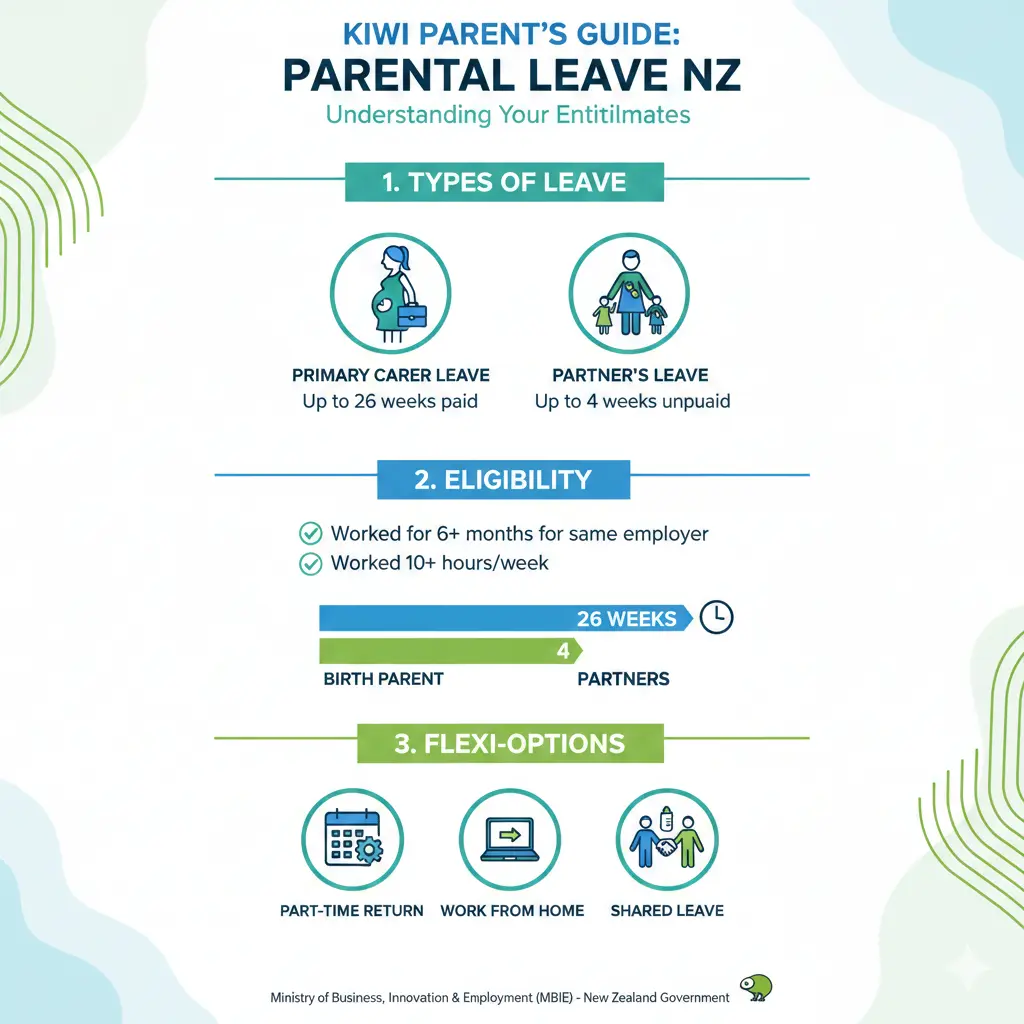
Before diving back into work, grasp your entitlements under New Zealand's Parental Leave and Employment Protection Act 1987, with key updates effective from 1 July 2025. These provide job protection and financial support, ensuring you don't lose your position while caring for your new child.
Primary Carer and Extended Leave
Primary carer leave offers up to 26 weeks of unpaid, job-protected leave for the main caregiver of a child under six—whether through birth, adoption, or whāngai. This can start up to six weeks before the due date if unsafe to work, or earlier if your employer directs.
- If you've averaged 10+ hours per week for the same employer over the six months before the due date or care start, you're eligible for 26 weeks primary carer leave, one week partner's leave, and 10 days special leave.
- For 12 months' service at 10+ hours weekly, add 26 weeks extended leave, totalling 52 weeks, plus two weeks partner's leave.
Extended leave follows primary carer leave and can be shared between eligible parents. Note: For subsequent children, you must have been back at work six or 12 months respectively since your last leave.
Paid Parental Leave Payments
Government-funded payments from IRD replace your income for 26 weeks, paid fortnightly into your bank account. Eligibility requires averaging 10 hours per week over any 26 of the 52 weeks before the due date or care start—this can span multiple employers or self-employment.
Current rates (1 July 2025 – 30 June 2026) cap payments at $788.66 weekly (gross), the higher of your ordinary weekly pay or average weekly income. Payments stop if you return to work early or cease primary care. Transfer unused portions to a partner.
"Keeping in touch" days let you work up to 64 hours during leave (not in the first 28 days post-birth) without halting payments.
Upcoming 2026 Changes
New holiday leave legislation, set for introduction in early 2026 with a two-year transition, will pay annual leave at full salary for new parents—not reduced based on parental leave earnings. Bereavement and family violence leave will accrue from day one, usable in part days. Stay updated via Employment New Zealand.
Financial Planning: Budgeting for Your Return
Returning to work shifts your finances from leave payments to full income, but childcare costs can bite. Start with a realistic budget tailored to Kiwi living costs.
Childcare Costs and Subsidies
Expect $250–$600 weekly for centre-based care in 2026, varying by location—Auckland pricier than regional areas. WINZ's Childcare Subsidy helps if your family income is under $110,000 (20 hours free for under-twos; more for over-twos). Apply via MyMSD; it's means-tested and requires 20+ hours weekly work or study.
Other options: Home-based care ($150–$400/week), kindergartens (subsidised, session-based), or nannies ($20–$30/hour). Factor in ACC levies if self-employed.
Tax and KiwiSaver Implications
IRD taxes parental payments as income at your marginal rate (10.5%–39% brackets for 2026). Upon return, secondary tax restarts—use the IRD calculator for precision.
KiwiSaver contributions resume automatically if salary-deducted; catch up on gaps during leave. Employer matching (minimum 3%) applies once back, boosting your nest egg. If self-employed, voluntary contributions maintain momentum.
| Income Threshold (2026) | Marginal Tax Rate |
|---|---|
| $0–$15,600 | 10.5% |
| $15,601–$53,500 | 17.5% |
| $53,501–$78,100 | 30% |
| $78,101–$180,000 | 33% |
| Over $180,000 | 39% |
Reassess Working for Families credits—your return may increase in-work payments.
Actionable Budget Tips
- Track three months' expenses pre-return using apps like PocketSmith.
- Build a $2,000–$5,000 buffer for transition costs (uniforms, travel).
- Compare childcare via CareforKids.co.nz; negotiate employer subsidies.
- Review insurance—update life/income protection for family changes.
Navigating the Workplace: Rights and Conversations
Your job is protected during eligible leave, but proactive talks ensure a seamless return.
Flexible Work Requests
From day one back (or after six months' service), request flexible hours, part-time, or remote under the Employment Relations Act. Employers must engage reasonably; 75% approve. Submit in writing: "I'd like to trial four days at 0.8 FTE."
Return-to-Work Rights
Your employer must offer the same or comparable role at no less pay. If redundant during leave, they prove genuine need. Use "keeping in touch" days to ease in.
"Plan early for coverage... through fixed-term contracts or workload redistribution."
Childcare and Support Networks
Secure care early—waitlists hit six months in cities.
- Centre-based: ECE subsidised; quality-rated via Education Review Office.
- Home-based: Flexible, personal; networks via Barnardos.
- Playcentre/Kindy: Parent-led, affordable for preschoolers.
- Nanny shares: Split costs with another family.
Leverage Plunket for health checks, Parents Centre for courses. Employer EAPs offer counselling.
Balancing Act: Wellbeing and Career Progression
Combat "mum guilt" with boundaries. Use KiwiSaver Government Contribution (up to $521/year if contributing) for long-term security.
Career tips:
- Upskill via StudyLink-funded courses (e.g., online management certs).
- Network via Women in Business NZ.
- Mentoring: Seek internal sponsors.
Prioritise sleep, exercise—burnout hits 40% of returning parents.
Next Steps for a Smooth Return
1. Check eligibility at ird.govt.nz/parental-leave and apply early.
2. Notify employer 21 days pre-start.
3. Secure childcare and budget via WINZ tools.
4. Request flexible work in writing.
5. Consult a financial adviser for personalised KiwiSaver/tax advice—this guide isn't substitute for professional counsel.
Frequently Asked Questions
Sources & References
-
1
New holiday leave legislation: what you need to know - Lane Neave — www.laneneave.co.nz
-
2
Parental Leave NZ: Complete Employer Guide to Entitlements — paymasters.co.nz
- 3
-
4
Paid parental leave overview - Inland Revenue — www.ird.govt.nz
-
5
Changes to parental leave laws from 1 July - Employment New Zealand — www.employment.govt.nz
-
6
Paid Parental Leave - Bountiful NZ — bountifulpacks.co.nz
-
7
The Complete Guide to Parental Leave for NZ Employers (2025) — www.gocrayon.com
-
8
Parental leave - Business.govt.nz — www.business.govt.nz
-
9
Parental leave - Employment New Zealand — www.employment.govt.nz
-
10
Taking parental leave | New Zealand Government — www.govt.nz
Related Articles

Industry Bodies and Professional Associations NZ
Whether you're launching a business, advancing your career, or navigating financial regulations, industry bodies and professional associations in New Zealand offer invaluable support. These organisati...

Emergency Benefit NZ: When You Have No Other Options
When you're struggling financially and don't qualify for other benefits, the Emergency Benefit might be your lifeline. It's a discretionary payment designed for Kiwis in genuine hardship who've exhaus...

Unpaid Internships NZ: Are They Legal?
Unpaid internships are a common pathway for students and graduates to gain work experience in New Zealand, but there's often confusion about whether they're actually legal. The short answer is: unpaid...

Estate Administration NZ: Managing Someone's Affairs After Death
Losing a loved one is one of life's toughest challenges, and stepping in to manage their estate can feel overwhelming. In New Zealand, estate administration—the process of handling someone's affairs a...