Raising Kids in NZ: A Guide to Daycare Costs and Subsidies

Raising kids in New Zealand comes with its joys and challenges, but one of the biggest hurdles for many Kiwi families is navigating daycare costs. With fees that can eat up a huge chunk of your househ...
Aroha writes about parenting, education, and family life in Aotearoa. She covers school choices, childcare, family benefits, and practical advice for raising a family in New Zealand.
Raising kids in New Zealand comes with its joys and challenges, but one of the biggest hurdles for many Kiwi families is navigating daycare costs. With fees that can eat up a huge chunk of your household budget, understanding the latest subsidies and funding options is essential to ease the financial strain—especially in 2026, when rates have been updated to better support working parents.
Understanding Daycare and Early Childhood Education (ECE) in New Zealand
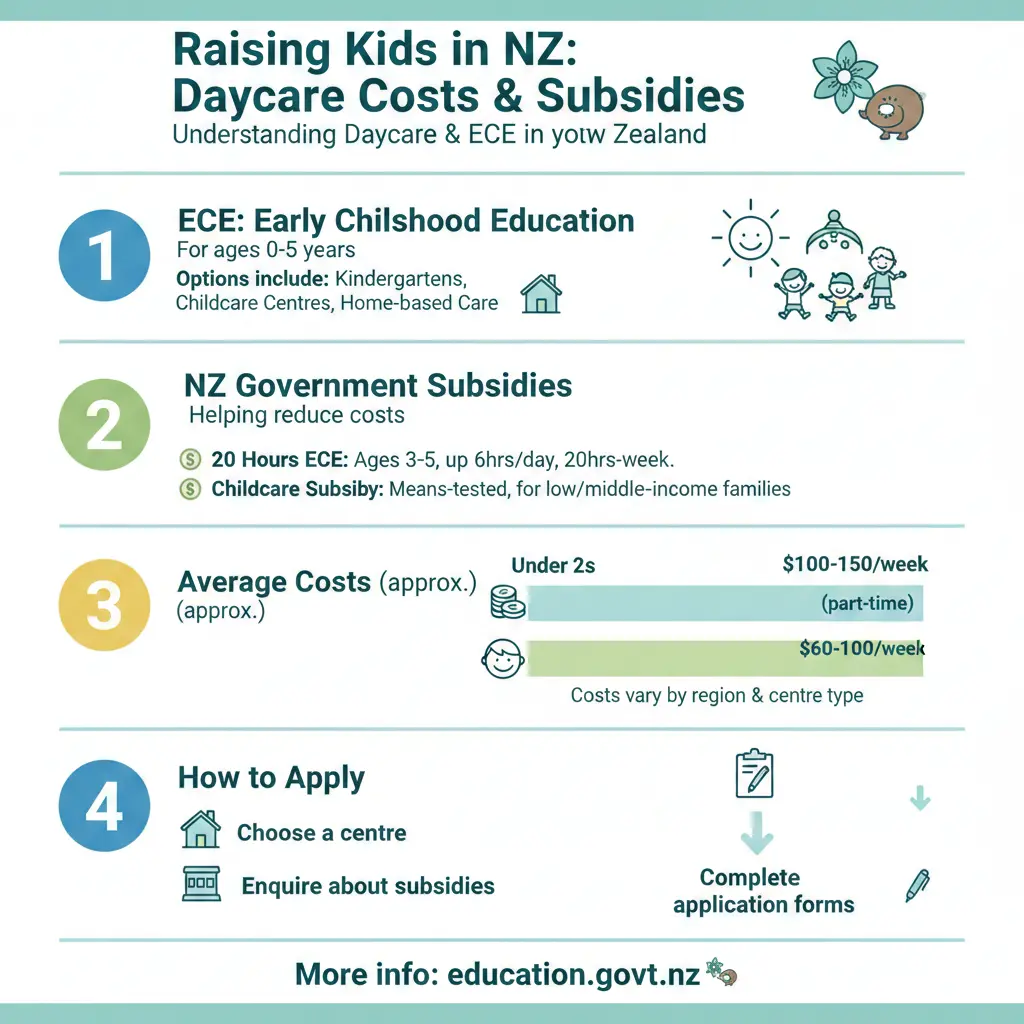
In Aotearoa, early childhood education (ECE) covers a range of services like childcare centres, kindergartens, home-based care, playcentres, and te kōhanga reo. These aren't just babysitting—they provide structured learning and social development for kids from birth to school age. The government funds ECE through the Ministry of Education, but fees vary widely because providers set their own rates on top of subsidies.
Why does this matter for you? ECE helps prepare your child for school while giving parents breathing room to work or study. But without knowing the subsidies, you could be paying thousands more than necessary. Let's break down the costs and how to slash them.
Types of ECE Services and Their Typical Costs
- Childcare Centres: Full-time care for under-3s can hit $500 per week for long days (7.30am-6pm), or $415 for short days (8.30am-3.30pm). Over-3s drop to a minimum $305 weekly for up to 35 hours.
- Kindergartens: Often not-for-profit with higher subsidies; fees as low as $3 per hour over 20 hours, though some charge more.
- Home-based Care: $5-$12+ per hour, flexible for families.
- Playcentres: Most affordable—often $30 per term or donations. Eligible families might pay nothing with WINZ subsidies.
- Te Kōhanga Reo: Culturally immersive, with specific funding rates (detailed below).
Real talk: In Auckland, some families fork out $800 weekly for two kids, or 30% of their income. Costs are higher for under-2s due to stricter staff ratios (1:5 vs 1:10 for over-2s).
Government Funding Rates for ECE Providers in 2026
From 1 January 2026, the Ministry of Education pays providers per funded child hour (incl. GST). These rates help keep parent fees down, but services add extras for quality staffing and facilities.
Key 2026 Funding Rates
| Service Type | Under 2 | 2 and Over | 20 Hours ECE |
|---|---|---|---|
| Quality (General) | $10.17 | $5.46 | $11.87 |
| Free Kindergarten (100% cert. teachers) | $20.27 | $11.58 | $18.55 |
| Playcentre (Quality) | $12.66 | $6.36 | $8.28 |
Note: Standard rates phased out in some categories. Providers like Daisies get $542 weekly (30 hours) for under-2s, $298.77 for 2-year-olds, and $438.38 for 3+ (incl. 20 hours).
20 Hours ECE: Free Education for 3-5 Year Olds
Every child aged 3, 4, or 5 gets 20 hours free ECE per week—up to 6 hours a day—from approved providers like kindergartens and childcare centres. This programme, funded by the government, covers early childhood schooling but not infant daycare.
Practical tips:
- Sign an attestation form at enrolment to access it.
- Extra hours? Expect $5-$8/hour, or less at kindergartens ($3+).
- Providers can charge for optional items (e.g., food, excursions), but not core 20 hours.
For over-3s at centres like BestStart, this means subsidised fees for 20 hours, with charges only for extras.
WINZ Childcare Subsidy: Support for Working Parents
If you're working, studying, or training, Work and Income (WINZ) offers the Childcare Subsidy to cover fees after ECE funding. It scales with family income:
Apply via your WINZ account. It can fully cover playcentre fees for eligible whānau. Combine with 20 Hours ECE for maximum relief—potentially dropping costs to zero at low-fee spots.
FamilyBoost: The 2026 Tax Rebate Boost
FamilyBoost provides a tax rebate of up to 25% on childcare costs—max $75/week—for families earning up to $180,000. It's a game-changer for middle-income Kiwis, helping offset high urban fees.
Actionable Steps to Maximise Savings
- Check eligibility: Use the IRD FamilyBoost calculator.
- Combine subsidies: 20 Hours ECE + WINZ + FamilyBoost = big wins.
- Shop around: Compare centres via Education Counts.
- Ask about attestations: Ensure your provider offers 20 Hours ECE.
- Budget for extras: Food, nappies, or over-hours add up—negotiate if possible.
Regional Differences and Tips for High-Cost Areas
Auckland and Wellington see the steepest fees due to shortages—up to $44,000/year for two kids. Rural areas or playcentres offer better value. Pro tip: Join waitlists early and consider home-based for flexibility.
Next Steps: Make Childcare Affordable Today
Start by listing your family's needs—hours, location, budget—then check eligibility on govt.nz or WINZ sites. Chat with providers about 2026 rates and subsidies, and apply for FamilyBoost via IRD. With these tools, raising kids in NZ doesn't have to break the bank. You've got this, whānau—reach out to Lifetimes NZ for more family guides.
Frequently Asked Questions
Sources & References
- 1
-
2
Fees — Daisies.co.nz — www.daisies.co.nz
- 3
-
4
The Staggering Cost of Childcare In Aotearoa — capsulenz.com — capsulenz.com
-
5
Childcare Subsidies in New Zealand — moneyhub.co.nz — www.moneyhub.co.nz
-
6
Fees and Payments — best-start.org — best-start.org
-
7
Help paying for early childhood education — govt.nz — www.govt.nz
Related Articles

Screen Time Guidelines for Kiwi Kids
Ever caught your little one glued to a tablet, eyes wide and fingers flying? In Aotearoa, where Kiwi kids spend more screen time than most—up to 42 hours a week for teens—it's time to hit pause and re...

School Zones NZ: How They Work and Why They Matter
Choosing the right school for your tamariki can feel like navigating a map of coloured zones—literally. In Aotearoa, **school zones NZ** dictate where your child is guaranteed a spot, helping prevent...

Best Playgrounds in Christchurch: Family Guide
Christchurch has some of the best family playgrounds in Aotearoa, offering everything from award-winning attractions to hidden gems perfect for a weekend adventure. Whether you're looking for thrillin...

Kids Sports NZ: Costs and Options by Age
Getting your kids active in sports is one of the best gifts you can give them as a Kiwi parent—building fitness, teamwork, and lifelong habits. But with rising costs biting into household budgets, und...