Postgraduate Study NZ: Funding Options and Costs

Pursuing postgraduate study in New Zealand is an investment in your future, but it comes with significant costs. Whether you're considering a master's degree, PhD, or postgraduate diploma, understandi...
Sarah covers personal finance, tax, and KiwiSaver topics for Lifetimes NZ. She focuses on making money management straightforward and practical for everyday Kiwis.
Pursuing postgraduate study in New Zealand is an investment in your future, but it comes with significant costs. Whether you're considering a master's degree, PhD, or postgraduate diploma, understanding your funding options can make the difference between achieving your academic goals and facing financial stress. This guide explores the scholarships, grants, and financial support available to Kiwis and international students studying at our universities in 2026.
Understanding Postgraduate Study Costs in New Zealand
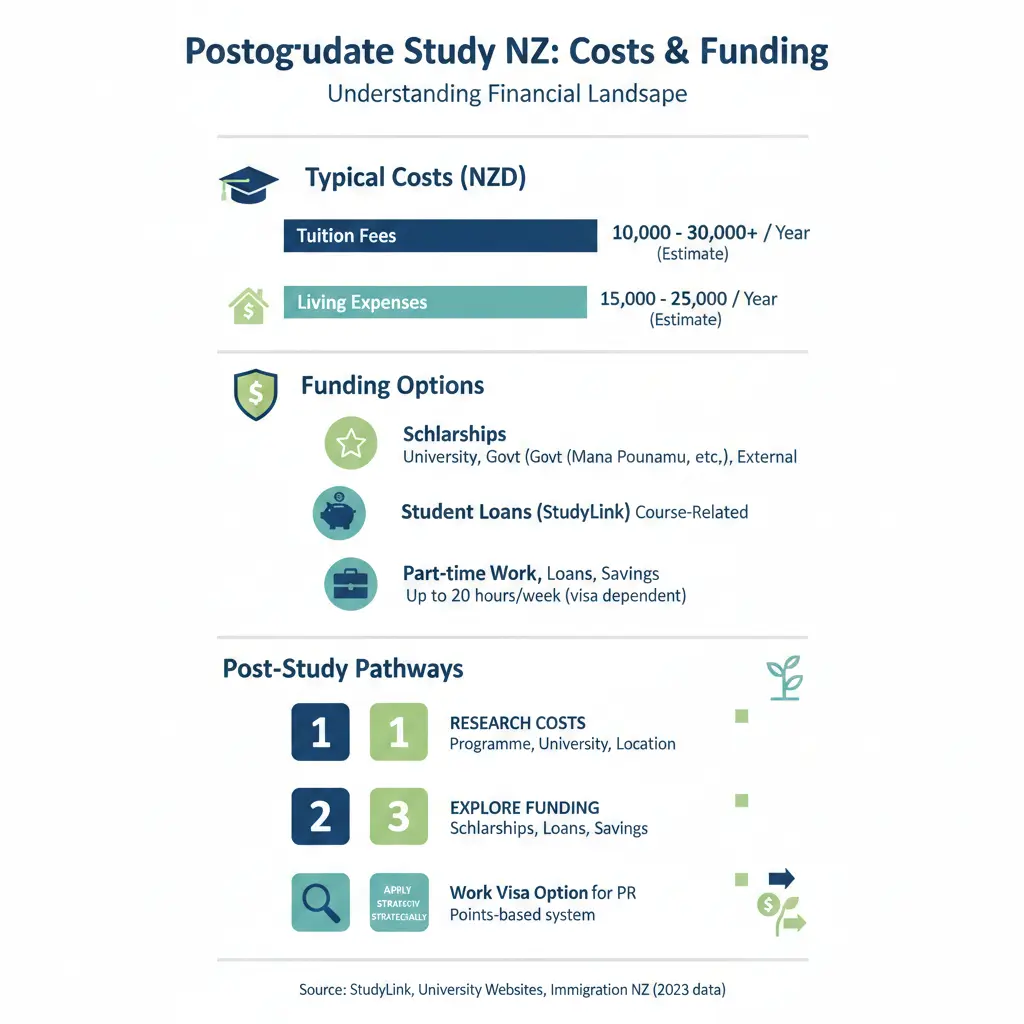
Postgraduate study in New Zealand isn't cheap. Tuition fees vary depending on your field of study and institution, but you'll also need to budget for living expenses, accommodation, and research costs. The good news is that multiple funding pathways exist to help you manage these expenses, from government-backed scholarships to university-specific awards.
Before exploring funding options, it's worth understanding what you're working with. Most postgraduate programmes in New Zealand run between one and three years, depending on whether you're studying for a taught master's degree or conducting research-based study.
Government-Funded Scholarship Opportunities
Manaaki New Zealand Scholarships
The Manaaki New Zealand Scholarships are among the most comprehensive funding options available for international students pursuing postgraduate study in New Zealand. These fully funded scholarships cover tuition fees, living allowance, medical insurance, travel allowance, and research and thesis costs for research students.
Applications for the 2026-2027 intake open on 1 March 2026 and close at midday on 31 March 2026. The scholarships are available for both undergraduate and master's-level study, making them accessible to a wide range of students.
To be eligible, you'll typically need to be 18 years or older at programme start, hold citizenship in an eligible country, meet English language requirements, and have relevant work or study background.
New Zealand International Doctoral Research Scholarships (NZIDRS)
If you're pursuing a PhD, the New Zealand International Doctoral Research Scholarships offer exceptional support. These fully funded scholarships cover full international PhD tuition fees for up to three years, an annual living stipend of NZD $29,000, medical insurance, and research and travel allowances.
You can study at any of New Zealand's eight universities in cities like Auckland, Wellington, Christchurch, and Dunedin. Applications are typically open year-round on a rolling basis, though it's essential to check individual university deadlines.
To qualify, you'll need a bachelor's or master's degree with strong research skills, proof of academic excellence, admission to a New Zealand PhD programme, and English language proficiency (IELTS, TOEFL, or equivalent).
University-Specific Postgraduate Scholarships
University of Auckland
The University of Auckland offers several postgraduate scholarship options. For domestic students, Postgraduate Honours and PGDip Scholarships provide a tax-free stipend of NZD $14,346 in 2025, plus the cost of compulsory fees.
The university also offers Doctoral Scholarships to domestic Māori and Pacific doctoral candidates with a qualifying GPA of 7.0 or above, providing full tuition and a stipend of NZD $33,000 per year.
For international students, the University of Auckland International Doctoral Scholarship covers full tuition and a stipend of NZD $33,000 per year, with applications open year-round on a rolling basis.
Victoria University of Wellington
Victoria University of Wellington is offering postgraduate scholarships worth NZD $10,000 for international students in 2026. The university also has Doctoral Scholarships providing full tuition and a stipend of NZD $29,500 per year for PhD candidates from all countries.
University of Otago
The University of Otago provides Doctoral Scholarships covering full tuition and a stipend of NZD $32,544 per year for international PhD students, with rolling applications throughout the year.
University of Canterbury
International students at the University of Canterbury can access International Deans Awards based on academic merit. These scholarships amount to NZD $4,000 for undergraduate programmes and NZD $8,000 for postgraduate programmes, with automatic assessment at the time of application.
Field-Specific Funding for Postgraduate Study
Nursing Postgraduate Funding
If you're pursuing postgraduate nursing study, Health New Zealand offers Nursing Workforce Postgraduate funding. In 2025, applications opened on 25 August and closed on 6 October, with funding available to eligible candidates in the Canterbury region.
Midwifery Postgraduate Education Grants
The New Zealand College of Midwives provides Postgraduate Education Grants for midwifery professionals pursuing postgraduate education at level eight or above. These grants support papers, master's, and PhD study commencing in May or September 2026.
What Postgraduate Scholarships Typically Cover
Understanding what's included in scholarship packages helps you plan your finances effectively. Most comprehensive postgraduate scholarships include:
- Full tuition fees (or a significant portion)
- Annual living stipend (typically NZD $29,000–$33,000 for doctoral study)
- Medical and health insurance
- Travel allowance (for international students)
- Research and thesis support for postgraduate researchers
- Establishment allowance (up to NZD $3,000 in some cases)
However, not all scholarships cover all these elements, so you'll need to review the specific terms of each award you're considering.
Application Timeline and Deadlines for 2026
Timing is critical when applying for postgraduate scholarships. Here's what you need to know for 2026:
- Manaaki New Zealand Scholarships: Applications open 1 March 2026, close 31 March 2026
- University of Auckland Doctoral Scholarships: Open year-round (rolling applications)
- University of Otago Doctoral Scholarships: Open year-round (rolling applications)
- Victoria University of Wellington Doctoral Scholarships: Open year-round (rolling applications)
- AUT Vice-Chancellor Doctoral Scholarships: Open October 2025 for 2026 intake
Application windows are strict, so prepare all documents, references, and transcripts well ahead of opening dates.
How to Strengthen Your Postgraduate Scholarship Application
To maximise your chances of securing postgraduate funding, follow this checklist:
- Confirm eligibility and deadlines for your specific country and institution
- Prepare strong academic transcripts and a compelling CV
- Request reference letters from academic supervisors or employers
- Develop a well-structured research proposal (for research-based study)
- Demonstrate English language proficiency with IELTS, TOEFL, or equivalent
- Secure admission to your chosen postgraduate programme before applying for scholarships
- Submit applications online via official university portals
Many universities will automatically assess you for scholarships when you apply for admission, so ensure your application is as strong as possible from the start.
Next Steps: Planning Your Postgraduate Funding Strategy
Postgraduate study in New Zealand is achievable with the right funding strategy. Start by identifying which scholarships align with your field of study, citizenship, and academic profile. Then, create a timeline for applications, ensuring you meet all deadlines.
Visit the official scholarship websites—particularly nzscholarships.govt.nz and studywithnewzealand.govt.nz—for the most up-to-date information and application portals. Contact your chosen university's scholarship office directly if you have questions about eligibility or application requirements.
Remember, many postgraduate students combine scholarships with other funding sources. Don't let the absence of a single large scholarship deter you—explore all available options, and you'll likely find a funding combination that works for your situation.
Frequently Asked Questions
Sources & References
-
1
25 Fully Funded Scholarships New Zealand: International 2026 — es.bestfullyfundedscholarships.com
-
2
Manaaki New Zealand Scholarships 2026 | Requirements | Deadlines — scholarshiproar.com
-
3
Guaranteed postgraduate scholarships - University of Auckland — www.auckland.ac.nz
-
4
Get a scholarship to study in New Zealand in 2026 — www.newzealandshores.com
-
5
Postgraduate Education Grants 2026 Information Sheet — www.midwife.org.nz
-
6
Manaaki New Zealand Scholarships | MANAAKI | Education New Zealand — www.nzscholarships.govt.nz
-
7
Find a scholarship - Study with New Zealand — www.studywithnewzealand.govt.nz
-
8
Postgraduate study funding applications – Health New Zealand — www.tewhatuora.govt.nz
Related Articles

Industry Bodies and Professional Associations NZ
Whether you're launching a business, advancing your career, or navigating financial regulations, industry bodies and professional associations in New Zealand offer invaluable support. These organisati...

Emergency Benefit NZ: When You Have No Other Options
When you're struggling financially and don't qualify for other benefits, the Emergency Benefit might be your lifeline. It's a discretionary payment designed for Kiwis in genuine hardship who've exhaus...

Unpaid Internships NZ: Are They Legal?
Unpaid internships are a common pathway for students and graduates to gain work experience in New Zealand, but there's often confusion about whether they're actually legal. The short answer is: unpaid...

Estate Administration NZ: Managing Someone's Affairs After Death
Losing a loved one is one of life's toughest challenges, and stepping in to manage their estate can feel overwhelming. In New Zealand, estate administration—the process of handling someone's affairs a...