Health Insurance NZ: Complete Guide to Going Private

Imagine facing a sudden health scare in New Zealand—long public hospital waits could stretch weeks or months, but with private health insurance, you could access top specialists and private rooms swif...
Sarah covers personal finance, tax, and KiwiSaver topics for Lifetimes NZ. She focuses on making money management straightforward and practical for everyday Kiwis.
Imagine facing a sudden health scare in New Zealand—long public hospital waits could stretch weeks or months, but with private health insurance, you could access top specialists and private rooms swiftly. For Kiwis tired of queues, health insurance NZ offers a practical way to go private, complementing our world-class public system without replacing it.
Our public healthcare, funded by taxes, covers essentials like emergency care and major surgeries for all residents. Yet, elective procedures often mean waits—knee replacements can take over 200 days in some DHBs. That's where going private shines: faster treatment, choice of doctors, and comforts like no shared wards. This complete guide breaks down everything you need to know about health insurance NZ: complete guide to going private in 2026.
Why Kiwis Choose Private Health Insurance
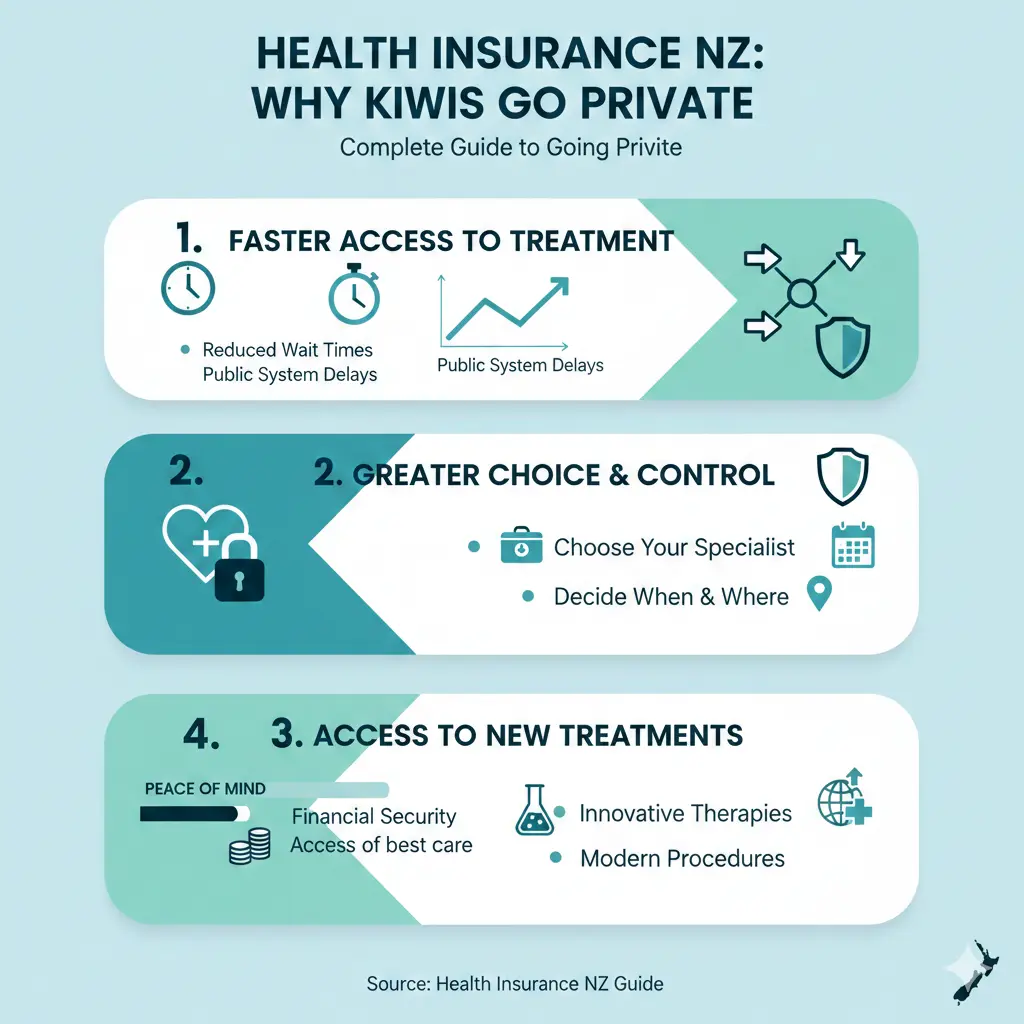
Health insurance isn't essential in New Zealand—our public system handles core needs—but it's a smart upgrade for many. Common reasons include dodging waitlists, picking your specialist, and enjoying private hospital perks. Women might pay 10% more than men for similar cover due to actuarial data on health risks.
It won't cover organ transplants, cosmetics, or experimental treatments, but it excels for acute issues like cancer surgery or diagnostics. Private cover also eases public system pressure, indirectly benefiting everyone.
Public vs Private: Key Differences
| Aspect | Public System | Private Insurance |
|---|---|---|
| Wait Times | Months for electives (e.g., 200+ days for hips/knees) | Days or weeks |
| Choice of Provider | Limited to DHB-assigned | Any accredited specialist/hospital |
| Accommodation | Shared wards | Private rooms |
| Coverage Scope | Essentials + some co-pays | Surgery, tests, non-Pharmac drugs |
| Cost | Tax-funded (free/low co-pay) | Premiums from $50/month (basic) |
This table highlights why over 30% of Kiwis over 65 have private cover.
Types of Health Insurance Policies in NZ
New Zealand offers flexible policies from major providers like Southern Cross, nib, AIA, Accuro, UniMed, and AA Health. Choose based on needs: basic for surgery only, or comprehensive for extras.
Core Policy Types
- Basic/Surgical Cover: Focuses on hospital stays and operations (e.g., appendectomies, cancer surgery). Ideal for budget-conscious Kiwis. Starts around $50-80/month for under-40s.
- Comprehensive/Mid-Range: Adds diagnostics (CT scans, MRIs), non-surgical treatments (physio, specialist consults), and some non-Pharmac drugs. Popular for families; $100-200/month.
- Premium/UltraCare: Full cover including day-to-day (GP visits, dental, optical). Southern Cross UltraCare exemplifies this, with add-ons for overseas emergencies.
Add-Ons and Excess Options
Tailor with excesses ($0-$5,000)—higher excess lowers premiums by 20-40%. Add-ons cover dental (up to $1,000/year), optical, or maternity. nib's Everyday plan bundles GP and specs.
What Does Health Insurance Cover?
Standard policies include:
- Surgical: Acute conditions like hernias or tumours.
- Non-Surgical: Therapies for allergies or rheumatism.
- Diagnostics: Biopsies, mammograms, ultrasounds.
- Non-Pharmac: Specialised drugs not subsidised by Pharmac (e.g., new cancer meds).
- Overseas: Rare treatments unavailable here.
Exclusions: Pre-existing (often 6-24 month waits), fertility (unless added), and wellness like gym memberships.
How Much Does Health Insurance Cost in 2026?
Premiums vary by age, gender, location, and cover. Rough annual ranges:
| Age Group | Basic (Individual) | Comprehensive (Family) |
|---|---|---|
| Under 30 | $600-$1,200 | $1,500-$3,000 |
| 30-50 | $1,200-$2,500 | $3,000-$6,000 |
| Over 65 | $3,000-$6,000 | $6,000-$12,000+ |
Quotes from MoneyHub show these as 2026 averages; use tools for personalised rates. KiwiSaver or employer subsidies can offset costs—check with HR.
How to Choose the Best Health Insurance NZ
Step-by-Step Selection Guide
- Assess Needs: List conditions, family health history. Factor pre-existing—disclose fully to avoid claim denials.
- Budget Check: Balance premium vs excess. Affordable long-term? Premiums rise 5-10% yearly.
- Cancer/Non-Pharmac Focus: Ensure strong medical cancer treatment and specialist drugs.
- Compare Providers: Use LifeDirect or InsureMe for quotes from Southern Cross, nib, etc.—often cheaper than direct.
- Broker for Complex Cases: Free advice if you have conditions or want union deals.
- Review Fine Print: Waiting periods (e.g., 6 months maternity), guaranteed renewals.
Eligibility: NZ citizens/residents, or expats on 2+ year visas entitled to public care.
Making a Claim: Simple Process
Claims are straightforward:
- GPs Referral: Your doctor contacts insurer for pre-approval.
- Submit Details: Policy number, symptoms, referral info.
- Approval: Insurer confirms cover, pays provider directly.
- Post-Treatment: Reimbursed if you pay upfront—upload bills online.
Choose insurer-network providers for no/low out-of-pocket.
Practical Tips for Going Private
- Shop via comparison sites like LifeDirect—save up to 20%.
- Bundle family cover; kids often free under 21 on parents' plans.
- Check ACC integration—private covers non-injury care.
- Review annually; switch if premiums spike (most allow).
- For expats: Add travel support.
Next Steps to Secure Your Cover
Ready to go private? Get free quotes today via LifeDirect or providers' sites—enter details, compare, and buy online in minutes. Speak to a broker for personalised advice, and review public waitlists on health.govt.nz to confirm your needs. Protect your health and peace of mind—start comparing now.
Frequently Asked Questions
Sources & References
-
1
How the public health system works — www.health.govt.nz
-
2
Waiting lists for elective services — www.health.govt.nz
-
3
Compare Health Insurance NZ 2026 — www.moneyhub.co.nz
-
4
Health insurance claims statistics — www.stats.govt.nz
-
5
Best health insurance NZ 2026 — www.policywise.co.nz
-
6
Southern Cross health insurance plans — www.southerncross.co.nz
-
7
Health Insurance Guide — healthcareplus.org.nz
-
8
Compare nib Health Insurance Plans — www.nib.co.nz
-
9
Consumer NZ Health Insurance Guide — www.consumer.org.nz
-
10
New Zealand Health Insurance for Expats — www.internationalinsurance.com
Related Articles

Life Insurance NZ: Are You Overpaying for Cover You Don't Need?
Ever signed up for life insurance without a second thought, only to watch your premiums climb year after year? You're not alone—many Kiwis are paying for life insurance NZ cover they don't actually ne...

Travel Insurance NZ: What to Look For Before You Go
Picture this: you're hiking the Tongariro Crossing, the mist rolling off the emerald lakes, when a sudden twist of ankle leaves you stranded. No worries if you've got the right travel insurance NZ—but...

Pet Insurance NZ 2025: Is It Worth the Cost?
Imagine coming home to your loyal labrador, only to find them limping after a sudden accident. A trip to the vet reveals surgery costs over $5,000—money you hadn't budgeted for. This scenario plays ou...

Landlord Insurance NZ: Protecting Your Investment Property
Imagine coming home to discover your prized investment property in Auckland has been trashed by tenants—walls punched, carpets ruined, and worst of all, no rent coming in for months while you foot the...