Travel Insurance NZ: What to Look For Before You Go

Picture this: you're hiking the Tongariro Crossing, the mist rolling off the emerald lakes, when a sudden twist of ankle leaves you stranded. No worries if you've got the right travel insurance NZ—but...
Sarah covers personal finance, tax, and KiwiSaver topics for Lifetimes NZ. She focuses on making money management straightforward and practical for everyday Kiwis.
Picture this: you're hiking the Tongariro Crossing, the mist rolling off the emerald lakes, when a sudden twist of ankle leaves you stranded. No worries if you've got the right travel insurance NZ—but without it, that dream Kiwi adventure could turn into a financial nightmare with medical bills stacking up fast. As Kiwis, we love our adventures, whether it's a quick hop to Oz or a gap year overseas, but unexpected hiccups like illness, flight cancellations, or lost gear happen more often than we'd like.
In 2026, with rising travel costs and global uncertainties, sorting your travel insurance NZ: what to look for before you go is non-negotiable. This guide breaks it down with practical tips tailored for us Kiwis, from covering ACC gaps to protecting your hard-earned holiday cash. Let's ensure your next trip is stress-free and sorted.
Why Travel Insurance Matters for Kiwis Heading Overseas
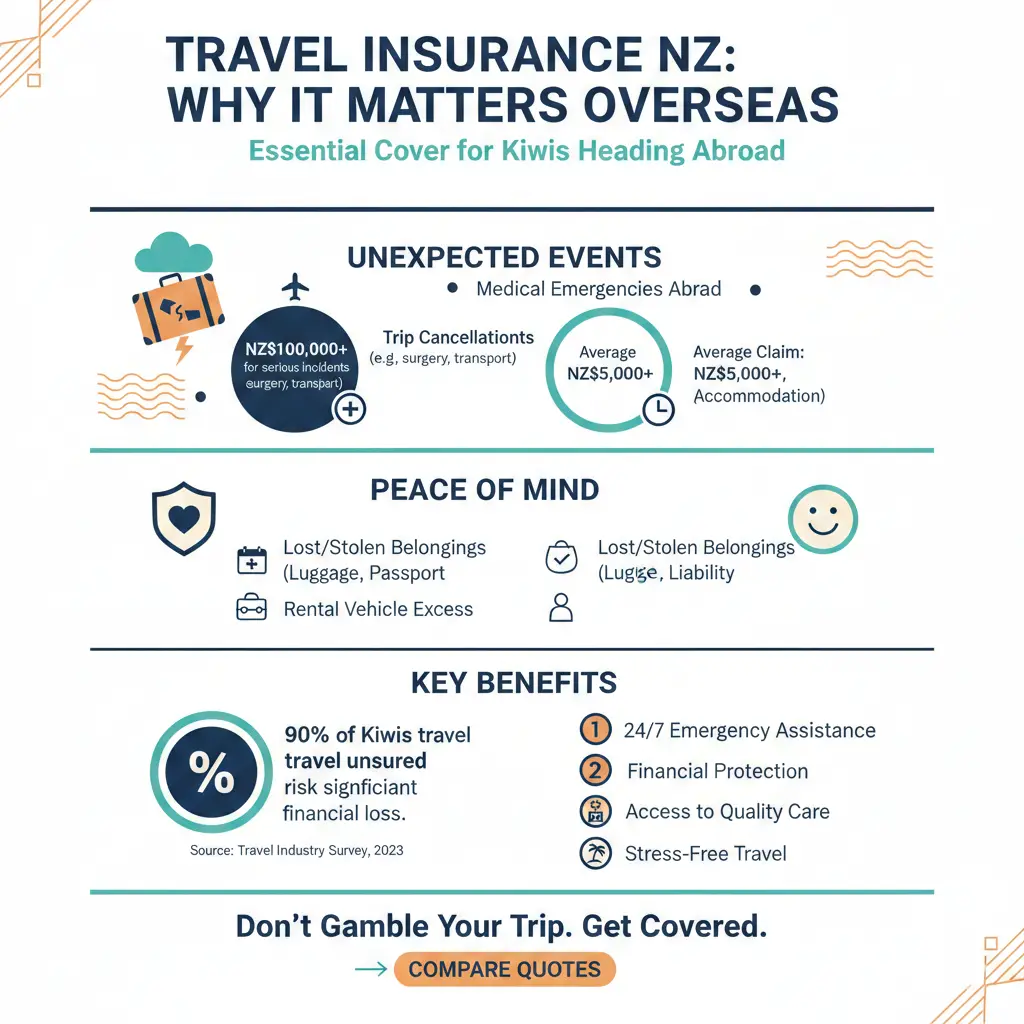
While New Zealand's public health system is world-class for residents, it doesn't extend to visitors or outbound travellers like us when we're away. Tourists and short-term visitors to places like Europe or Asia foot their own medical bills, which can soar into the tens of thousands for something as simple as a hospital stay. For Kiwis travelling abroad, domestic health insurance or KiwiSaver won't cut it—most policies exclude international cover, leaving you exposed to hefty out-of-pocket costs.
Plus, there's no reciprocal health agreement with most countries beyond Australia, where we get limited urgent care access via a mutual deal. A two-week jaunt can easily set you back $3,000–$5,000 just on basics like flights and digs, not counting emergencies. Smart travel insurance NZ protects your wallet, reimburses non-refundable bookings, and covers evacuations that could otherwise bankrupt you.
Key Stats: The Real Cost of Skipping Insurance
- A basic hospital visit overseas might cost $2,000+, with air ambulances hitting $50,000 or more.
- Over 1 in 10 trips involve delays or cancellations, per global insurer data—think volcanic ash clouds or strikes disrupting your plans.
- In 2026, with inflation biting, NZ medical evacuations average $30,000–$100,000 depending on destination.
Is Travel Insurance Mandatory for Popular Destinations?
Good news: New Zealand doesn't require inbound visitors to have travel insurance, unlike some spots with strict visa rules. However, certain visas—like working holiday or student ones—might mandate it as a condition, so double-check Immigration NZ's site before applying. For us Kiwis outbound, no country's forcing it at the border, but airlines and cruise lines increasingly recommend or require it for bookings over $1,000.
Australia's a soft spot thanks to our mutual assistance agreement, covering urgent public hospital care—but GPs, specialists, or repatriation? You're on the hook. For everywhere else—Fiji, UK, US—it's highly recommended, especially post-COVID when entry rules tightened around vaccinations and declarations.
What Does Good Travel Insurance NZ Cover?
Not all policies are created equal. Look for comprehensive plans blending trip protection and medical cover. Here's what top travel insurance NZ policies include:
Emergency Medical and Evacuation
The biggie: covers hospital stays, surgery, meds, and urgent care up to $500,000+ per person. Essential since NZ's ACC scheme only handles visitor accidents (not illnesses) and leaves gaps like GP fees. Includes medevac to the nearest decent facility or back home—vital for remote spots like the Pacific Islands.
Trip Cancellation, Interruption, and Delays
Reimburses prepaid flights, hotels, tours if you're crook before departure or need to cut short due to family emergencies. Covers delays over 6–12 hours with meals and accommodation vouchers.
Baggage and Personal Effects
Lost, stolen, or delayed gear? Policies reimburse up to $30,000 total, $2,500 per item—perfect for that pricey tramping pack or laptop. Declare high-value items like cameras upfront for extra cover.
Other Must-Haves
- Rental car excess: Up to $5,000 for accident damage—handy for Kiwi roadies in Europe.
- Personal liability: Legal costs if you accidentally smash a rental or injure someone.
- Adventure sports: Bungee in Queenstown? Ensure cover for bungy, skiing, or diving—many exclude "extreme" activities by default.
- COVID-19: In 2026, most policies cover testing, quarantine, and cancellation if borders snap shut again.
What to Look For in Travel Insurance NZ: Kiwi-Specific Tips
With so many providers, how do you pick? Focus on these for 2026:
Coverage Limits and Excess
Aim for unlimited medical/evac cover—no caps under $1 million. Excess (your upfront payment) should be $0–$200; higher saves premium but stings on claims.
Pre-Existing Conditions and Age Limits
Declare asthma or diabetes upfront—many add it for a fee post-purchase. Over 65? Check age caps; some like Uni-Care's NZ Visitor Plan go to 65 only.
24/7 Assistance and Claims Process
Pick providers with Kiwi helplines (e.g., Southern Cross or Cover-More) for quick help in emergencies. App-based claims make it painless—scan receipts and go.
Exclusions to Watch
| Common Exclusion | Why It Matters | How to Avoid |
|---|---|---|
| Pandemics (beyond COVID) | New outbreaks could void cover | Buy policies with epidemic extensions |
| High-risk activities | No pay for unlisted sports | Add adventure rider |
| Alcohol/drugs | Claims denied if impaired | Stick to limits |
| War/terrorism | Unpredictable regions excluded | Check FCDO advisories |
Pro tip: Use comparison sites like Canstar or MoneyHub, but read the PDS (Product Disclosure Statement) yourself.
How Much Does Travel Insurance NZ Cost in 2026?
Expect 4–6% of your trip total—$120–$300 for a $5,000 two-week Europe jaunt for a family of four. Singles pay less; multi-trip annual policies suit frequent flyers at $400–$800/year. Factors: age (over 70s pay double), destination (US pricier than Asia), and add-ons like cruises ($50 extra).
Shop around: Single-trip for one-offs, family plans for whānau holidays covering two adults + kids.
Steps to Buy Travel Insurance NZ Before You Go
- Plan your trip: List destinations, activities, dates—feeds accurate quotes.
- Compare quotes: Use tools from AA Insurance, 1Cover, or Trade Me Insurance.
- Declare everything: Health issues, valuables, pre-books.
- Buy early: Covers cancellation from day one; aim 2–4 weeks pre-departure.
- Keep docs handy: Policy number, app, emergency line in your phone.
For visas needing proof (e.g., Schengen), email your cert to embassies.
Next Steps: Get Covered and Go!
Don't let "she'll be right" attitude leave you high and dry—grab quotes today from trusted Kiwi providers like Southern Cross Travel Insurance or World Nomads. Tailor to your adventure, declare honestly, and travel with confidence. Safe journeys, Kiwis—your epic trip awaits!
Frequently Asked Questions
Sources & References
-
1
Travel Insurance for New Zealand - Visitors Coverage — www.visitorscoverage.com
-
2
Travel Insurance For New Zealand What To Take Note of — www.allianz-assistance.com.sg
-
3
New Zealand Visitor Plan - Uni-Care's insurance — www.uni-care.org
-
4
New Zealand Travel Insurance and Safety Advice for Visitors — www.internationalinsurance.com
-
5
Travel Protection for New Zealand - International Trip Protection — www.generalitravelinsurance.com
-
6
New Zealand International Travel Information — travel.state.gov
-
7
NZ Entry Requirements | Before you travel | NZTD — www.travellerdeclaration.govt.nz
Related Articles

Life Insurance NZ: Are You Overpaying for Cover You Don't Need?
Ever signed up for life insurance without a second thought, only to watch your premiums climb year after year? You're not alone—many Kiwis are paying for life insurance NZ cover they don't actually ne...

Health Insurance NZ: Complete Guide to Going Private
Imagine facing a sudden health scare in New Zealand—long public hospital waits could stretch weeks or months, but with private health insurance, you could access top specialists and private rooms swif...

Pet Insurance NZ 2025: Is It Worth the Cost?
Imagine coming home to your loyal labrador, only to find them limping after a sudden accident. A trip to the vet reveals surgery costs over $5,000—money you hadn't budgeted for. This scenario plays ou...

Landlord Insurance NZ: Protecting Your Investment Property
Imagine coming home to discover your prized investment property in Auckland has been trashed by tenants—walls punched, carpets ruined, and worst of all, no rent coming in for months while you foot the...