Emergency Department or Urgent Care: Where Should You Go?
Picture this: it's 2am, your child's fever is spiking, or you've twisted an ankle playing weekend footy. Do you race to the nearest **Emergency Department** or hunt for an **Urgent Care** clinic? Maki...
Emma writes about health, wellbeing, and ACC topics for Lifetimes NZ. She translates complex health information into clear, actionable advice for New Zealand readers.
Picture this: it's 2am, your child's fever is spiking, or you've twisted an ankle playing weekend footy. Do you race to the nearest **Emergency Department** or hunt for an **Urgent Care** clinic? Making the wrong choice can mean hours wasted waiting, or worse, delaying critical care. In New Zealand's evolving healthcare system, knowing where to go can save time, reduce stress, and get you treated faster.
With recent government investments like the $164 million Budget 2025 boost for urgent and after-hours care, Kiwis now have better options than ever. By mid-2026, 98% of us will access urgent care within an hour's drive from home. This article breaks it down: when to hit the ED, when Urgent Care suffices, and how to navigate our system in 2026.
What is an Emergency Department (ED)?
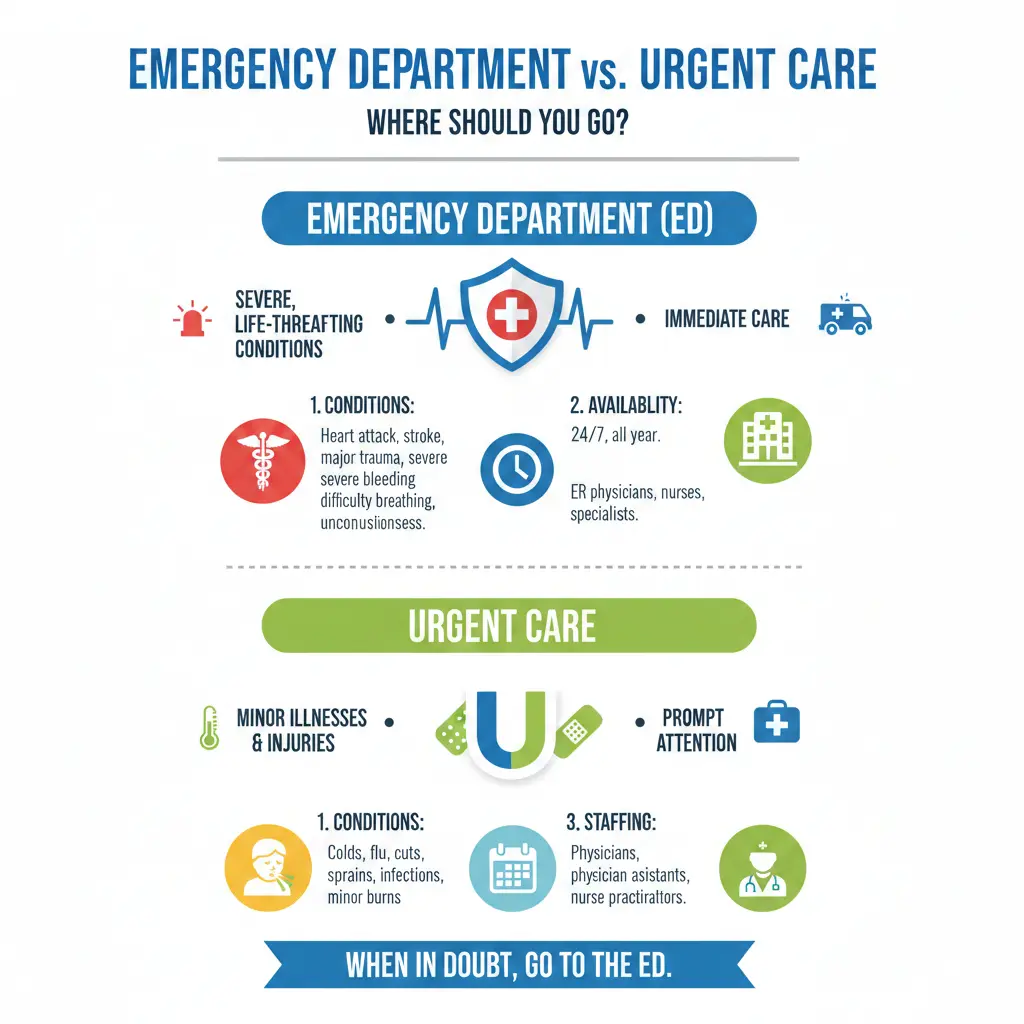
Emergency Departments, found in public hospitals across Aotearoa, handle life-threatening situations. Think heart attacks, severe trauma, strokes, or uncontrollable bleeding. These are **true emergencies** where seconds count.
EDs operate 24/7 with advanced diagnostics like CT scans, X-rays, and specialist teams on-site. In the quarter ending December 2024, EDs saw 12,000 more patients than the previous year, yet improvements meant 16,000 more were processed within six hours. The government's Target 1 aims for 95% of patients admitted, discharged, or transferred within six hours.
Common ED Scenarios in New Zealand
- Sudden chest pain or shortness of breath (possible heart issue).
- Severe head injury or unconsciousness.
- Major burns, deep wounds, or compound fractures.
- Stroke symptoms: face drooping, arm weakness, speech difficulty (call 111 immediately).
- Poisoning or drug overdose.
Staff use the Australasian Triage Scale to prioritise: Category 1 (immediate) to Category 5 (seen within two hours). About one-third of ED visits (450,000 annually) are lower urgency (Categories 4-5), often better suited elsewhere.
What is Urgent Care?
Urgent Care clinics treat non-life-threatening issues needing prompt attention, like infections, minor injuries, or fevers. They're designed to ease ED pressure, offering faster service for everyday urgencies.
In 2026, Urgent Care is expanding rapidly. Around 5,000 Kiwis use these services daily. New 24/7 clinics are rolling out: Counties Manukau and Dunedin by late 2025, Tauranga by mid-2026, Whangārei and Palmerston North by 2027. Up to 80 new or improved services nationwide ensure most can drive under an hour.
Key Features of Urgent Care Clinics
- Extended hours: Many open evenings, weekends, public holidays (e.g., 8am-8pm or 24/7 in new sites).
- On-site X-rays, labs, and prescriptions – no hospital trip needed.
- Lower costs: Often bulk-funded or low co-pay via your GP enrolment.
- Quicker waits: Typically 30-60 minutes vs ED's potential hours.
Rural Kiwis benefit too: Trials in Twizel, Tākaka, Tūrangi, Te Kuiti, Coromandel, and Great Barrier Island started mid-2025, expanding to 70+ spots. Features include 24/7 on-call clinicians, local diagnostics, and antibiotics.
Emergency Department vs Urgent Care: Key Differences
Choosing correctly keeps EDs free for critical cases. Here's a side-by-side in 2026:
| Feature | Emergency Department | Urgent Care |
|---|---|---|
| When to Go | Life-threatening: chest pain, stroke, major trauma. | Non-emergency urgent: sprains, UTIs, cuts needing stitches. |
| Hours | 24/7. | Extended/24/7 in new clinics (e.g., Tauranga 2026). |
| Wait Times | Variable; target <6 hours for 95%. | Usually under 1 hour. |
| Services | Full hospital: ICU, surgery, specialists. | X-rays, minor procedures, scripts. |
| Cost | Free for under-14s; $50+ co-pay adults (ACC-covered injuries free). | $50-100 co-pay; some free via Health NZ. |
| Location | Hospitals (e.g., Auckland City, Wellington Hospital). | Community clinics (e.g., EastCare Tauranga). |
Urgent Care diverts lower-urgency cases, helping EDs hit targets.
When to Choose Emergency Department
Call 111 if it's immediately life-threatening. Otherwise, head to ED for:
- Persistent chest pain radiating to arms/jaw.
- Severe allergic reactions (anaphylaxis).
- Difficulty breathing not from asthma.
- Seizures or sudden confusion.
- Pregnancy complications or severe abdominal pain.
In remote areas, PRIME services (funded by Health NZ and ACC) provide rural emergency response via St John.
When to Choose Urgent Care
Opt for Urgent Care to avoid ED queues:
- Fever over 38°C in kids/adults lasting >48 hours.
- Sprained ankle, minor fractures, or lacerations.
- Ear infections, sinusitis, or mild asthma flares.
- Work/sports injuries (ACC fast-tracks these).
- STIs, UTIs, or animal bites.
New services like Invercargill and Timaru improvements by mid-2026 mean more options.
Finding Services Near You in 2026
Use Health NZ's Healthpoint to search by postcode. Apps like "Healthify" or dial Healthline (0800 611 116) for advice. In Auckland, try Counties Manukau's new 24/7 by late 2025.
Rural and Regional Access
Provincial boosts include Whangārei, Palmerston North, and Lower Hutt daytime services. Rural rollouts add on-call support, cutting travel for diagnostics.
Tips for Navigating New Zealand's Healthcare
- Enrol with a GP: Unlocks free/under-14 visits and referrals.
- Carry your ACC45 form: Speeds injury claims.
- Use telehealth first: 24/7 digital triage via Healthline.
- Check wait times online: Many EDs/Urgent Cares post live updates.
- Prepare info: NHi number, meds, allergies.
- After-hours GP: Cheaper than Urgent Care for enrolled patients.
"When a child's fever spikes in the middle of the night, parents have somewhere to go without delay." – Prime Minister Christopher Luxon.
These steps align with Health NZ's patient-first push.
Next Steps for Kiwis
Save local ED and Urgent Care numbers in your phone today. Enrol with a GP if you haven't, and bookmark Healthpoint. With 80+ new services by 2027, our system is improving – but knowing your options ensures you're ready. Always consult a healthcare professional for personal advice; this isn't medical guidance.
Frequently Asked Questions
Sources & References
-
1
New and improved urgent and after-hours healthcare - The Beehive — www.beehive.govt.nz
-
2
Tauranga to get new 24/7 urgent care service by 2026, Luxon announces — www.nzherald.co.nz
-
3
Target 1 - Shorter stays in emergency departments - March 2025 — www.dpmc.govt.nz
-
4
Budget 2025: Govt's $164m plan for urgent, after-hours healthcare — www.1news.co.nz
-
5
Urgent Care Medicine in NZ - Good Together Health Recruitment — goodtogetherhealth.com
Related Articles

The NZ Healthcare System: How Private Health Insurance Works
Imagine facing a diagnosis that requires surgery, only to learn you'll wait months in the public system. For many Kiwis, private health insurance turns that worry into swift action, offering faster ac...
Dental Costs in NZ: Why They are High and How to Save Money
Ever stared at a dentist's quote and felt your wallet recoil? You're not alone—dental costs in New Zealand have skyrocketed, leaving many Kiwis skipping check-ups or delaying essential treatments. Wit...

How Much Does a GP Visit Cost in NZ?
Ever wondered why that nagging cough or unexpected rash sends you scrambling for your wallet before even booking a GP appointment? You're not alone—figuring out how much a GP visit costs in NZ is a co...

Prescription Costs & Subsidies in New Zealand 2025
If you're managing a long-term health condition in Aotearoa, understanding how much you'll pay for prescriptions can help you budget better and plan your healthcare. New Zealand's prescription system...