Vet Costs NZ: What to Budget for Your Pet

Owning a pet is one of life's great joys, but it comes with real financial responsibilities. If you're thinking about getting a dog or cat, or you're already a pet parent wondering if you're budgeting...
The Lifetimes NZ editorial team curates, fact-checks, and updates guides on personal finance, property, health, immigration, legal, business, and lifestyle topics relevant to Lifetimes NZ readers. Articles are produced with AI assistance and reviewed by the editorial team before publication.
Owning a pet is one of life's great joys, but it comes with real financial responsibilities. If you're thinking about getting a dog or cat, or you're already a pet parent wondering if you're budgeting correctly, understanding vet costs is essential. New Zealand has the second-highest rate of pet ownership in the world, with two-thirds of Kiwi households having at least one companion animal, but many pet owners are surprised by how quickly vet bills add up. This guide breaks down exactly what you can expect to pay for your pet's healthcare in 2026.
Understanding the True Cost of Pet Ownership
Before we dive into specific vet costs, it's worth knowing the bigger picture. The SPCA estimates that dogs cost an average of around $1,680 annually, while cats cost roughly $670 per year. These figures include food, registration, vaccinations, and routine vet care—but emergency visits or chronic health issues can push costs significantly higher.
One of the biggest myths about vet pricing is that it's unfair or unregulated. In reality, vet fees are fully user-pays, with no government regulation on pricing. This means vets compete against each other for business, but it also means costs can vary considerably depending on your location, the clinic's reputation, and your pet's specific needs.
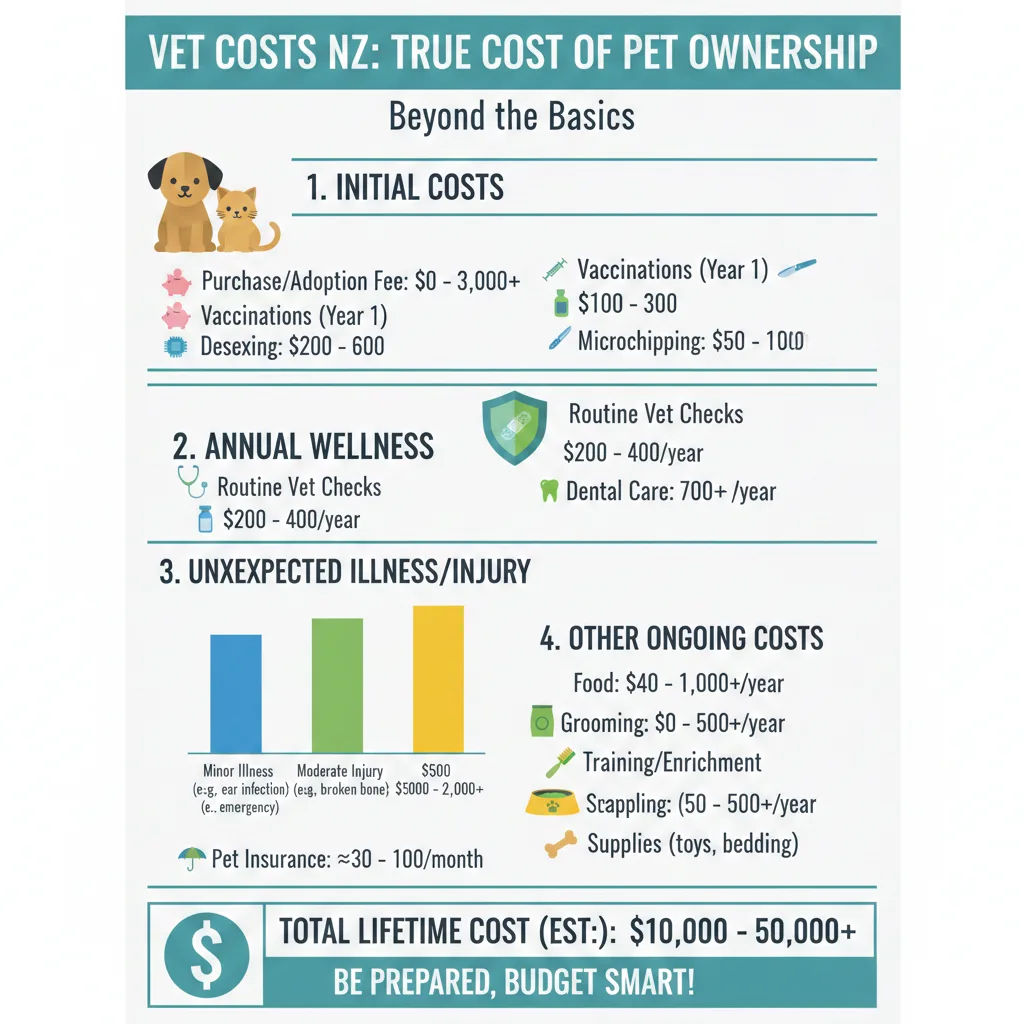
Breaking Down Routine Vet Costs in New Zealand
Standard Consultation Fees
A basic vet consultation in New Zealand typically costs around $50 to $80 per 15-minute appointment. However, this varies by location and clinic. According to Southern Cross Pet Insurance, the average veterinary visit for cats costs NZ$350, while dog owners can expect to pay about NZ$500 on average. These higher figures likely include diagnostics and treatments beyond a simple check-up.
Vaccinations
Annual vaccinations are a non-negotiable part of pet ownership. You can expect to pay $55 to $100 per vaccination shot, with total annual vaccination costs ranging from $100 to $200. Puppies and kittens require multiple vaccination rounds, so first-year costs will be higher than subsequent years.
Parasite Prevention
Flea and worm treatments are essential ongoing costs. Monthly parasite prevention typically costs $20 or more, which adds up to $240+ annually. Some vets offer annual packages that can reduce this cost, so it's worth asking about bundle deals.
Dental Care
Dental cleaning, if needed, can cost $200 or more. Many vets recommend professional cleaning for older pets or those with dental issues, so budget accordingly if your pet has a history of dental problems.
Routine Bloodwork
Routine bloodwork typically costs $70 to $200, depending on what tests are needed. This is particularly important for senior pets or those with existing health conditions.
One-Off Costs You'll Face
Desexing (Spaying and Neutering)
One of the most important one-off costs is desexing, which typically ranges from $200 to $400. If you're adopting from the SPCA, you're in luck—their adoption fee of $250 includes desexing, microchipping, and vaccinations, making it excellent value compared to purchasing from a breeder.
Microchipping
Microchipping costs around $35 to $70 and is a one-time expense that can literally save your pet's life if they go missing. Many vets recommend doing this when your pet is young.
Dog Registration
Don't forget about council registration. You'll need to register your dog annually with your local council, which costs between $35 to $50. In Auckland, annual pet registration for a non-service or working dog begins at about $100 and can go up to over $300 depending on factors like whether your dog is de-sexed or has a responsible dog owner licence.
Unexpected Emergency Vet Costs
The costs mentioned above are routine and predictable, but emergency visits can be significantly more expensive. Common health issues come with hefty price tags:
- Gastrointestinal disease: Average cost $661, with highest claims reaching $25,939
- Urinary tract disease: Average cost $1,589, with highest claims reaching $16,559
- Arthritis: Average cost $682, with highest claims reaching $12,387
- Skin infections or allergies: Average cost $398, with highest claims reaching $9,614
- Eye disease: Average cost $294, with highest claims reaching $7,823
These figures show why pet insurance is worth considering. On average, dog owners in New Zealand spend $200–499 per year on medical costs, while cat owners spend $100–199 per year. Pet insurance plans typically cost around $200 to $300 annually for basic coverage.
Why Are Vet Costs So High?
It's natural to wonder why vet bills are expensive. The answer lies in how vet fees are structured. Only about 20% of your vet bill goes to the vet's actual income. The rest covers:
- Medicines and pharmaceuticals
- Medical equipment and diagnostic tools
- Overhead costs (building, heating, lighting, insurance, management)
- Staff salaries (nurses, receptionists, assistants)
Even if vets worked for free, your bill would only reduce by 20%. Additionally, costs vary based on your location. Rural areas with fewer vet alternatives tend to be more expensive, as do well-known clinics with higher demand.
Money-Saving Tips for Pet Healthcare
Consider Pet Insurance
While pet insurance isn't mandatory, it can protect you from catastrophic bills. Basic plans cover unexpected illnesses and accidents, though they typically don't cover routine care like vaccinations.
Choose SPCA Adoption
If you're getting a new pet, adopting from the SPCA is significantly cheaper than buying from a breeder. SPCA adoption fees range from $200 to $500, while purebred dogs from breeders cost $800 to $3,000. Plus, the SPCA fee includes essential care.
Practise Preventative Care
The best way to save money is to prevent problems before they start. Keep up with vaccinations, parasite prevention, and dental care. Labradors, one of New Zealand's most popular breeds with around 42,000 registered, often face expensive claims for swallowing foreign objects—keeping hazards out of reach can prevent costly emergency surgery.
Shop Around for Vet Services
While it's difficult to compare vet prices directly (different clinics may recommend different tests), it's worth contacting a few local vets to get a sense of their consultation fees and any membership discounts they offer.
Frequently Asked Questions
How much should I budget annually for a dog's vet care?
Beyond the average annual cost of $1,680 for a dog, you should budget at least $500–$1,000 specifically for vet-related expenses (vaccinations, check-ups, parasite prevention). This doesn't include food, registration, or other costs. If your dog has a chronic condition, budget considerably more.
Is pet insurance worth it in New Zealand?
Pet insurance can be worthwhile if you want protection against emergency vet bills. Basic plans cost $200–$300 annually and can save you thousands if your pet needs emergency surgery or treatment. However, they typically don't cover routine care like vaccinations.
Why is my vet bill higher than my friend's?
Vet costs vary based on location, clinic reputation, your pet's size and age, and what treatments or diagnostics are needed. A rural vet might charge differently than an urban clinic, and an experienced clinic with high demand may charge premium prices.
What's included in SPCA adoption fees?
The SPCA adoption fee of $250 includes desexing, microchipping, and vaccinations—representing excellent value compared to purchasing from a breeder and paying for these services separately.
Can I negotiate vet fees?
Vet fees aren't regulated, so there's technically room to negotiate, but most vets have set pricing. Instead, ask about payment plans, membership discounts, or bundle packages for multiple services.
What's the most expensive health condition for pets in New Zealand?
Urinary tract disease is particularly expensive for cats, with average costs of $1,589 and highest claims reaching $16,559. For dogs, gastrointestinal issues from swallowing foreign objects can be equally costly.
Planning Ahead for Your Pet's Health
Pet ownership is a long-term commitment that requires financial planning. Whether you're bringing home a new puppy, kitten, or adopting an adult pet, understanding vet costs helps you make informed decisions and avoid financial stress when your furry friend needs care.
Start by contacting your local vet to get specific pricing for your area and your pet's needs. Ask about payment plans, membership discounts, and whether pet insurance might be right for you. Most importantly, prioritise preventative care—regular check-ups, vaccinations, and parasite prevention are far cheaper than emergency treatments.
If you're considering pet ownership and vet costs seem daunting, remember that the SPCA offers affordable adoption options, and many vets offer flexible payment arrangements. Your pet's health is worth the investment, and with proper planning, you can give your Kiwi companion the care they deserve without breaking the bank.