New Zealand Weather by Month: What to Expect and Where to Go Each Season
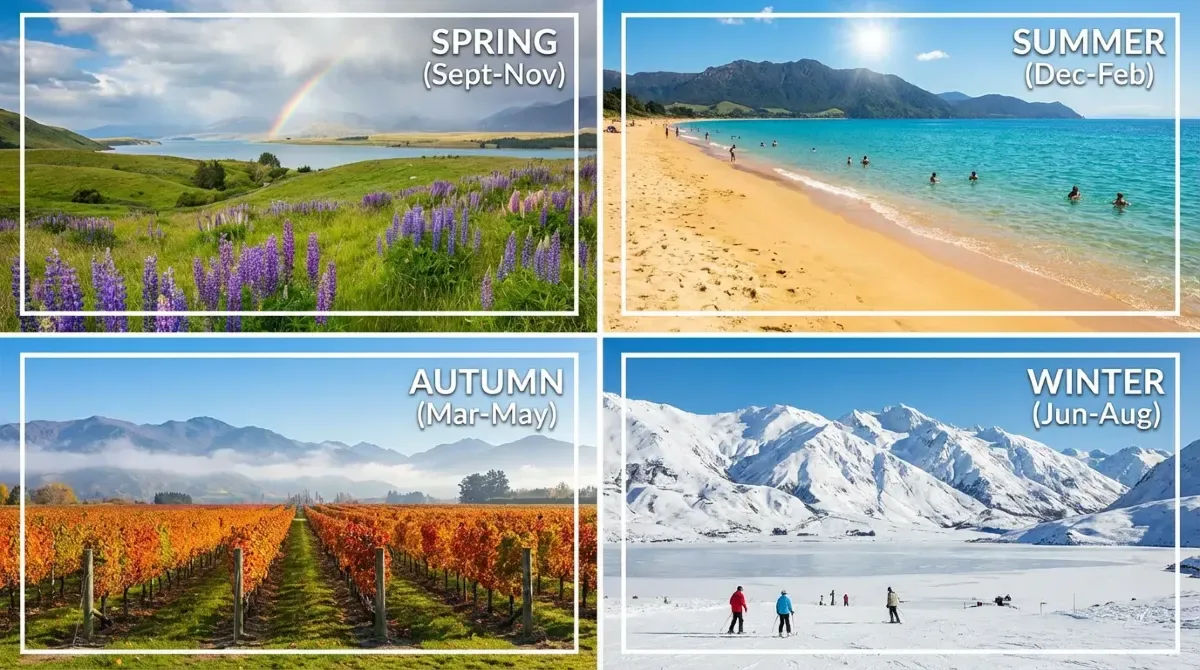
Whether you're planning a beach day in Coromandel or a hike in Fiordland, knowing New Zealand weather by month is key to making the most of our stunning landscapes. Our four distinct seasons offer som...
Tom covers travel, lifestyle, and cost-of-living topics across New Zealand. He writes practical guides on transport, day trips, outdoor activities, and everyday life in Aotearoa.
Whether you're planning a beach day in Coromandel or a hike in Fiordland, knowing New Zealand weather by month is key to making the most of our stunning landscapes. Our four distinct seasons offer something for everyone, from balmy summer swims to crisp autumn tramps, but with regional twists that can catch you out if you're not prepared.
From NIWA's latest 2026 outlooks to long-term averages, here's what to expect each month, where to head for the best conditions, and practical tips tailored for Kiwis. We'll break it down by season and month so you can pack right and dodge the wet spells.
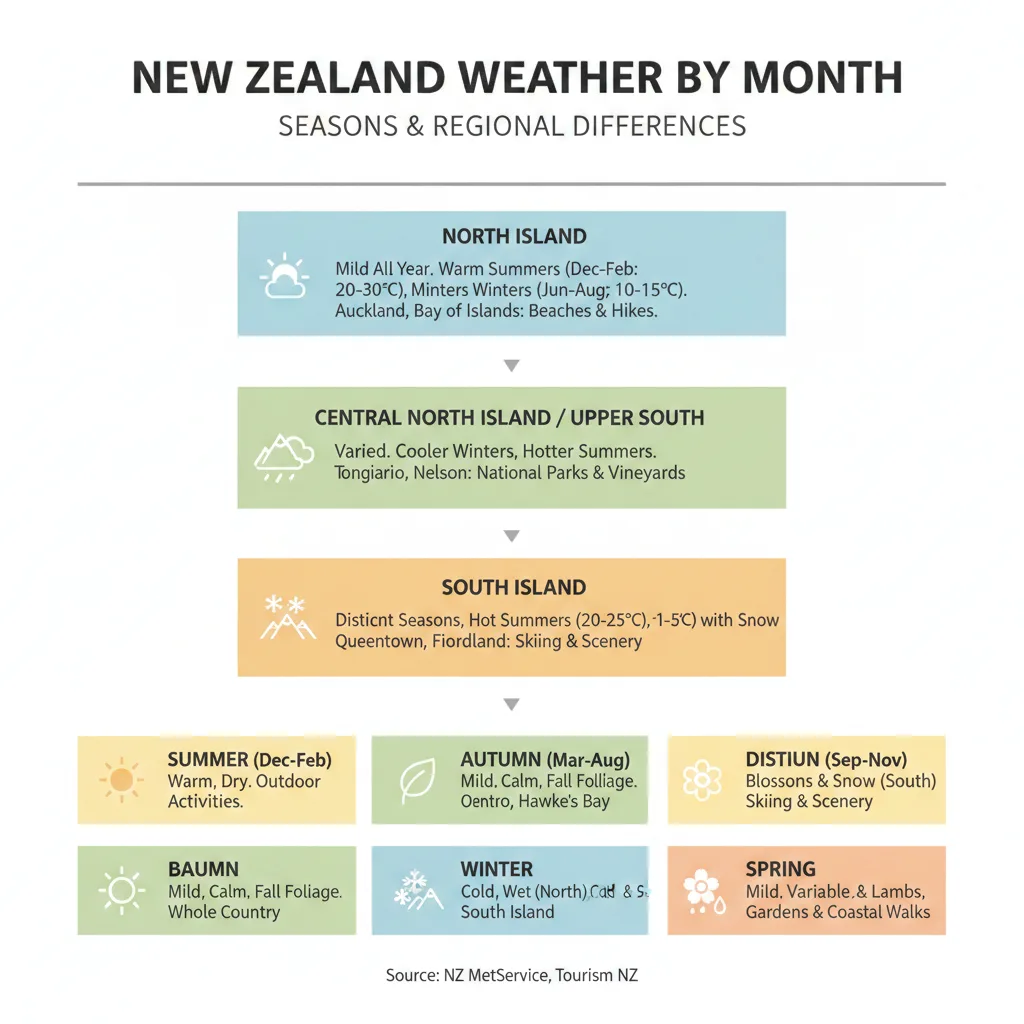
Understanding New Zealand's Seasons and Regional Differences
New Zealand's weather varies hugely from the subtropical Northland to the alpine South Island. The North Island enjoys milder winters (around 10-15°C max), while the South dips colder, especially inland. Expect more rain on the West Coast year-round, and drier spells in Central Otago.
NIWA forecasts for 2026 show above-average temperatures in northern regions this summer, with potential for heavy rain from tropical influences. Always check MetService for live updates before heading out.
Summer: December to February – Warm Days and Long Evenings
Summer brings our warmest weather, with daytime highs of 20-30°C, perfect for barbies, boating, and festivals. Long daylight hours (up to 8 hours of sunshine daily in January) mean more time outdoors. But watch for sudden showers – rainfall averages 80-94mm monthly.
December
Avg max: 19°C. Expect settled conditions early, shifting to easterlies later. NIWA predicts above-average temps in Northland and Auckland. Where to go: Bay of Plenty beaches or Rotorua's geothermal spots. Pack sunscreen – UV is high.
January
Avg max: 20°C, moderate rain (9 days). Warmer North Island (very likely above average). Where to go: Abel Tasman for kayaking or Hawke's Bay wine tours. Crowds peak, so book ahead.
February
Avg max: 20°C, similar to January. Mild and sunny, great for surf. Where to go: Coromandel's Cathedral Cove or Dunedin's Otago Peninsula for wildlife. NIWA notes possible tropical rain events.
- Tip: Layer with a light jacket for evenings (mins around 14°C).
- Kiwisaver perk: Use holiday savings for a summer roadie – check IRD for working holiday tax rules if combining with work.
Autumn: March to May – Golden Leaves and Fewer Crowds
Autumn is prime time for many Kiwis – milder temps (16-14°C avg max), vibrant foliage, and less rain than winter. It's the sweet spot for tramping with fewer tourists.
March
Avg max: 19°C, 96mm rain (12 days). Crisp days for exploring. Where to go: Arrowtown for autumn colours or Taranaki's Egmont National Park.
April
Avg max: 17°C, moderate rain. Cooling fast in the South. Where to go: Nelson's artisan trail or Wanaka's lakeside walks.
May
Avg max: 14°C, higher rain (125mm). Chilly but beautiful. Where to go: Kaikōura for whale watching – cooler waters bring marine life closer.
- Tip: Waterproof gear essential; West Coast sees up to 18 rainy days by late autumn.
- Event highlight: Catch Matariki prep vibes in May for cultural festivals.
Winter: June to August – Snow, Storms, and Cosy Fires
Our shortest days (3-4 sunshine hours) and coolest temps (9-12°C max) define winter. July is coldest, milder North, frosty South. Southern Alps get epic snow for skiing.
June
Avg max: 12°C, high rain (139mm). Snow starts falling. Where to go: Queenstown ski fields or Auckland's indoor markets.
July
Avg max: 11°C, peak chill (144mm rain). Where to go: Mt Hutt or Cardrona for powder; Rotorua for thermal pools to warm up.
August
Avg max: 12°C, still wet (136mm). Spring hints emerge. Where to go: Hanmer Springs hot pools or Fiordland cruises (less rain than peak winter).
- Tip: Pack thermals, waterproof boots, and a beanie – ACC covers ski injuries, but check your coverage.
- Resource: MetService snow reports for safe driving on SH94 to Milford.
Spring: September to November – Blooming Landscapes
Spring warms up (11-17°C max), with moderate rain and wild winds. Lambs in paddocks, flowers blooming – ideal for road trips.
September
Avg max: 13°C, 104mm rain. Windy. Where to go: Banks Peninsula tracks or Napier Art Deco vibes.
October
Avg max: 15°C. Where to go: Tongariro Crossing (check DOC for weather closures) or Marlborough vineyards.
November
Avg max: 17°C, 95mm rain. Lush and green. Where to go: Abel Tasman or Stewart Island for birdwatching.
- Tip: Windproof jacket a must; lambing season means busy rural roads.
- Best for: Shoulder season deals on accom via Bookabach.
Packing Essentials and Safety Tips for Kiwi Adventures
Layering is key – merino wool rules for all seasons. Sunscreen year-round (UV peaks summer), and raingear always. Download the MetService app for alerts; DOC huts require bookings.
| Season | Must-Haves | North Island Focus | South Island Focus |
|---|---|---|---|
| Summer | Sunscreen, hat, swimsuit | Beach towel | Insect repellent |
| Autumn | Light jacket, sturdy boots | Fleece | Gloves |
| Winter | Thermals, waterproofs, beanie | Hot water bottle | Snow chains |
| Spring | Windbreaker, quick-dry layers | Umbrella | Beanie |
FAQ
What’s the best month for New Zealand weather?
Spring (Sep-Nov) or autumn (Mar-May) offer mild temps and fewer crowds.
Does it snow in the North Island?
Rarely, but possible on central volcanoes like Ruapehu in July.
How rainy is NZ winter?
High – up to 18 rainy days in August, more on West Coast.
What’s the 2026 summer outlook?
Above-average temps in North, possible heavy rain from tropics.
Where’s driest in winter?
Central Otago – great for inland exploring.
Need car insurance for weather damage?
Check AA or NZI policies cover floods; WINZ has emergency aid if needed.
Plan Your Next Kiwi Adventure
From sun-soaked Piha to snowy Treble Cone, New Zealand's weather keeps us on our toes. Check NIWA seasonal outlooks and MetService forecasts weekly, book DOC permits early, and hit the road. What's your favourite season? Share in the comments and tag your pics #LifetimesNZ.
Related Articles
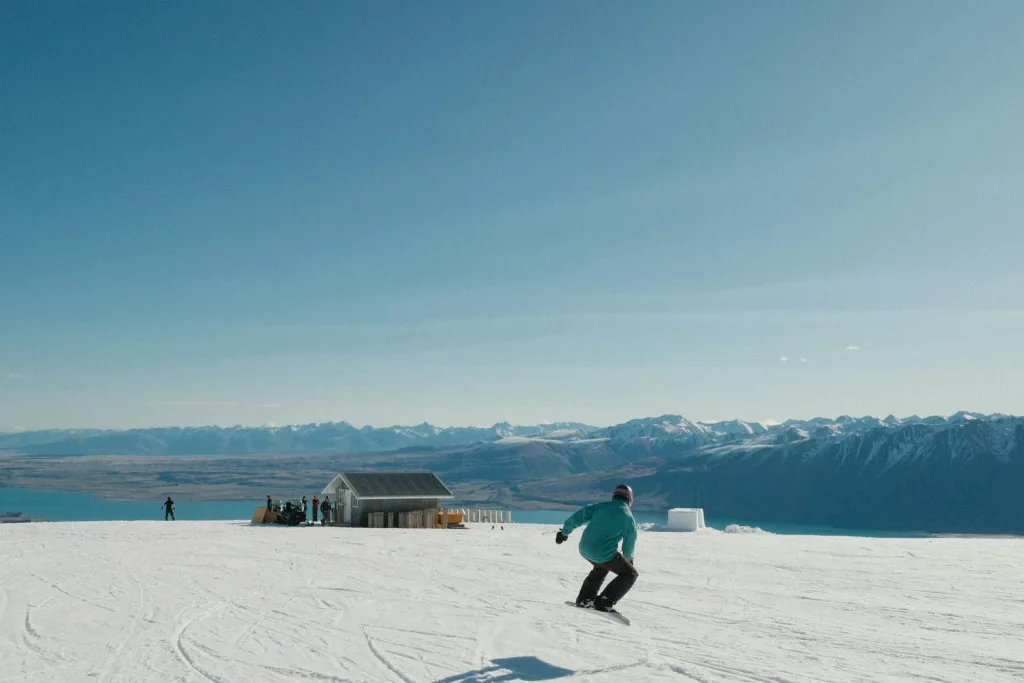
Visiting New Zealand in Winter (Jun–Aug): Ski, Snow, Hot Pools and Clear Skies
New Zealand's winter months (June to August) transform the country into a snow-dusted wonderland, offering everything from world-class skiing to steaming geothermal pools and starlit nights. Whether y...
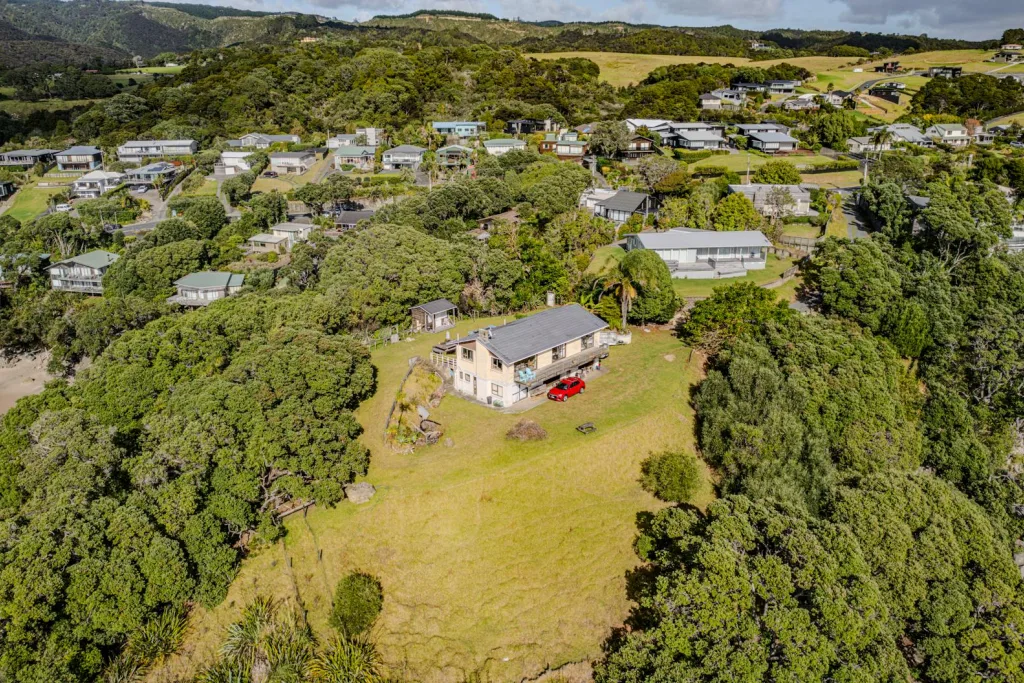
Visiting New Zealand in Summer (Dec–Feb): Crowds, Prices and Best Beach Spots
Summer in New Zealand means long days, balmy evenings, and beaches calling your name—but if you're a Kiwi planning a getaway from December to February, you'll want to navigate the crowds and price spi...

Major Festivals and Events in New Zealand: Wine, Food, Culture and Sports Calendar
Whether you're a Kiwi chasing the next big thrill or planning a weekend getaway, New Zealand's calendar bursts with major festivals and events celebrating our world-class **wine**, mouthwatering **foo...
When to Visit New Zealand for Specific Experiences: Skiing, Hiking, LOTR, Wildlife and Glow‑Worms
New Zealand's diverse landscapes offer something magical year-round, whether you're chasing powder on the slopes, summiting epic tracks, reliving The Lord of the Rings moments, spotting wildlife, or m...