School Zones Explained: How Your Address Affects Your Child’s Education
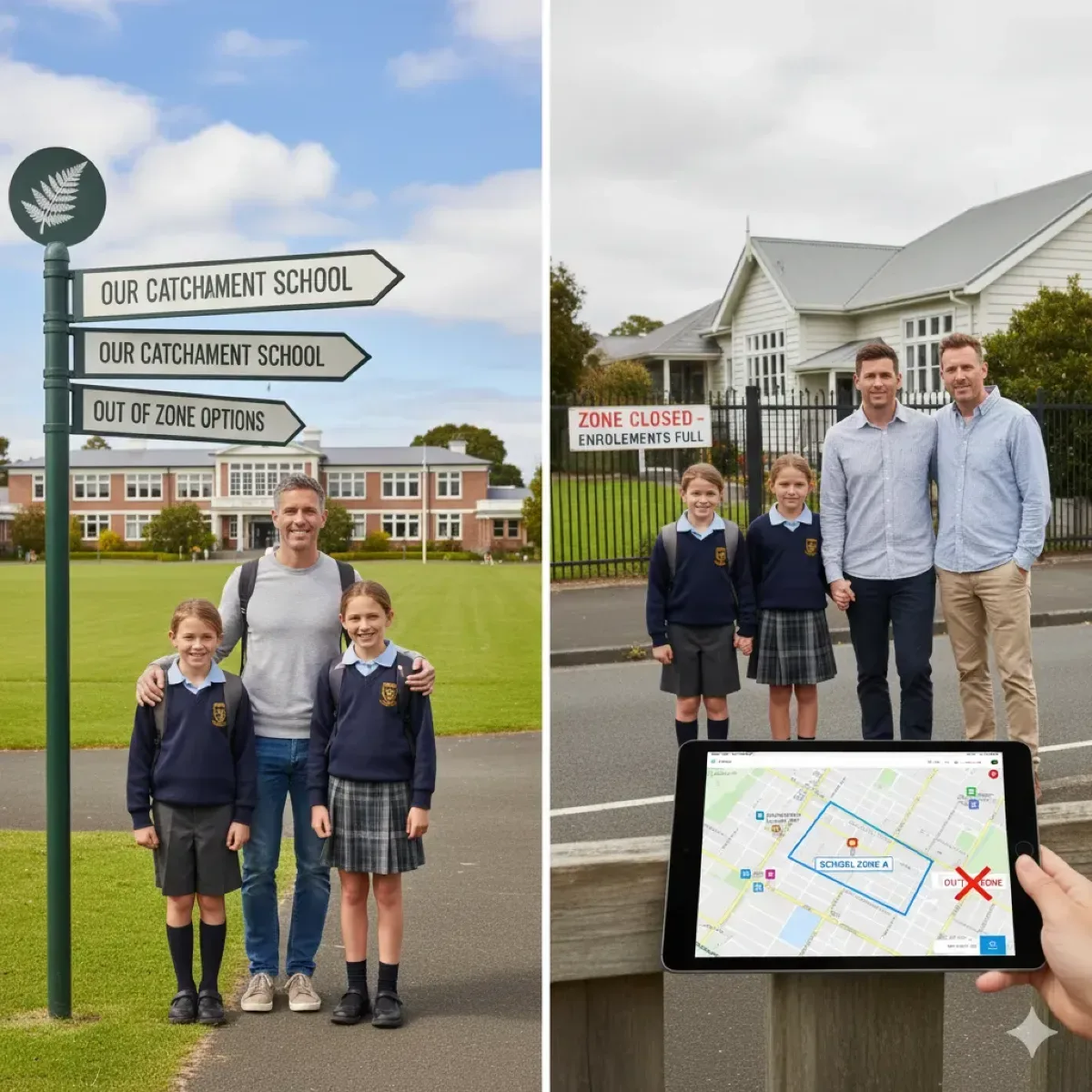
Ever wondered why your neighbour's kids go to a top-rated secondary school while yours might face a ballot? Your home address could be the key to unlocking the best educational opportunities for your...
The Lifetimes NZ editorial team curates, fact-checks, and updates guides on personal finance, property, health, immigration, legal, business, and lifestyle topics relevant to Lifetimes NZ readers. Articles are produced with AI assistance and reviewed by the editorial team before publication.
Ever wondered why your neighbour's kids go to a top-rated secondary school while yours might face a ballot? Your home address could be the key to unlocking the best educational opportunities for your tamariki in New Zealand. School zones aren't just lines on a map—they shape your child's future by determining access to sought-after state schools.
In this guide, we'll break down how school zones work, why they matter for secondary education, and what you can do if your address doesn't align with your dream school. Whether you're house-hunting in Auckland or planning a move to Wellington, understanding zoning empowers you to make informed choices for Years 9-13.
What Are School Zones?
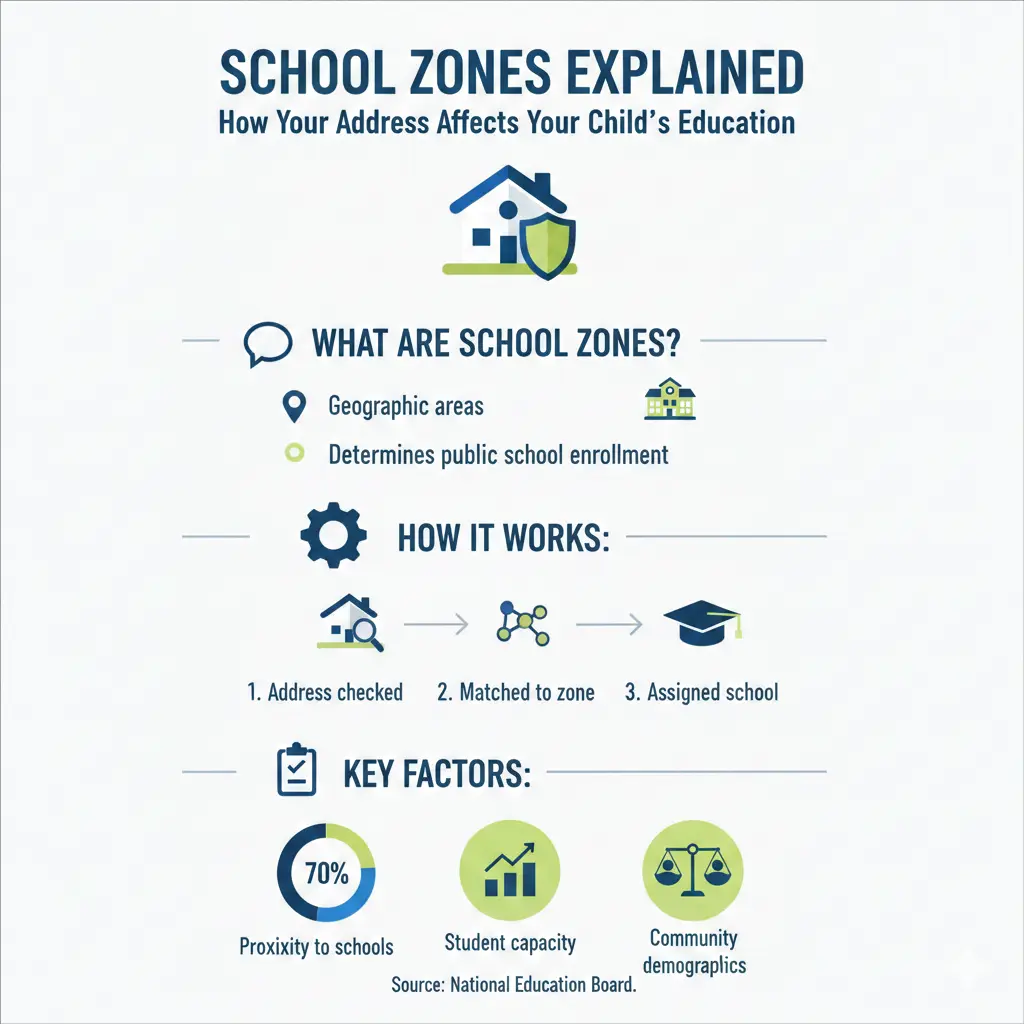
School zones, or enrolment schemes, define a geographical area around a state school called the home zone. If you live inside it, your child is guaranteed a place—provided they meet basic requirements like proof of residency. This system prevents overcrowding in popular schools and ensures local whānau have priority access.
The Ministry of Education sets these zones in consultation with schools and communities, focusing on accessibility for nearby residents. Zones apply mainly to state-funded schools, including most secondary schools (Years 9-13 or Year 7-13 in some cases). State-integrated and private schools operate differently, often without zones but with their own entry criteria based on special character.
Types of Schools and Their Zones
New Zealand's education system divides schools by year levels, each with distinct zoning:
- Primary (Years 1-6 or 1-8): Focus on foundational skills; blue zones on interactive maps.
- Intermediate (Years 7-8): Bridge to secondary; orange zones.
- Secondary (Years 9-13): NCEA qualifications; purple zones. Some are Year 7-13 composites (green zones).
- Composite: Cover multiple levels under one roof.
For secondary parents, zones often influence house prices in desirable areas like Auckland's North Shore or Christchurch suburbs.
How School Zones Are Determined
Zones are designed for convenience—think walking distance or easy bus routes—under the Education and Training Act 2020. The Secretary of Education approves them to clearly include or exclude specific addresses, avoiding ambiguity.
New Zealand splits into 12 education regions, grouped into three tai (areas): Te Tai Raro (Upper North Island), Te Tai Whenua (Central), and Te Tai Runga (Lower North Island/South Island). For example:
- Tai Tokerau (Northland)
- Tāmaki Herenga Tāngata (Auckland Central)
- Waikato
- Wellington
Zones can change due to population growth or reviews, so always verify with the school.
Finding Your School Zone
Check your address instantly using official tools:
- Visit Education Counts 'Find a school'—enter your address for zoned schools nearby.
- Use interactive maps like Mapscaping's tool, colour-coded by school type.
- Contact the school directly for 2026 updates, as enrolments open now (e.g., Northcross Intermediate guarantees in-zone spots).
Pro tip: Schools like Ormiston Primary require proof of permanent residency—rates notices or power bills—to combat false claims, an offence under the Education Act 2020.
In-Zone vs Out-of-Zone Enrolments
In-Zone: Guaranteed Access
Live in the home zone? You're set. Your child enrols "as of right" if:
- They're entitled to state education.
- The address is their main home with a parent/guardian.
- You provide docs like a tenancy agreement or utility bill.
Even in-zone families must enrol formally—2026 intakes are underway at many schools.
Out-of-Zone: The Ballot Process
Popular secondaries often have limited extra spots. Schools advertise these in September (or term-specific) via newsletters or websites. Apply early—closing dates and ballot info come in enrolment packs.
Priority order is strict:
- Returning students' siblings.
- Children in school-run special programmes (e.g., te reo immersion).
- Siblings of current/past students.
- Children of past students or staff.
- All other applicants (ballot if oversubscribed).
Example: Northcross Intermediate offers 20 Year 7 out-of-zone places for 2026, but none for Year 8. Ballots are random and supervised.
Why Your Address Matters for Secondary Education
In competitive areas, zones drive real estate—parents pay premiums for addresses in zones like Auckland Grammar or Wellington Girls' College catchments. Secondary zones affect NCEA pathways, extracurriculars, and uni prep.
Overcrowding risks traffic chaos and strained resources, so zones balance this. No zones? Some rural or small schools accept all comers.
Real Kiwi Examples
- Auckland: Tāmaki regions see high demand; check purple secondary zones.
- North Shore: Northcross zones Browns Bay—enrol now for 2026.
- Christchurch: Equity Index tools show funded schools by zone.
Practical Tips: Navigating School Zones
House hunting? Prioritise zones early.
- Before buying/renting: Map your address on Education Counts.
- Out-of-zone hopefuls: Build relationships—volunteer or attend open days for staff priority.
- Appeals: If rejected, request zone review via the school board or Ministry.
- Multiple kids? Sibling priority helps chain enrolments.
- Rural moves: Fewer zones mean more flexibility.
Track term dates: Term 1 starts late Jan/early Feb 2026.
Next Steps for Your Family
Don't leave your child's secondary spot to chance. Start by entering your address on Education Counts, contact your top school for 2026 packs, and map zones via interactive tools. If out-of-zone, note ballot dates and prep priorities. With planning, you'll secure the right fit—empowering your tamariki for NCEA success and beyond. Kia kaha!
Frequently Asked Questions
Sources & References
-
1
New Zealand School Zones Map: Interactive School Finder — mapscaping.com
-
2
NZ school zoning explained (and how to get into a school from out of zone) — clueylearning.co.nz
-
3
NZ Student Enrolment Information – Northcross Intermediate School — www.northcross.school.nz
-
4
Enrolment schemes (school zones) - Community Law — communitylaw.org.nz
-
5
School zones and enrolment schemes - Ministry of Education — www.education.govt.nz
-
6
Enrol Now - Ormiston Primary School — ormps.school.nz
- 7
-
8
New Zealand's School System Explained - Wise Move — www.wisemove.co.nz
Related Articles

Best Secondary Schools in Auckland: A 2026 Guide
Choosing the right secondary school in Auckland sets your tamariki up for success in NCEA, university entrance, and beyond. With Auckland's diverse mix of decile-rated state schools, elite privates, a...
Alternative Qualifications: Cambridge and IB in NZ
Considering the NCEA pathway but wondering if there's more out there? For Kiwi families seeking alternative qualifications like Cambridge and IB in NZ, these globally recognised programmes offer rigor...

University Entrance Requirements NZ 2025/2026
As Year 13 looms large for many Kiwi students, understanding University Entrance Requirements NZ 2025/2026 is your ticket to a smooth transition to uni life. Whether you're aiming for Auckland, Otago, or a...