Nutrition and Diet in NZ: Eating Well on a Budget
Struggling to eat healthily without breaking the bank? You're not alone—many Kiwis are feeling the pinch with rising food costs, but with smart choices rooted in New Zealand's official guidelines, you...
Emma writes about health, wellbeing, and ACC topics for Lifetimes NZ. She translates complex health information into clear, actionable advice for New Zealand readers.
Struggling to eat healthily without breaking the bank? You're not alone—many Kiwis are feeling the pinch with rising food costs, but with smart choices rooted in New Zealand's official guidelines, you can nourish your body affordably and deliciously.
Our food prices might fluctuate, but the basics of good nutrition haven't changed. The Ministry of Health's Eating and Activity Guidelines emphasise plenty of veggies, fruits, whole grains, and lean proteins—foods that are often the best value when bought wisely. This guide shows you how to build a budget-friendly plate that keeps you energised, supports your health, and fits your wallet in 2026.
Understanding New Zealand's Nutrition Guidelines
New Zealand's food and nutrition guidelines, updated through collaborations with experts and endorsed by the Ministry of Health, provide a roadmap for healthy eating across all ages. They're designed for our context, factoring in local foods and lifestyles.
Key Messages for Healthy Adults
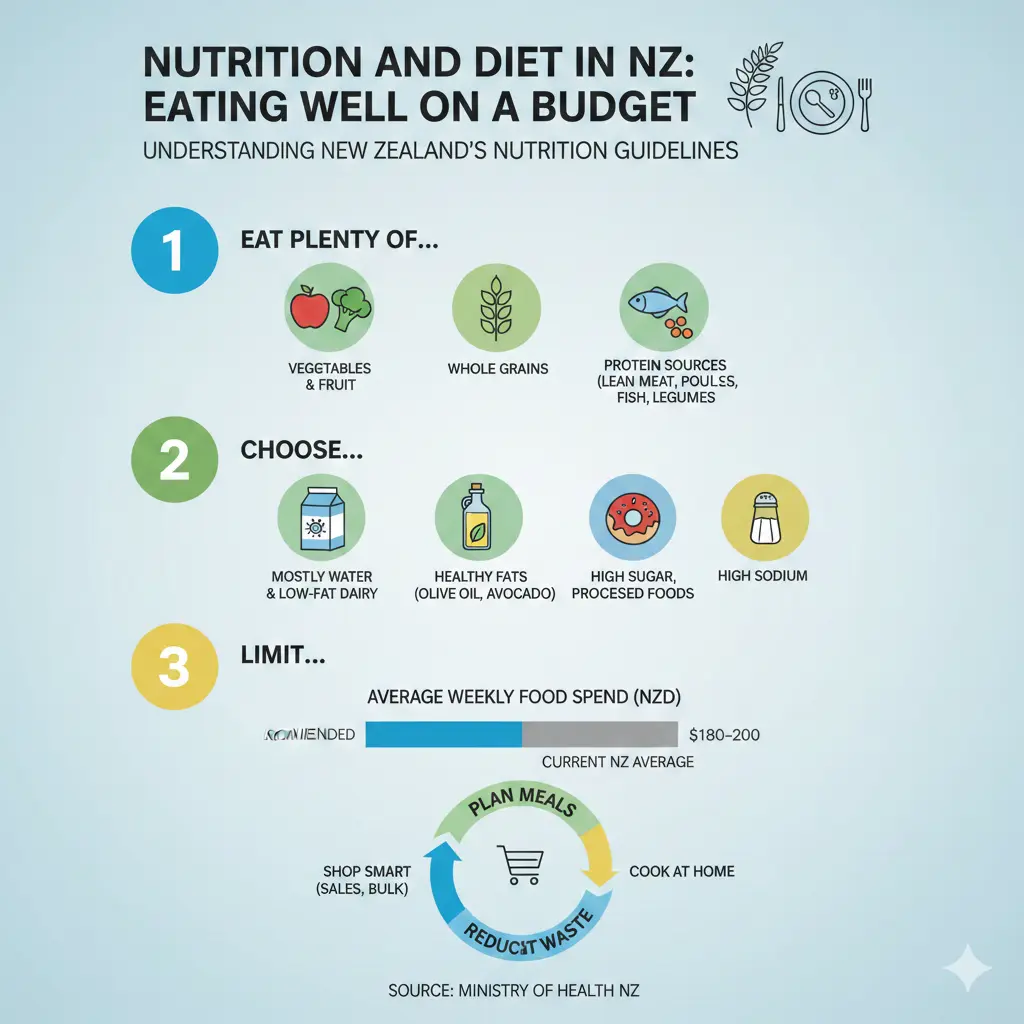
- Eat plenty of vegetables and fruits: Aim for at least 5 servings of veg and 2 of fruit daily. These are packed with fibre, vitamins, and antioxidants.
- Choose breads and cereals, preferably wholegrain: At least 6 servings a day for sustained energy and fibre.
- Include milk and milk products: 2-3 servings of low-fat options for calcium and protein.
- Add lean proteins: Legumes, nuts, seafood, eggs, or lean meats—at least 2 servings of plant-based or 1 of animal-based daily.
- Limit fats, salt, and sugars: Opt for minimal added fat (especially saturated), low-salt (use iodised if needed), and little sugar.
- Stay hydrated: Plenty of water, and limit alcohol.
These align with the four main food groups, with specific serving sizes to make planning easy (see table below).
| Food Group | Daily Servings | Examples (1 serving) |
|---|---|---|
| Vegetables & Fruit | At least 5 veg + 2 fruit | ½ cup cooked veg, 1 cup salad, 1 medium apple |
| Grain Foods | At least 6 (mostly wholegrain) | 1 slice wholegrain bread, ½ cup cooked brown rice |
| Milk & Milk Products | 2-3 (low-fat) | 250mL milk, 1 small yoghurt, 40g cheese |
| Proteins (legumes, nuts, fish, etc.) | 2 legumes/nuts or 1 animal-based | 1 cup cooked beans, 100g fish, 2 eggs |
For kids and young people, guidelines are under review in 2025-2026, but core principles remain: focus on whole foods with minimal processing.
Budget-Friendly Shopping Strategies in NZ
With food inflation hovering, Kiwis can save by prioritising seasonal, local produce. Markets like farmers' markets in Auckland or Christchurch offer deals on fresh kai. Check apps like Bargain Box or New World/Countdown specials for weekly deals.
Shop Smart: Tips for Supermarket Wins
- Plan with a list: Base it on the guidelines—fill half your trolley with veg and fruit.
- Buy seasonal and bulk: Broccoli, cabbage, and silverbeet are cheap year-round; stock up on oats and rice.
- Choose home brands: Pams or Budget brands match nutrition at half the price.
- Frozen and canned savvy: Frozen peas or canned tomatoes retain nutrients and last longer.
- Check Health Star Ratings: Look for 4-5 stars on packaged foods—mandatory considerations in 2026 for better choices.
A weekly shop for a family of four can stay under $200 by sticking to these, per recent Stats NZ data on household spending.
Protein on a Budget
Legumes are stars here: a 1kg bag of dried lentils costs under $3 and yields multiple meals. Tinned chickpeas or kidney beans are under $1.50 per can, providing fibre-rich protein. Eggs are often $5/dozen, and chicken thighs beat pricier cuts.
Affordable Meal Ideas Aligned with Guidelines
Build meals around the plate: half veg/fruit, quarter grains, quarter protein. Here's how to do it cheaply.
Breakfast Under $1 per Serve
- Porridge: Rolled oats (30c/serve) with banana (20c) and low-fat milk (30c). Wholegrain goodness.
- Wholegrain toast with peanut butter and apple slices.
Lunch: Packed and Portable
- Chickpea salad: Canned chickpeas, cucumber, tomato, feta—total $2. High fibre, low cost.
- Brown rice sushi rolls with canned tuna and carrot sticks.
Dinner for Four Under $15
- Stir-fry: Cabbage, carrots, onion, chicken thighs, served over brown rice. Uses cheap, filling veg.
- Lentil bolognese with wholegrain pasta and side salad.
- Baked fish fillets (frozen hoki, $10/kg) with kumara and greens.
Batch cook on Sundays: make a big pot of veggie soup or bean curry to stretch across the week.
Swapping for Savings and Health
Cut costs without cutting nutrition by smarter swaps, as per Heart Foundation advice.
| Expensive/High-Risk | Budget-Healthy Swap | Why It Works |
|---|---|---|
| Butter | Canola oil spray | Less saturated fat, versatile. |
| White bread | Wholegrain (often same price in bulk) | More fibre. |
| Full-fat milk | Reduced-fat ($0.20/L cheaper) | Same calcium. |
| Processed snacks | Home-popped corn or fruit | Low sugar/salt. |
Navigating 2026 Trends and Policies
In 2026, expect tighter rules on high-fat, salt, sugar (HFSS) foods, with Health Star Ratings potentially mandatory. Te Whatu Ora's National Food and Drink Policy promotes green-category foods (low sugar/fat) in public spaces. Ka Ora, Ka Ako school meals stick to minimal processed foods, water, and unflavoured milk—models for home.
Sustainability matters too: local, plant-forward eating reduces costs and environmental impact, aligning with regenerative ag trends.
Practical Tips for Kiwi Families
- Grow your own: Herbs, lettuce, or potatoes in pots cost pennies long-term.
- Waste not: Use apps like Too Good To Go for discounted surplus food.
- Community resources: Check WINZ for food grants or City Mission pantries if needed.
- KiwiSaver health boost: Better eating supports long-term wellness for retirement.
For kids, involve them in cooking to build healthy habits affordably.
Disclaimer: This is general advice based on official guidelines. Consult a doctor or registered dietitian for personalised nutrition, especially with health conditions.
Next Steps to Eat Well on a Budget
Start small: this week, swap one meal to match the guidelines and track your spend. Download the HealthEd booklet for recipes, visit healthed.govt.nz, or chat with a dietitian via your GP. Healthy eating is an investment in your future—affordable, achievable, and oh-so Kiwi.
Frequently Asked Questions
Sources & References
-
1
Food-based dietary guidelines - New Zealand — www.fao.org
-
2
Healthy eating, active living - HE1518 - HealthEd — healthed.govt.nz
-
3
National Food and Drink Policy - Health New Zealand | Te Whatu Ora — www.tewhatuora.govt.nz
-
4
Food and Nutrition Guidelines for Healthy Children and Young People — www.health.govt.nz
-
5
Five Key Health and Nutrition Megatrends for 2026 — khni.kerry.com
-
6
Consultation on the Children and Young People's Dietary Guidelines — dietitians.org.nz
-
7
Healthy eating - Heart Foundation NZ — www.heartfoundation.org.nz
-
8
Nutrition Standards for Ka Ora, Ka Ako menus — kaorakaako.education.govt.nz
Related Articles
Sun Safety NZ: Protecting Your Skin in the High-UV Kiwi Summer
Picture this: you're at the beach on a classic Kiwi summer day, waves crashing, BBQs sizzling, and the sun beating down with that intense UV punch we all know too well. But here's the reality check—Ne...

Mental Health Resources in NZ: Where to Get Free or Low-Cost Help
When you're struggling with your mental health, knowing where to turn for help can feel overwhelming. The good news is that New Zealand has a range of free and low-cost mental health resources availab...

Best Gym Memberships in NZ: A Price and Feature Comparison
Whether you're a Kiwi chasing peak fitness or just dipping your toes into gym life, picking the right membership can transform your routine without breaking the bank. With chains like CityFitness, Jet...

Managing Hayfever in NZ: The Best Local Remedies for Spring
Spring in New Zealand brings blooming landscapes and outdoor adventures, but for about 1 in 5 Kiwis, it also means battling hayfever symptoms like itchy eyes, runny noses, and endless sneezing.Managin...