How to Write a Will in New Zealand

Imagine this: you've worked hard your whole life, building a home in Auckland, saving for KiwiSaver, and raising a family. But without a proper will, the government—not you—decides who gets your house...
Sarah covers personal finance, tax, and KiwiSaver topics for Lifetimes NZ. She focuses on making money management straightforward and practical for everyday Kiwis.
Imagine this: you've worked hard your whole life, building a home in Auckland, saving for KiwiSaver, and raising a family. But without a proper will, the government—not you—decides who gets your house, your savings, and even your prized All Blacks memorabilia. In New Zealand, dying without a will means your estate follows strict intestacy rules, potentially leaving your partner or kids shortchanged. Writing a will puts you in control, ensuring your assets go where you want them to. This guide walks you through how to write a will in New Zealand, step by step, so you can protect your whānau with confidence.
Why Every Kiwi Needs a Will
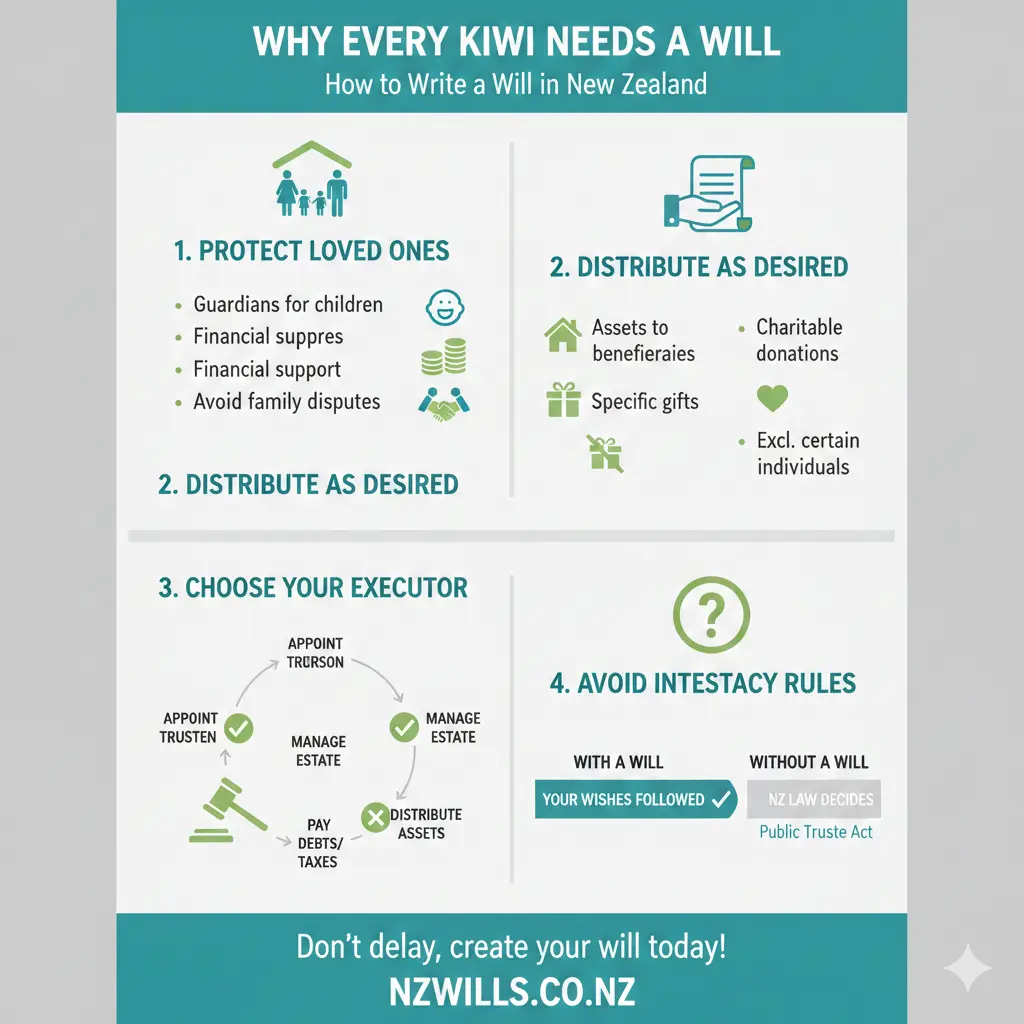
Life's unpredictable—think car accidents on the motorway or sudden health issues. A will isn't just for the elderly; it's essential for anyone over 18 with assets, dependents, or wishes for their belongings. Without one, your estate enters intestacy, where the Administration Act 1969 dictates distribution: spouses get the first $155,000 plus half the rest, with children sharing the balance. But what if you're in a de facto relationship? Your partner might get nothing, forcing costly legal battles.
A well-drafted will avoids this chaos. It names an executor to handle probate, appoints guardians for kids under 18, and minimises taxes or disputes. For blended families common in NZ, it's crucial to prevent Family Protection Act claims where adult children challenge "moral duty" provisions.
Common Myths About Wills in New Zealand
- My partner will automatically get everything: Nope. Intestacy rules prioritise legal spouses or children first.
- I'm too young: At 18+, you're eligible, especially with KiwiSaver balances or property.
- It's too expensive: DIY options start at $30, while lawyers ensure it's ironclad.
Legal Requirements for a Valid Will Under the Wills Act 2007
The Wills Act 2007 sets strict rules to make your will legally binding. Get these wrong, and your will could be invalid, costing your estate thousands in court fees.
Who Can Make a Will?
- Age: 18 or older. Exceptions for married, civil union, de facto partners, military, or seafarers under 18 with Family Court approval.
- Mental Capacity: You must understand your assets, beneficiaries, and the will's effects—known as testamentary capacity.
- No Duress: It must be your free choice, without pressure.
Essential Formalities for Validity
Your will must be:
- In Writing: Handwritten, typed, or printed—no video wills unless court-validated under section 14.
- Signed: By you at the end (or by someone in your presence if you can't).
- Witnessed: By two independent witnesses, present together, who see you sign and then sign themselves. They must be 18+, of sound mind, and not beneficiaries (or their spouses/partners)—this disqualifies gifts.
Courts can validate informal documents post-2007 if they clearly show your intentions, but don't risk it—proper execution avoids High Court applications.
"The witnessing requirements trip up many DIY will-makers: both witnesses must be present together when you sign."
What to Include in Your New Zealand Will
A comprehensive will covers key elements tailored to Kiwi life. Start with a revocation clause (cancelling old wills), then detail your wishes.
Key Components
- Appoint an Executor: Your trusted rep (often a spouse, adult child, or lawyer) to manage probate, pay debts, and distribute assets. They should live in NZ and have capacity.
- Guardians for Children: Name backups for minors—vital for solo parents.
- Specific Gifts: E.g., "My fishing rod to my brother" or $10,000 to a charity like Starship.
- Residue Clause: What's left goes here—e.g., "to my children equally."
- Funeral Wishes: Optional but helpful; note organ donation or hui preferences.
- Digital Assets: List passwords separately (wills become public); reference a secure memo.
Consider KiwiSaver: it's not automatically in your will but can be directed via nomination forms alongside your will.
DIY Will Kits vs Hiring a Lawyer: Which is Right for You?
You can legally DIY a will in NZ, but complexity matters. Here's a breakdown for 2026.
DIY Will Kits: Pros, Cons, and When to Use
Kits from chemists or online (e.g., $30–$100) include templates, instructions, and witnessing guides. Ideal for simple estates: single person, no kids, under $500k assets, NZ-only property.
Pros: Cheap, quick, private.
Cons: Easy errors invalidate it; no tailored advice for trusts or businesses. Risk: $10k+ if contested.
When to See a Lawyer
Opt for professional help if:
- Blended family or potential Family Protection claims
- Business, trusts, or partnerships
- Overseas assets
- Estate over $500k
- Complex conditions (e.g., gifts only after age 25)
Lawyers ensure compliance and can draft mirror wills for couples.
Cost Comparison (2026 Estimates)
| Option | Upfront Cost | Risk if Challenged |
|---|---|---|
| DIY Kit | $30–$100 | $10,000+ |
| Lawyer: Simple Will | $300–$500 | Minimal |
| Lawyer: Complex Will | $500–$800 | Minimal |
| Mirror Wills (Couple) | $500–$700 | Minimal |
Find a practising lawyer via the NZ Law Society's Register.
Step-by-Step Guide: How to Write and Execute Your Will
- Inventory Assets: List house, KiwiSaver, bank accounts, superannuation, vehicles. Exclude joint assets (auto-survive).
- Choose Beneficiaries/Executor: Discuss with whānau.
- Draft: Use kit or lawyer. Include all clauses.
- Sign & Witness: Two witnesses together, not beneficiaries.
- Store Safely: Original in a safe place; tell executor. Copies elsewhere. Avoid bank safety deposit boxes without notice.
When and How to Update Your Will
Review every 5 years or after life events—marriage revokes prior wills automatically!
- Marriage/divorce/separation
- Birth/adoption
- Death of beneficiary/executor
- Asset changes (e.g., inheritance, business sale)
- Family trust setup or move abroad
Update via codicil (simple amendment) or new will.
Common Pitfalls and How to Avoid Them
- Beneficiary Witnesses: Disqualifies gifts—invalidate!
- No Witnesses Present Together: Court battles ensue.
- Forgetting Digital Estate: Use separate secure lists.
- Outdated Will: Last signed one prevails, even if obsolete.
Pair your will with Enduring Powers of Attorney (Property & Personal Care) for incapacity protection.
Frequently Asked Questions
Related Articles

Scam Alert: How to Stay Safe on NZ Online Marketplaces
Picture this: you're scrolling Facebook Marketplace for a bargain on a second-hand lawnmower, spot a deal too good to pass up, and before you know it, your bank's alerting you to suspicious activity....

5 NZ Laws Changing in 2026 That You Haven’t Heard Of
Ever scrolled through your news feed and wondered if you're missing out on the quiet legal shifts that could change how you work, shop, or even camp in Aotearoa? In 2026, five under-the-radar law chan...

Inheritance & Wills: A Practical Guide to Protecting Your NZ Estate
Imagine this: you've spent decades building a life in Aotearoa—your family home in Auckland, a KiwiSaver nest egg, maybe a bach on the Coromandel. But without a solid will or estate plan, it could all...

Tenancy Disputes and Legal Aid: Getting Help
Imagine coming home to a leaky roof after a heavy Auckland downpour, only to have your landlord brush off your urgent repair request. Or as a landlord, discovering unexplained damage to your property...