Fencing Disputes NZ: Who Pays and How to Resolve

Picture this: you've just moved into your dream Kiwi home in Auckland, only to discover the boundary fence with your neighbour is leaning precariously, encroaching on your section, and sparking heated...
The Lifetimes NZ editorial team curates, fact-checks, and updates guides on personal finance, property, health, immigration, legal, business, and lifestyle topics relevant to Lifetimes NZ readers. Articles are produced with AI assistance and reviewed by the editorial team before publication.
Picture this: you've just moved into your dream Kiwi home in Auckland, only to discover the boundary fence with your neighbour is leaning precariously, encroaching on your section, and sparking heated arguments over who should foot the bill for repairs. Fencing disputes like these are surprisingly common across New Zealand, turning friendly neighbours into feuding foes and potentially costing thousands in legal fees if not handled right.
In this guide, we'll break down everything you need to know about fencing disputes NZ: who pays and how to resolve them under current 2026 laws. From the Fencing Act 1978 to practical steps for serving notices and escalating to the Disputes Tribunal, you'll get actionable advice tailored for Kiwis. Whether you're in Wellington facing a sagging rural fence or Christchurch dealing with an urban boundary blunder, we've got you covered with real-world examples and tips to protect your wallet.
Understanding Fencing Disputes in New Zealand
Fencing disputes typically arise over boundary location, fence condition, construction standards, or cost-sharing. Common triggers include discovering a fence isn't on the legal boundary after a survey, disagreements on whether an existing fence is "adequate," or one neighbour building without consent. In New Zealand, these issues affect homeowners nationwide, from suburban sections in Hamilton to lifestyle blocks in the Waikato.
What Counts as a Boundary Fence?
A boundary fence divides adjoining properties and falls under the Fencing Act 1978. It's not just any fence—it's one along the legal boundary as shown on your Record of Title and deposited plan. If it's off the line, it could be encroaching, leading to orders for relocation or cost-sharing.
- Legal boundary check: Always start with your property title from Land Information New Zealand (LINZ).
- Encroachment example: In a recent Auckland case, a fence built 30cm over the line prompted a Disputes Tribunal order to move it, with costs split 50/50 unless proven otherwise.
Who is Responsible? Occupiers vs Owners
Under section 9 of the Fencing Act, "occupiers" share costs equally. An occupier is the property owner or a tenant with a lease over 10 years. If your property sells mid-dispute, a fresh Fencing Notice is needed as the old one lapses. Tenants should check their tenancy agreement—short-term renters aren't usually liable.
The Law: Fencing Act 1978 Explained
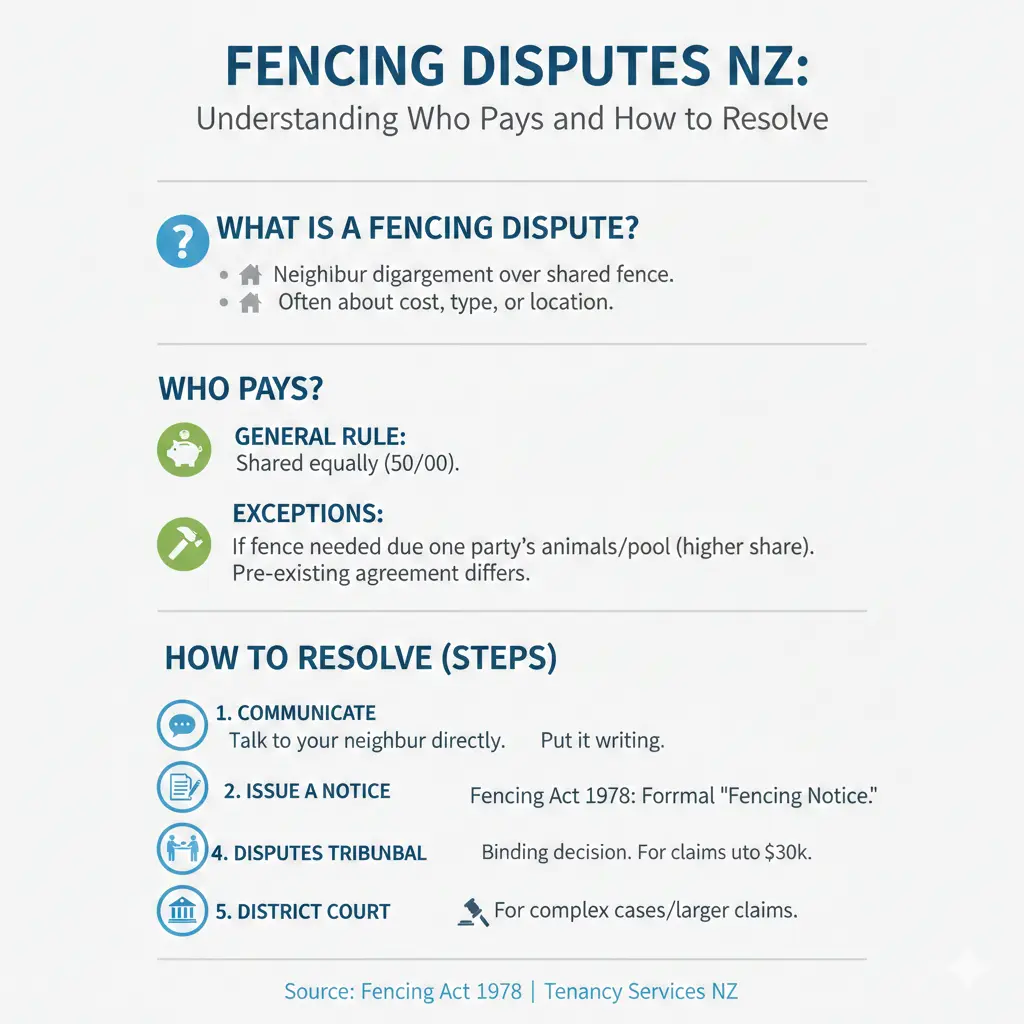
The cornerstone of fencing disputes NZ is the Fencing Act 1978, which mandates equal cost-sharing for adequate boundary fences unless agreements state otherwise. It sets minimum standards but allows courts to decide on type, location, and payments. No major updates in 2026, but always verify via govt.nz for amendments.
Key Principles: Who Pays What?
| Scenario | Who Pays? | Legal Basis |
|---|---|---|
| New or replacement fence | Equal share between occupiers | Section 9, Fencing Act |
| Repairing inadequate fence | Equal share, unless one party at fault | Section 9 |
| Encroaching fence | Court decides; often shared or remover pays | District Court/Disputes Tribunal |
| Unapproved build/alteration | Builder may pay full if no consent | Fencing Act procedures |
Exceptions include fencing covenants or private agreements registered on titles, binding successors for up to 12 years. Always search your title first via LINZ.
Step-by-Step: How to Resolve Fencing Disputes
Don't rush to court—most disputes settle amicably. Follow these practical steps for New Zealanders.
Step 1: Talk it Out and Document Everything
Approach your neighbour calmly, perhaps over a cuppa. Discuss concerns like fence adequacy or boundary issues. Get any agreement in writing. Pro tip: Photograph the fence from all angles and note dates—evidence for later.
Step 2: Serve a Fencing Notice
If talks fail, issue a formal Fencing Notice (Form 1, Schedule 1 of the Act). Detail proposed works, costs, materials, start date, and payment method. Serve it correctly—post, deliver, or email if agreed.
- Timeline: Neighbour has 21 days to dispute via Cross Notice (Form 2).
- If no response: Deemed consent; start work within 28 days.
- Trap to avoid: Wrong format or service voids your claim—get a lawyer to draft.
Step 3: Handle Objections and Negotiate
A Cross Notice objects to specifics like cost or type. Negotiate within 21 days. If stalled, mediate via Community Law Centres or a fencing mediator.
Step 4: Escalate to Disputes Tribunal or Court
For claims under $30,000, head to the Disputes Tribunal—no lawyers needed, low fees. Over that, or complex? District Court. They can order boundary determination, fence type, costs, and work allocation.
- Apply online via disputes-tribunal.govt.nz.
- Attend hearing (usually 3-6 months wait in 2026).
- Enforce orders via District Court if needed.
Example: In a 2025 Wellington case, the Tribunal ruled a neighbour pay 50% for a new pine paling fence after deeming the old one inadequate.
Costs Involved: Budgeting for Your Dispute
Expect survey fees ($1,000-$3,000), lawyer consults ($300-$500/hour), Tribunal filing ($45-$180), and fence works ($100-$300/metre). Sharing halves it, but unilateral action risks full payment. KiwiSaver or home insurance might cover legal fees—check your policy.
Financial Tips for Kiwis
- Budget via IRD's myIR for tax-deductible legal costs if investment property.
- Seek free advice from Community Law or Citizens Advice Bureau.
- Avoid DIY notices—incorrect ones mean you pay 100%.
Disclaimer: This isn't financial or legal advice. Consult a lawyer or accountant for your situation, especially re IRD implications.
Preventing Fencing Disputes: Proactive Kiwi Strategies
Head off trouble with these tips:
- Pre-purchase survey: Get a LINZ title search and boundary survey when buying.
- Register covenants: For new builds or subdivisions, bind future owners.
- Neighbourly agreements: Written and registered for 12 years.
- Maintenance plan: Annual checks prevent "inadequate" claims.
FAQ: Common Fencing Disputes NZ Questions
Q1: My fence is on my neighbour's land—can I make them move it?
A: Yes, apply to Disputes Tribunal for removal or relocation. Costs often shared unless bad faith.
Q2: What if my neighbour ignores the Fencing Notice?
A: After 21 days, proceed with works and claim half costs via Tribunal if needed.
Q3: Does a tenant pay for fences?
A: Only if lease >10 years; otherwise, owner liable.
Q4: Can I build without notice if urgent?
A: No—mandatory process or risk full costs. Exceptions rare.
Q5: What's an "adequate" fence in NZ?
A: Court-defined; meets local standards (e.g., durable for urban/rural).
Q6: How long does a Disputes Tribunal hearing take?
A: 3-6 months in 2026; faster than court.
Next Steps: Resolve Your Fencing Dispute Today
Grab your property title, snap photos, and chat with your neighbour. If needed, download Fencing Notice templates from communitylaw.org.nz and serve properly. For complex cases, contact a local lawyer via lawsociety.org.nz. Free resources like govt.nz/browse/housing-and-property keep you informed. Act early to save money and maintain good relations—your section and sanity will thank you.
Remember, most Kiwi disputes settle without courts. Prioritise mediation for a win-win.
Sources & References
-
1
Fencing dispute - Godfreys Law — www.godfreyslaw.co.nz
-
2
Disputes between neighbours - New Zealand Law Society — www.lawsociety.org.nz
-
3
Neighbours at War – What to do when you have a fence dispute — www.harknesshenry.co.nz
-
4
Neighbour Disputes Series (Part 1): Boundary Fences — www.glaisterkeegan.co.nz
-
5
Fencing Disputes: Neighbours and Notices - Hesketh Henry — www.heskethhenry.co.nz
-
6
Fences - Community Law — communitylaw.org.nz
-
7
Fencing Rights & Obligations For Neighbours | Hobec Law — hobec.co.nz
-
8
Fences, driveways and drains - New Zealand Government — www.govt.nz
Related Articles

Working Multiple Jobs NZ: Tax and Legal Considerations
Juggling multiple jobs can boost your income, but it's crucial to understand the tax implications and legal requirements that come with working more than one role in Aotearoa. Whether you're a contrac...

Name Changes NZ: Legal Process and Costs
Considering a fresh start with a new name? Whether it's after marriage, divorce, or simply embracing a personal transformation, changing your name in New Zealand is straightforward but requires follow...

Holiday Home Tax Rules NZ: Private Use and Rental
Own a bach in Coromandel or a holiday home in Queenstown? You're not alone—many Kiwis cherish these escapes, but renting them out while enjoying personal use can trip you up on tax rules. Getting the...

Industry Bodies and Professional Associations NZ
Whether you're launching a business, advancing your career, or navigating financial regulations, industry bodies and professional associations in New Zealand offer invaluable support. These organisati...