Heritage Buildings NZ: Rules for Owners and Buyers

Owning or buying a heritage building in New Zealand can be a rewarding way to connect with our rich history, but it comes with strict rules designed to preserve these taonga for future generations. Wh...
The Lifetimes NZ editorial team curates, fact-checks, and updates guides on personal finance, property, health, immigration, legal, business, and lifestyle topics relevant to Lifetimes NZ readers. Articles are produced with AI assistance and reviewed by the editorial team before publication.
Owning or buying a heritage building in New Zealand can be a rewarding way to connect with our rich history, but it comes with strict rules designed to preserve these taonga for future generations. Whether you're a current owner eyeing renovations or a potential buyer assessing risks, understanding the regulations around Heritage Buildings NZ: Rules for Owners and Buyers is crucial to avoid costly surprises.
From resource consents to heritage covenants, New Zealand's framework balances protection with practical use. Recent 2026 reforms promise more flexibility, making it easier to adapt these properties for modern living while safeguarding genuine heritage value. This guide breaks down everything you need to know, with actionable steps tailored for Kiwis.
What Are Heritage Buildings in New Zealand?
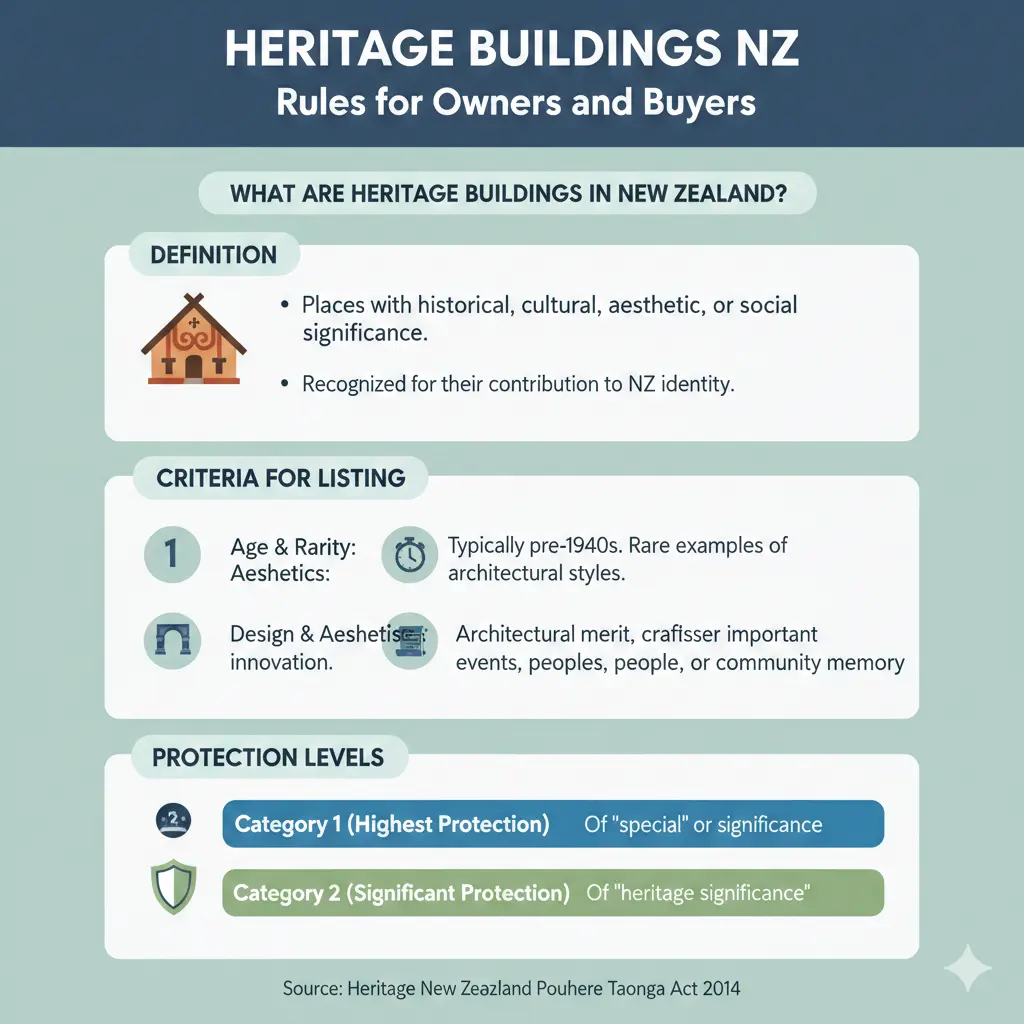
Heritage buildings are structures of historic, cultural, architectural, or archaeological significance, protected under local district plans, the Resource Management Act 1991 (RMA), and the Heritage New Zealand Pouhere Taonga Act 2014. They might be grand Victorian villas in Wellington or modest farm sheds in Canterbury—anything that tells our story.
Protection levels vary: some are on Heritage New Zealand's Rārangi Kōrero (the New Zealand Heritage List), others in council schedules. Pre-1900 buildings often have archaeological status, meaning even ground disturbance requires authorisation.
How to Identify a Heritage Building
- Check your property file or council's district plan online—search for "heritage schedule".
- Use Heritage New Zealand's online database at heritage.org.nz to see if it's listed.
- For buyers, request a LIM (Land Information Memorandum) report, which flags heritage overlays.
- Look for plaques or covenants on the title via Land Information New Zealand (LINZ).
Pro tip: Before buying, hire a heritage consultant for a pre-purchase assessment. It's cheaper than discovering restrictions post-settlement.
Key Laws Governing Heritage Buildings
The main legislation includes the RMA for planning controls and the Heritage New Zealand Pouhere Taonga Act for listings and covenants. Local councils enforce rules through district plans, often requiring resource consents for alterations.
In 2026, ongoing RMA reforms aim to streamline consents, focusing protection on "places of genuine heritage value" while allowing more flexibility for homes—like adding storeys or renovating without full consents. Councils can now more easily deschedule low-value listings, as pushed by Wellington City Council for sites like Gordon Wilson Flats.
Resource Management Act (RMA) and Recent Reforms
Under the RMA, heritage schedules in district plans restrict demolition, alterations, additions, and subdivisions. The 2025 Resource Management Amendment Bill No. 2 introduced changes to "better manage outcomes for historic heritage," enabling councils to remove over-listed buildings via resolution.
These reforms address owner frustrations: lengthy consents, high costs, and barriers to housing development. By 2026, standardised national zones simplify rules on height, coverage, and noise, making nationwide house plans viable.
Rules for Owners of Heritage Buildings
As an owner, you're steward of a public taonga, but you retain rights to use and enjoy it—provided you protect its values.
Daily Maintenance and Repairs
Like-for-like repairs (e.g., replacing rotten weatherboards with matching timber) often don't need consent if they don't alter heritage fabric. Interior work is usually exempt unless it affects listed features or structure.
- Earthworks, signage, or subdivisions always trigger council checks.
- For archaeological sites (pre-1900), get Heritage New Zealand authorisation before digging—it's illegal otherwise.
Renovations, Additions, and Upgrades
Major changes require resource consent. Engage experienced contractors familiar with heritage work; they know how to meet council standards without compromising authenticity.
| Activity | Consent Needed? | Tips |
|---|---|---|
| Repair roof with original materials | Usually no | Document with photos for records. |
| Add a modern extension | Yes, resource consent | Prove minimal impact on heritage values. |
| Demolition | Yes, often contested | Explore alternatives like relocation first. |
| Structural strengthening (e.g., earthquake-prone) | Possibly, if visible | Dunedin advocates for flexible laws here. |
Always pre-consult your council—many offer free heritage advisory sessions.
Heritage Covenants Explained
A covenant is a binding agreement with Heritage New Zealand, registered on your title, outlining protection measures. It covers homes, farms, or wāhi tapu areas—not just listed places.
You can live in, maintain, and repair covenanted buildings, but need approval for subdivisions, additions, or relocations. Destruction is prohibited.
Covenants are usually perpetual but can be time-limited or removed in rare cases.
Rules for Buyers of Heritage Buildings
Heritage status can boost value (character homes sell premiums in Auckland) but adds compliance costs. Due diligence is non-negotiable.
Pre-Purchase Checks
- Review the LIM and PIM (Project Information Memorandum) for overlays.
- Search Heritage New Zealand's list and covenant register.
- Get a building report noting earthquake-prone status—many pre-1970s heritage buildings qualify.
- Calculate ongoing costs: consents average $5,000–$20,000, plus specialist fees.
Ask sellers for consent histories. In 2026, reforms mean fewer low-value listings, potentially easing future sales.
Financing and Insurance
Banks like heritage premiums but factor in repair costs. KiwiSaver withdrawals for heritage homes may qualify under first-home rules, but check IRD. Insurers often exclude heritage fabric—opt for specialists like Vero or AMI Heritage policies.
Disclaimer: This isn't financial advice. Consult a lawyer, accountant, or heritage expert for your situation.
2026 Updates: What's Changing for Heritage Owners and Buyers?
Government reforms mark a "once-in-a-generation shift," consolidating 1,100+ council rules into national zones. Key wins:
- Easier renovations, decks, garages, and additions without consents.
- Councils empowered to deschedule dubious listings, freeing development.
- Focus on high-value sites, balancing property rights with preservation.
Monitor environment.govt.nz for Phase 3 RMA changes, expected to refine heritage further.
Practical Tips for Compliance
- Join Heritage New Zealand for free advice and grants.
- Use qualified heritage architects—find via nzia.co.nz.
- Budget 20–30% extra for consents in renovations.
- Document everything: photos, invoices—vital for insurance or sales.
- For earthquake work, leverage government funds via EQC or MBIE programmes.
Next Steps for Owners and Buyers
Start by checking your property's status today—visit your council website or heritage.org.nz. If buying, build heritage checks into your offer conditions. For owners, plan upgrades with a pre-application meeting to save time and money.
These rules preserve our Kiwi identity while letting you live practically. Stay informed on reforms, and consult professionals to navigate confidently. Your heritage building could be a legacy worth protecting.
Disclaimer: Regulations evolve; this reflects 2026 info. Seek advice from qualified experts, councils, or Heritage New Zealand for your property.
Frequently Asked Questions
Sources & References
-
1
Govt reveals big consenting reforms, 'once-in-a-generation shift' — www.1news.co.nz
-
2
Better managing outcomes for historic heritage (PDF) — environment.govt.nz
-
3
Heritage Covenants - Pouhere Taonga — www.heritage.org.nz
-
4
An Essential Guide for Heritage Restorations — qbsconstruction.co.nz
-
5
What are my legal requirements? - Heritage New Zealand — www.heritage.org.nz
-
6
New Zealand Laws - UNESCO World Heritage Convention — whc.unesco.org
-
7
Williamhill Endorses Dunedin Efforts to Influence Legislation — www.hyundaiofanaheim.com
Related Articles

Working Multiple Jobs NZ: Tax and Legal Considerations
Juggling multiple jobs can boost your income, but it's crucial to understand the tax implications and legal requirements that come with working more than one role in Aotearoa. Whether you're a contrac...

Name Changes NZ: Legal Process and Costs
Considering a fresh start with a new name? Whether it's after marriage, divorce, or simply embracing a personal transformation, changing your name in New Zealand is straightforward but requires follow...

Holiday Home Tax Rules NZ: Private Use and Rental
Own a bach in Coromandel or a holiday home in Queenstown? You're not alone—many Kiwis cherish these escapes, but renting them out while enjoying personal use can trip you up on tax rules. Getting the...

Industry Bodies and Professional Associations NZ
Whether you're launching a business, advancing your career, or navigating financial regulations, industry bodies and professional associations in New Zealand offer invaluable support. These organisati...