Networking in NZ: How Kiwis Really Find Jobs

In New Zealand's evolving job market, your network might be worth more than your CV. While job boards and online applications remain part of the search process, the reality for most Kiwis is that pers...
Sarah covers personal finance, tax, and KiwiSaver topics for Lifetimes NZ. She focuses on making money management straightforward and practical for everyday Kiwis.
In New Zealand's evolving job market, your network might be worth more than your CV. While job boards and online applications remain part of the search process, the reality for most Kiwis is that personal connections, industry relationships, and strategic networking often open doors that traditional job hunting simply can't. With employment growth expected to be modest at 0.3% in 2026, standing out from the crowd requires more than just applying online—it requires building genuine professional relationships that create opportunities before they're even advertised.
Why Networking Matters More in 2026
New Zealand's labour market has shifted significantly. Job ads remain 20-30% below 2022 peaks, and competitive cities like Auckland and Wellington are seeing 100-200+ applications per role. This means the traditional approach of scrolling job boards and submitting applications is increasingly ineffective. Employers are becoming more selective, and many positions are filled through referrals and personal recommendations before they're ever posted publicly.
The current hiring environment also favours candidates who can demonstrate relevance and readiness. As hiring teams process heavier application pipelines, a personal introduction from a trusted contact can be the difference between your application getting noticed or lost in the noise. Networking isn't just about finding opportunities—it's about positioning yourself as a credible, connected professional in your field.
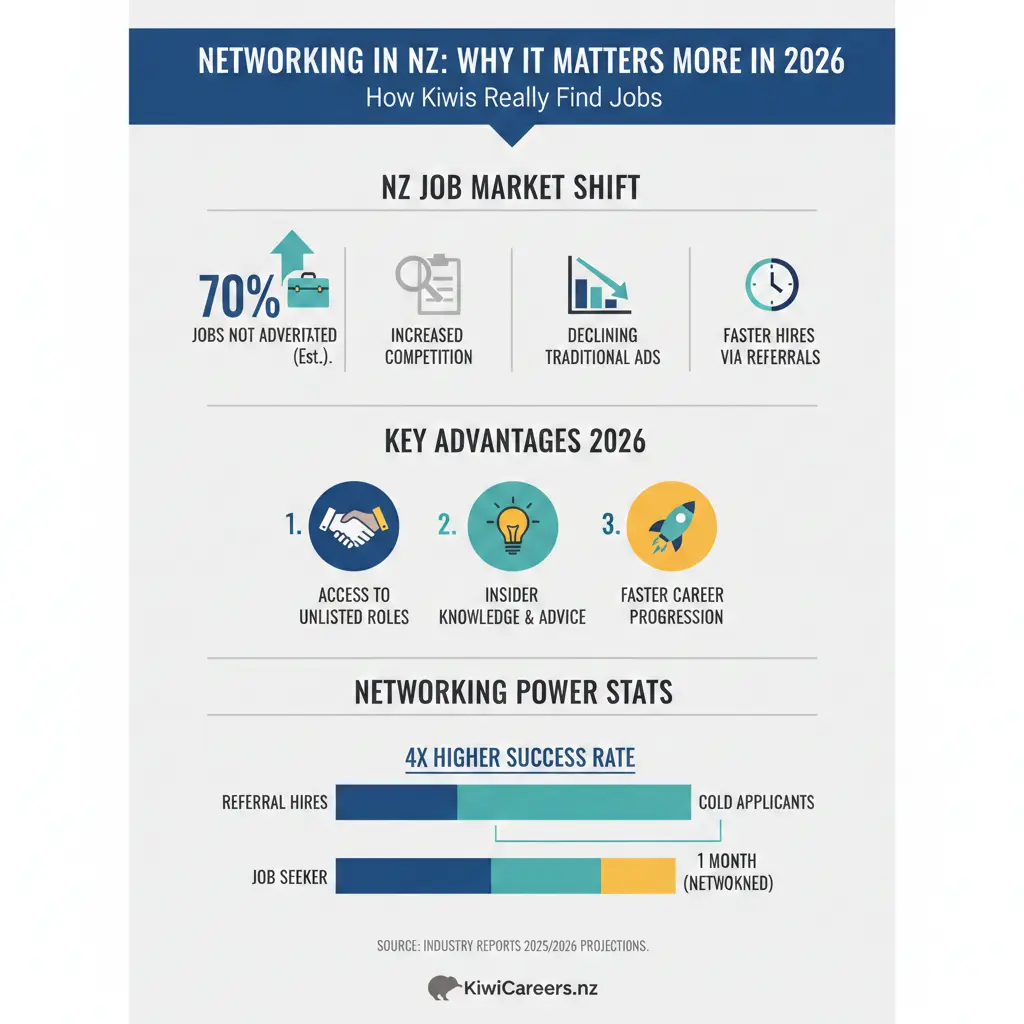
How Kiwis Are Actually Finding Jobs Right Now
Leveraging Professional Networks
The most effective job search strategy in 2026 involves activating your professional network early and often. This includes colleagues from previous roles, industry contacts, mentors, and professional associations specific to your field. In New Zealand, many industries have active professional bodies—whether you're in IT, healthcare, construction, or finance—and these organisations often host events, webinars, and networking sessions where genuine connections happen.
For sectors with persistent skill shortages—including healthcare, construction trades, engineering, education, and agriculture—industry networks are particularly valuable. These fields often rely on word-of-mouth recommendations and professional referrals because the demand for skilled workers remains high despite the broader economic slowdown.
Strategic Use of LinkedIn and Online Platforms
While networking is often thought of as in-person, the reality for Kiwis in 2026 is that digital networking is equally important. LinkedIn has become a professional necessity, not an optional extra. Rather than passively uploading your CV, successful job seekers are actively engaging with industry content, connecting with hiring managers, and participating in relevant professional discussions.
The key difference between effective and ineffective online networking is intentionality. Following companies you're interested in, commenting thoughtfully on industry posts, and reaching out to connections with genuine interest in their work creates visibility and demonstrates engagement. When a role becomes available, you're already on the radar.
Attending Industry Events and Conferences
New Zealand has a vibrant events calendar across major sectors. From tech conferences in Auckland to construction industry forums in Christchurch, these gatherings create natural opportunities to meet hiring managers, team leads, and colleagues in your field. The benefit of in-person networking is that it creates memorable interactions—people remember conversations far more than they remember resumes.
Many of these events are now hybrid, meaning you can attend virtually if travel isn't practical. This is particularly valuable for Kiwis in smaller regions or those balancing work and job searching.
Building Your Networking Strategy
Start With Your Existing Network
Before reaching out to strangers, reconnect with people you already know. Former colleagues, university friends, family contacts, and previous managers can all be part of your job search strategy. A simple message—"I'm exploring new opportunities in [industry/role]—would you be open to a quick coffee or call to catch up?"—can reactivate dormant connections and often leads to introductions, advice, or direct opportunities.
Identify Target Organisations and Key Contacts
Rather than applying to dozens of roles, a more effective approach is identifying 10-15 organisations where you'd genuinely like to work. Research the hiring managers, team leads, and HR contacts at these companies. Follow them on LinkedIn, engage with their content, and look for genuine ways to connect. This targeted approach is far more effective than mass applications.
Develop Your Professional Story
Networking requires you to articulate clearly what you do, what you're looking for, and why you're valuable. This isn't about being salesy—it's about being clear. When someone asks what you do, can you explain it in a way that's interesting and memorable? Can you describe the type of role or organisation that excites you? Being able to communicate this concisely makes it easier for your network to help you.
Offer Value, Don't Just Ask
The most effective networkers are those who think about what they can offer others, not just what they need. This might be sharing relevant articles, making introductions between contacts, offering advice based on your expertise, or simply being genuinely interested in someone else's work. When you approach networking as relationship-building rather than transactional asking, people are far more willing to help.
Sector-Specific Networking Opportunities
Different industries have different networking norms and opportunities. Here's what's particularly relevant in high-demand sectors for 2026:
- Healthcare: Nursing, general practice, and allied health roles remain in high demand. Professional bodies like the Nursing Council and Health and Disability Services (Complaints) Commissioner host events and provide networking opportunities. Hospital and DHB networks are also valuable.
- IT and Technology: Demand for AI-related skills has surged, especially in IT, marketing, and strategy. Tech meetups, coding communities, and professional associations like the Institute of IT Professionals (IITP) provide regular networking opportunities across major cities.
- Construction and Trades: With ongoing skill shortages, construction industry associations and trade-specific groups are active. These sectors often rely heavily on personal recommendations and established relationships.
- Finance and Professional Services: These sectors are seeing growth in 2026, and professional bodies, industry conferences, and alumni networks are strong networking channels.
- Education: Teachers and educators remain in demand. Professional teaching associations, school networks, and educational conferences provide regular opportunities to connect.
Regional Networking Considerations
New Zealand's labour market recovery is uneven across regions. If you're job searching in Auckland, you'll face more competition but also more opportunities and events. Wellington's job market has been shaped by public sector contraction, but recovery is beginning. Canterbury and parts of the South Island are showing signs of lift, and these regions may have less competition but also fewer total opportunities.
Consider whether your network is concentrated in one region or spread across the country. If you're open to relocating, expanding your network to other regions early can create opportunities before you're actively searching in that area.
Practical Networking Actions You Can Take This Week
- Update your LinkedIn profile with a clear, professional photo and a headline that describes what you do and what you're looking for
- Identify 5-10 people from your existing network and reach out for a catch-up conversation
- Research 10-15 target organisations and follow their hiring managers on LinkedIn
- Find one industry event, webinar, or professional association meeting happening in the next month and register
- Join relevant online communities or forums in your industry (Reddit, Slack groups, professional forums)
- Prepare your 30-second professional summary—what you do, what you're looking for, and why you're good at it
The Bottom Line
In 2026, networking isn't a luxury for Kiwi job seekers—it's a necessity. With job ads remaining below pre-COVID levels and competition intensifying, the candidates who succeed are those who've invested in genuine professional relationships. Whether you're in a high-demand field like healthcare or IT, or competing in a more saturated market, your network creates opportunities that job boards simply can't.
Start this week by reconnecting with one person from your past, updating your LinkedIn profile, and identifying one networking opportunity in your industry. Networking is a long-term investment in your career, but it's one that consistently delivers results for Kiwis across every sector and region.
Frequently Asked Questions
Sources & References
-
1
New Zealand hiring market: Workforce outlook for 2026 — www.talentinternational.com
-
2
Job Search Strategies for 2026 — www.careersolutions.co.nz
-
3
The 2025 list of most in demand jobs in New Zealand — www.pssremovals.com
-
4
The jobs that will be in highest demand for the year ahead — www.hays.net.nz
- 5
Related Articles

Industry Bodies and Professional Associations NZ
Whether you're launching a business, advancing your career, or navigating financial regulations, industry bodies and professional associations in New Zealand offer invaluable support. These organisati...

Emergency Benefit NZ: When You Have No Other Options
When you're struggling financially and don't qualify for other benefits, the Emergency Benefit might be your lifeline. It's a discretionary payment designed for Kiwis in genuine hardship who've exhaus...

Unpaid Internships NZ: Are They Legal?
Unpaid internships are a common pathway for students and graduates to gain work experience in New Zealand, but there's often confusion about whether they're actually legal. The short answer is: unpaid...

Estate Administration NZ: Managing Someone's Affairs After Death
Losing a loved one is one of life's toughest challenges, and stepping in to manage their estate can feel overwhelming. In New Zealand, estate administration—the process of handling someone's affairs a...