Rent Increases NZ: Rules Landlords Must Follow
Navigating rent increases as a landlord in New Zealand can feel like walking a tightrope—get it right, and you maintain healthy cash flow; get it wrong, and you're facing disputes or Tenancy Tribunal...
The Lifetimes NZ editorial team curates, fact-checks, and updates guides on personal finance, property, health, immigration, legal, business, and lifestyle topics relevant to Lifetimes NZ readers. Articles are produced with AI assistance and reviewed by the editorial team before publication.
Navigating rent increases as a landlord in New Zealand can feel like walking a tightrope—get it right, and you maintain healthy cash flow; get it wrong, and you're facing disputes or Tenancy Tribunal headaches. With the rental market shifting in 2026, understanding the rules is more crucial than ever for Kiwis balancing investment returns and fair tenancy practices.
Whether you're a first-time landlord in Auckland or managing multiple properties in Christchurch, this guide breaks down the Rent Increases NZ: Rules Landlords Must Follow. We'll cover the latest Residential Tenancies Act (RTA) requirements, notice periods, exceptions, and practical tips to keep your tenancies compliant and drama-free.
Understanding the Basics of Rent Increases in New Zealand
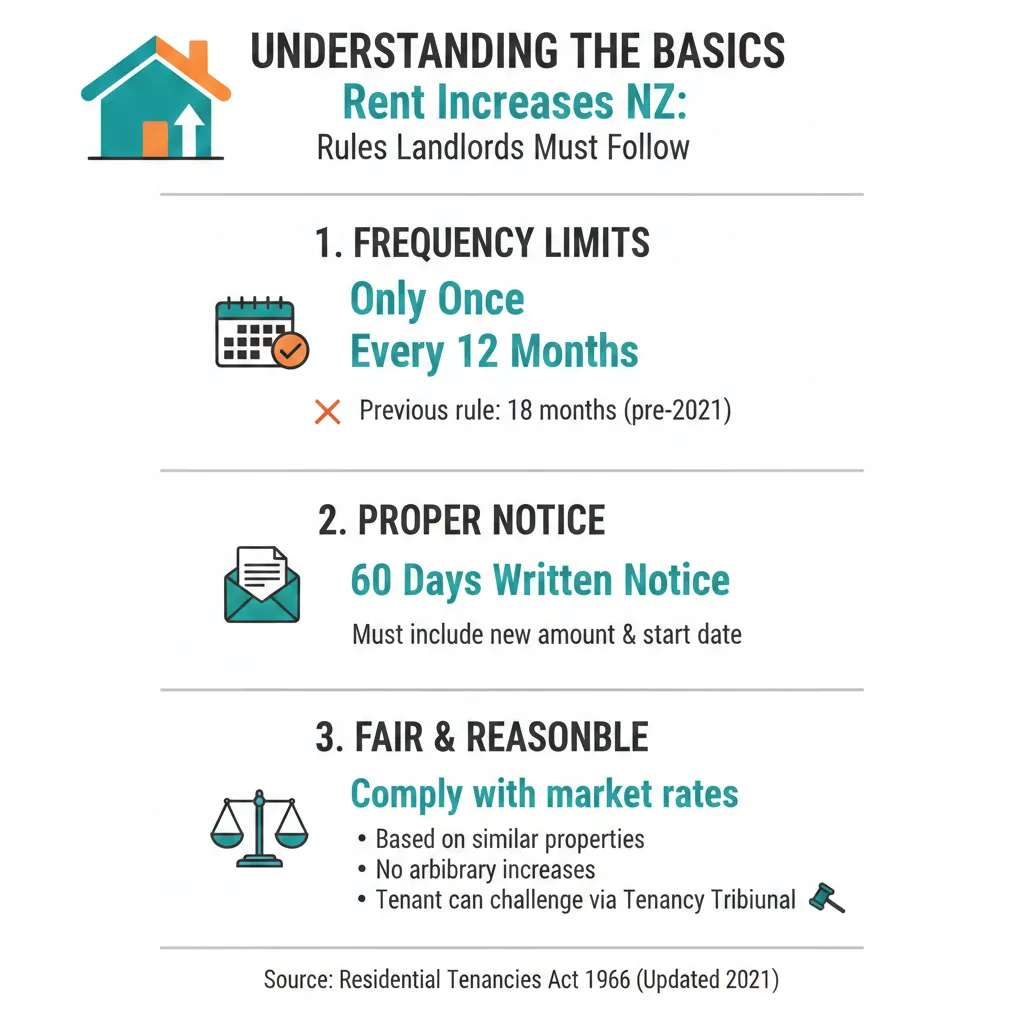
Rent increases are a standard part of property investment, but they're tightly regulated to protect tenants. The core rule under the RTA is straightforward: landlords can only raise rent once every 12 months. This change, effective from 12 August 2020, replaced the previous 180-day limit, giving tenants more predictability.
For both fixed-term and periodic tenancies, increases can't happen until 12 months after the tenancy start date or the last increase—whichever is later. Fixed-term agreements can include clauses allowing increases during the term, but only if explicitly stated and compliant.
Who Does This Apply To?
- Private landlords: Standard residential properties across NZ.
- Boarding houses: Slightly different notice periods apply (more on this below).
- Special cases like RSE worker accommodation: From April 2026, new caps (NZD 150–211 weekly) based on quality standards kick in for Recognised Seasonal Employer setups.
These rules ensure fairness, but they don't cap the increase amount—market rates still guide what you can charge, provided it's reasonable.
Notice Periods: The 60-Day Rule Landlords Can't Ignore
Timing is everything. Landlords must provide at least 60 days' written notice for standard tenancies, or 28 days for boarding houses. This notice can be issued before the 12-month period ends, but the increase only takes effect after it.
Pro tip: Use the official Tenancy Services notice form to avoid disputes. Email or post it with proof of delivery—Tenancy Tribunal cases often hinge on this.
How to Calculate Your Notice Correctly
- Check the last increase date or tenancy start (must be 12+ months ago).
- Issue written notice stating the new rent, effective date, and reasons if applicable.
- Ensure the effective date is at least 60 days from notice delivery.
Fail here, and tenants can challenge it at the Tribunal, potentially delaying your increase or voiding it entirely.
Exceptions: When Can You Increase Rent More Often?
Strict 12-month rules have carve-outs for value-adding changes. You and your tenant can agree to an earlier increase if you've:
- Improved the property (e.g., adding a garage for off-street parking).
- Upgraded facilities/services (e.g., new pool in an apartment block—repairs don't count).
- Changed the agreement to benefit tenants (e.g., allowing an extra flatmate).
If tenants won't agree, apply to the Tenancy Tribunal. They can approve if you've proven improvements or face unforeseen expenses since the last hike. Tribunal decisions don't reset your 12-month clock.
"General or necessary repairs are not considered improvements." — Tenancy Services guidance on qualifying upgrades.
Rent Increase Caps and Market Trends in 2026
No nationwide cap exists on increase amounts, unlike some overseas models (e.g., UK's upcoming two-month notice under Renters’ Rights Act). Instead, NZ relies on market forces, but 2026 forecasts show variance:
- National softening: Wellington down 9.7% YoY, Auckland 2.5%, due to more listings.
- Regional rises: Canterbury up 3.1% to $578/week, driven by jobs and uni enrolments.
- Outlook: Moderate to strong increases expected as supply tightens and demand grows with economic recovery.
For RSE accommodation, strict caps from April 2026 (NZD 150–211/week) tie to quality like bedroom sharing and bathroom access. Employers can only recover actual costs.
What's a 'Reasonable' Increase?
Base it on local medians from TradeMe Property or Tenancy Services data. A 5–10% hike might fly in hot Canterbury markets, but tenants in cooling Auckland have leverage to negotiate down. Housing Minister Chris Bishop encourages tenants to haggle—many landlords relist lower when they walk.
Recent RTA Changes Impacting Landlords
2026 builds on post-2020 tweaks:
- No-cause terminations: Back for periodic tenancies (90 days' notice).
- Pets: Separate pet bonds (up to 2 weeks' rent) for more control.
- Freeze lift: Ended 2020, but reminder: always 12-month spacing now.
Stay updated via Tenancy.govt.nz—non-compliance risks fines or Tribunal orders.
Practical Tips for Compliant Rent Increases
Make it smooth for everyone:
Step-by-Step Process
- Review tenancy agreement and history: Confirm 12-month eligibility.
- Research market rent: Use Stats NZ or REINZ data for justification.
- Draft notice: Include old/new rent, effective date, payment method.
- Discuss first: Chat with tenants—many agree if communicated well.
- Document everything: Keep records for Tribunal if needed.
- Adjust payments: Update direct debits post-effective date.
Common Pitfalls to Avoid
- Verbal notices—must be written.
- Ignoring boarding house rules (28 days).
- Backdating increases—illegal.
- Not accounting for improvements properly.
For KiwiSaver-linked investors, factor tax implications: increased rent boosts taxable income, but claim deductions via IRD. Always consult a tax advisor.
Disclaimer: This isn't financial advice. Seek professional guidance from accountants, lawyers, or Tenancy Services for your situation.
Disputes: What Happens if Tenants Challenge Your Increase?
If tenants refuse payment or apply to the Tribunal, respond promptly. Tribunals prioritise RTA compliance—provide evidence of notice and market rates. Outcomes often favour landlords with solid paperwork, but excessive hikes can be reduced if deemed unfair.
Tenants can't withhold rent unilaterally; they must pay the original amount and let the Tribunal decide.
FAQ: Rent Increases NZ
How much notice do I need to give for a rent increase?
60 days for standard tenancies, 28 days for boarding houses. Written notice only.
Can I increase rent during a fixed-term tenancy?
Only if the agreement explicitly allows it, and still within 12-month rules.
Is there a maximum rent increase percentage in NZ?
No cap on amount, but it must be market-justified. RSE has specific weekly caps from April 2026.
What if I've renovated—can I raise rent sooner?
Yes, with tenant agreement or Tribunal approval for qualifying improvements.
Will rents rise across NZ in 2026?
Forecasts show tightening markets with moderate-strong increases, but regional dips persist (e.g., Wellington).
Where do I get the official rent increase notice form?
Download from Tenancy.govt.nz—free and compliant.
Next Steps for NZ Landlords
Review your tenancies now: check last increase dates and prep notices for eligible properties. Monitor local markets via TradeMe and Tenancy Services. For complex cases like RSE or disputes, contact Tenancy Services (0800 836 262) or a lawyer. Compliant increases protect your investment—stay informed, communicate openly, and keep records impeccable. Your portfolio will thank you.
Related Articles

Working Multiple Jobs NZ: Tax and Legal Considerations
Juggling multiple jobs can boost your income, but it's crucial to understand the tax implications and legal requirements that come with working more than one role in Aotearoa. Whether you're a contrac...

Name Changes NZ: Legal Process and Costs
Considering a fresh start with a new name? Whether it's after marriage, divorce, or simply embracing a personal transformation, changing your name in New Zealand is straightforward but requires follow...

Holiday Home Tax Rules NZ: Private Use and Rental
Own a bach in Coromandel or a holiday home in Queenstown? You're not alone—many Kiwis cherish these escapes, but renting them out while enjoying personal use can trip you up on tax rules. Getting the...

Industry Bodies and Professional Associations NZ
Whether you're launching a business, advancing your career, or navigating financial regulations, industry bodies and professional associations in New Zealand offer invaluable support. These organisati...