Workplace Health and Safety for Workers: Know Your Rights
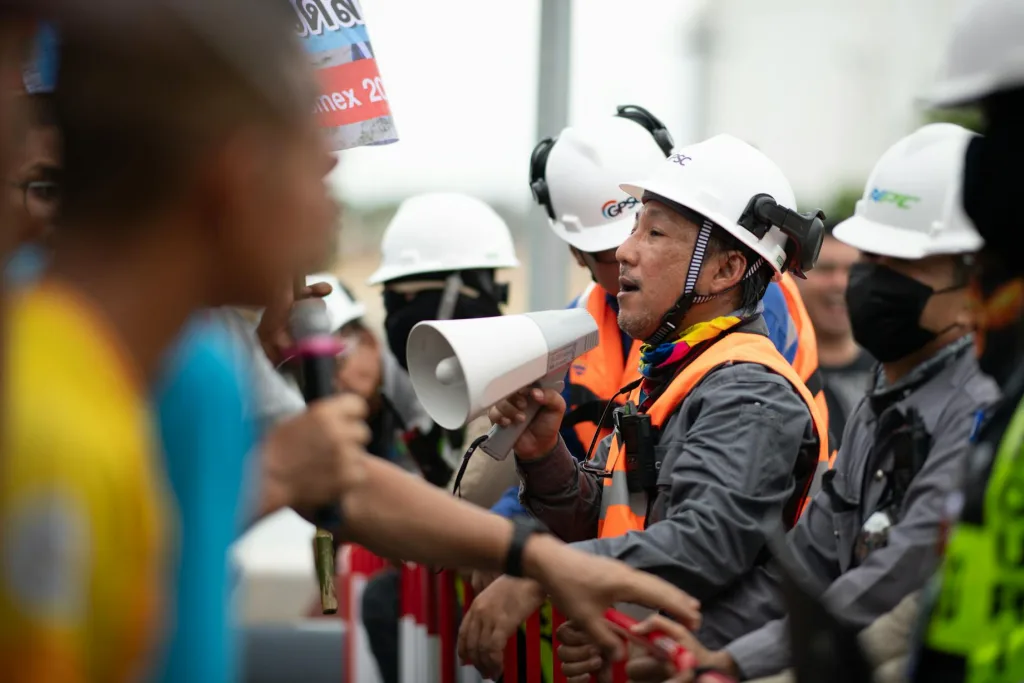
Every year, thousands of Kiwis head to work expecting a safe day, yet workplace incidents claim lives and cause serious injuries. Knowing your rights under New Zealand's evolving health and safety law...
Sarah covers personal finance, tax, and KiwiSaver topics for Lifetimes NZ. She focuses on making money management straightforward and practical for everyday Kiwis.
Every year, thousands of Kiwis head to work expecting a safe day, yet workplace incidents claim lives and cause serious injuries. Knowing your rights under New Zealand's evolving health and safety laws empowers you to protect yourself, hold employers accountable, and contribute to safer workplaces across the country.
As workers, you're at the heart of the Health and Safety at Work Act 2015 (HSWA), which places primary responsibility on persons conducting a business or undertaking (PCBUs)—that's your employer or business operator—to ensure your health and safety so far as is reasonably practicable. Recent reforms via the Health and Safety at Work Amendment Bill, introduced on 9 February 2026 and passing its first reading, aim to sharpen focus on critical risks while clarifying duties, but your core rights remain robust.
Understanding Your Fundamental Rights Under HSWA
The HSWA is New Zealand's cornerstone legislation for workplace health and safety, designed to prevent harm by requiring PCBUs to eliminate risks where possible or minimise them if elimination isn't feasible. For workers, this translates to clear entitlements that apply regardless of your role, industry, or business size.
The Right to a Safe Working Environment
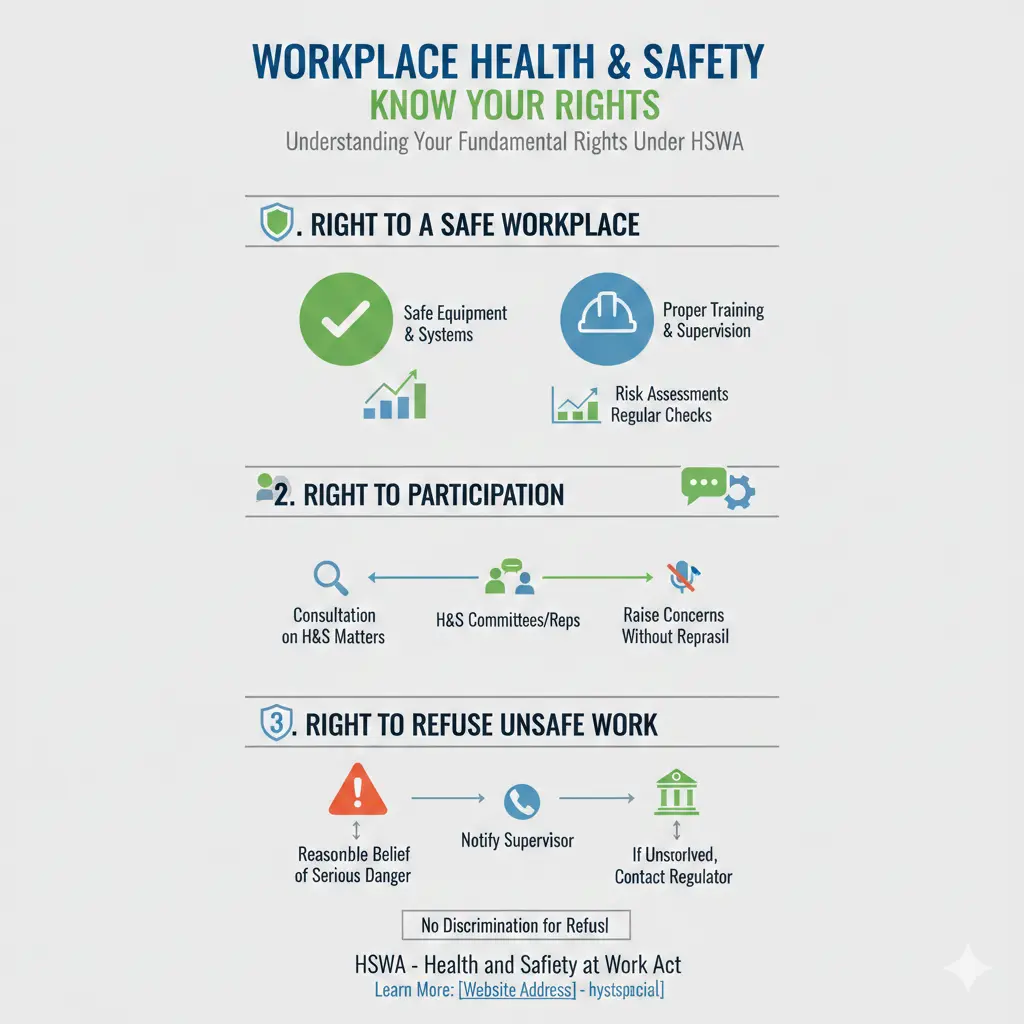
You have the right to work in an environment free from risks to your health and safety. PCBUs must identify hazards, assess risks, and implement controls—prioritising critical risks like those likely to cause death or serious injury under the new amendments. This includes physical hazards (e.g., machinery in manufacturing) and psychosocial ones like stress or bullying, which WorkSafe NZ increasingly emphasises.
In practice, this means your employer must provide safe equipment, proper training, and adequate supervision. For example, in high-risk sectors like construction or forestry—where Kiwis face elevated incident rates—controls must be rigorous.
Right to Information and Training
Employers must consult with workers on health and safety matters and provide all necessary information, instruction, training, and supervision to protect you. If you're new to a role, such as operating heavy machinery on a Kiwi farm, you can't be thrown in without proper induction.
- Ask for risk assessments specific to your tasks.
- Request training records to confirm compliance.
- Participate in worker health and safety committees if your workplace has 20+ employees.
Right to Refuse Unsafe Work
A cornerstone right: you can refuse work if you reasonably believe it presents a serious risk to your health and safety. Notify your supervisor immediately, and they must investigate without retaliating. This is crucial in dynamic environments like logistics or hospitality, where rushed tasks can lead to slips or strains.
"The Bill will require WorkSafe to move from an approach of expecting everyone to address every possible risk, towards one in which WorkSafe provides clear guidance on critical risks."
Key Changes from the 2026 Health and Safety Amendment Bill
The Amendment Bill, championed by Workplace Relations and Safety Minister Brooke van Velden, passed its first reading in early 2026, marking the biggest update to HSWA since 2015. While aimed at reducing red tape for businesses—97% of which are small (under 20 employees)—these changes sharpen worker protections on high-impact areas.
Focus on Critical Risks
PCBUs must now explicitly prioritise critical risks—those posing death or notifiable harm—like falls from height, vehicle incidents, or exposure to hazardous substances. Small, low-risk businesses get a carve-out, managing only these plus basic welfare facilities, easing burdens without diluting your rights in riskier settings.
For you as a worker, this means more resources directed to real threats. Monitor if your employer allocates greater time, budget, and reviews to these—failure could breach duties.
Strengthened Approved Codes of Practice (ACOPs)
ACOPs become "safe harbours": complying with sector-specific ones (e.g., for retail or agriculture) proves due diligence. Non-regulators can now propose them, ensuring up-to-date, practical guidance. Check WorkSafe's site for your industry's ACOP and confirm your employer's adherence.
Clarified Officer Duties and Notifications
Officers (directors, executives) focus on governance due diligence, not day-to-day operations, with a closed list of duties. Notification rules expand with examples like serious burns or spinal injuries, reducing ambiguity when incidents occur.
These tweaks increase certainty, as Minister van Velden notes: "The changes... will make it easier to run a business... helping to ease costs of compliance and improve safety outcomes."
Impacts on Small Businesses and Low-Risk Work
With most Kiwi businesses small, reforms exempt them from broad duties, focusing on critical risks. If you work in a low-risk office or cafe, expect streamlined processes; in high-risk fields like mining, standards toughen.
Critics argue changes might confuse priorities, potentially not enhancing safety. Stay vigilant—your rights persist.
Practical Steps: How to Exercise Your Rights Daily
Empowerment comes from action. Here's how Kiwis can safeguard themselves amid 2026 reforms.
Report Hazards and Incidents Promptly
Spot a frayed cable or overloaded shelf? Report it immediately. For serious events (e.g., hospitalisation), PCBUs notify WorkSafe within specified times—now clearer under the Bill. Use your workplace's system or contact WorkSafe directly at 0800 030 040.
- Document the issue with photos and details.
- Follow up in writing.
- If ignored, escalate to your HSW rep or WorkSafe.
Participate in Consultations
HSWA mandates worker involvement. Join safety meetings, review risk registers, and suggest improvements. In unionised workplaces, leverage collective agreements.
Know When to Seek External Help
If rights are breached, contact:
- WorkSafe NZ: Free advice, inspections (worksafe.govt.nz).
- MBIE: Employment disputes (mbie.govt.nz).
- Union or Community Law Centre for representation.
- ACC: For injury claims, ensuring cover without fault (acc.co.nz).
For psychosocial risks like burnout—rising post-reforms—demand assessments.
Financial Implications: Linking Safety to Your Wallet
Workplace safety ties directly to money matters. Injuries trigger ACC claims, but preventable ones hit your KiwiSaver through lost wages or permanent impairment. Reforms may cut compliance costs, potentially lowering business levies and benefiting wages indirectly.
Tip: Check your employment agreement for safety clauses. If injured, file ACC promptly—2026 thresholds remain: weekly compensation at 80% of average earnings (capped). Consult IRD if safety-related deductions apply, but always seek professional advice.
Disclaimer: This is general information. Consult a lawyer, accountant, or advisor for personalised financial or legal guidance.
Common Challenges and How to Overcome Them
Kiwis face hurdles like reluctant employers or reform confusion. In agriculture—New Zealand's backbone—quad bike rollovers are critical risks demanding strict controls.
- Challenge: Pressure to work unsafely. Invoke your refusal right; document refusals.
- Challenge: Small business shortcuts. Remind them of critical risk duties.
- Challenge: Mental health oversights. Push for fatigue policies.
Stay Safe and Informed: Your Next Steps
Download WorkSafe's free app for hazard reporting, review your workplace's safety policy today, and bookmark worksafe.govt.nz for updates on the Amendment Bill's progress. By knowing and asserting your rights, you help build safer Kiwi workplaces—one informed step at a time. If concerns arise, reach out to WorkSafe or a trusted advisor promptly.
Frequently Asked Questions
Sources & References
-
1
Health and Safety at Work Act reform — russellmcveagh.com — www.russellmcveagh.com
-
2
Health & Safety Bill Clears First Reading Hurdle — miragenews.com — www.miragenews.com
- 3
- 4
-
5
Key NZ Workplace Changes to Prepare for Before 2026 — employmenthero.com — employmenthero.com
-
6
Health and Safety Amendment Bill 2026 — advancedsafety.co.nz — www.advancedsafety.co.nz
-
7
Milestone health and safety bill passes first reading — beehive.govt.nz — www.beehive.govt.nz
-
8
Proposed Workplace Health & Safety changes — retail.kiwi — retail.kiwi
-
9
Reforms to work health and safety law pass first reading — hrmonline.co.nz — www.hrmonline.co.nz
-
10
Health and safety reform — mbie.govt.nz — www.mbie.govt.nz
Related Articles

Industry Bodies and Professional Associations NZ
Whether you're launching a business, advancing your career, or navigating financial regulations, industry bodies and professional associations in New Zealand offer invaluable support. These organisati...

Emergency Benefit NZ: When You Have No Other Options
When you're struggling financially and don't qualify for other benefits, the Emergency Benefit might be your lifeline. It's a discretionary payment designed for Kiwis in genuine hardship who've exhaus...

Unpaid Internships NZ: Are They Legal?
Unpaid internships are a common pathway for students and graduates to gain work experience in New Zealand, but there's often confusion about whether they're actually legal. The short answer is: unpaid...

Estate Administration NZ: Managing Someone's Affairs After Death
Losing a loved one is one of life's toughest challenges, and stepping in to manage their estate can feel overwhelming. In New Zealand, estate administration—the process of handling someone's affairs a...