The Best NZ-Based Online Communities for Support and Advice

Whether you're navigating parenthood, managing a health condition, or simply looking for people who understand what you're going through, online communities can be a lifeline. For Kiwis, there's a gro...
Aroha writes about parenting, education, and family life in Aotearoa. She covers school choices, childcare, family benefits, and practical advice for raising a family in New Zealand.
Whether you're navigating parenthood, managing a health condition, or simply looking for people who understand what you're going through, online communities can be a lifeline. For Kiwis, there's a growing network of New Zealand-based support groups and online communities that offer genuine connection, practical advice, and emotional support—often completely free. This guide walks you through some of the best options available and how to find the right community for your needs.
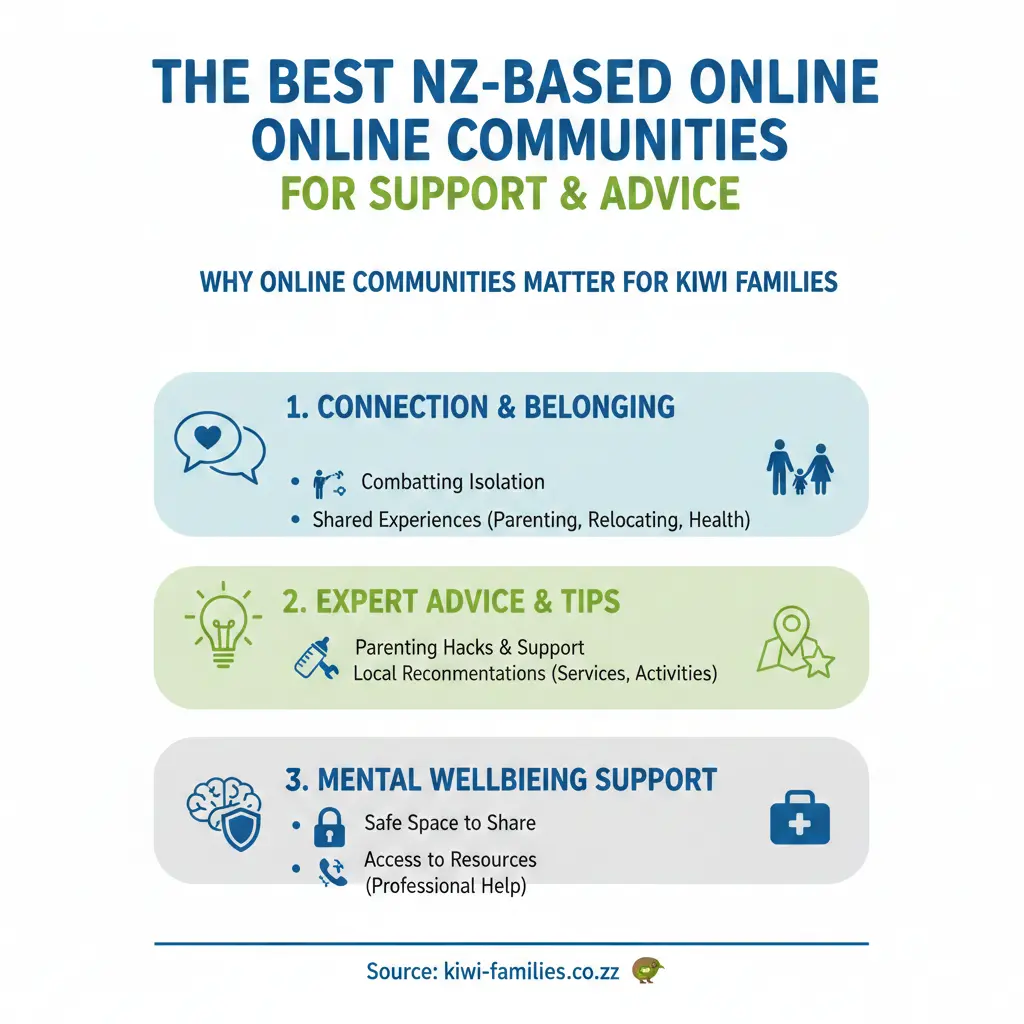
Why Online Communities Matter for Kiwi Families
Online support communities fill a crucial gap in our mental health and wellbeing landscape. They provide access to peer support regardless of where you live in Aotearoa—whether you're in central Auckland or a small town in Southland—and they're available 24/7 when you need them most. For parents and whānau dealing with specific health conditions, grief, or life challenges, connecting with others who've walked the same path can reduce isolation and provide practical strategies you won't find in a GP's office.
New Zealand's health and community sector increasingly recognises the value of peer-led support. Many of our local organisations now combine professional facilitation with community-driven spaces, creating environments where people feel genuinely heard.
Health-Specific Support Communities
ME/CFS, Long COVID, and Fibromyalgia Support
If you or a family member lives with ME/CFS (Myalgic Encephalomyelitis/Chronic Fatigue Syndrome), Long COVID, or fibromyalgia, ME Support and CCI Support offer comprehensive online and face-to-face groups across New Zealand. These organisations run monthly online social groups alongside structured sessions with guest speakers, and they host regular in-person meetings in West and South Auckland, with bi-monthly gatherings in East and Central regions.
What makes these groups particularly valuable is their holistic approach. Beyond peer support meetings, they offer workshops on meditation, mindfulness, and restorative movement—all designed with the specific needs of people with these conditions in mind. There's also a dedicated supporters' workshop for whānau members who want to better understand and help their loved ones.
You can connect with ME Support by:
- Calling 0800 632 553
- Emailing [email protected]
- Joining their Facebook group: ME/CFS Support Group NZ (open to members from all over New Zealand)
Cancer Support Groups
For those navigating a cancer diagnosis, New Zealand has dedicated support networks. The Ovarian Cancer Foundation NZ runs monthly counsellor-facilitated peer-support groups entirely online via Zoom. These groups are small and personal—designed so you're not just another face in a crowd. Each group is facilitated by an experienced counsellor, and there's no pressure to attend every month; you join when it suits you.
If you're new to Zoom or don't have internet access, the foundation can help—they provide guides for first-time users and phone dial-in options. Before joining, you can book a 15-minute call with the facilitator to ask questions and see if the group feels right for you.
The Brain Tumour Support NZ takes a similarly comprehensive approach, offering five monthly online support groups via Zoom for both patients and caregivers. They also maintain active Facebook communities where members can connect, ask questions, and share experiences any time of day or night in a moderated, safe space.
Mental Health and Wellbeing Communities
General Mental Health Support
The Mental Health Foundation maintains a searchable directory of free mental health support groups organised by region and type of support. This is your go-to resource if you're looking for something specific in your area or online.
New Zealand is also strengthening its crisis support infrastructure. The government is working towards a national mental health crisis system, with 24/7 phone-based crisis support and consistent pathways being prioritised. Peer support and kaupapa Māori services are already demonstrating what effective crisis responses look like across the country.
Condition-Specific and Specialist Groups
Beyond the major organisations listed above, New Zealand has support communities for virtually every health condition and life circumstance. Many groups offer:
- Online social groups for connection and friendship
- Structured support groups with professional facilitation
- Specialist groups (men's groups, neurodiversity groups, LGBTQ+ rainbow groups, groups for people "doing it alone")
- Workshops and educational sessions
- Face-to-face meetups in major centres
The key is knowing where to look. Start with your condition's national organisation (a quick Google search for "[your condition] support New Zealand" usually works), or contact the Mental Health Foundation's directory if you're seeking general mental health support.
Finding the Right Community for You
Start With Your Needs
Ask yourself what you're really looking for:
- Professional guidance? Look for groups facilitated by counsellors or health professionals.
- Peer connection? Community-led groups often feel more informal and friend-like.
- Flexibility? Online groups suit busy schedules and those in rural areas.
- Face-to-face connection? Many organisations now offer both options.
- Specific focus? Some groups cater to parents, supporters, or specific demographics.
Test the Waters
Most groups welcome visitors to one session before committing. You don't need to share your story or participate—you can simply listen and get a feel for whether the group's vibe suits you. Many organisations, like the Ovarian Cancer Foundation, actively encourage you to have an introductory chat before your first meeting.
Check Practical Details
Before joining, confirm:
- Meeting times and frequency
- Whether it's online (Zoom, Facebook) or face-to-face
- How to register or join
- Whether there are any costs (most are free, but it's worth checking)
- How the group handles privacy and confidentiality
The Benefits of Online Communities for Whānau
For New Zealand families, online communities offer distinct advantages:
- Accessibility: No travel required, particularly valuable for those with mobility issues or living outside major centres.
- Anonymity options: You can participate under a username if you prefer privacy.
- 24/7 availability: Facebook groups and forums mean support is available at 3 AM when anxiety strikes.
- Diverse perspectives: Connect with Kiwis from all regions and backgrounds.
- Cost-free: Most New Zealand support communities are completely free to join.
- Reduced isolation: Particularly important in rural Aotearoa where services may be sparse.
Safety and Wellbeing in Online Communities
When joining any online community, keep these safety principles in mind:
- Moderation matters: Choose groups that are actively moderated (most health-specific groups are).
- Privacy first: Don't share personal identifying information beyond what's necessary.
- Professional support: Online communities complement—not replace—professional mental health care. If you're in crisis, contact 1737 (call or text, free, 24/7).
- Respect boundaries: What's shared in the group stays in the group.
- Trust your instincts: If a community doesn't feel right, it's okay to leave and try another.
Next Steps: Getting Connected Today
If you've been feeling isolated or struggling to find people who truly understand your situation, an online community might be exactly what you need. The barrier to entry is genuinely low: most groups are free, accessible from your home, and genuinely welcoming to newcomers.
Here's how to get started:
- Identify your need: What support are you seeking? A specific health condition? General mental health? Parenting advice? Connection with others in a similar life situation?
- Search for relevant groups: Use the Mental Health Foundation directory, Google, or ask your GP for recommendations.
- Contact the organisation: Send an email or call to ask about upcoming meetings and how to join.
- Attend one meeting: No commitment required. See how it feels.
- Stay or move on: If it's right, keep attending. If not, try another group—there's genuinely something for everyone.
Remember: reaching out and seeking connection is a sign of strength, not weakness. Thousands of Kiwis are already in online communities, supporting each other through life's challenges. You deserve that support too.
Frequently Asked Questions
Sources & References
-
1
Support Groups and Organisations in New Zealand - ANZMES — anzmes.org.nz
-
2
Support Groups - Ovarian Cancer Foundation NZ — ovariancancerfoundation.org.nz
-
3
Online Support Groups - Brain Tumour Support NZ — www.braintumoursupport.org.nz
-
4
Call for a National Mental Health Crisis System - Te Hiringa Mahara — www.mhwc.govt.nz
-
5
Community Support Groups | Mental Health Foundation — mentalhealth.org.nz
Useful Tools
Related Articles

Screen Time Guidelines for Kiwi Kids
Ever caught your little one glued to a tablet, eyes wide and fingers flying? In Aotearoa, where Kiwi kids spend more screen time than most—up to 42 hours a week for teens—it's time to hit pause and re...

School Zones NZ: How They Work and Why They Matter
Choosing the right school for your tamariki can feel like navigating a map of coloured zones—literally. In Aotearoa, **school zones NZ** dictate where your child is guaranteed a spot, helping prevent...
Best Playgrounds in Christchurch: Family Guide
Christchurch has some of the best family playgrounds in Aotearoa, offering everything from award-winning attractions to hidden gems perfect for a weekend adventure. Whether you're looking for thrillin...

Kids Sports NZ: Costs and Options by Age
Getting your kids active in sports is one of the best gifts you can give them as a Kiwi parent—building fitness, teamwork, and lifelong habits. But with rising costs biting into household budgets, und...