How to Teach Kids About Money in NZ

Imagine your child confidently navigating KiwiSaver contributions, spotting a scam before it hits, or choosing between needs and wants at the supermarket. With New Zealand's new mandatory financial li...
Sarah covers personal finance, tax, and KiwiSaver topics for Lifetimes NZ. She focuses on making money management straightforward and practical for everyday Kiwis.
Imagine your child confidently navigating KiwiSaver contributions, spotting a scam before it hits, or choosing between needs and wants at the supermarket. With New Zealand's new mandatory financial literacy curriculum rolling out in schools from 2026, teaching kids about money has never been more timely—or easier for parents like us.
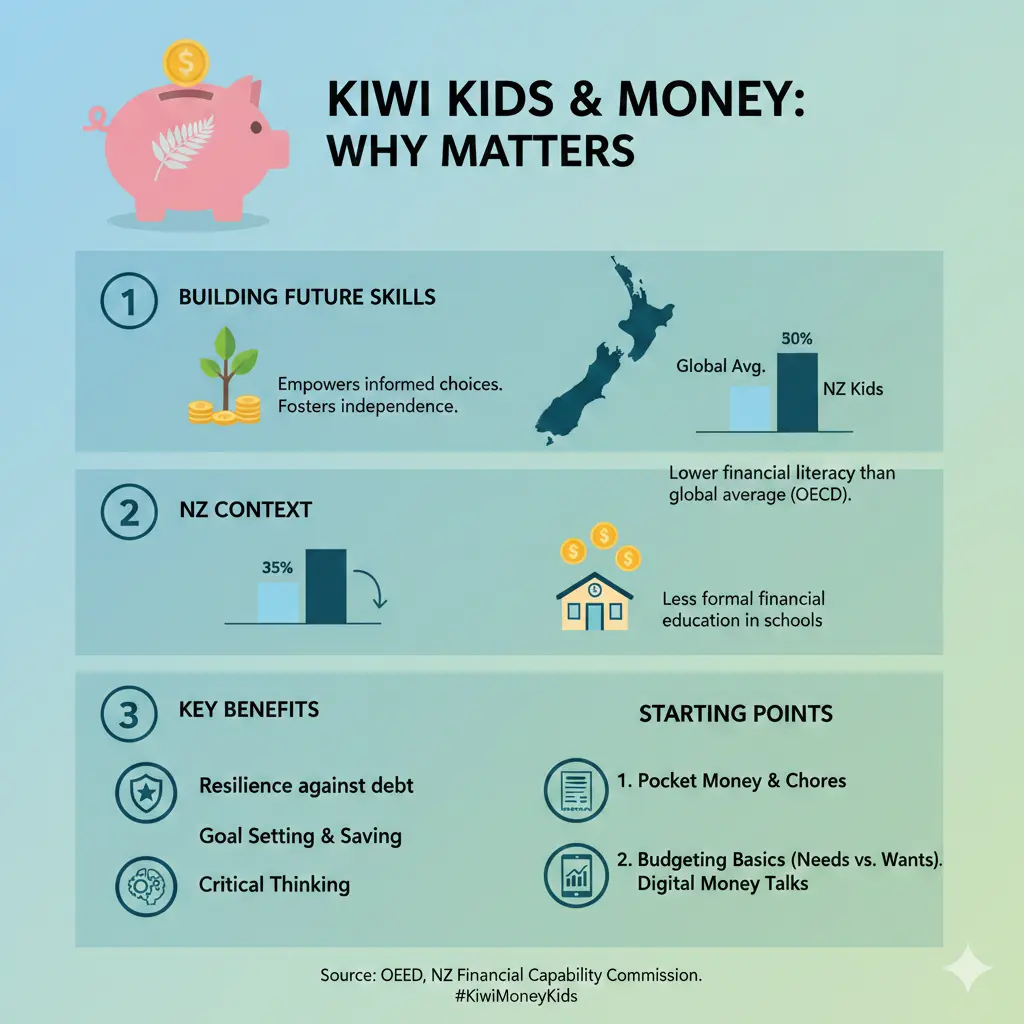
But schools can't do it alone. As whānau, we're the first teachers of financial smarts, shaping habits that last a lifetime. In Aotearoa, where only about 25% of students previously got any financial education, this article equips you with practical, NZ-specific strategies to start today. Whether you're in Auckland or the deep south, these tips align with the refreshed curriculum and real Kiwi life—from pocket money to understanding GST and taxes.
Why Financial Literacy Matters for Kiwi Kids
Financial know-how isn't just nice-to-have; it's essential in our complex economy. Finance Minister Nicola Willis notes that poor financial knowledge often traps young Kiwis in debt early on. The Retirement Commission's research backs this, showing most students lacked curriculum-aligned money lessons before now.
From 2026, Years 1-10 tamariki will learn core skills embedded in social sciences and maths curricula, preparing them to be savvy consumers. Younger kids (Years 1-5) focus on basics like earning, spending, saving, and bank accounts. Older ones (Years 6-10) tackle budgeting, investments, interest, taxes, insurance—even digital currencies and blockchain in a digital-first world.
This shift responds to parent calls and aims to boost our economy by creating informed decision-makers. Parents play a key role: reinforce school lessons at home to build lifelong habits.
Key Stats on Kiwi Kids and Money
- Only 25% of NZ students received financial education pre-2026.
- Curriculum rollout: Available 2026, mandatory from 2027.
- Topics include spotting scams, KiwiSaver basics, and modern payments like digital wallets.
Age-Appropriate Ways to Teach Money Skills
Tailor lessons to your child's stage, mirroring the new curriculum's progressive approach. Start simple, build complexity—use real Kiwi scenarios like buying at Pak'nSave or saving for a family trip to Rotorua.
For Under 5s: Fun with Needs vs Wants
Tiny tots learn by playing. Use everyday shops to distinguish needs (milk, bread) from wants (lollies). The curriculum emphasises this foundation.
Actionable Tips:
- Play "Shopkeeper": Give play money, label items as need/want. "Do we need this toy or just want it?"
- Token Rewards: Earn stickers for chores, "spend" on privileges like extra storytime—echoing blockchain-inspired class ledgers.
- Read NZ Books: The Kiwi Pocket Money Book or Sorted.org.nz stories for whānau chats.
Years 5-10: Pocket Money and Bank Accounts
Introduce earning via chores—$2-5 weekly, tied to tasks like walking the dog. Open a kids' bank account at Kiwibank or ASB; many offer no-fee options with apps for tracking.
Practical Kiwi Example: Allocate pocket money into jars: 50% save (KiwiSaver piggy bank), 30% spend, 20% give (to Starship or local marae). Discuss GST: "That $5 ice cream? $4.76 before 15% tax."
Teens (11+): Budgeting, Taxes, and Investments
Teens grasp interest and taxes—use IRD's simple tax calculator for holiday job earnings. Explain KiwiSaver: Auto-enrolled at 18, but early habits count. Show compound interest: $10/week from age 10 could grow massively by retirement.
Hands-On Activity: Mock Budget. Track a month's "income" from chores/allowance against expenses like bus fares or Spotify. Apps like PocketSmith (NZ-made) help.
Frequently Asked Questions
Sources & References
-
1
[4] — www.beehive.govt.nz
-
2
[3] — www.cryptopolitan.com
-
3
[7] — www.moneytimekids.com
-
4
[3] — www.cryptopolitan.com
-
5
[3] — www.cryptopolitan.com
-
6
[7] — www.moneytimekids.com
-
7
New Zealand school students to learn financial literacy from 2026 — www.nzherald.co.nz
-
8
New Zealand to Introduce Mandatory Financial Literacy Curriculum by 2026 — www.binance.com
-
9
New Zealand to include digital currency in 2026 financial education — www.cryptopolitan.com
-
10
Transforming financial education in schools — www.beehive.govt.nz
-
11
Financial education a key focus in refreshed national curriculum — tahurangi.education.govt.nz
-
12
New Zealand to Introduce Digital Currency Learning in 2026 — www.youtube.com
-
13
MoneyTime | Online Financial Literacy Course for Kids — www.moneytimekids.com
Related Articles

The "No-Spend" Month: How One Kiwi Saved $2;000 in 30 Days
Imagine looking at your bank account at the end of the month and seeing an extra $2,000 staring back at you—all because you said "no" to impulse buys, takeaways, and those sneaky coffee runs. That's e...
How to Calculate Your Take-Home Pay with the NZ Salary Calculator
Ever wondered why your bank account doesn't match that shiny new job offer? You're not alone—many Kiwis scratch their heads over the gap between gross salary and actual take-home pay. With New Zealand...

Budgeting for Beginners: The "50/30/20 Rule" Adjusted for NZ Salaries
Struggling to make your Kiwi paycheck stretch further? You're not alone—many of us feel the pinch from rising rents, grocery bills, and that tempting flat white habit. But what if a simple rule could...

How to Travel the World on a NZ Salary
Ever dreamed of sipping cocktails on a Thai beach or exploring the ancient ruins of Machu Picchu, all while earning a solid Kiwi wage? With New Zealand's average monthly salary hitting 5,666 NZD in 20...