The Powelliphanta Snail Takes 10 Years to Reach Maturity
Introduction to the Powelliphanta Snail The Powelliphanta snail is a unique and fascinating creature that can be found in the wilds of New Zealand. One of
Daniel covers technology, cybersecurity, and small business topics for Lifetimes NZ. He breaks down tech news and digital trends for a general audience.
Introduction to the Powelliphanta Snail
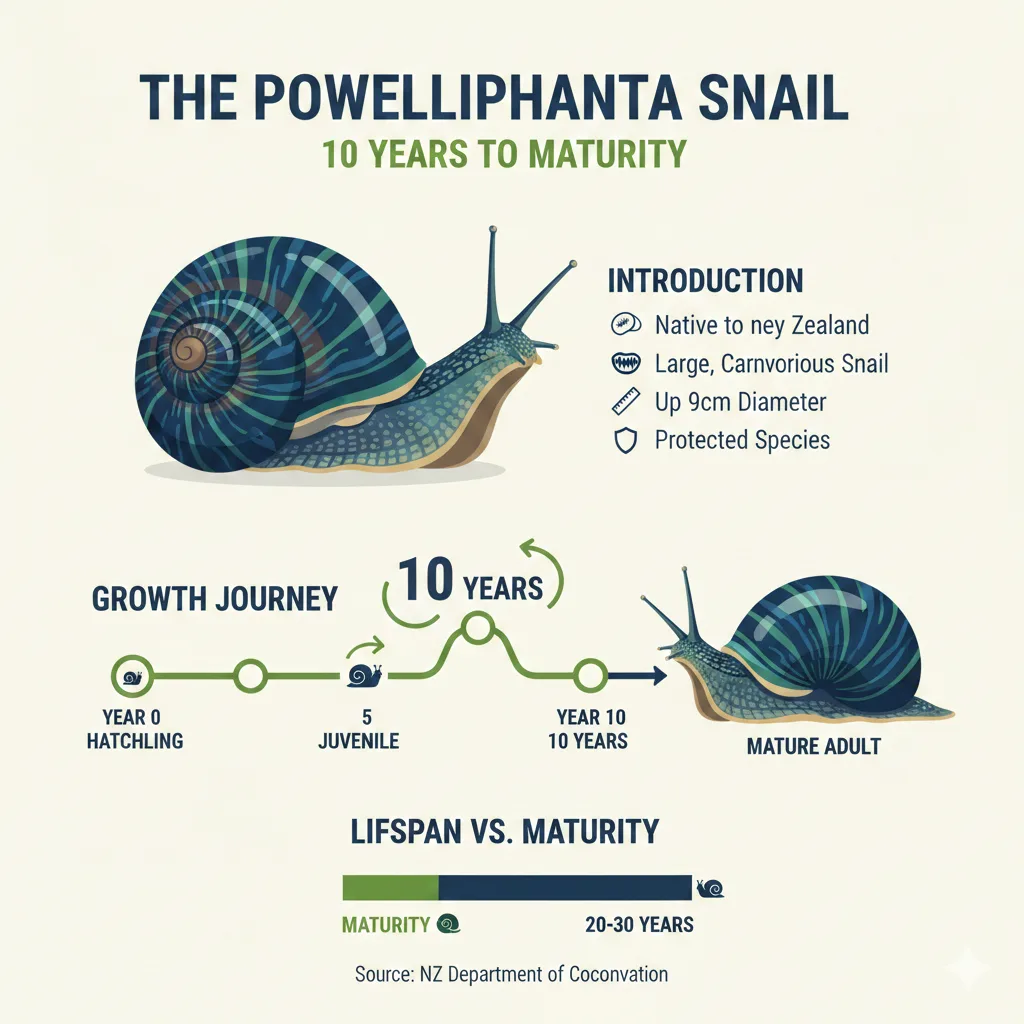
The Powelliphanta snail is a unique and fascinating creature that can be found in the wilds of New Zealand. One of the most interesting things about this snail is the amount of time it takes to reach maturity - a whopping 10 years. This slow growth rate is just one of the many things that sets the Powelliphanta snail apart from other species. In this article, we'll delve into the world of the Powelliphanta snail and explore what makes it so special.
The Powelliphanta snail is a type of large, carnivorous land snail that is endemic to New Zealand. It can be found in the native forests and grasslands of the South Island, where it plays an important role in the ecosystem. Despite its importance, the Powelliphanta snail is facing a number of threats, including habitat destruction and predation by introduced species. As a result, conservation efforts are underway to protect this unique and fascinating creature.
If you're interested in learning more about the Powelliphanta snail and how you can help protect it, then you're in the right place. In this article, we'll cover everything from the snail's habitat and diet to its unique characteristics and the conservation efforts that are in place to protect it. We'll also provide you with some practical tips and advice on how you can get involved and make a difference.
Habitat and Distribution
The Powelliphanta snail can be found in the native forests and grasslands of the South Island, where it inhabits a variety of different habitats. It is typically found in areas with high levels of rainfall and humidity, and can be found in a range of different vegetation types, including forests, grasslands, and scrublands. Some of the key areas where the Powelliphanta snail can be found include:
- The West Coast of the South Island
- The Southern Alps
- The Catlins
- The Otago Peninsula
These areas provide the perfect environment for the Powelliphanta snail, with high levels of rainfall and humidity, and a range of different food sources. However, the snail's habitat is under threat from a number of different factors, including deforestation, urbanisation, and the introduction of invasive species.
Threats to the Powelliphanta Snail's Habitat
The Powelliphanta snail's habitat is facing a number of different threats, including:
- Deforestation: The clearance of native forests for agriculture, urbanisation, and other purposes is leading to the destruction of the snail's habitat.
- Invasive species: Introduced species, such as rats, stoats, and possums, are preying on the Powelliphanta snail and competing with it for food and resources.
- Climate change: Changes to the climate are altering the snail's habitat and making it more difficult for it to survive.
Diet and Foraging
The Powelliphanta snail is a carnivorous species, which means that it feeds on meat. Its diet consists mainly of earthworms, insects, and other small invertebrates. The snail uses its radula, a tongue-like structure with tiny teeth, to scrape up its food and grind it into a pulp. It is a slow-moving creature, and it takes its time to find and eat its food.
The Powelliphanta snail is an important part of the ecosystem, playing a key role in the food chain. It helps to control the population of earthworms and other invertebrates, which in turn helps to maintain the balance of the ecosystem. However, the snail's slow growth rate and long lifespan mean that it is vulnerable to changes in its environment and the introduction of invasive species.
What You Can Do to Help
There are a number of things that you can do to help protect the Powelliphanta snail and its habitat. Some of these include:
- Support conservation efforts: You can support conservation efforts by donating to organisations that are working to protect the snail and its habitat.
- Reduce your impact on the environment: You can reduce your impact on the environment by reducing your use of resources, recycling, and using public transport.
- Get involved in your community: You can get involved in your community by participating in local conservation efforts and raising awareness about the importance of protecting the Powelliphanta snail and its habitat.
Conservation Efforts
Conservation efforts are underway to protect the Powelliphanta snail and its habitat. These efforts include:
- Habitat protection: National parks and other protected areas have been established to provide a safe habitat for the snail.
- Research and monitoring: Scientists are studying the snail and its habitat to better understand its needs and the threats it faces.
- Control of invasive species: Efforts are being made to control the population of invasive species, such as rats and stoats, which are preying on the snail.
How You Can Get Involved
There are a number of ways that you can get involved in the conservation of the Powelliphanta snail. Some of these include:
- Volunteering: You can volunteer with organisations that are working to protect the snail and its habitat.
- Donating: You can donate to organisations that are working to protect the snail and its habitat.
- Spreading the word: You can help to raise awareness about the importance of protecting the Powelliphanta snail and its habitat by sharing information with your friends and family.
Unique Characteristics
The Powelliphanta snail has a number of unique characteristics that set it apart from other species. Some of these include:
- Large size: The Powelliphanta snail is one of the largest land snails in the world, with some species reaching sizes of up to 10 cm in length.
- Long lifespan: The Powelliphanta snail can live for up to 20 years in the wild, making it one of the longest-living land snails in the world.
- Slow growth rate: The Powelliphanta snail takes up to 10 years to reach maturity, making it one of the slowest-growing land snails in the world.
Conclusion
The Powelliphanta snail is a unique and fascinating creature that plays an important role in the ecosystem. Its slow growth rate and long lifespan make it vulnerable to changes in its environment and the introduction of invasive species. However, by supporting conservation efforts and reducing our impact on the environment, we can help to protect the Powelliphanta snail and its habitat.
Some of the key takeaways from this article include:
- The Powelliphanta snail takes up to 10 years to reach maturity.
- The snail's habitat is under threat from deforestation, invasive species, and climate change.
- You can help to protect the Powelliphanta snail by supporting conservation efforts, reducing your impact on the environment, and getting involved in your community.
- The Powelliphanta snail has a number of unique characteristics, including its large size, long lifespan, and slow growth rate.
By working together, we can help to protect the Powelliphanta snail and its habitat, and ensure the long-term survival of this unique and fascinating creature.
Related Articles

Kiwi Birds Are More Closely Related to Elephants Than Other Birds
Introduction to Kiwi Birds The kiwi bird is an iconic symbol of New Zealand, and for good reason. These small, flightless birds have captured the hearts o
New Zealand Has Giant Carnivorous Land Snails
Introduction to New Zealand's Giant Carnivorous Land Snails New Zealand is renowned for its unique and diverse wildlife, with many species found nowhere el

The Royal Albatross Has the Largest Wingspan of Any Bird
Introduction to the Royal Albatross The Royal Albatross is a magnificent bird species that can be found in New Zealand, particularly in the Otago Peninsula
New Zealand Once Had a Giant Eagle That Hunted Moa
Introduction to New Zealand's Wildlife Wonders New Zealand is renowned for its unique and fascinating wildlife. From the kiwi, our national symbol, to the