Remote Work Opportunities NZ 2025
Imagine ditching the daily commute, reclaiming hours for family or adventure, and building a career on your terms—all from a home office in Auckland, Wellington, or even a beachside bach. Remote work...
The Lifetimes NZ editorial team curates, fact-checks, and updates guides on personal finance, property, health, immigration, legal, business, and lifestyle topics relevant to Lifetimes NZ readers. Articles are produced with AI assistance and reviewed by the editorial team before publication.
Imagine ditching the daily commute, reclaiming hours for family or adventure, and building a career on your terms—all from a home office in Auckland, Wellington, or even a beachside bach. Remote work opportunities in New Zealand have exploded, offering Kiwis unprecedented flexibility in 2025 and beyond. With 33.2% of employed people working from home at least some of the time in the September 2024 quarter, and trends holding steady into 2026, now's the time to tap into this shift.
Whether you're a tech whiz in Christchurch, a marketer in Dunedin, or a finance pro eyeing global gigs, remote work isn't just a perk—it's a pathway to better work-life balance. This guide dives into the top industries hiring remotely, proven strategies to land those roles, IRD tax essentials, and practical tips to thrive from home. Let's explore how you can make remote work your reality in NZ 2025.
Remote Work Trends in New Zealand: What the 2025-2026 Data Shows
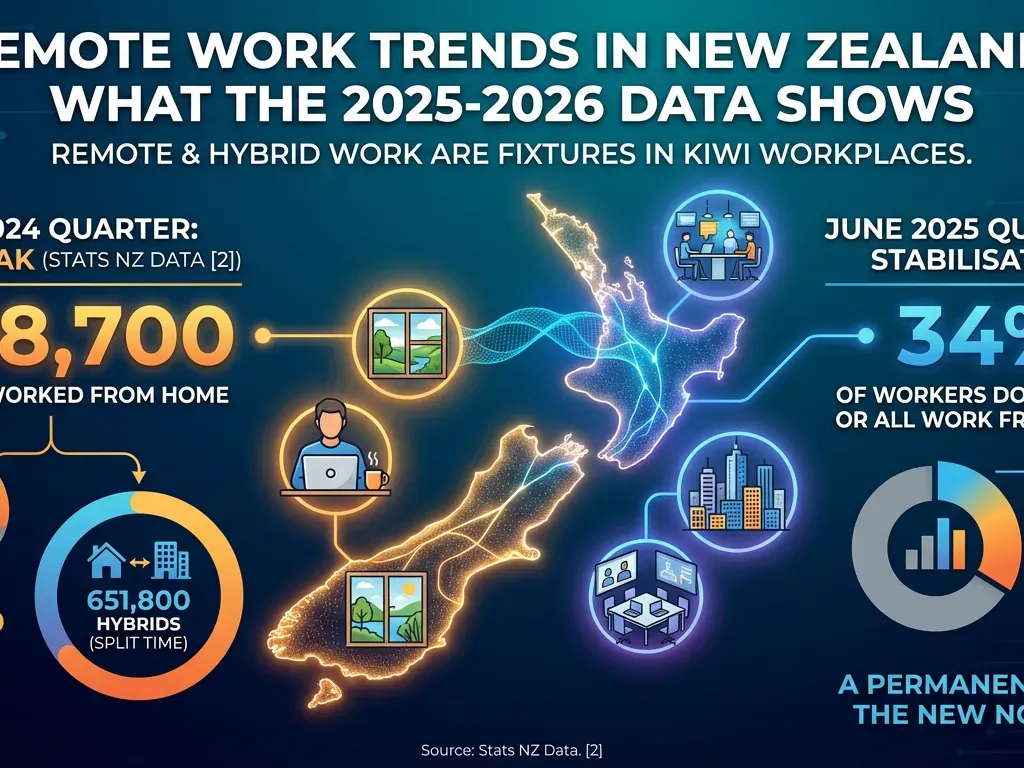
Remote and hybrid work have become fixtures in Kiwi workplaces. Stats NZ data reveals that in the September 2024 quarter, 898,700 people worked from home, including 240,000 fully remote workers and 651,800 hybrids who split time between home and other locations. By the June 2025 quarter, this stabilised at 34% of workers doing some or all work from home.
Public servants average just 0.85 days per week from home in 2025, down slightly from 0.89 in 2024, with 55% rarely or never doing so—reflecting government pushes for more office time. Yet across the private sector, flexibility persists, especially in knowledge-based roles. Globally, remote work hit 48% of the workforce in 2025, with high adoption in Australia, New Zealand, North America, and the UK.
Key Statistics at a Glance
- 33.2% of employed Kiwis worked from home in the reference week (Q3 2024)—hybrid models dominate.
- Top industries: Information media/telecoms (27% of staff WFH on a given day), financial/insurance services (20%), and professional/scientific/technical services (20%).
- Over 40% of businesses offer WFH options (2023 Business Operations Survey).
- 60% rise in people mostly working from home between 2018 and 2023 Census.
- Job hunting challenges: 56% cite no response as the worst part, with ghost jobs affecting 32% of applicants.
These figures signal stability heading into 2026, with hybrid setups (20.9% globally) outpacing fully remote (7.8%). For Kiwis, long commutes in cities like Auckland make hybrid "sticky."
Top Industries Offering Remote Work Opportunities NZ 2025
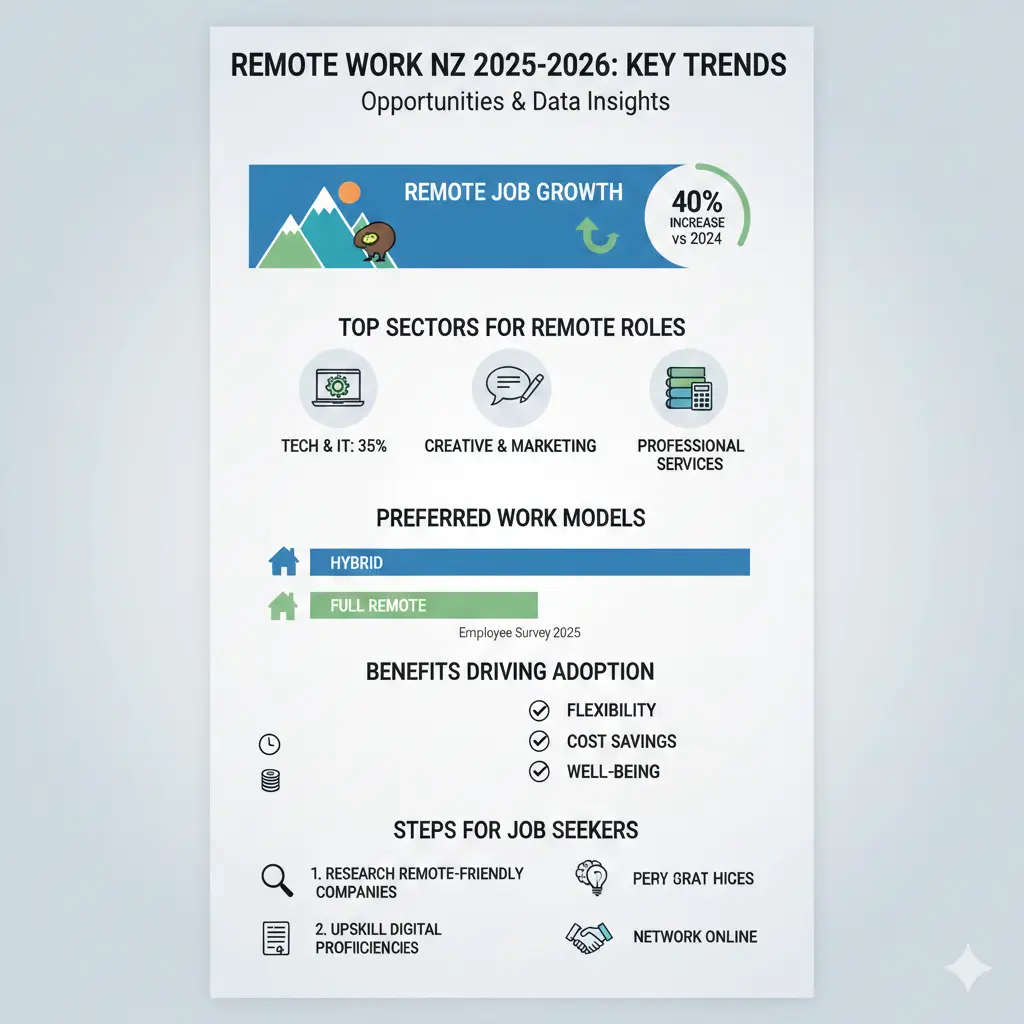
Digital-native sectors lead the charge. Finance and insurance boast 30% fully remote roles globally, while info/tech and professional services hit 22-23%—trends mirroring NZ. Here's where Kiwis are finding remote gold:
1. IT and Tech
New Zealand's tech scene is booming, with companies like Xero, Datacom, and Spark hiring remotely. Roles in software development, cybersecurity, and cloud computing often allow full flexibility. In 2025, 22% of global tech roles are fully remote.
2. Finance and Insurance
Banks like ASB and BNZ, plus insurers such as Tower, offer remote analyst, compliance, and advisory positions. KiwiSaver providers and fintechs seek accountants and advisors who can work anywhere with secure VPNs. 20% WFH rate here.
3. Marketing and Professional Services
Agencies like Traction and consulting firms (Deloitte, PwC) post remote gigs in digital marketing, PR, and project management. 23% fully remote globally.
4. Emerging Sectors: Health, Education, and Customer Support
Telehealth roles via platforms like Tend, online tutoring with Education Perfect, and support for firms like Vend. Self-employed Kiwis see higher WFH rates (33.5% vs 26% employees).
Avoid low-flexibility fields like construction (5% remote) or hospitality.
How to Find and Land Remote Jobs in NZ 2025
Securing a remote role requires strategy amid 36% of new joiners finding it tough. Start here:
Top Job Platforms for Kiwis
- Seek.co.nz and Trade Me Jobs: Filter for "remote" or "work from home"—thousands listed weekly.
- LinkedIn: Use "remote" + "New Zealand" filters; network with Kiwi recruiters.
- FlexJobs and Remote.co: Curated global listings open to NZ talent.
- Wellbeing Work and Kiwi-owned Flexi: Local hybrid/remote boards.
Actionable Application Tips
- Tailor Your CV: Highlight remote tools (Zoom, Slack, Asana) and results like "Boosted sales 25% via remote campaigns."
- Build a Portfolio: Use GitHub for devs, Behance for creatives.
- Network NZ-Style: Join groups like Remote Workers NZ on Facebook or Women in Tech NZ.
- Prepare for Interviews: Demo your home setup; discuss time zones for international roles.
- Upskill Free: Coursera (Google certs), FreeCodeCamp, or KiwiSaver-funded training via StudyLink.
Pro tip: 57% of remote workers would quit without flexibility—leverage this in negotiations.
Tax Implications for Remote Workers in New Zealand
Working remotely doesn't change your tax residency—if you're NZ-based, you're taxed here. IRD treats home office costs as deductible if used exclusively for work.
Key IRD Rules for 2025-2026
- Home Office Expenses: Claim portion of power, internet, and rates via actual costs or 25c/hour flat rate (under review for 2026).
- Equipment: Depreciate laptops/desks over time; instant write-off for small items under $1,000.
- International Gigs: Report all income; use IRD's double tax agreements to avoid double-dipping. Track via myIR portal.
- ACC Levies: Self-employed remote workers pay via IRD; employees covered by employers.
- KiwiSaver: Remote or not, contributions continue—check employer matching.
Always keep records; audit risk rises with claims. Visit ird.govt.nz for forms.
Practical Work-from-Home Tips for Kiwis
Thriving remotely means setup and habits. Here's how:
Setting Up Your Space
- Ergonomic chair/desk—claim via ACC subsidies if injured.
- Fast broadband (UFB or Starlink for rural).
- Natural light, plants for wellbeing.
Daily Routines and Productivity
- Schedule Core Hours: Align with team (e.g., 9-3 NZT).
- Boundary Work-Life: Dress for work; end with a walk.
- Tools: Notion for tasks, RescueTime for focus.
- Combat Isolation: Virtual coffees; join NZ Remote Work Meetups.
- Health: Stand hourly; use apps like Stretchly.
49% of public service managers report WFH boosts or matches productivity.
Next Steps to Launch Your Remote Career
Update your LinkedIn today, apply to five remote roles on Seek, and calculate your home office claim on ird.govt.nz. Remote work empowers Kiwis to work smarter—pair it with KiwiSaver growth and WINZ support if transitioning. Stay flexible, track trends via Stats NZ, and turn 2025 opportunities into 2026 success. You've got this!
Frequently Asked Questions
Sources & References
-
1
APAC Remote Work 2025: Data, Trends, Actions — blog.remotlyjobs.com
-
2
Work from home statistics: September 2024 quarter | Stats NZ — www.stats.govt.nz
- 3
-
4
New data released on public servants working from home — www.publicservice.govt.nz
-
5
Hybrid Working in New Zealand | What 2026 Data Shows | ZEIL — www.zeil.com
-
6
Employment Uncovered: Inside the story of NZ work 2025 — employmenthero.com
Related Articles

Best Coworking Spaces in Auckland CBD
If you're a freelancer, startup founder, or remote worker in Auckland CBD, finding the right coworking space can supercharge your productivity and network. In 2026, these top spots offer flexible desk...

Remote Work in NZ: Which Kiwi Companies Offer True Flexibility?
Remote work in New Zealand has transformed from a pandemic novelty into a permanent fixture of the modern workplace. But while flexibility is increasingly available, the reality for Kiwi workers is mo...

The Secret to Getting a Pay Rise in NZ This Year
Ever wondered why your mate down the road just scored a hefty pay bump while you're still grinding the same old wage? In 2026, with wages ticking up across Aotearoa, the secret to getting a pay rise i...

Salary Negotiation Tips for Kiwi Workers
Ever walked away from a job offer or performance review feeling like you left money on the table? You're not alone—many Kiwis hesitate to negotiate their salary, missing out on thousands over their ca...