The Secret to Getting a Pay Rise in NZ This Year

Ever wondered why your mate down the road just scored a hefty pay bump while you're still grinding the same old wage? In 2026, with wages ticking up across Aotearoa, the secret to getting a pay rise i...
The Lifetimes NZ editorial team curates, fact-checks, and updates guides on personal finance, property, health, immigration, legal, business, and lifestyle topics relevant to Lifetimes NZ readers. Articles are produced with AI assistance and reviewed by the editorial team before publication.
Ever wondered why your mate down the road just scored a hefty pay bump while you're still grinding the same old wage? In 2026, with wages ticking up across Aotearoa, the secret to getting a pay rise in NZ this year isn't luck—it's strategy, timing, and a bit of Kiwi grit. Whether you're in Auckland's hustle or a quiet Southland office, mastering these steps can land you that well-deserved increase.
Understanding the 2026 Wage Landscape in New Zealand
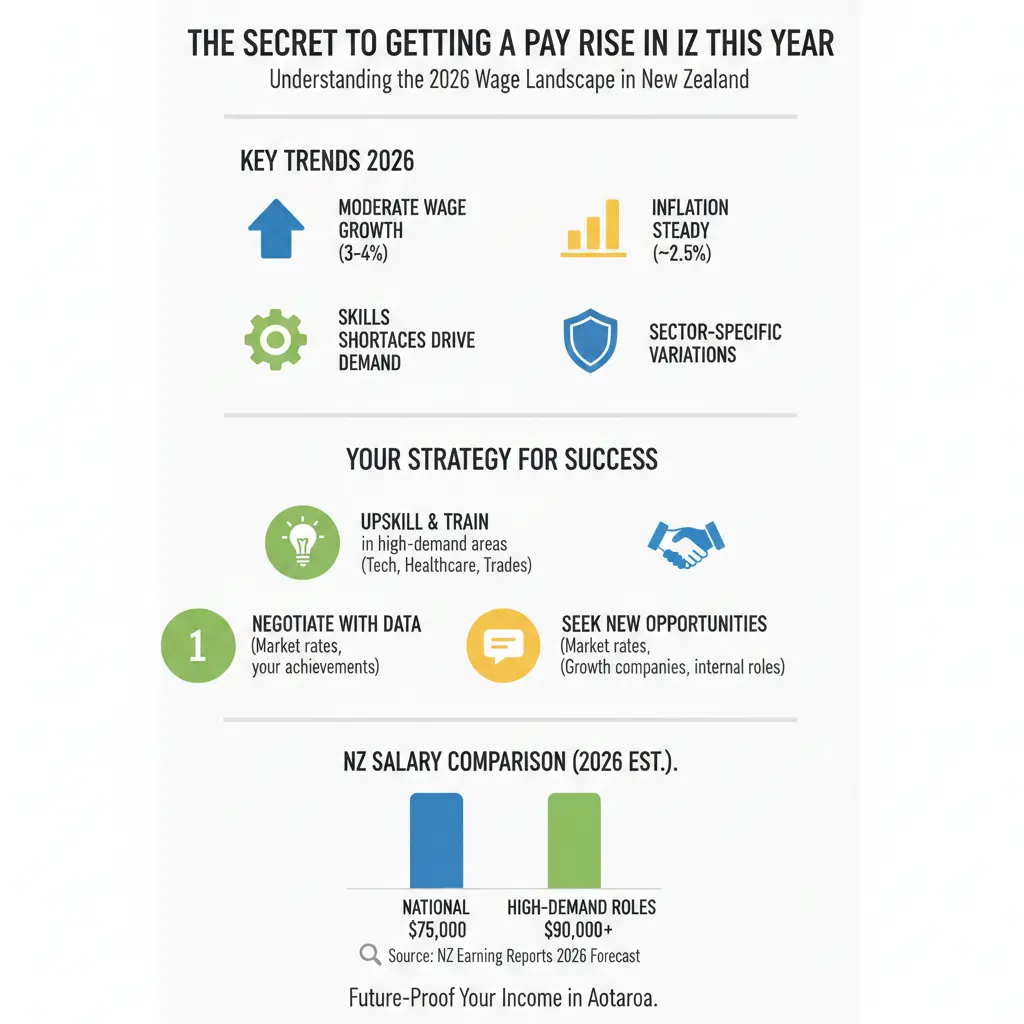
Before you march into your boss's office, get the lay of the land. New Zealand's wage growth is steady but not explosive, sitting at around 2% year-on-year in late 2025, with projections holding at 1.9% for 2026. Employers are budgeting for 3.5% salary increases this year, even as inflation cools, meaning real wages are finally climbing. The adult minimum wage jumps to $23.95 per hour from 1 April 2026—a 45-cent hike that boosts weekly earnings by $18 for full-timers, affecting 122,500 workers.
If you're on or near the minimum, this automatic lift is a win, but for most Kiwis earning above it, pay rises come from negotiation, not legislation. Public sector wages grew just 1.2% to June 2025, lagging private sector gains of 2.3%, so sector matters. Immigration changes also play a role: the median wage rises to $35/hour from March 2026, pushing skilled roles higher.
Key Wage Stats for 2026
- Average hourly wage: Around $43.47 (June 2025 data).
- Public Service average salary: $103,300 annually, up 1.6%.
- Private sector growth: 4.6% in some earnings metrics.
- Minimum wage impact: Training wages to $19.16/hour.
These figures show opportunity: if your pay hasn't budged in line, you're ripe for a rise.
Step 1: Build Your Case with Solid Evidence
The real secret to getting a pay rise in NZ this year starts with proof you're worth more. Track your wins—don't just say you're great, show it. In New Zealand's performance-driven workplaces, data trumps chit-chat.
Track Your Achievements Kiwi-Style
- Quantify impact: Saved the team $10k on supplies? Boosted sales by 15%? Log it in a brag file.
- Align with business goals: Reference your company's KPIs or the latest Stats NZ labour data to show how you contribute to growth.
- Gather market data: Use tools like Seek or Trade Me Jobs to benchmark salaries. For example, if you're a policy analyst, public service averages rose 3.5% recently.
Pro tip: Reference the Labour Cost Index (LCI) from Stats NZ—it's the gold standard for wage trends and impresses bosses.
"Wage growth in New Zealand is projected to trend around 1.90 percent in 2026."
Step 2: Time Your Ask Perfectly
Timing is everything in NZ's calendar-driven work culture. Hit performance reviews, budget season (often Q1), or post-minimum wage hikes in April. Avoid December holidays or post-election flux—2026's coalition government is steady, but economic updates from MBIE can sway decisions.
Best Times to Negotiate
- April 2026: Fresh off minimum wage rise, momentum for adjustments.
- July fiscal year-end: Many firms reset budgets.
- After big wins: Landed a project? Strike while hot.
- Pre-KiwiSaver reviews: Tie your rise to contributions—IRD loves matching employer boosts.
If you're on a collective agreement, check your union or Employment NZ for bargaining windows. Individual contracts under the Employment Relations Act 2000 give flexibility, but evidence is key.
Step 3: Master the Negotiation Conversation
Kiwi bosses value straight talk—no bluster. Schedule a meeting: "Kia ora, can we chat about my progress and future here?" Present your case calmly.
Script Your Pitch
Opening: "I've delivered X, Y, Z this year, contributing to our targets."
Ask directly: "Based on market rates and my impact, I'm targeting a [3-5%] rise to $[amount]. What do you think?"
Handle pushback: If budgets are tight (3.5% average), suggest non-salary perks like extra leave, professional development, or KiwiSaver top-ups.
- Propose alternatives: Flexible hours, WFH, or training budgets.
- Don't accept first no: Ask, "What would make this possible in six months?"
Women and Māori/Pasifika Kiwis often face negotiation gaps—use resources from the Ministry for Women or Te Puni Kōkiri for tailored advice.
Step 4: Leverage NZ-Specific Tools and Rights
Know your entitlements. Under the Holidays Act 2003 and Employment Relations Act, equal pay for equal work is law. If you're undervalued, Employment NZ's mediation is free.
NZ Resources to Boost Your Ask
- Employment NZ: Free advice on pay equity and rights.
- Stats NZ Wage Surveys: Latest data for your industry.
- MBIE Minimum Wage Info: Context for low-end roles.
- IRD Tax Calculator: Show take-home pay impact.
- Unions: Like NZCTU for collective power.
For migrants or skilled workers, the new $35/hour median wage signals rising bars—use it to argue your value.
Common Pitfalls to Avoid
Don't undervalue yourself—Kiwis often do, settling for 2% when 3.5% is budgeted. Skip emotional pleas; stick to facts. And never threaten to quit unless you're ready—NZ's job market is tight, but loyalty counts.
Next Steps to Secure Your Pay Rise
Update your brag file today, research salaries on Seek, and book that meeting. With 2026's positive wage vibes—from minimum hikes to 3.5% budgets—you're in prime position. Nail this, and watch your bank balance (and KiwiSaver) grow. Kia kaha—go get what's yours.
Frequently Asked Questions
Sources & References
-
1
New Zealand to raise minimum wage for workers from April 2026 — economictimes.com
-
2
New Zealand Wage Growth - Trading Economics — tradingeconomics.com
-
3
Minimum wage set for 2026 - MBIE — www.mbie.govt.nz
-
4
Salary budgets hold as real wages rise | Human Resources Director — www.hcamag.com
-
5
New occupations recognised under the National Occupation List — www.immigration.govt.nz
-
6
Wage trends - Te Kawa Mataaho Public Service Commission — www.publicservice.govt.nz
Related Articles

Best Coworking Spaces in Auckland CBD
If you're a freelancer, startup founder, or remote worker in Auckland CBD, finding the right coworking space can supercharge your productivity and network. In 2026, these top spots offer flexible desk...

Remote Work in NZ: Which Kiwi Companies Offer True Flexibility?
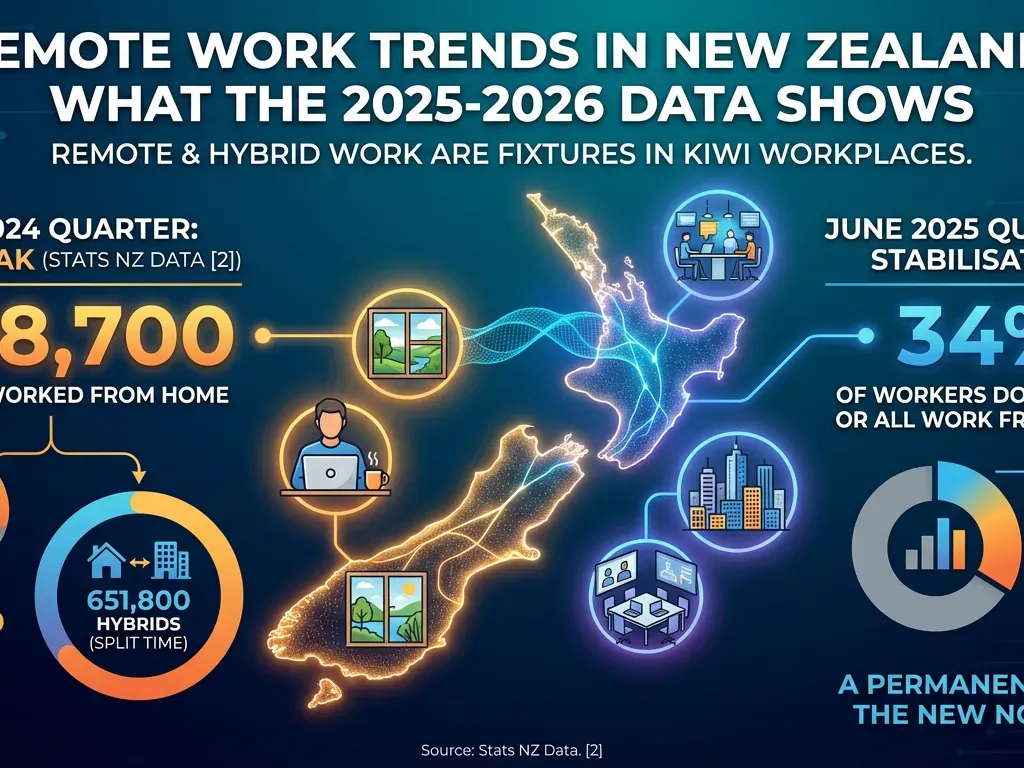
Remote work in New Zealand has transformed from a pandemic novelty into a permanent fixture of the modern workplace. But while flexibility is increasingly available, the reality for Kiwi workers is mo...

Salary Negotiation Tips for Kiwi Workers
Ever walked away from a job offer or performance review feeling like you left money on the table? You're not alone—many Kiwis hesitate to negotiate their salary, missing out on thousands over their ca...
Remote Work Opportunities NZ 2025
Imagine ditching the daily commute, reclaiming hours for family or adventure, and building a career on your terms—all from a home office in Auckland, Wellington, or even a beachside bach. Remote work...