Work Visa vs. Residency: Navigating the 2026 Immigration Changes

Planning your move to New Zealand or helping a skilled worker transition from a work visa to residency? The 2026 immigration changes bring fresh opportunities and hurdles, especially with updates to w...
Priya writes about immigration pathways, job searching, and building a career in New Zealand. She covers visa options, CV writing, interview preparation, and workplace culture for newcomers and locals alike.
Planning your move to New Zealand or helping a skilled worker transition from a work visa to residency? The 2026 immigration changes bring fresh opportunities and hurdles, especially with updates to work visas and residency pathways kicking in from March and August.
Whether you're a Kiwi employer scouting talent or a migrant eyeing long-term roots here, understanding the differences between **work visas** like the Accredited Employer Work Visa (AEWV) and **residency** options under the Skilled Migrant Category (SMC) is crucial. These shifts aim to match our workforce needs while ensuring fair wages and genuine skills.Work Visa vs. Residency: Navigating the 2026 Immigration Changes just got more straightforward—let's break it down with the latest 2026 details.
What Are Work Visas and How Do 2026 Changes Affect Them?
Work visas, primarily the AEWV, let skilled migrants fill jobs Kiwis can't right now. They're temporary but can lead to residency if you play it right. From March 9, 2026, big updates hit the National Occupation List (NOL) and median wage, reshaping eligibility.
National Occupation List (NOL) Expansion
The NOL replaces the old ANZSCO system to mirror today's job market. 47 new roles across skill levels 1–3 join from March 9, opening doors for more occupations on AEWV Job Checks. Exciting for sectors like tech, trades, and healthcare needing quick hires.
But watch out: three roles—Pet Groomers, Nannies, and Kennel Hands—drop from skill level 3 to 4. New applicants need stronger English skills and Mandatory Social Development (MSD) engagement via Work and Income. Existing visa holders keep their conditions until renewal.
- Tip for employers: Start Job Checks early for new NOL roles from March 9. Keep the 14-day ad period and prove genuine recruitment.
- For migrants: Check if your job's on the NOL via Immigration New Zealand's site before applying.
Immigration Median Wage Rises to $35/Hour
The median wage threshold jumps to NZD $35.00 per hour on March 9, 2026. It no longer blocks AEWV approvals (scrapped in 2025), but it's key for family support on visas and some residency paths. Green List roles, partner income, and residence wages auto-adjust to this.
Plus, the minimum wage hits $23.95/hour from April 1, 2026, so align offers accordingly.
Other AEWV Tweaks for 2026
Expect faster processing, but tougher checks on job offers and MSD engagement—15% of employers recently fell short. Re-accreditation? Get your docs shipshape to avoid snags.
Actionable advice: Employers, document recruitment rigorously. Migrants, ensure your job offer beats $35/hour for family perks.
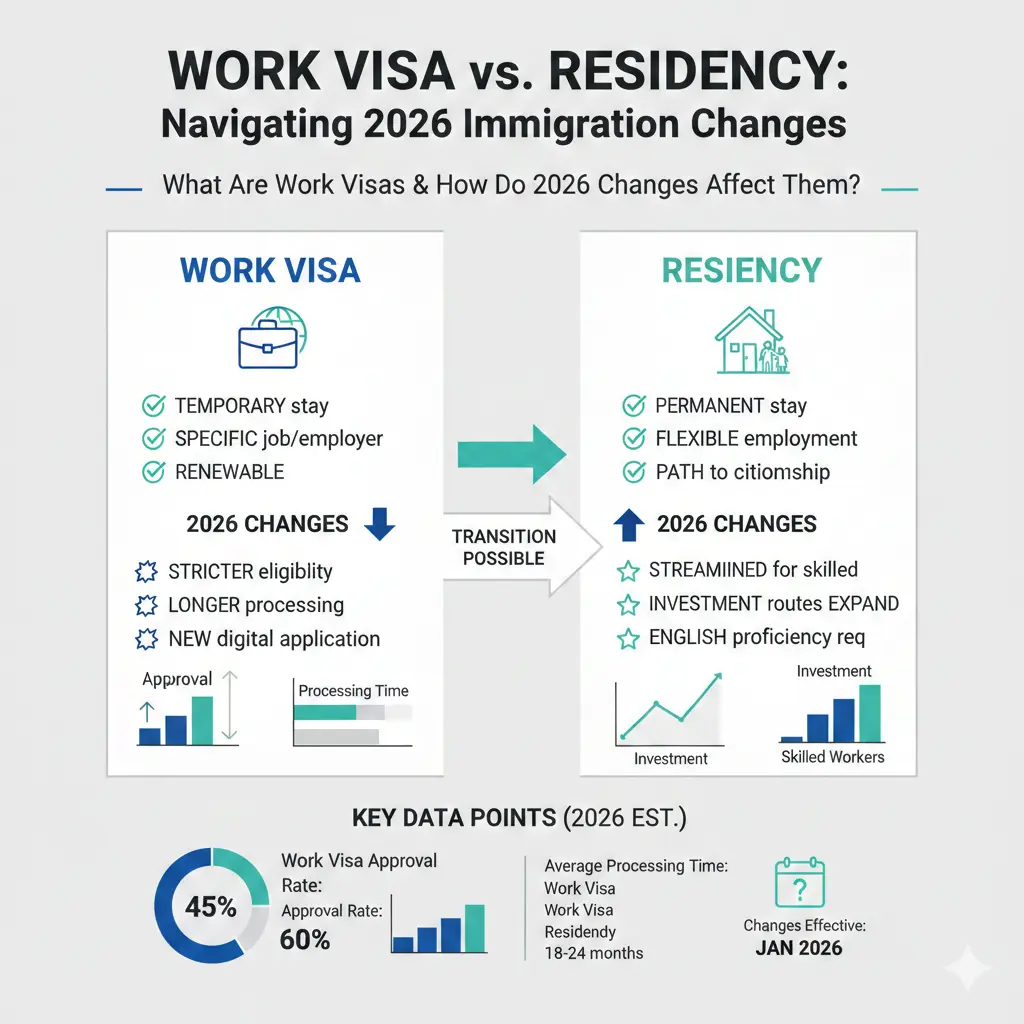
Residency Pathways: Straight from Work Visa to Permanent Stay
Residency means indefinite stay, work rights, and access to benefits like KiwiSaver boosts. The SMC Resident Visa evolves in August 2026 with two new pathways, slashing NZ work experience from 3 to 2 years max.
New Skilled Migrant Category Pathways
Opening August 2026:
- Skilled Work Experience Pathway: For pros with NZ experience. No wage hike needed for residence—just hold the median wage ($35/hour post-March) during your stint.
- Trades & Technician Pathway: Targets hands-on skills. Specific quals listed soon on immigration.govt.nz. Perfect for plumbers, electricians filling our shortages.
Boosted points for NZ uni quals help graduates transition fast. Overseas quals? Get NZQA's International Qualification Assessment (IQA). All need health, character, and English checks.
Work Visa to Residency: The Bridge
AEWV holders: Rack up 2 years' skilled work at median wage, then pivot to SMC. NOL updates might let current holders extend stays under new rules. No more wage jumps for residence apps.
"These pathways better reflect practical skills and migrants’ contributions," says Immigration New Zealand, tying into the Going for Growth programme.
Work Visa vs. Residency: Side-by-Side Comparison for 2026
Here's how they stack up post-changes:
| Feature | Work Visa (AEWV) | Residency (SMC) |
|---|---|---|
| Duration | Up to 3–5 years, extendable | Indefinite (PR after 2 years) |
| Wage Threshold | $23.95 min (Apr 2026), $35 median for perks | Hold $35 median for 2 years |
| Job List | NOL (47 new roles Mar 2026) | Skilled experience or trades quals |
| Family | Possible if over $35/hr | Full rights |
| Path Forward | Leads to SMC | Access WINZ, full citizenship track |
Practical Tips for Navigating 2026 Changes
- Employers: Get accredited early. Use the Immigration New Zealand job check tool and engage MSD properly.
- Migrants: Track NOL updates. Aim for $35+/hour roles. Build NZ experience on AEWV for SMC eligibility.
- Graduates: Leverage extra points for local quals—no IQA needed.
- Check system upgrades: Visas may glitch during Jan 2026 maintenance—plan ahead.
Deportation risks? Possible expansions for serious offences, even pre-arrival. Stay clean.
Next Steps: Make Your Move
Ready to act? Visit immigration.govt.nz for NOL lists, wage calcs, and apps. Employers, audit compliance today. Migrants, secure that AEWV job over $35/hour and eye August's SMC paths. With faster processing, 2026 is prime time—don't miss out on building your Kiwi future.
Frequently Asked Questions
Sources & References
-
1
NZ Immigration Update 2026: 47 New NOL Roles & Median Wage Update — www.newzealandshores.com
-
2
Changes to the Skilled Migrant Category Resident Visa announced — www.immigration.govt.nz
-
3
Immigration Update - January 2026 - Ashcroft Mitchell McGregor — www.ammlaw.co.nz
-
4
Immigration New Zealand Outlines Major 2026 Policy Shifts — newlandchase.com
-
5
Immigration weekly update: February 19, 2026 - Crown World Mobility — www.crownworldmobility.com
-
6
Immigration New Zealand 2026 Policy Updates - eduaid — eduaid.net
-
7
NZ Immigration Policy Updates: 2025 Review & 2026 Outlook — www.pathwaysnz.com
-
8
Planned upgrades for 2026 - Immigration New Zealand — www.immigration.govt.nz
Related Articles

Points Calculator for Skilled Migration to NZ
Ever wondered if your skills could earn you a spot in Aotearoa? The Points Calculator for Skilled Migration to NZ is your first step towards turning that dream into reality, helping skilled workers li...

Culture Shock: 10 Things Nobody Tells You About Moving to NZ
Imagine stepping off the plane at Auckland Airport, buzzing with excitement about your new life in Aotearoa—only to be blindsided by a gale-force wind that nearly sweeps you off your feet. Or discover...

The Skilled Migrant Category: How to Score Enough Points in 2026
Imagine landing a job in New Zealand that not only matches your skills but fast-tracks you to residency. That's the promise of the Skilled Migrant Category (SMC) Resident Visa in 2026, where scoring a...

Moving to NZ in 2026: The Complete Relocation Guide
Planning your move to New Zealand in 2026? Whether you're chasing career opportunities, a lifestyle upgrade, or simply the chance to call Aotearoa home, this guide covers everything you need to know f...