Moving to NZ Budget Guide: How Much Do You Need?

Planning your move within New Zealand or from overseas? Knowing your budget upfront can make the transition smoother, whether you're eyeing Auckland's buzz or Dunedin's laid-back vibe. This guide brea...
The Lifetimes NZ editorial team curates, fact-checks, and updates guides on personal finance, property, health, immigration, legal, business, and lifestyle topics relevant to Lifetimes NZ readers. Articles are produced with AI assistance and reviewed by the editorial team before publication.
Planning your move within New Zealand or from overseas? Knowing your budget upfront can make the transition smoother, whether you're eyeing Auckland's buzz or Dunedin's laid-back vibe. This guide breaks down exactly how much you'll need for 2026, tailored to Kiwi realities like rising rates and power bills.
Understanding the Basics of Cost of Living in New Zealand
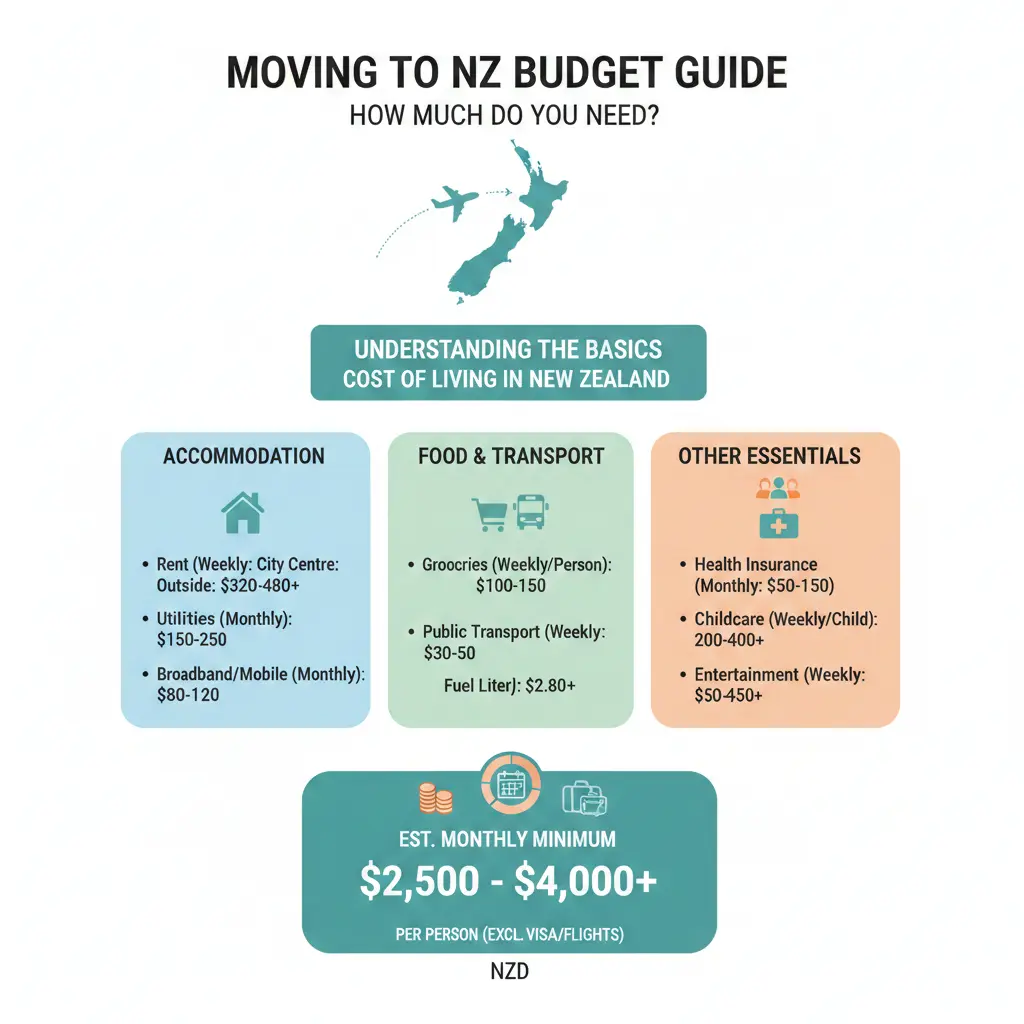
The cost of living in New Zealand varies by location, lifestyle, and family size, but it's generally higher than many countries yet more affordable than places like Australia or Switzerland. For a single person, expect NZ$1,830–2,240 per month covering rent, food, utilities, and basics. A family of four might need around NZ$6,198 monthly excluding rent, according to recent estimates.
Factors like inflation, council rates hikes into 2026, and energy costs play a big role. Immigration New Zealand notes that expenses include housing, food, transport, and healthcare, which shift with economic conditions. Use tools from Stats NZ or Numbeo for personalised calculators, but always factor in local taxes like GST at 15%.
National Averages vs City Breakdowns
Auckland tops the list at NZ$2,100–2,500 monthly for a comfortable single lifestyle, thanks to high rents. Wellington runs NZ$1,690–2,070, with rentals 20% cheaper than Christchurch. Dunedin offers the best value at NZ$1,260–1,540, ideal for budget movers. Smaller spots like Palmerston North keep one-bedroom city centre apartments at NZ$700–980.
Moving Costs: One-Off Expenses to Budget For
Beyond monthly bills, your initial move hits hard. Shipping a 20-foot container from Australia costs NZ$3,000–5,000; from the UK, it's NZ$8,000+ including customs. Flights average NZ$1,500–3,000 one-way internationally.
Settling in adds up: bond and first week's rent (typically 4 weeks' rent upfront), furniture if not flatting (NZ$2,000–5,000 for basics), and IRD registration for a tax number (free but essential for work). New arrivals should budget NZ$10,000–20,000 for the first three months, covering visas if applicable (check immigration.govt.nz).
- Visa fees: Skilled Migrant Category around NZ$4,000+.
- Health checks: NZ$400–600.
- Temporary accommodation: Airbnb or hostel NZ$100–200/night initially.
Monthly Budget Breakdown by Category
Here's a realistic 2026 breakdown for a single person in a mid-sized city, scalable for families (multiply by 2–3). Total: NZ$1,590–2,560, aligning with INZ's NZ$20,000 annual minimum for students, but adjust for workers.
| Expense | Monthly Cost (NZD) |
|---|---|
| Accommodation (Shared Flat) | NZ$600–1,200 |
| Food & Groceries (Home Cooking) | NZ$320–480 |
| Utilities (Power, Gas, Water Share) | NZ$150–300 |
| Internet & Mobile | NZ$100–150 |
| Transport (PT Pass or Fuel) | NZ$120–200 |
| Personal/Entertainment | NZ$200–300 |
| Total | NZ$1,590–2,560 |
Housing: Your Biggest Expense
Rent dominates—expect NZ$700–900 for a house share room nationwide, up to NZ$1,000–1,700 for a private house. In Auckland, university halls run NZ$330–480 weekly; Dunedin is cheapest at NZ$200–320. Flatting saves most: shared flats NZ$140–280 weekly. Pro tip: Use Trade Me or Facebook Marketplace, but inspect for damp—common in older rentals. Bonds go to Tenancy Services if disputes arise (tenancy.govt.nz).
Food and Groceries
Cooking at home keeps it under NZ$60–100 weekly. Countdown or Pak'nSave for deals; fresh produce shines but meat's pricier. Dining out: inexpensive meal NZ$15–25, mid-range main NZ$25–50. Families: Add NZ$200–400 monthly. Shop sales and join loyalty apps like Onecard.
Utilities and Bills
Power and gas are rising into 2026—budget NZ$150–300 monthly share. Internet NZ$80–100 flat total; mobile NZ$15–35. Water/rates via councils, expect hikes. Switch to Contact or Spark for bundles; apply for low-user electricity if solo.
Transport Options
AT Hop cards in Auckland or Snapper in Wellington: monthly passes NZ$120–200. Single trips NZ$1.09–3.70 student fare. Owning a car? NZ$500–800 monthly including rego, petrol at NZ$2.50/litre, and WOF. Cycle or e-scooters for cities—cheaper and greener.
Healthcare, Insurance, and Extras
ACC covers accidents; public health free for residents after two years. Budget NZ$100–200 monthly for private insurance. KiwiSaver starts at 3% contributions. Entertainment: gym NZ$45, movies NZ$20.
City-by-City Cost Comparison
| City | Single Monthly Total (NZD) | 1-Bed Rent City Centre (NZD) |
|---|---|---|
| Auckland | 2,100–2,500 | 1,800–2,200 |
| Wellington | 1,690–2,070 | 1,400–1,675 |
| Christchurch | 1,800–2,200 | 1,200–1,500 |
| Dunedin | 1,260–1,540 | 900–1,200 |
| Palmerston North | 1,500–1,900 | 700–980 |
Provincial areas suit retirees or families—NZ Super covers basics at NZ$600–700 weekly modest lifestyle.
2026 Cost Increases and How to Prepare
Council rates, power, gas, and food prices climb before mid-2026. Inflation hovers at 2–3%; stock up on non-perishables and fix power leaks. WINZ offers emergency aid; check eligibility at workandincome.govt.nz.
Practical Tips to Stretch Your Budget
- Flat early—saves 40% on housing.
- Buy second-hand via Trade Me.
- Use PT apps for off-peak fares.
- Power-saving: LED bulbs, low-flow showers—cut bills 20%.
- Part-time work: Students up to 20 hours/week at minimum wage NZ$23.50/hr (2026 est.).
- Budget apps like PocketSmith (Kiwi-made).
Next Steps for Your Move
Crunch numbers with a spreadsheet using these figures, then scout rentals on Trade Me. Visit ird.govt.nz for tax setup, immigration.govt.nz for visas, and stats.govt.nz for latest CPI. Track expenses monthly—adjust as you settle. With smart planning, you'll thrive in Aotearoa without breaking the bank.
Frequently Asked Questions
Sources & References
-
1
Cost of Living in New Zealand 2026-2027 - AECC Global — www.aeccglobal.com
-
2
The Cost of Living in New Zealand - International Citizens Group — www.internationalcitizens.com
-
3
Cost of Living in New Zealand - Moving To New Zealand in 2026 — www.thebrokebackpacker.com
-
4
5 Cost-of-Living Changes Hitting NZ Households Before Mid-2026 — www.artbeat.org.nz
-
5
Cost of living in New Zealand - Immigration NZ — www.immigration.govt.nz
-
6
Cost of Living in New Zealand - Numbeo — www.numbeo.com
-
7
Cost of Living in New Zealand - 2026 prices - Expatistan — www.expatistan.com
-
8
Cost of Living in New Zealand for International Student 2026 — www.studies-overseas.com
-
9
Cost-of-Living Crisis 2026: Is NZ Super Still Enough? - Exclusive Chauffeur — www.exclusivechauffeur.co.nz
Related Articles
Auckland Cost of Living 2026: How Much You Really Need to Survive
Auckland's cost of living in 2026 remains one of New Zealand's steepest challenges, especially with housing pressures and everyday expenses squeezing Kiwi budgets. If you're wondering how much you rea...

Auckland vs. Christchurch: Where is the Best Property Value Right Now?
Choosing between Auckland and Christchurch for your next property move? In 2026, Christchurch edges ahead for the best value, offering stronger price growth, affordability, and family-friendly suburbs...

Most Affordable Places to Live in NZ 2025
If you're looking to stretch your dollar further in Aotearoa, choosing where you live can make a massive difference to your weekly budget. The cost of living varies significantly across New Zealand, w...