Most Affordable Places to Live in NZ 2025
If you're looking to stretch your dollar further in Aotearoa, choosing where you live can make a massive difference to your weekly budget. The cost of living varies significantly across New Zealand, w...
James writes about the New Zealand property market, renting, home ownership, and housing costs. He breaks down complex property topics into practical advice for renters and buyers.
If you're looking to stretch your dollar further in Aotearoa, choosing where you live can make a massive difference to your weekly budget. The cost of living varies significantly across New Zealand, with some cities offering savings of up to 45% compared to Auckland and Wellington. Whether you're a student, young professional, or family planning your next move, understanding where you can live affordably without sacrificing quality of life is crucial.
Why Location Matters for Your Budget
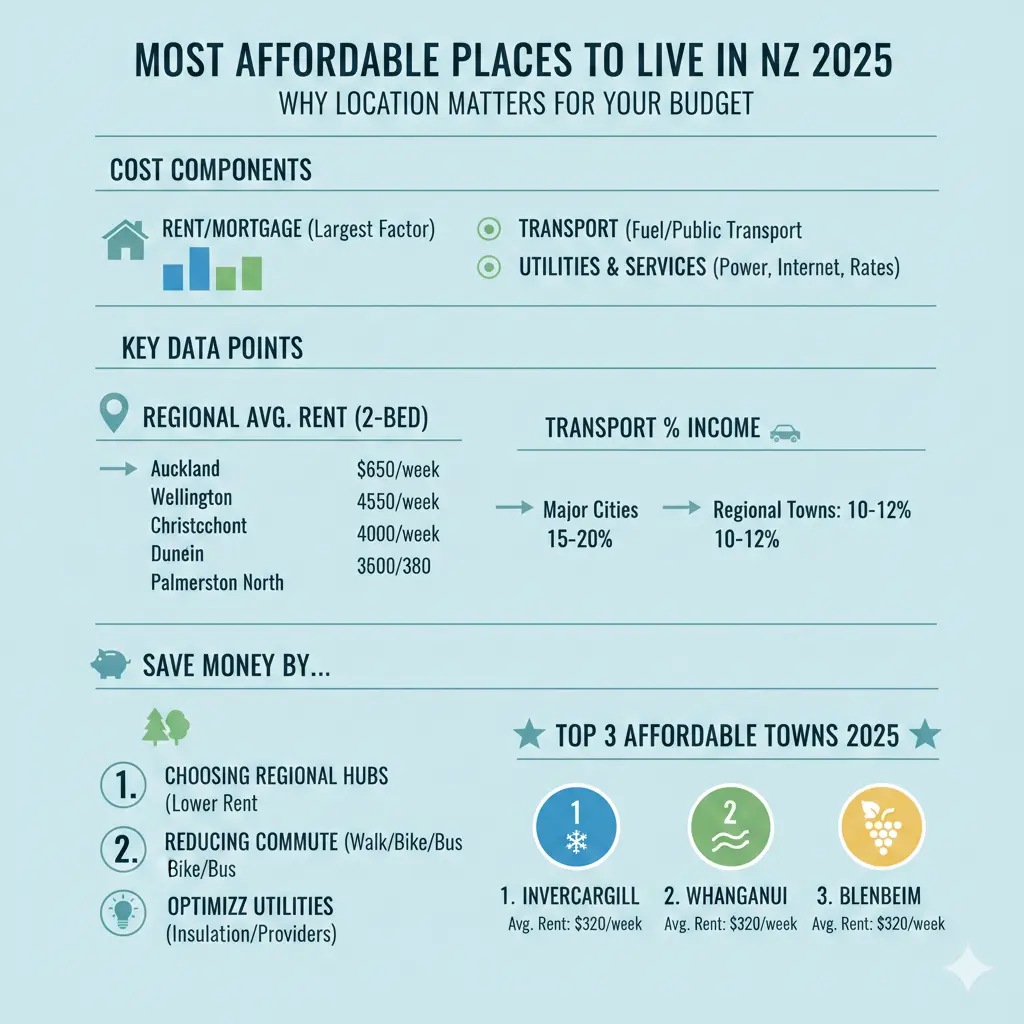
Your choice of city can save you thousands of dollars annually. Auckland and Wellington are 30–45% more expensive than smaller cities, with rent alone jumping from around NZD 150/week in affordable areas to NZD 300–400/week in the major metros. This means choosing wisely could save you NZD 6,000–10,000 per year.
Beyond rent, food and transport costs also vary widely depending on the region. A student in an affordable city might spend NZD 250–320/week on all living expenses, while the same person in Auckland or Wellington could spend NZD 450–560/week. That's a difference of up to NZD 16,000 annually.
The Most Affordable Cities to Live in New Zealand
Invercargill – The Budget Champion
If you're after the absolute lowest cost of living, Invercargill is New Zealand's most affordable city. Located at the southern tip of the South Island, this compact city offers some of the country's lowest rents.
Average weekly living costs:
- Rent: NZD 100–150/week
- Food: NZD 60–80/week
- Transport: NZD 10–20/week
- Total: NZD 200–270/week
While Invercargill is smaller and quieter than major cities, it's ideal if affordability is your top priority. The city has a strong sense of community and lower competition for rental properties means you'll find genuine bargains.
Palmerston North – Best for Students and Professionals
Home to Massey University, Palmerston North is often considered one of the best affordable cities for students and young professionals. The city boasts more cafes and restaurants per capita than anywhere else in New Zealand, despite being significantly cheaper than Wellington.
Average weekly living costs:
- Rent: NZD 130–180/week
- Food: NZD 60–80/week
- Transport: NZD 20–25/week
- Total: NZD 250–320/week
The cost of living in Palmerston North is approximately 65% lower than Wellington, ranging from NZD 1,230 to NZD 1,500 per person monthly. It's an excellent choice if you want strong academic opportunities combined with genuine affordability and a vibrant social scene.
Dunedin – Vibrant Student City
Dunedin is home to the prestigious University of Otago and offers a lively student atmosphere without the hefty price tag of major metros. The city has excellent research facilities and a thriving campus culture.
Average weekly living costs:
- Rent: NZD 140–190/week
- Food: NZD 70–90/week
- Transport: NZD 10–20/week
- Total: NZD 260–330/week
Dunedin combines affordability with excellent educational opportunities, making it ideal for students seeking both quality academics and lower living costs.
Christchurch – Affordable Big City Living
Christchurch is New Zealand's most affordable big city, offering metropolitan amenities at regional prices. Home to the University of Canterbury and Ara Institute of Canterbury, the city has rebuilt strongly since 2011 and now boasts a growing economy with excellent job opportunities.
Average weekly living costs:
- Rent: NZD 150–220/week
- Food: NZD 70–100/week
- Transport: NZD 20–30/week
- Total: NZD 290–360/week
Monthly rent for a one-bedroom apartment in Christchurch averages around NZD 3,240 (approximately USD $810), significantly cheaper than Auckland (NZD 5,100/month) or Wellington (NZD 4,180/month). The city offers strong job opportunities in construction, IT, hospitality, and engineering, plus big-city lifestyle without big-city prices.
Napier and Hastings – Seaside Affordability
If you want coastal living without coastal prices, Napier and Hastings offer the perfect balance. Home to the Eastern Institute of Technology (EIT), this sunny Hawke's Bay region combines affordability with scenic beauty.
Average weekly living costs:
- Rent: NZD 140–180/week
- Food: NZD 60–90/week
- Transport: NZD 20–25/week
- Total: NZD 270–340/week
These cities offer excellent value for those seeking a slower pace of life with reliable sunshine and strong community connections.
How Affordable Cities Compare to Major Metros
To put things in perspective, here's how weekly living costs stack up across New Zealand:
| City | Weekly Rent (NZD) | Total Weekly Cost (NZD) |
|---|---|---|
| Invercargill | 100–150 | 200–270 |
| Palmerston North | 130–180 | 250–320 |
| Dunedin | 140–190 | 260–330 |
| Napier/Hastings | 140–180 | 270–340 |
| Christchurch | 150–220 | 290–360 |
| Auckland | 250–350 | 450–550 |
| Wellington | 260–360 | 460–560 |
As you can see, moving to an affordable city could save you between NZD 150–360 per week compared to living in Auckland or Wellington.
Beyond Rent: Other Cost Considerations
Housing for Long-Term Residents and Families
If you're looking to buy rather than rent, affordability varies dramatically. The median house price in New Zealand is around NZD 750,000 as of 2025, but regional variations are significant.
In Auckland, the average house price is around NZD 970,000, while smaller towns like Mataura and Gore in Southland have average house prices as low as NZD 297,000. Christchurch offers a middle ground with more balanced property prices than major metros.
Transport Costs
Smaller cities generally have lower transport costs, though you may need to budget for a car if you're in areas with limited public transport. Palmerston North has excellent public transport, making it possible to live affordably without a vehicle. Auckland and Wellington have better public transport networks but higher fares.
Food and Groceries
Grocery costs are relatively consistent across New Zealand, but regional variations exist. Expect to budget NZD 60–100/week for food depending on your city and eating habits. Shopping at budget supermarkets like The Warehouse and Countdown can help stretch your budget further.
Making Your Move: Practical Tips
Research Before You Commit
Visit potential cities before moving if possible. What looks affordable on paper might not suit your lifestyle. Consider factors like:
- Job market and employment opportunities in your field
- Availability of services you need (healthcare, education, entertainment)
- Community vibe and whether you'll enjoy the pace of life
- Climate and weather patterns
- Public transport and car ownership requirements
Look Beyond City Centres
Even in affordable cities, you can save more by living in suburban areas. Suburbs offer 30–40% lower rents than city centres while maintaining good transport links. In Auckland, suburbs like Papakura offer significant savings, while in Wellington, Lower Hutt provides cheaper options with good connections to the CBD.
Consider Your Employment Options
Before moving to a smaller city, ensure there are genuine job opportunities in your field. Christchurch has strong opportunities in construction, IT, hospitality, and engineering, while Palmerston North benefits from Massey University and education-related employment. Remote work has changed the game—if you can work remotely, you have complete freedom to choose the most affordable location that suits you.
Making Your Decision
New Zealand offers genuine affordability if you're willing to move beyond Auckland and Wellington. Whether you prioritise the lowest possible rent (Invercargill), strong education and community (Palmerston North and Dunedin), job opportunities (Christchurch), or coastal living (Napier and Hastings), there's an affordable option that matches your lifestyle.
The key is researching thoroughly, visiting if possible, and being honest about what matters most to you. A city might be cheap, but if you're miserable there, it's not a genuine saving. Take time to find the right fit—your budget and your wellbeing will thank you.
Ready to make your move? Start by researching job markets in your chosen cities, connecting with local community groups online, and visiting during different seasons to get a real feel for the place. Your more affordable New Zealand future is waiting.
Frequently Asked Questions
Sources & References
-
1
Best Low-Cost New Zealand Cities Every Student Should Know — aspireglobalpathways.com
-
2
Cost of Living in New Zealand: A Complete Guide — www.escapeartist.com
-
3
The Cost of Living in New Zealand [2025] — www.wisemove.co.nz
-
4
The Cost of Living in New Zealand — www.internationalcitizens.com
-
5
The Most Affordable Housing in New Zealand — lighthousefinancial.co.nz
Related Articles
Auckland Cost of Living 2026: How Much You Really Need to Survive
Auckland's cost of living in 2026 remains one of New Zealand's steepest challenges, especially with housing pressures and everyday expenses squeezing Kiwi budgets. If you're wondering how much you rea...

Auckland vs. Christchurch: Where is the Best Property Value Right Now?
Choosing between Auckland and Christchurch for your next property move? In 2026, Christchurch edges ahead for the best value, offering stronger price growth, affordability, and family-friendly suburbs...

Moving to NZ Budget Guide: How Much Do You Need?
Planning your move within New Zealand or from overseas? Knowing your budget upfront can make the transition smoother, whether you're eyeing Auckland's buzz or Dunedin's laid-back vibe. This guide brea...