Electricity Bill Killers: How to Cut Your NZ Power Bill by 30%
Your electricity bill doesn't have to be a budget killer. With smart planning and a few strategic changes, many Kiwi households can cut their power costs by 30% or more—without sacrificing comfort or...
James writes about the New Zealand property market, renting, home ownership, and housing costs. He breaks down complex property topics into practical advice for renters and buyers.
Your electricity bill doesn't have to be a budget killer. With smart planning and a few strategic changes, many Kiwi households can cut their power costs by 30% or more—without sacrificing comfort or convenience. The good news? New Zealand's electricity market is changing in your favour, with major retailers now required to offer time-of-use pricing plans that reward you for shifting your energy use to cheaper periods.
The New Era of Smarter Electricity Pricing
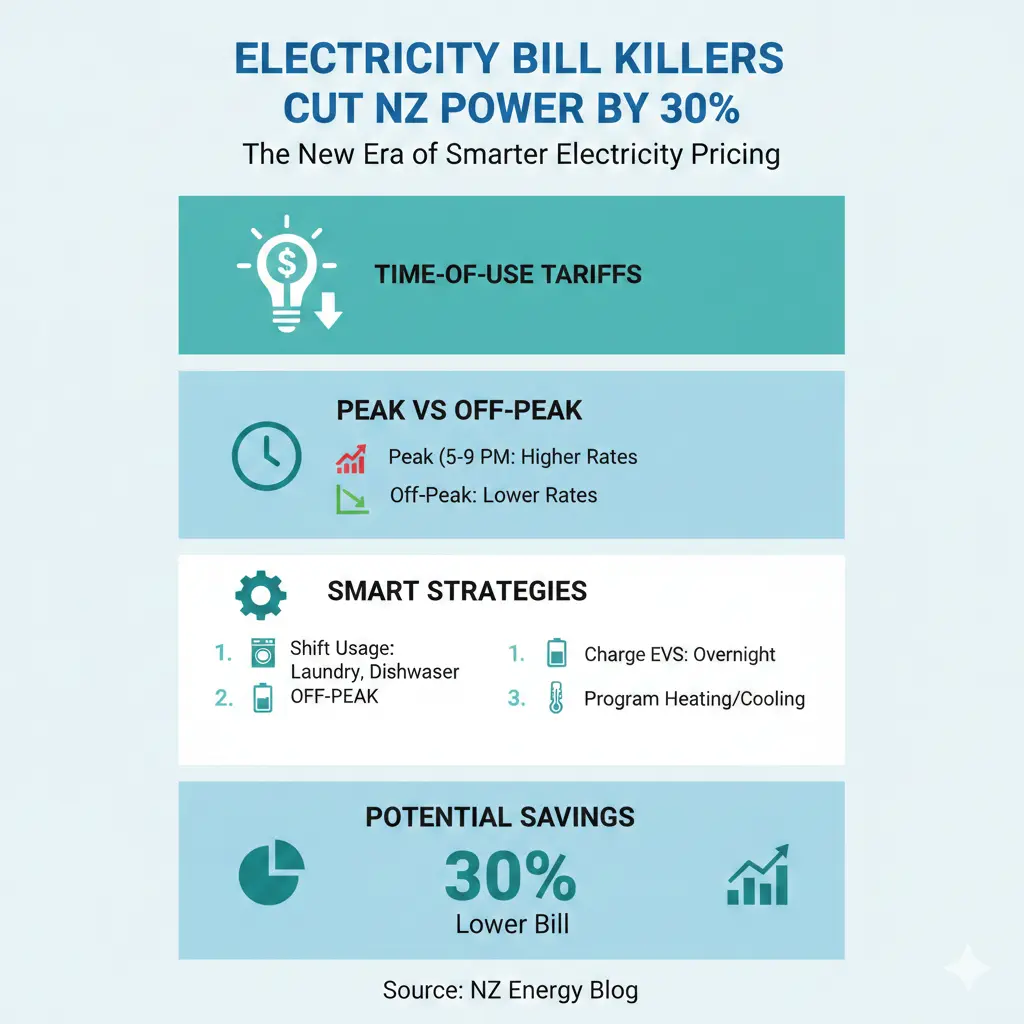
From 1 July 2026, all major power retailers in New Zealand must offer off-peak or time-of-use pricing plans. This regulatory change is a game-changer for households wanting to take control of their energy costs. Instead of paying a flat rate for electricity throughout the day, you'll have the opportunity to pay less during off-peak hours—typically late evening, early morning, and sometimes midday—and more during peak times when demand is highest.
The shift is designed to create a fairer, more efficient energy system, especially benefiting households with solar panels and battery storage. But here's the catch: not everyone will benefit equally. Some retailers may raise peak rates to balance the discounts offered during off-peak times. For example, a flat rate of 35 cents per kilowatt hour might become 48 cents at peak and 24 cents off-peak. If you can't shift your usage patterns, you may end up paying more.
The key to maximising savings is understanding when you use electricity and strategically shifting that usage to cheaper periods.
Five Proven Strategies to Slash Your Power Bill
1. Shift High-Energy Appliances to Off-Peak Hours
Major appliances like washing machines, dishwashers, and dryers consume considerable electricity. Running these during off-peak hours—usually late at night or early morning—allows you to benefit from significantly lower rates. This simple shift requires minimal lifestyle disruption but delivers real savings.
Consider setting your washing machine to run at 10 pm or 6 am instead of midday. Your clothes come out just as clean, but you're paying substantially less per load. Over a year, this single change can save hundreds of dollars for an average household.
2. Master Your Heating Strategy
Heating is one of the largest contributors to electricity use in New Zealand, especially during our cooler months. Rather than maintaining constant warmth throughout the day, adjust your heating to minimise usage during peak pricing hours and increase it during off-peak times. Modern smart thermostats and timers make this automatic and effortless.
For example, you might heat your home aggressively during off-peak evening hours (say 9 pm to 7 am) and rely on passive heating, layers, and lower thermostat settings during peak daytime hours. Your home stays comfortable, but your bill shrinks dramatically.
3. Charge Your Electric Vehicle Strategically
As electric vehicles become more popular across New Zealand, their impact on household electricity demand grows. If you own an EV, charging overnight or during off-peak periods helps you avoid higher electricity prices during peak hours, making EV ownership significantly more economical.
Set your vehicle to charge during your retailer's cheapest hours—typically between 9 pm and 7 am. Over a year, this habit alone can save hundreds of dollars compared to charging during peak times.
4. Leverage Solar Power with Time-of-Use Pricing
If you have solar panels, time-of-use pricing works in your favour. You'll generate free electricity during the day when rates are highest, and you can sell excess power back to the grid at peak prices. Add timers to hot water cylinders or heat pumps to restrict use to off-peak periods, and you'll further optimise your savings.
Use solar monitoring apps or smart home systems to automate energy use and savings, ensuring you're always capturing maximum value from your system.
5. Monitor and Automate Your Energy Use
Knowledge is power when it comes to cutting your electricity bill. Many retailers provide online comparison tools and usage tracking systems to help you understand your consumption patterns. Use these tools to identify your biggest energy drains, then tackle them strategically.
Consider investing in smart home technology that automates your energy-saving strategies. Smart plugs, timers, and home automation systems can shift your usage automatically without requiring daily effort.
Additional Ways to Reduce Your Power Bill
Upgrade Your Home's Energy Efficiency
Beyond time-of-use strategies, improving your home's physical efficiency delivers lasting savings. Key upgrades include:
- Improving insulation in your roof, walls, and floors
- Draught-proofing doors and windows
- Installing energy-efficient appliances
- Using LED lighting throughout your home
- Upgrading to a modern heat pump system
These improvements require upfront investment but pay dividends for years. The Energy Efficiency and Conservation Authority (EECA) offers advice through their Gen Less programme to help Kiwis use less energy effectively.
Compare Your Electricity Plan Regularly
Don't assume your current plan is the best deal. Electricity retailers often provide competitive offers, and switching could save you hundreds annually. Many smaller providers, including Octopus Energy and Ecotricity, already offer flexible plans and are attracting customers with smart usage habits.
Use comparison tools and contact retailers directly to understand what's available in your area. Even if you're happy with your current provider, asking about new plans or negotiating your rate can yield savings.
Check Your Eligibility for Support Programmes
If you're struggling with electricity costs, several support options exist. Check your eligibility for Winter Energy Assistance, which provides subsidies to low-income households. Additionally, if you were on a low user charge pricing plan, you may be entitled to a one-off payment to help with the transition away from that policy.
The Electricity Retailers' Association of New Zealand (ERANZ) has launched an online resource for consumers finding it difficult to pay their electricity bill, introducing sources of support and ways to find help online.
Understanding the 2026 Electricity Bill Increases
It's important to acknowledge that New Zealand is experiencing electricity bill increases. Many senior households will face monthly bill increases ranging between $55 and $70 from March 2026. These increases reflect higher network charges, infrastructure investment, and wholesale electricity market volatility, according to major retailers including Meridian Energy, Contact Energy, and Genesis Energy.
However, the simultaneous rollout of time-of-use pricing offers a genuine opportunity to offset these increases through smarter usage patterns. The infrastructure investments driving these price increases will ultimately support long-term stability and potentially reduce volatility in the future, as New Zealand expands renewable capacity including wind farms, solar installations, and hydro upgrades.
Practical Steps to Get Started Today
- Contact your electricity retailer to ask about time-of-use pricing plans available from 1 July 2026. Understand the specific peak and off-peak hours in your region.
- Audit your current usage using your retailer's online tools or by reviewing recent bills to identify your biggest energy consumers.
- Create a usage shift plan identifying which appliances and activities you can move to off-peak hours.
- Invest in smart controls like timers, smart thermostats, or home automation to automate your energy-saving strategies.
- Compare alternative retailers to ensure you're getting the best deal on your chosen plan.
- Explore energy efficiency upgrades that complement your time-of-use strategy for maximum savings.
Your Path to Lower Power Bills Starts Now
Cutting your electricity bill by 30% isn't a pipe dream—it's an achievable goal for most Kiwi households, especially with the new time-of-use pricing plans rolling out from 1 July 2026. The combination of strategic usage shifting, smart controls, energy efficiency improvements, and regular plan comparisons creates a powerful toolkit for reducing your costs.
Start today by contacting your electricity retailer to understand what time-of-use options will be available to you. Audit your current usage patterns. Identify which high-energy activities you can shift to off-peak hours. Even small changes compound into significant annual savings.
Remember, every dollar saved on your electricity bill is money you can redirect towards other priorities. With rising living costs affecting many New Zealand households, taking control of your power consumption is one of the most practical steps you can take right now.
Frequently Asked Questions
Sources & References
-
1
Major Power Retailers to Offer Off-Peak Pricing - Think Solar Group — thinksolar.co.nz
-
2
5 Smart Ways to Use Time-of-Use Pricing to Slash Your Power Bill — electrifythehutt.nz
-
3
Power Companies Confirm Seniors to Face Monthly Bill Hike From March 2026 — dirtdevildetailing.co.nz
-
4
Goodbye Cheap Winter Power — NZ Bills Could Jump Soon in 2026 — www.diltakeaways.co.nz
- 5
Related Articles
Reducing Your NZ Internet Bill: Fiber vs. 5G Wireless Home Broadband
Struggling with a hefty internet bill each month? You're not alone—many Kiwis are feeling the pinch from rising broadband costs in 2026. But here's the good news: switching between **fibre** and **5G...

DIY Home Maintenance: 5 Repairs Every Kiwi Homeowner Should Know
Owning a home in New Zealand comes with its fair share of rewards, but it also means staying on top of maintenance to keep your place safe, warm, and weathertight. With our unpredictable weather—from...
Home Security Systems: Protecting Your NZ Property on a Budget
Imagine coming home to find your door ajar or hearing a strange noise in the night—it's a Kiwi homeowner's worst nightmare. With burglary rates holding steady across New Zealand, protecting your prope...
Heating Your Home Efficiently in NZ
As winter bites harder across Aotearoa, many Kiwis face skyrocketing power bills while shivering in draughty homes. But heating your home efficiently in NZ doesn't have to mean choosing between warmth...