DIY Home Maintenance: 5 Repairs Every Kiwi Homeowner Should Know

Owning a home in New Zealand comes with its fair share of rewards, but it also means staying on top of maintenance to keep your place safe, warm, and weathertight. With our unpredictable weather—from...
The Lifetimes NZ editorial team curates, fact-checks, and updates guides on personal finance, property, health, immigration, legal, business, and lifestyle topics relevant to Lifetimes NZ readers. Articles are produced with AI assistance and reviewed by the editorial team before publication.
Owning a home in New Zealand comes with its fair share of rewards, but it also means staying on top of maintenance to keep your place safe, warm, and weathertight. With our unpredictable weather—from summer droughts to wild southerlies—regular DIY checks can save you thousands in repairs and keep your whare standing strong for years to come. In this guide, we'll walk you through DIY home maintenance: 5 repairs every Kiwi homeowner should know, with step-by-step advice tailored to our local conditions.
Why DIY Home Maintenance Matters for Kiwis
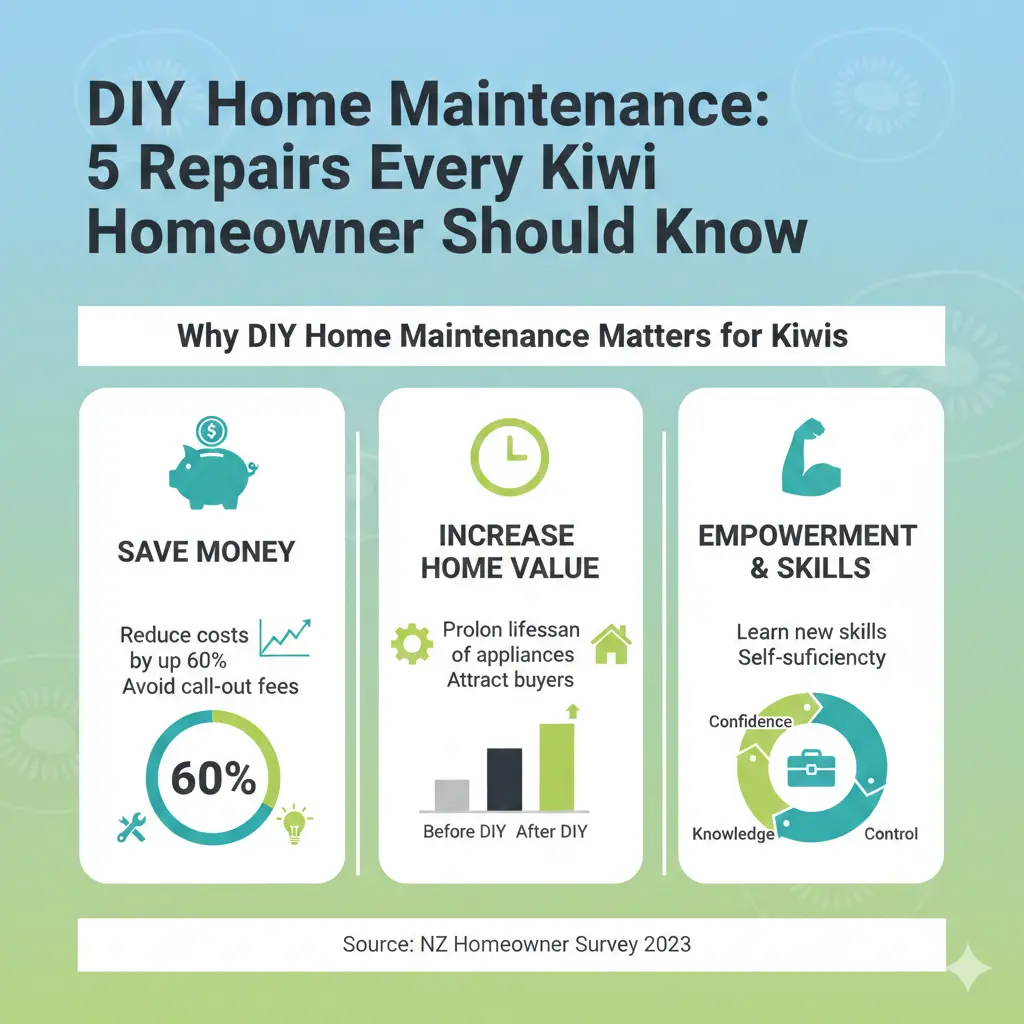
From leaky homes scandals of the past to today's Building Code requirements, New Zealand homeowners know prevention beats cure. Regular upkeep helps comply with weathertightness standards and avoids costly call-outs from tradies. Plus, with rising costs in 2026, handling simple fixes yourself stretches your budget further—think saving $200–500 on basic jobs like fixing a tap or clearing gutters.
It's not just about savings; it's about safety too. A quick smoke alarm test or gutter clean can prevent fires or water damage, which affects thousands of Kiwi homes annually. Always check if your job needs building consent—contact your local council first for decks, sheds, or structural changes.
Essential Tools for Every Kiwi DIY Toolkit
Before diving in, stock up on basics. You'll need a multi-tool set with screwdrivers, a hammer, pliers, an adjustable spanner, silicone sealant, and a sturdy ladder. Add gloves, safety glasses, and a first-aid kit—essential for handling rust-prone tools or sharp edges. For NZ conditions, include a wet/dry vac for damp jobs and outdoor extension leads rated for our wet weather.
- Screwdriver set (Phillips and flathead)
- Hammer and assorted nails/screws
- Adjustable spanner for taps
- Caulking gun with silicone
- Step ladder (under 3m for most indoor jobs)
- Tape measure and spirit level
Inspect tools before use to avoid accidents—rusty handles or dead batteries can turn a quick fix into a hazard.
Repair 1: Fixing a Dripping Tap
Why It Matters in NZ Homes
Dripping taps waste up to 20 litres of water daily, hitting your water bill and contributing to our conservation efforts amid dry spells. In Kiwi bathrooms and kitchens, hard water in areas like Auckland speeds up wear.
Step-by-Step Guide
- Turn off the water supply under the sink or at the main valve.
- Plug the sink drain to catch small parts.
- Disassemble the tap: Prise off the cap, remove the screw, and lift the handle.
- Replace the washer (cheap at Bunnings or Mitre 10) and O-ring if worn.
- Reassemble, apply plumber's tape to threads, and test for leaks.
Time: 30 minutes. Cost: $10–20. Pro tip: Use ceramic disc taps for longevity—they're common in new NZ builds and rarely drip. If it's a mixer tap, watch YouTube tutorials specific to your brand.
Repair 2: Cleaning and Clearing Gutters
The Risks of Neglected Gutters
Blocked gutters cause 30% of water damage claims in NZ, leading to rotten fascias and interior leaks—especially with our heavy rains. Autumn leaves in Wellington or pine needles in Rotorua make this a must-do twice yearly.
How to Do It Safely
- Wait for dry weather. Position your ladder on firm ground, with a spotter if over 3m high.
- Start from the downpipe end, scooping debris into a bucket with a trowel or gloved hands.
- Flush downpipes with a hose; use a drain snake for stubborn blocks.
- Check brackets and seals; reseal with silicone if needed.
- Install gutter guards for low-maintenance (DIY kits from $50/m).
Time: 1–2 hours. Cost: Minimal. In winter, check for ice buildup in the South Island.
Repair 3: Silicone Sealing Around Baths and Sinks
Preventing Mould and Leaks
Our humid climate breeds mould fast—unsealed gaps let moisture in, risking health issues and rot. Refresh sealant every 5–10 years per Building Code guidelines.
DIY Steps
- Remove old silicone with a utility knife and mould cleaner.
- Clean thoroughly with vinegar or bathroom spray; dry completely.
- Tape edges for neat lines. Cut nozzle at 45°, apply Resene silicone in a steady bead.
- Tool smooth with a wet finger; remove tape before it skins.
- Let cure 24 hours before use.
Time: 45 minutes. Cost: $15 tube. Choose mould-resistant silicone for NZ bathrooms.
Repair 4: Tightening Loose Hinges and Handles
Common in Older Kiwi Homes
Sagging cupboard doors and wobbly handles are everyday gripes in bungalows and state houses. Tightening prevents further damage and keeps things functional.
Quick Fix Method
- Identify loose screws; remove doors if needed.
- Fill stripped holes with matchsticks and wood glue, or use longer screws.
- Tighten with screwdriver; lubricate hinges with WD-40.
- For cabinets, adjust cams on European-style hinges.
- Test alignment with a level.
Time: 20 minutes per door. Cost: Free. Great starter job for renters too.
Repair 5: Testing and Replacing Smoke Alarm Batteries
A Legal Must-Know
By law, rental properties need compliant smoke alarms from July 2024, but all homeowners should test monthly—fires rise in winter. Interconnected alarms are now standard in new builds.
Simple Maintenance
- Press test button monthly; replace batteries yearly (use lithium for longevity).
- Vacuum dust from vents.
- Replace unit every 10 years—check manufacture date on back.
- Position: One per level, near bedrooms, not in kitchens.
- For hardwired, call an electrician if beeping persists.
Time: 10 minutes. Cost: $20–50 per alarm. Get free ones via Fire and Emergency NZ programs.
Seasonal DIY Tips for New Zealand Weather
Tailor your maintenance to our seasons. In summer, paint touch-ups and leak checks; autumn, gutters and secure outdoor items; winter, seal draughts and chimney sweeps; spring, slip-proof paths.
Budget Tips and When to Call a Pro
DIY saves cash—e.g., $8,000 bathroom refresh vs. full reno—but know limits. Avoid plumbing rewires, wall removals, or exterior painting without consents. Check insurance; some policies cover DIY tools under minor alterations. Myths busted: Not all decks need pros, but electrical/gas does.
FAQ
Do I need building consent for these repairs?
Usually no for minor fixes like taps or seals, but yes for decks over 1.5m or sheds. Check your council.
What's the best sealant for NZ humidity?
Mould-resistant silicone from Resene or Selleys—lasts 10+ years.
How often should I clean gutters?
Twice yearly, or more in leafy areas.
Are there rebates for home maintenance?
Check EECA for insulation upgrades or warm up New Zealand: Healthy Homes.
What if I'm renting?
Tenants can do minor maintenance with permission; report issues via Tenancy Services.
Can DIY void my insurance?
No, if done properly and no consent needed. Confirm with your insurer.
Next Steps to Keep Your Home Tip-Top
Grab your toolkit and tackle one repair this weekend—start with smoke alarms for peace of mind. Schedule seasonal checks in your calendar, and for bigger jobs, get 2–3 quotes from Licensed Building Practitioners via lbp.govt.nz. Your home's your biggest asset—regular DIY keeps it thriving in Aotearoa's great outdoors.
Related Articles

Reducing Your NZ Internet Bill: Fiber vs. 5G Wireless Home Broadband
Struggling with a hefty internet bill each month? You're not alone—many Kiwis are feeling the pinch from rising broadband costs in 2026. But here's the good news: switching between **fibre** and **5G...

Home Security Systems: Protecting Your NZ Property on a Budget
Imagine coming home to find your door ajar or hearing a strange noise in the night—it's a Kiwi homeowner's worst nightmare. With burglary rates holding steady across New Zealand, protecting your prope...
Electricity Bill Killers: How to Cut Your NZ Power Bill by 30%
Your electricity bill doesn't have to be a budget killer. With smart planning and a few strategic changes, many Kiwi households can cut their power costs by 30% or more—without sacrificing comfort or...

Heating Your Home Efficiently in NZ
As winter bites harder across Aotearoa, many Kiwis face skyrocketing power bills while shivering in draughty homes. But heating your home efficiently in NZ doesn't have to mean choosing between warmth...