Heating Your Home Efficiently in NZ
As winter bites harder across Aotearoa, many Kiwis face skyrocketing power bills while shivering in draughty homes. But heating your home efficiently in NZ doesn't have to mean choosing between warmth...
James writes about the New Zealand property market, renting, home ownership, and housing costs. He breaks down complex property topics into practical advice for renters and buyers.
As winter bites harder across Aotearoa, many Kiwis face skyrocketing power bills while shivering in draughty homes. But heating your home efficiently in NZ doesn't have to mean choosing between warmth and your wallet—smart choices in insulation, heating systems, and habits can slash costs by up to 85% and keep you toasty without the guilt.
With energy prices fluctuating and our climate pushing more reliance on electricity, now's the time to upgrade. In 2026, government programmes like Warmer Kiwi Homes are still rolling out grants, while Healthy Homes Standards enforce better setups for rentals. This guide breaks down practical steps tailored for New Zealand homes, from retrofitting insulation to picking the right heater, so you can heat smarter and save.
Why Efficient Home Heating Matters in New Zealand
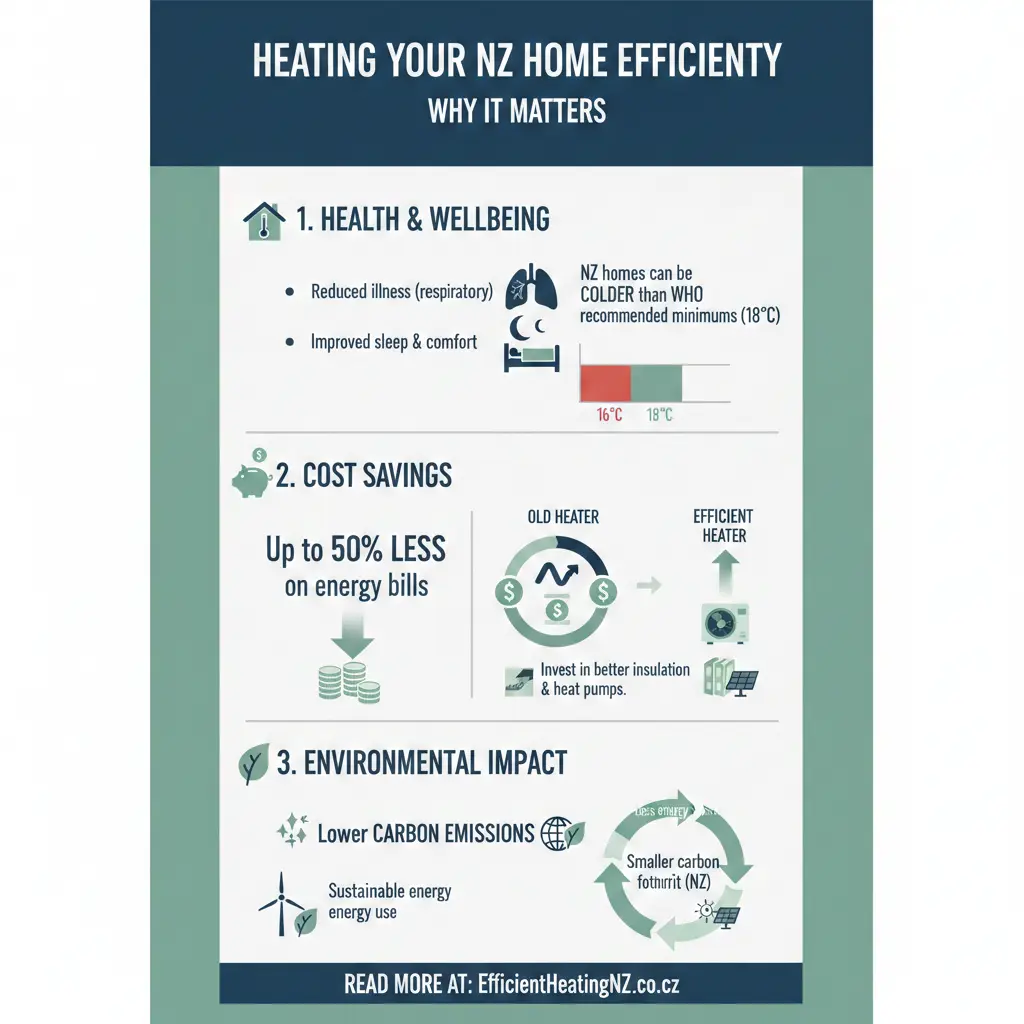
New Zealand's homes are notoriously chilly—over 200,000 are among the coldest in the developed world, leading to higher energy use and health issues like respiratory problems. Our heating sector guzzles about 23 TWh annually for buildings and hot water, with electrification scenarios projecting steady demand around 55-60 TWh by 2050 thanks to efficient heat pumps.
Efficient heating isn't just about comfort; it's a money-saver. The Warmer Kiwi Homes programme delivers $4.66 in benefits for every $1 spent, mainly through lower bills and better health. Plus, with peak winter loads straining the grid—potentially hitting 16-18 GW by 2050—smart usage helps avoid blackouts and keeps prices down for everyone.
The Impact of Cold Homes on Kiwi Families
Cold, damp homes contribute to mould, asthma, and missed workdays. Programmes like Warm Up New Zealand have subsidised nearly half a million improvements, proving insulation and efficient heaters make a real difference. For owner-occupiers, there's no legal mandate, but why suffer when grants cover up to 90% of costs?
Top Heating Options for NZ Homes
Choosing the right heater depends on your home size, location, and budget. Heat pumps reign supreme for efficiency, but wood burners and flued gas still have a place in rural spots.
Heat Pumps: The Gold Standard
Reverse-cycle heat pumps are the most efficient for Kiwi climates, delivering 3-4 units of heat per unit of electricity (COP of 300-400%). They're approved under Warmer Kiwi Homes and Healthy Homes Standards, warming spaces evenly without drying the air. Expect annual savings of $640 on heating bills post-install.
- Pros: Low running costs (around 20-30c/kWh effective), zoning control, cooling in summer.
- Cons: High upfront cost ($3,000-$8,000), needs professional install.
- Tip: Size to your room—too big cycles inefficiently. Get a free EECA assessment.
Wood and Pellet Burners
Ideal for off-grid or bush blocks, these provide instant heat but require dry wood to avoid pollution. Modern low-emission models meet 2026 standards and qualify for grants if your home lacks fixed heating.
- Running costs: $1,000-$2,000/year in wood, but free if you source sustainably.
- NZ tip: Check regional air quality rules—Auckland bans unflued gas/older burners.
Other Options: Electric, Gas, and Hybrids
Fixed electric heaters suit small spaces under Healthy Homes, but avoid plug-ins—they're inefficient. Flued gas is cheap to run (10-15c/kWh) but needs venting. By 2028, gas may face bans in new builds, pushing electrification.
| Heater Type | Upfront Cost | Running Cost (per season) | Best For |
|---|---|---|---|
| Heat Pump | $3k-$8k | $500-$1,000 | Most homes |
| Wood Burner | $4k-$7k | $1k-$2k (fuel) | Rural/large |
| Flued Gas | $2k-$4k | $800-$1,200 | Medium, vented |
| Electric Fixed | $500-$1k | $1,500+ | Small rooms |
Insulation: The Unsung Hero of Efficient Heating
No matter the heater, poor insulation wastes 30-50% of heat. Ceiling and underfloor insulation saves $340/year on average. Warmer Kiwi Homes covers two-thirds (or more) for pre-2008 homes.
Meeting NZ Insulation Standards
Healthy Homes requires ceiling/underfloor where possible, with R-values varying by region (e.g., R3.2+ in Auckland). Post-2016 installs usually comply. For grants, homes need EECA-standard insulation before heating upgrades.
- Ceiling: Fibreglass or polyester batts—DIY possible but pros ensure no gaps.
- Underfloor: Essential for suspended timber floors; grants check compliance.
- Walls/Floors: Deep retrofits target these for 85% energy cuts.
Bonus: Ventilation and Draught-Proofing
Positive pressure systems recycle warm air, slashing bills while meeting moisture rules. Seal gaps with weatherstripping—cheap win for any home.
Understanding Running Costs and Savings in 2026
Average Kiwi household energy use hovers at levels seen pre-2025, but efficiency tweaks matter. Heat pumps cut bills consistently; trials show Wi-Fi controls shift peaks, saving households up to $3 billion nationally.
Calculate Your Costs
At 30c/kWh (2026 average), a heat pump uses 5,000kWh/season ($1,500 raw, but COP halves effective cost). Time usage off-peak: pre-heat via apps before 5pm.
- Track with EECA tools: Monitor via apps for real savings.
- KiwiSaver tie-in: Energy savings free up contributions.
Government Support and Incentives
Warmer Kiwi Homes runs to June 2027: insulation grants for deciles 1-10, heating up to $3,450 (90% for CSC/SuperGold holders in high-need areas). Pre-2008 owner-occupied homes qualify if no existing fixed heater.
EECA trials renewable integrations for resilience—perfect for storm-prone spots. Landlords: Comply with Healthy Homes by 2025 deadlines via fixed heaters.
How to Apply
- Check eligibility on eeca.govt.nz.
- Get free insulation audit.
- Install approved gear—providers handle paperwork.
Practical Tips for Affordable Warmth
- Zone heat: Heat living areas to 20°C, bedrooms to 18°C.
- Curtains & rugs: Block 10-20% heat loss.
- Off-peak power: Shift hot water/heat pumps—saves 20-30%.
- Maintenance: Clean filters yearly for peak efficiency.
- Behaviours: Dress in layers, use hot water bottles—EECA reports show awareness drives action.
Stay Warm Without Breaking the Bank
Heating your home efficiently in NZ starts with insulation, a smart heater, and savvy habits—backed by grants that make it affordable. Kiwis who've upgraded via Warmer Kiwi Homes report warmer lives and lighter bills. Take the first step: assess your home on eeca.govt.nz or call EECA today. Your cosier, cheaper winter awaits.
Frequently Asked Questions
Sources & References
- 1
-
2
Existing Homes Roadmap - New Zealand Green Building Council — nzgbc.org.nz
-
3
Energy efficiency and electrification listed as New Zealand's key energy goals through 2050 — globalenergyprize.org
-
4
Energy efficiency in New Zealand - MBIE — www.mbie.govt.nz
-
5
A Guide to Meeting New Zealand's Healthy Homes Standards by 2025 — juiceelectrical.co.nz
- 6
-
7
New Zealand household energy use report 2024–2025 - EECA — www.eeca.govt.nz
Related Articles

Reducing Your NZ Internet Bill: Fiber vs. 5G Wireless Home Broadband
Struggling with a hefty internet bill each month? You're not alone—many Kiwis are feeling the pinch from rising broadband costs in 2026. But here's the good news: switching between **fibre** and **5G...

DIY Home Maintenance: 5 Repairs Every Kiwi Homeowner Should Know
Owning a home in New Zealand comes with its fair share of rewards, but it also means staying on top of maintenance to keep your place safe, warm, and weathertight. With our unpredictable weather—from...
Home Security Systems: Protecting Your NZ Property on a Budget
Imagine coming home to find your door ajar or hearing a strange noise in the night—it's a Kiwi homeowner's worst nightmare. With burglary rates holding steady across New Zealand, protecting your prope...
Electricity Bill Killers: How to Cut Your NZ Power Bill by 30%
Your electricity bill doesn't have to be a budget killer. With smart planning and a few strategic changes, many Kiwi households can cut their power costs by 30% or more—without sacrificing comfort or...