Age Limit for NZ Immigration: Skilled Migrant Restrictions

Planning a move to New Zealand or helping a skilled worker settle here? The age limit for NZ immigration under the Skilled Migrant Category remains a key hurdle at 55 years or younger, unchanged even...
The Lifetimes NZ editorial team curates, fact-checks, and updates guides on personal finance, property, health, immigration, legal, business, and lifestyle topics relevant to Lifetimes NZ readers. Articles are produced with AI assistance and reviewed by the editorial team before publication.
Planning a move to New Zealand or helping a skilled worker settle here? The age limit for NZ immigration under the Skilled Migrant Category remains a key hurdle at 55 years or younger, unchanged even with the major 2026 reforms. These updates make residence more accessible for genuine skilled talent, but age still gates entry for most applicants.
Whether you're a Kiwi employer retaining overseas staff or a migrant eyeing permanent residency, understanding these restrictions is crucial. With new pathways recognising practical experience over sky-high salaries, more people qualify—but only if they're under 55. This guide breaks down the rules, changes, and steps to navigate them successfully in 2026.
What is the Age Limit for Skilled Migrant Category Visas?
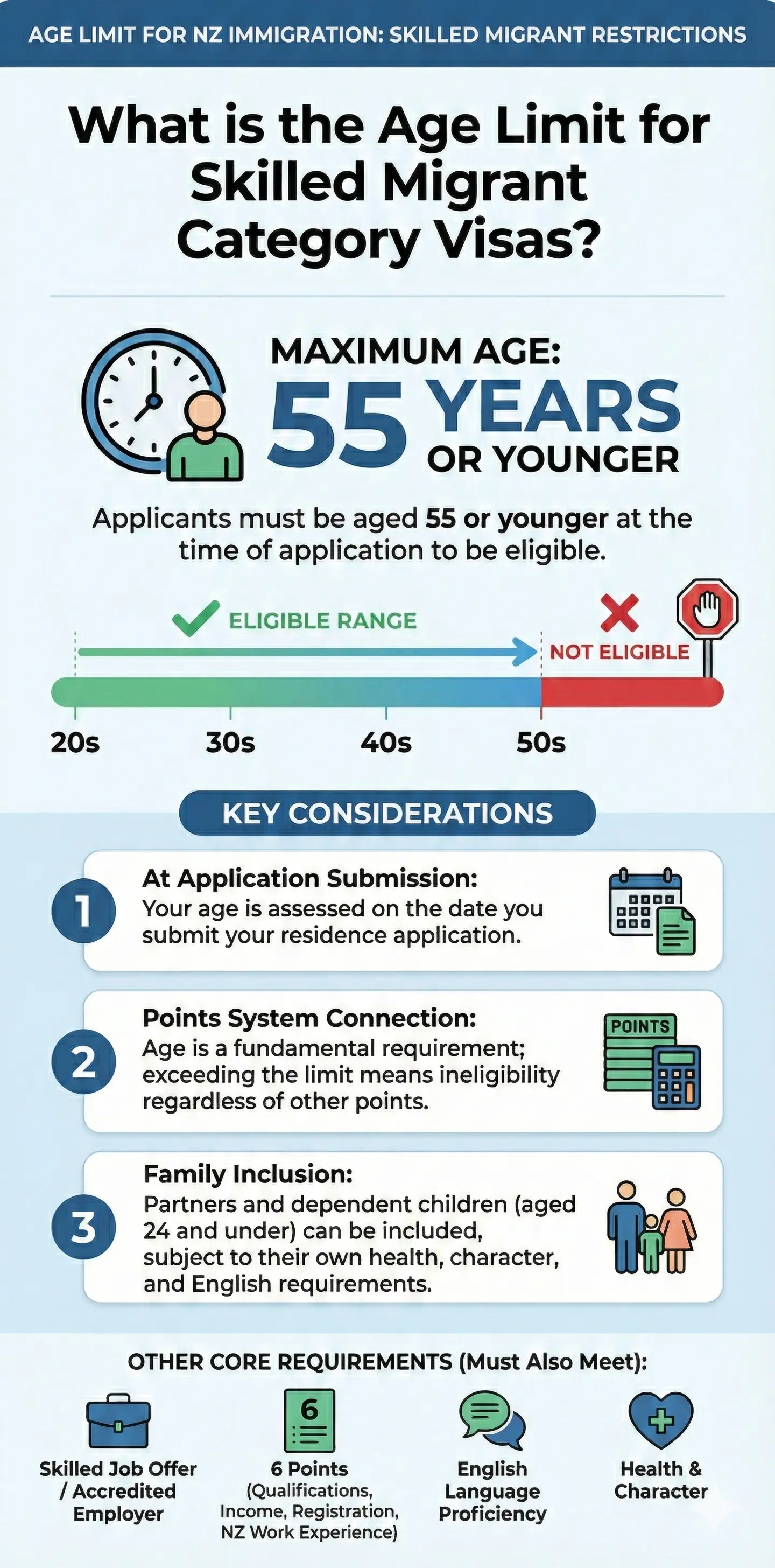
The core rule is straightforward: you must be 55 years or younger when you apply for the Skilled Migrant Category (SMC) Resident Visa. This limit applies to the principal applicant and has stayed firm through the 2026 reforms, ensuring the system prioritises younger workers who can contribute long-term to New Zealand's economy.
Family members included in the application—partners and dependent children—must also meet health, character, and age-related requirements, though the 55-year cap primarily targets the main applicant. Immigration New Zealand (INZ) enforces this strictly to align with workforce needs in sectors like healthcare, construction, and tech.
Why 55 Years? New Zealand's Immigration Rationale
New Zealand sets the age limit at 55 to balance attracting skilled migrants with protecting opportunities for locals and ensuring fiscal sustainability. Younger applicants are seen as more likely to integrate, upskill, and pay taxes over decades via IRD, KiwiSaver contributions, and ACC levies.
Official consultations confirm no broad changes to this threshold, though INZ is exploring exceptions for highly specialised medical roles where training takes decades domestically. For most, hitting 56 means exploring alternatives like investor visas or family sponsorships, not SMC.
Skilled Migrant Category 2026 Reforms: What Stays the Same
The 2026 SMC updates, effective August 2026, overhaul points and pathways but keep foundational requirements intact. Alongside the 55-year age limit, you'll need:
- English language proficiency (IELTS 6.5 or equivalent).
- Good health and character checks.
- A skilled job or job offer in New Zealand (ANZSCO levels 1-3).
These basics ensure only committed, capable migrants proceed, safeguarding Kiwi jobs and public services.
Key Changes in 2026: Beyond the Age Limit
While age restrictions endure, the reforms lower barriers elsewhere, making SMC viable for more under-55 applicants. The simplified six-point system now values real-world skills, with salary thresholds tied to the median wage—around $33.55 per hour or $69,800 annually as of 2026 (full-time equivalent).
New Pathways to Meet the Six Points
Two fresh routes target experienced workers previously sidelined:
Skilled Work Experience Pathway
For hands-on pros without degrees:
- 5+ years relevant experience, including 2 years in New Zealand at 1.1 times median wage.
- Skilled occupation (ANZSCO 1-3).
Trades & Technician Pathway
For vocational experts:
- Level 4+ NZQF qualification.
- 4+ years post-qualification experience, including 18 months in New Zealand at median wage.
- Approved trades like electricians, plumbers, or mechanics.
These cut prior needs like 3 years' NZ experience to 18-24 months, easing transitions for Accredited Employer Work Visa holders.
Other Practical Shifts
- No wage hikes at application: Maintain median wage throughout NZ employment—no last-minute increases.
- Bonus points for NZ qualifications: International graduates claim more for local study/work.
- Priority processing for SMC, Straight to Residence, and Work to Residence visas.
Kiwi employers benefit too: retain nurses from Auckland hospitals or builders in Christchurch without visa churn.
Who Qualifies Under the 55-Year Age Limit?
If you're 55 or under with a skilled role, check these profiles:
| Profile | Key Requirements | Example |
|---|---|---|
| International Graduate | NZ degree + 18-24 months work | IT grad in Wellington earning median wage |
| Experienced Professional | 5 years exp + 2 years NZ at 1.1x median | Engineer from India with Auckland firm |
| Tradesperson | Level 4 qual + 18 months NZ work | Plumber in construction shortage area |
Over-55? Rare medical exceptions may apply—consult INZ. Partners/kids can join if principal qualifies.
Practical Tips for Kiwis and Migrants
As a Kiwi employer, sponsor via Accredited Employer Work Visa first—leads to SMC after 2 years. Migrants: secure skilled work via Seek.co.nz or Trade Me Jobs, then build NZ experience.
- Verify skills: Use INZ's skill checker tool.
- Track wages: Log payslips for IRD median wage proof (updates quarterly via Stats NZ).
- Plan family: Include dependents early; check ACC portability.
- Seek advice: Use licensed advisers via iaa.govt.nz—avoid scams.
- Prepare docs: Passports, quals, police certs upfront.
Budget $4,000-$6,000 NZD for fees, tests, and advice. KiwiSaver access post-residence boosts settlement.
Common Pitfalls to Avoid
- Ignoring age: Applications turn 56 mid-process get declined.
- Low wages: Below median voids pathways.
- Unskilled jobs: ANZSCO 4-5 won't count.
- Health/character fails: Get checks early.
FAQ
What is the exact age limit for Skilled Migrant Category in 2026?
You must be 55 or younger at application—no changes in reforms.
Can I apply if I'm over 55?
Generally no, but limited medical specialist exceptions under review. Consider other visas.
Do family members have an age limit?
Principal applicant capped at 55; dependents face health/character rules, no strict age cap.
When do 2026 changes start?
August 2026—prepare Accredited Employer visas now.
What's the median wage for pathways?
Approximately $69,800/year full-time (2026); check Stats NZ quarterly.
Can NZ graduates skip work experience?
No, but reduced to 18 months with bonus points.
Next Steps for Success
Under 55 with skills? Start with INZ's online eligibility test at immigration.govt.nz. Employers: accredit via MBIE. Consult a licensed adviser for tailored plans—residency unlocks KiwiSaver growth, ACC coverage, and family stability. Changes favour practical Kiwis and migrants building our future—act before August 2026.
Disclaimer: Immigration rules evolve; this isn't advice. Consult professionals or INZ for your situation. Financial impacts? Speak to an adviser re IRD tax, KiwiSaver.
Related Articles

Working Multiple Jobs NZ: Tax and Legal Considerations
Juggling multiple jobs can boost your income, but it's crucial to understand the tax implications and legal requirements that come with working more than one role in Aotearoa. Whether you're a contrac...

Name Changes NZ: Legal Process and Costs
Considering a fresh start with a new name? Whether it's after marriage, divorce, or simply embracing a personal transformation, changing your name in New Zealand is straightforward but requires follow...

Holiday Home Tax Rules NZ: Private Use and Rental
Own a bach in Coromandel or a holiday home in Queenstown? You're not alone—many Kiwis cherish these escapes, but renting them out while enjoying personal use can trip you up on tax rules. Getting the...

Industry Bodies and Professional Associations NZ
Whether you're launching a business, advancing your career, or navigating financial regulations, industry bodies and professional associations in New Zealand offer invaluable support. These organisati...