Boarding Houses NZ: Tenant Rights and What to Expect

Thinking about moving into a boarding house in New Zealand? You're not alone—many Kiwis choose this affordable option, especially in cities like Auckland, Wellington, and Christchurch where rental pri...
The Lifetimes NZ editorial team curates, fact-checks, and updates guides on personal finance, property, health, immigration, legal, business, and lifestyle topics relevant to Lifetimes NZ readers. Articles are produced with AI assistance and reviewed by the editorial team before publication.
Thinking about moving into a boarding house in New Zealand? You're not alone—many Kiwis choose this affordable option, especially in cities like Auckland, Wellington, and Christchurch where rental prices are steep. But while boarding houses offer convenience and lower costs, they come with unique rules under the Residential Tenancies Act 1986 (RTA). Knowing your tenant rights can protect you from unexpected rent hikes, unfair evictions, or substandard living conditions. This guide breaks down everything you need to expect in boarding houses NZ: tenant rights, so you can settle in confidently.
What Exactly is a Boarding House in New Zealand?
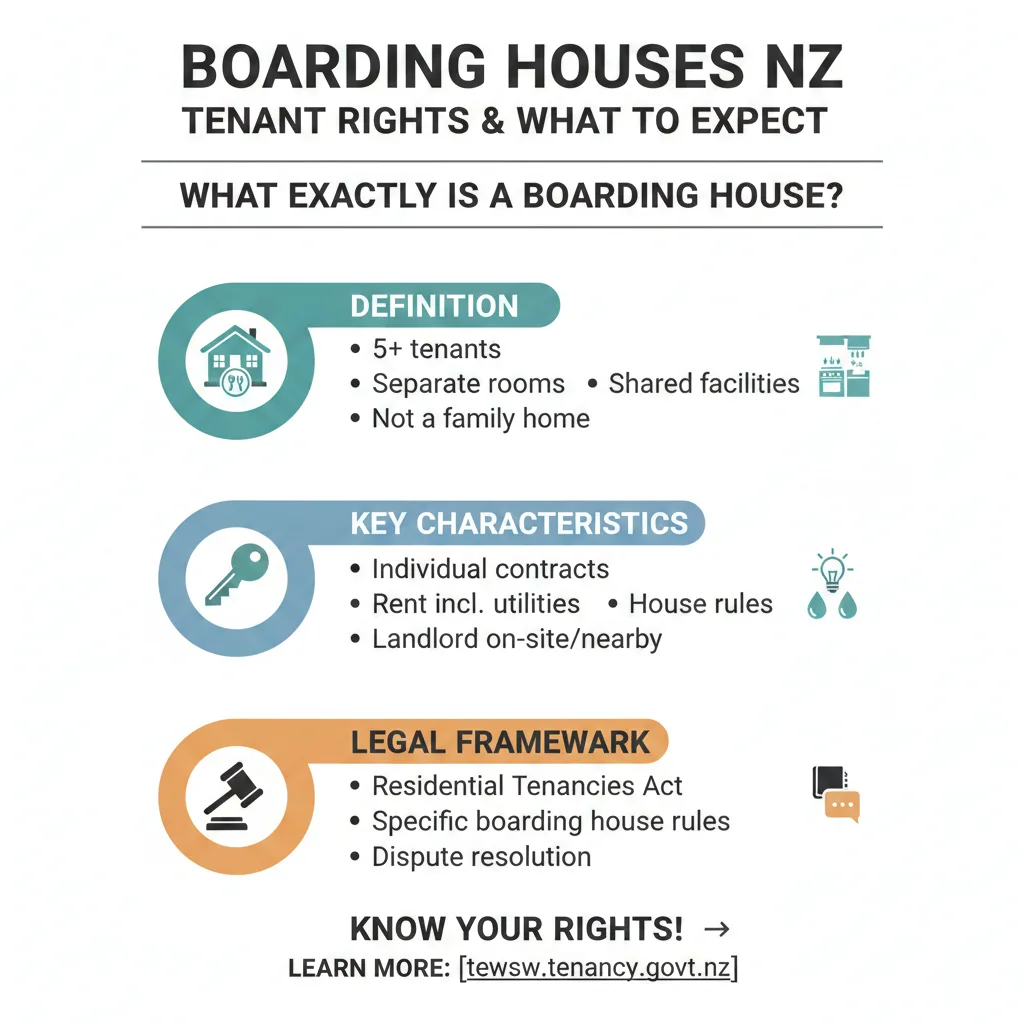
Boarding houses provide a distinct renting setup popular among students, young professionals, and those on budgets. Unlike flatting where you share a whole house under one agreement, a boarding house lets you rent just your room (or sleeping space) while sharing communal areas like kitchens and bathrooms.
To qualify as a boarding house under the RTA:
- It must house (or intend to house) at least six tenants at any time.
- Each tenant has an individual tenancy agreement with the landlord for exclusive use of their room or space.
- The stay must last (or be intended to last) 28 days or more—short-term stays under 28 days fall outside full RTA protections.
- Shared facilities are standard, such as kitchens, bathrooms, and lounges.
Boarding House vs Flatting vs Standard Tenancy
Getting this right matters for your rights. Here's a quick comparison:
| Feature | Boarding House | Flatting (Flatmates) | Standard Tenancy |
|---|---|---|---|
| Number of Tenants | 6+ intended | Any, under head tenant | 1-5 typically, whole property |
| Agreement | Individual per room | With head tenant (not always RTA) | Joint for whole house/flat |
| Minimum Stay for RTA | 28 days | N/A (contract-based) | No minimum |
| Landlord Access | Communal areas anytime; rooms with notice | Via head tenant rules | 48 hours notice usually |
If your setup doesn't meet these criteria, you might only have contract law or local council bylaws protecting you—check with your city council.
Your Key Tenant Rights in Boarding Houses NZ
The RTA offers solid protections for boarding house tenants, but with tweaks for the shared setup. Landlords must follow these, or you can apply to the Tenancy Tribunal for remedies like rent refunds or compensation.
Right to Exclusive Room Access
You have exclusive rights to your room or assigned sleeping space—no one else can use it without your okay. Landlords must ensure 24-hour access to your room, toilet, and bathroom facilities.
Notice Periods for Ending Tenancy
Landlords need 28 days' written notice to end your tenancy (periodic, not fixed-term usually). Exceptions include:
- Immediate if you damage property, threaten others, or disrupt seriously.
- 48 hours if rent is overdue after a 10-day notice to pay.
- Illegal use or abandonment.
You also give 28 days' notice to leave, unless the agreement states otherwise (but can't be less).
Rent Increases and Payments
Rent can rise, but only with 28 days' written notice, and not within 12 months of the last increase (per 2026 rules). It must be market-rate fair—no automatic hikes.
- Pay rent on time to avoid eviction risks.
- Bonds up to 4 weeks' rent are common; must be lodged with Tenancy Services within 23 working days.
Landlord Entry Rules
Landlords can enter communal areas anytime without notice. For your room:
- 24 hours' written notice normally.
- Immediate for emergencies, serious risks, or with your consent.
House rules (e.g., no pets, quiet hours) must be displayed and not contradict the RTA. Copies of rules and fire evacuation plans must be visible.
Healthy Homes and Maintenance
Boarding houses must meet Healthy Homes Standards (fully phased in by 2026), covering heating, insulation, ventilation, moisture, draughts, and drainage. Landlords handle common area cleaning and maintenance—you report issues promptly.
Tenants can't withhold rent for repairs; notify in writing instead.
Tenant Responsibilities: What Landlords Expect
Rights go both ways. Keep things smooth by meeting these RTA duties:
- Pay rent on time.
- Keep your room and shared spaces reasonably clean.
- Report damage or repairs immediately.
- Don't damage property, disturb others, or make unapproved changes.
- Use for residential purposes only (no businesses).
- Leave clean and return keys/items on exit.
- Stick to occupancy limits.
Boarding-specific: Respect shared facilities and follow displayed rules.
Bonds, Bills, and Financial Tips for Boarding House Tenants
Boarding suits tight budgets, but watch finances. Bonds (up to 4 weeks' rent) protect against damage or unpaid rent—get yours back by leaving tidy.
Bills like power, internet often fall to you individually, but confirm in your agreement. Rent income is taxable for landlords—check IRD if you're concerned about deductions passed to you.
Practical Money Tips
- Budget Check: Factor rent ($150-300/week in 2026 urban averages), bond, and 4 weeks' notice periods.
- IRD and Benefits: Boarding rent counts for accommodation supplements via WINZ. Declare correctly for KiwiSaver or tax.
- Bond Lodgement: Verify it's with Tenancy Services—use their bond centre search.
- Disputes: Tribunal claims up to $35,000; no lawyers needed.
Disclaimer: This isn't personalised financial advice. Consult a professional advisor or IRD for your situation.
Common Pitfalls and How to Avoid Them
Many Kiwis face issues like surprise entries or unclean commons. Tips:
- Read the Agreement: Ensure it details rent, bond, rules, and facilities.
- Photos on Move-In: Document your room's condition.
- Communicate: Written notices for everything—email works.
- Check Compliance: Ask for Healthy Homes report; report issues to Tenancy Services.
- Local Rules: Some councils (e.g., Auckland) have extra bylaws—contact them.
If things go wrong, contact Community Law, Citizens Advice, or Tenancy Services hotline first.
FAQ: Boarding Houses NZ Tenant Rights
1. Do boarding houses require a written tenancy agreement?
Yes, ideally—covers rights, rules, rent. Verbal agreements have basic protections, but written is best.
2. Can landlords lock me out for unpaid rent?
No—must follow 10-day notice, then 48-hour process. Self-help evictions illegal.
3. What if shared areas are always dirty?
Landlord responsible for cleaning commons. Complain in writing; escalate to Tribunal if ignored.
4. Are pets allowed in boarding houses?
Usually no—house rules often ban them. Check agreement; RTA allows reasonable rules.
5. How do I get my bond back?
Landlord lodges it; apply jointly post-exit. Disputes go to Tribunal—provide cleaning evidence.
6. Does the RTA cover student boarding houses?
Yes, if 6+ tenants, 28+ days, exclusive rooms—even in backpacker-style spots with long-stayers.
Next Steps: Secure Your Boarding House Tenancy
Ready to move? Inspect thoroughly, snap photos, sign only clear agreements, and lodge bonds properly. For disputes, head to Tenancy Services or the Tribunal. Staying informed keeps your rights strong—bookmark this for reference. If budgeting, chat with WINZ or a financial advisor to maximise support like Accommodation Supplement.
Boarding houses offer flexible living for Kiwis, but knowledge is your best defence. Rent smart, live well.
Related Articles

Working Multiple Jobs NZ: Tax and Legal Considerations
Juggling multiple jobs can boost your income, but it's crucial to understand the tax implications and legal requirements that come with working more than one role in Aotearoa. Whether you're a contrac...

Name Changes NZ: Legal Process and Costs
Considering a fresh start with a new name? Whether it's after marriage, divorce, or simply embracing a personal transformation, changing your name in New Zealand is straightforward but requires follow...
Holiday Home Tax Rules NZ: Private Use and Rental
Own a bach in Coromandel or a holiday home in Queenstown? You're not alone—many Kiwis cherish these escapes, but renting them out while enjoying personal use can trip you up on tax rules. Getting the...

Industry Bodies and Professional Associations NZ
Whether you're launching a business, advancing your career, or navigating financial regulations, industry bodies and professional associations in New Zealand offer invaluable support. These organisati...