Campervan Living NZ: Freedom Camping Rules 2025
Imagine waking up to the sound of waves lapping at Ninety Mile Beach or the mist rising over Lake Taupo, all without paying a cent for a campsite. That's the allure of campervan living NZ, where freed...
Sarah covers personal finance, tax, and KiwiSaver topics for Lifetimes NZ. She focuses on making money management straightforward and practical for everyday Kiwis.
Imagine waking up to the sound of waves lapping at Ninety Mile Beach or the mist rising over Lake Taupo, all without paying a cent for a campsite. That's the allure of campervan living NZ, where freedom camping offers Kiwis and visitors alike a taste of true adventure. But with new rules kicking in through 2025 and beyond, getting it right means knowing the Freedom Camping Rules 2025 inside out to avoid fines and protect our precious landscapes.
In this guide, we'll break down everything you need to know about freedom camping in New Zealand as of 2026, from self-containment certifications to local bylaws and responsible practices. Whether you're a seasoned van-lifer saving on KiwiSaver contributions or a family hitting the road for the holidays, these rules ensure you can roam responsibly while keeping costs low.
What is Freedom Camping in New Zealand?
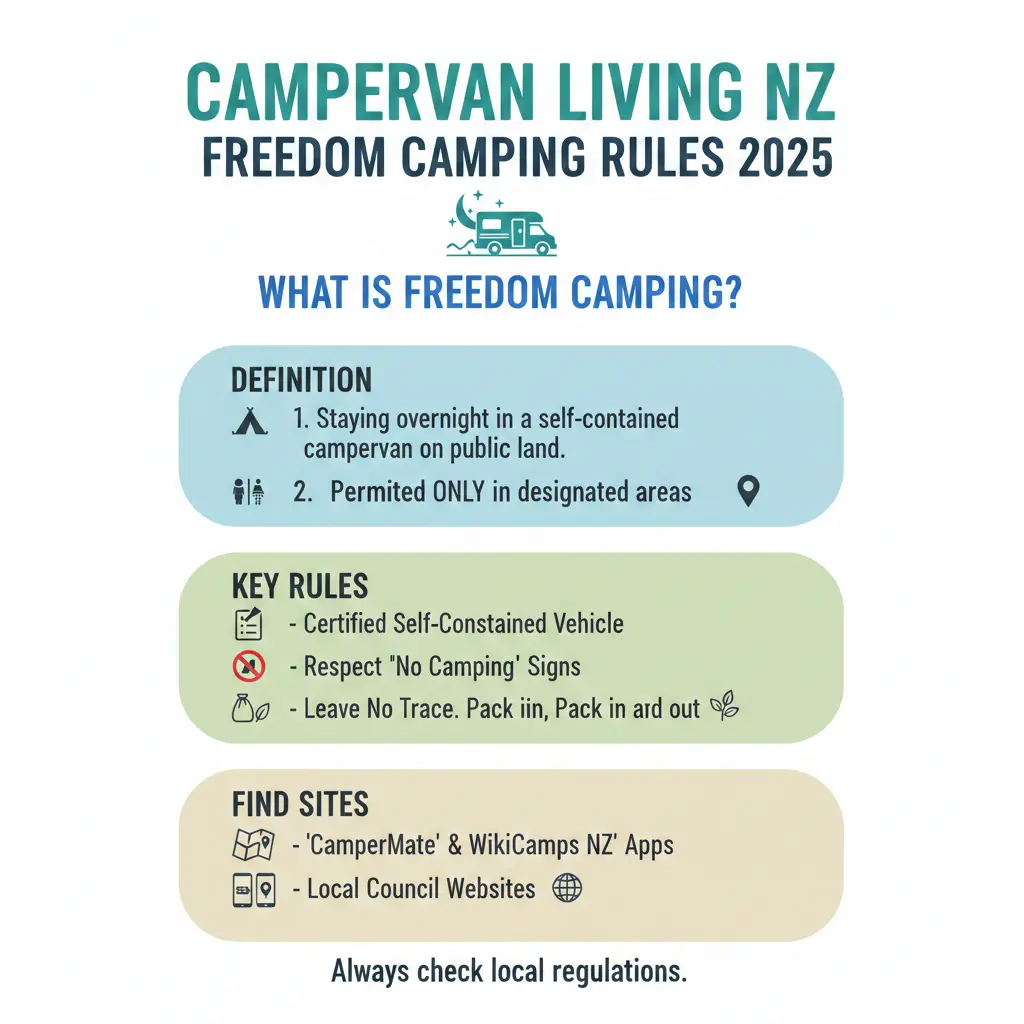
Freedom camping is defined under the Freedom Camping Act 2011 as camping in a location that's not a designated campground, specifically within 200m of an area accessible by motor vehicle, within 200m of the mean low water spring line of any sea or harbour, or on or within 200m of a formed road or Great Walks track. It's the ultimate budget hack for campervan living NZ, letting you park up on public land without hookups or fees, but only where permitted.
On Department of Conservation (DOC) land, freedom camping is generally allowed except where prohibited or restricted, such as scenic reserves or areas with conservation concerns. Local councils, however, set their own bylaws – some ban it near towns, others limit stays to one night in carparks. Always check signage: a "No Camping" sign means exactly that, while "Self-Contained Vehicles Only" restricts it to certified vans.
Freedom Camping vs DOC Campsites and Holiday Parks
- Freedom camping: Free, wild spots on public land – think beachfront laybys or DOC backcountry.
- DOC campsites: Over 320 low-cost options with basic facilities, ideal backups during peak season.
- Holiday parks: Powered sites with showers and kitchens, often requiring minimum stays of 3 nights in summer.
Pro tip: Use apps like CamperMate or Rankers Camping NZ to scout legal spots and read reviews – they're lifesavers for avoiding fines.
Self-Containment Certification: The Golden Ticket for 2025 and 2026
To freedom camp legally on most local authority land, your campervan must be certified self-contained, proving it can manage waste independently for up to 3 days per person. Until 7 June 2026, private vehicles can use a 'Blue warrant' or 'Green warrant'. From 7 June 2026, all must switch to the stricter 'Green warrant' and display it prominently.
Key 2026 requirements include:
- A fixed toilet (not portable) bolted to the floor, with at least 3L capacity per person, usable even with the bed made.
- Separate grey and black water tanks holding 3 days' worth per person.
- Fresh water tank of at least 20L per person.
- No leaks, proper seals, and a waste disposal system.
Get certified through approved inspectors via the New Zealand Motor Caravan Association – costs around $150-200 and lasts 2 years. Rentals from companies like Spaceships remain compliant during transitional periods, but verify before booking.
"Your campervan MUST have a certified fixed toilet... to freedom camp legally in many areas."
Blue vs Green Warrants: What's Changing?
| Warrant Type | Valid Until | Requirements | Notes |
|---|---|---|---|
| Blue/Green (transitional) | 7 June 2026 | Current self-containment standards | Private vehicles OK for now |
| Green (new) | From 7 June 2026 | Fixed toilet, larger tanks, display card mandatory | No portable toilets allowed |
These changes, finalised in early 2025, aim to curb environmental damage from non-compliant vans.
Where Can You Freedom Camp? DOC Land, Councils, and Restrictions
On DOC Land
Freedom camping is permitted on public conservation land unless signage or rules say otherwise – no fires, no damage to flora/fauna, and pack out all waste. Prohibitions apply in:
- Scenic and recreation reserves (unless DOC-approved campsites exist).
- Protected sites like urupā or endangered species habitats.
- Areas with overnight limits or self-contained only rules.
Dogs are banned in national parks; check bylaws elsewhere.
On Local Council Land
Council bylaws vary wildly:
- Queenstown Lakes District: Allowed in 15 designated carparks (141 spaces) for certified vans – arrive after 6pm, leave by 8am, max 2 nights/30 days. Rural laybys OK with conditions; urban parking banned. Fines from $400. Temporary ban in some spots Jan-Apr 2026.
- Many districts prohibit within 1km of towns or limit to 1 night.
- Always contact the local council or check their website.
Popular spots like Lake Pukaki may cap stays at 1 night – read app descriptions and signage religiously.
Rules and Responsibilities: Stay Legal and Leave No Trace
Core rules for all freedom camping:
- Obey all signs and bylaws.
- Manage waste responsibly – empty at certified dump stations only.
- No fires outside your vehicle.
- No damage to environment or neighbours.
- Limit stays: Typically 2-4 nights max, check locally.
Infringements carry fines via the Freedom Camping Act – don't risk it. Apps and DOC visitor centres are your best mates for planning.
Financial Tips for Campervan Living NZ
Freedom camping slashes costs – no site fees means more for fuel, food, or KiwiSaver top-ups. Budget $50-100/week on waste disposal and DOC sites as backups. Track expenses via apps to claim IRD deductions if working remotely. Remember, this isn't financial advice – consult a pro for your situation.
Planning Your Freedom Camping Trip: Actionable Tips
- Apps: CamperMate, Rankers – filter for self-contained sites.
- Vehicle choice: Opt for off-grid ready vans with solar, big batteries.
- Backup plans: Book holiday parks in peak summer; have $20 DOC fees ready.
- Seasonal smarts: Avoid Queenstown peaks; head to quieter South Island spots.
- Waste strategy: Map dump stations via govt.nz.
Frequently Asked Questions
Related Articles

Industry Bodies and Professional Associations NZ
Whether you're launching a business, advancing your career, or navigating financial regulations, industry bodies and professional associations in New Zealand offer invaluable support. These organisati...

Emergency Benefit NZ: When You Have No Other Options
When you're struggling financially and don't qualify for other benefits, the Emergency Benefit might be your lifeline. It's a discretionary payment designed for Kiwis in genuine hardship who've exhaus...

Unpaid Internships NZ: Are They Legal?
Unpaid internships are a common pathway for students and graduates to gain work experience in New Zealand, but there's often confusion about whether they're actually legal. The short answer is: unpaid...

Estate Administration NZ: Managing Someone's Affairs After Death
Losing a loved one is one of life's toughest challenges, and stepping in to manage their estate can feel overwhelming. In New Zealand, estate administration—the process of handling someone's affairs a...