Flexi-wage Subsidies: Help for Employers to Hire You
Imagine slashing your hiring costs while building a stronger, more skilled team—that's the promise of Flexi-wage subsidies for Kiwi employers. In today's competitive job market, these government-backe...
Sarah covers personal finance, tax, and KiwiSaver topics for Lifetimes NZ. She focuses on making money management straightforward and practical for everyday Kiwis.
Imagine slashing your hiring costs while building a stronger, more skilled team—that's the promise of Flexi-wage subsidies for Kiwi employers. In today's competitive job market, these government-backed payments make it easier to bring on talent who might otherwise face barriers to employment, helping your business thrive and supporting New Zealanders back into work.
Whether you're a small business owner in Auckland looking to expand or a regional employer needing skilled hands for community projects, Flexi-wage offers real financial relief plus training support.Flexi-wage Subsidies: Help for Employers to Hire You is more than a programme—it's a smart way to grow your workforce sustainably.
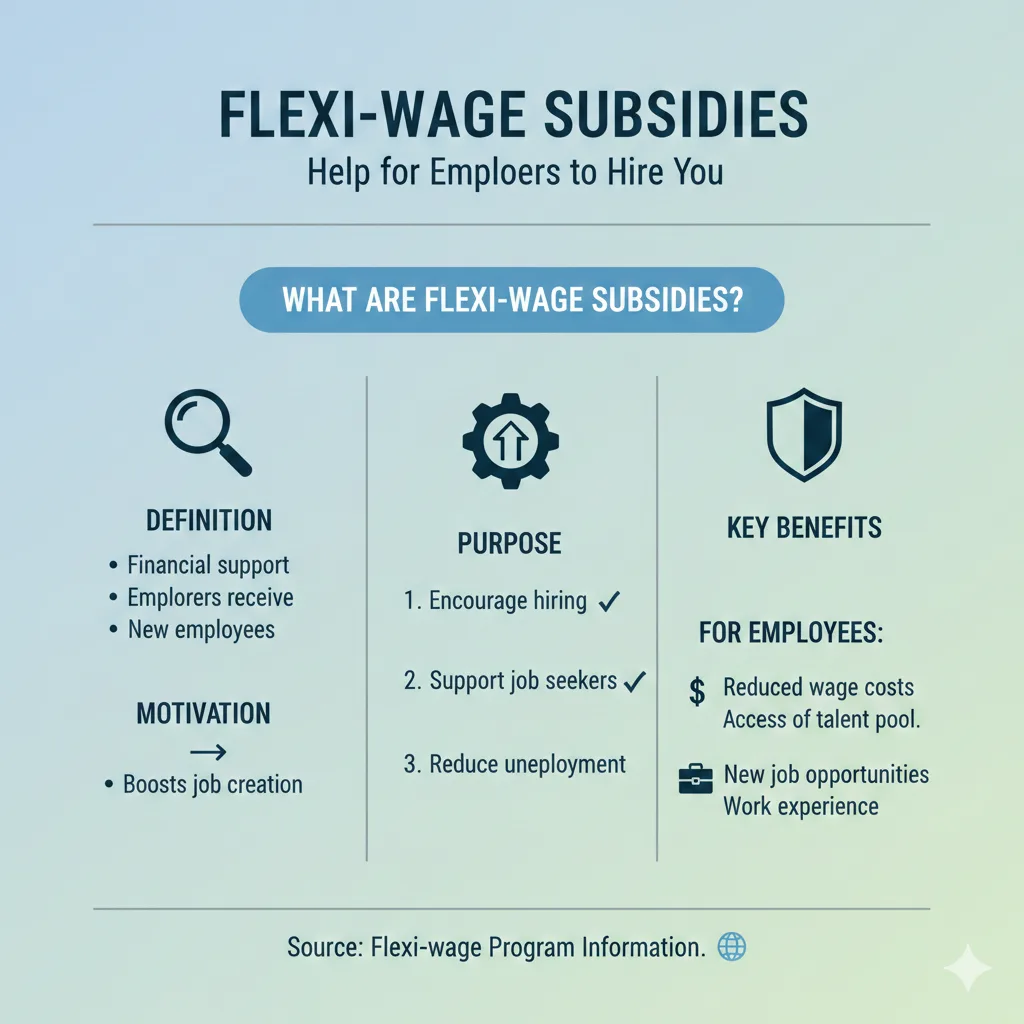
What Are Flexi-wage Subsidies?
Flexi-wage is an employment programme run by Work and Income that provides wage contributions to employers hiring eligible job seekers. It helps cover part of the new employee's wages while they gain the skills needed for the role, including on-the-job training and ongoing support like regular check-ins.
The subsidy targets those who are disadvantaged in the workforce, at risk of long-term benefit dependency, or haven't worked for a while. For employers, it's a low-risk way to hire, reskill current staff, or fill roles in ongoing positions or community projects.
How Flexi-wage Works for Employers
Work and Income matches you with suitable candidates and assesses their support needs. Depending on this, you receive:
- Standard support (24 weeks): $5,638.68 (GST inclusive) total, or about $235 per week.
- Higher support (36 weeks): $11,277.36 (GST inclusive) total, or roughly $313 per week.
These amounts reflect 2026 rates, adjusted for the adult minimum wage of $23.50 per hour (for employees 16+ from 1 April 2026). You must pay at least this minimum wage, and the job can't be created by dismissing existing staff.
For special cases, like fixed-term community or environmental projects, Flexi-wage - Project in the Community provides tailored support to build transferable skills.
Who Qualifies for Flexi-wage?
Both employers and job seekers must meet strict criteria to ensure the programme benefits those who need it most.
Employer Eligibility
Any Kiwi business or organisation can apply if:
- The role is genuine—ongoing after subsidy ends, or a fixed-term project benefiting the community/environment with skill-building potential.
- You pay at least the adult minimum wage.
- No one was dismissed to create the vacancy.
- You're committed to training and support, such as pastoral care or skill development.
Even if reskilling a current employee at risk of redundancy, Flexi-wage can help transition them to a new role.
Job Seeker Eligibility
Candidates typically qualify if they:
- Are likely to need a benefit long-term without help.
- Haven't worked recently and need entry-level training.
- Face barriers like disabilities, health conditions, or long-term unemployment.
Work and Income checks both parties before approving. This includes people with disabilities, youth, or those post-COVID recovery needing a leg-up.
The Application Process: Step-by-Step Guide
Getting started is straightforward—Work and Income guides you through it.
- Contact Work and Income: Discuss your needs; they'll help find candidates and assess eligibility.
- Review support level: They'll evaluate the candidate's training needs to determine subsidy amount and duration.
- Sign contract: Receive a drafted agreement outlining subsidy details, payments, and support. Email back with your bank details for verification.
- Hire and claim: Once hired, submit claims (usually 4-weekly) for payments.
Processing is quick if criteria are met, with flexibility for complex needs. For self-employment variants, candidates pitch business ideas, but employer-focused Flexi-wage is simpler.
Tips for a Smooth Application
- Prepare job descriptions showing minimum wage, hours (meeting any obligations), and post-subsidy continuity.
- Highlight community benefits for project roles.
- Keep records of no redundancies to avoid issues.
- Engage early—regional variations exist due to past expansions.
Benefits of Flexi-wage for Kiwi Employers
Beyond cash savings, Flexi-wage delivers long-term gains. The 2021 expansion evaluation showed it as MSD's most effective hiring subsidy, boosting employment and incomes for participants.
Financial Savings
Offset up to 36 weeks of wages, freeing capital for growth. At 2026 rates, that's significant—e.g., $11,277 covers over half a minimum-wage salary for a full-time role.
Skilled, Loyal Workforce
Built-in training ensures quick productivity. Participants often stay longer, reducing turnover costs. Ideal for inclusive hiring, like those with disabilities.
Business Growth and Community Impact
Supports reskilling amid 2026 trends like flexible work and financial wellness. Community projects enhance your reputation while accessing funds.
"Flexi-wage remains the most effective hiring subsidy... improving employment and income outcomes."
Flexi-wage Success Stories from New Zealand
Real Kiwi examples show impact. A Wellington café hired a long-term job seeker via Flexi-wage, using the 36-week subsidy for barista training—now they're a star employee, and the business expanded. In regional Canterbury, a farm used it for a disability hire, combining wage help with pastoral support for a thriving role.
The 2021 expansion scaled participation, sustaining short-term employment gains despite implementation hiccups. Businesses report easier hiring in tight markets, especially post-economic recovery.
Flexi-wage vs Other Subsidies
| Subsidy | Duration | Amount (2026 GST incl.) | Best For |
|---|---|---|---|
| Flexi-wage | 24-36 weeks | $5,638-$11,277 total | Skill-building, disadvantaged hires |
| Project in Community | Fixed-term | Varies | Environmental/community projects |
| Self-Employment | Up to 52 weeks | Viability-based | Starting own business |
Flexi-wage stands out for employer subsidies, unlike self-employment options.
Common Challenges and How to Overcome Them
Past expansions caused regional inconsistencies and info gaps—mitigate by contacting local Work and Income early. Ensure candidates meet criteria to avoid rejections. For complex needs, leverage discretion for extra support.
Track claims diligently; late submissions delay payments. Always consult Work and Income for 2026 updates, as rates tie to minimum wage changes.
FAQ
1. How much does Flexi-wage pay in 2026?
Up to $5,638.68 over 24 weeks or $11,277.36 over 36 weeks (GST inclusive), based on support needs.
2. Can I use Flexi-wage for part-time roles?
Yes, as long as it meets minimum wage, hours for obligations, and is ongoing or qualifying project.
3. What if my candidate has a disability?
Absolutely—Flexi-wage supports those with disabilities or health conditions, including training.
4. Is Flexi-wage only for new hires?
No, it works for reskilling at-risk employees too.
5. How do I contact Work and Income for Flexi-wage?
Call 0800 555 005 or visit workandincome.govt.nz/employers.
6. Does Flexi-wage affect other benefits like KiwiSaver?
No direct impact, but hires must meet minimums; check IRD for tax/ACC obligations.
Next Steps: Get Flexi-wage Working for Your Business
Ready to hire smarter? Contact Work and Income today to explore candidates and subsidies. Review your roles against criteria, and consider how Flexi-wage fits your 2026 growth plans. This isn't just help—it's a pathway to a resilient team.
Disclaimer: This guide uses 2026 information. Wage rates and eligibility can change—always verify with Work and Income or a professional advisor for personalised advice. Not financial advice.
Related Articles

Industry Bodies and Professional Associations NZ
Whether you're launching a business, advancing your career, or navigating financial regulations, industry bodies and professional associations in New Zealand offer invaluable support. These organisati...

Emergency Benefit NZ: When You Have No Other Options
When you're struggling financially and don't qualify for other benefits, the Emergency Benefit might be your lifeline. It's a discretionary payment designed for Kiwis in genuine hardship who've exhaus...

Unpaid Internships NZ: Are They Legal?
Unpaid internships are a common pathway for students and graduates to gain work experience in New Zealand, but there's often confusion about whether they're actually legal. The short answer is: unpaid...

Estate Administration NZ: Managing Someone's Affairs After Death
Losing a loved one is one of life's toughest challenges, and stepping in to manage their estate can feel overwhelming. In New Zealand, estate administration—the process of handling someone's affairs a...