Food Banks NZ: Accessing Help When You Need It

When the cost of living squeezes your budget and the fridge is looking bare, knowing where to turn for help can make all the difference. Food banks across New Zealand provide essential support, delive...
Sarah covers personal finance, tax, and KiwiSaver topics for Lifetimes NZ. She focuses on making money management straightforward and practical for everyday Kiwis.
When the cost of living squeezes your budget and the fridge is looking bare, knowing where to turn for help can make all the difference. Food banks across New Zealand provide essential support, delivering food parcels and resources to Kiwis facing hardship—whether it's due to job loss, rising bills, or unexpected expenses.
In 2026, with one in four households struggling to put enough food on the table for their children, these services are more vital than ever.Food Banks NZ networks ensure no one goes without, from bustling Auckland to remote Southland communities. This guide walks you through how to access help, find local options, and understand eligibility, so you can get the support you need quickly and confidently.
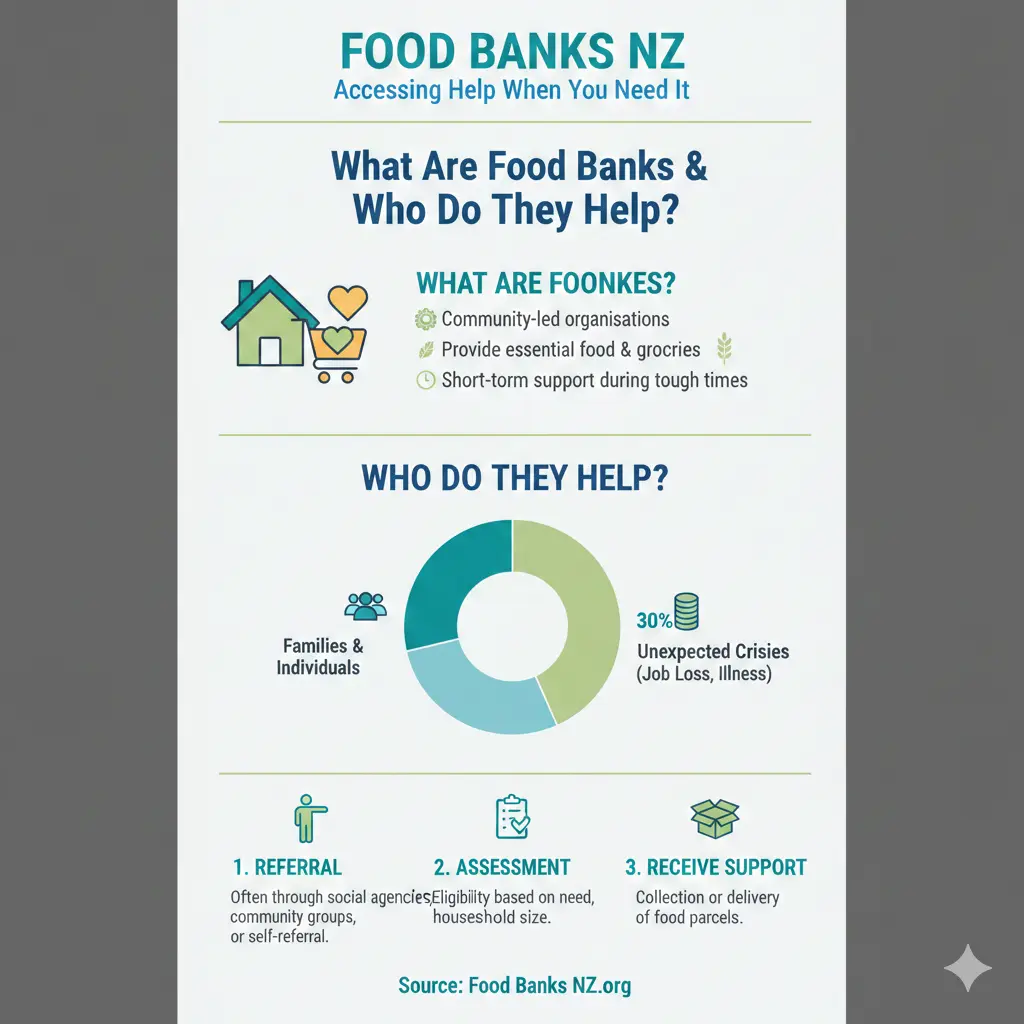
What Are Food Banks and Who Do They Help?
Food banks in New Zealand are charitable organisations that collect, store, and distribute food to individuals and families in need. They rescue surplus food from supermarkets, growers, and manufacturers, reducing waste while providing nutritious meals to those who can't afford them.They offer a vital safety net, especially when WINZ benefits, KiwiSaver withdrawals, or IRD tax credits aren't enough to cover essentials.
The network includes major players like the New Zealand Food Network (NZFN), which coordinates 65 registered Food Hubs nationwide, from Auckland City Mission to marae in remote areas. These hubs act as central points, distributing bulk donations to local charities, iwi, and community groups that provide frontline food parcels.
Key providers include:
- Salvation Army: New Zealand's largest food support provider, with food banks from Kaitaia to Invercargill. They supplied parcels to thousands last year alone, focusing on whānau wellbeing.
- Foodbank New Zealand: Maintains an online directory for easy access to local food banks across regions like Northland, Waikato, and Otago.
- NZ Food Network: Links donors with hubs for efficient redistribution, including Auckland hubs like KiwiHarvest and Grace Foundation.
- Local trusts, such as Salt Community Trust in North Auckland, offering temporary food security.
These services help a wide range of Kiwis: single parents on benefits, pensioners facing power bill hikes, migrants adjusting to new costs, and families hit by medical expenses not covered by ACC. No one is turned away solely for lacking ID—many operate on a needs basis.
Current Demand in 2026
Demand for food parcels has surged, with food banks struggling to meet needs amid 2026's economic pressures. The Salvation Army reports tremendous hardship, with children often bearing the brunt when budgets fall short. NZFN's 'Pitch In' campaign recently delivered over 200,000 meals, highlighting the scale of reliance on these networks.
How to Find a Food Bank Near You
Finding help is straightforward with online directories and helplines tailored for Kiwis. Start by identifying your region—Auckland, Wellington, Canterbury, or beyond—to locate the closest service.
Online Directories and Maps
- Visit Foodbank New Zealand's directory for region-specific lists: Northland, South Auckland, Taranaki/Whanganui, Otago, Waikato, Manawatu, Southland, Bay of Plenty, Wellington, and more.
- Check NZ Food Network's Food Hubs map for 65 locations, including detailed Auckland lists like BBM Motivation (South) and Visionwest (West).
- Salvation Army's store locator covers sites like Albany Bays and Ashburton.
For Auckland-specific needs, directories list dozens of options across central, west, east, and south areas.
Regional Breakdown
Here's a snapshot of availability:
| Region | Key Providers | Contact Tips |
|---|---|---|
| Auckland (Central/South/West) | Auckland City Mission, KiwiHarvest, Grace Foundation | Use Foodbank directory or call 0800 53 00 00 (Salvation Army) |
| Northland/Waikato | NZFN Hubs, local Salvation Army | Search Foodbank NZ by region |
| Wellington/Canterbury | St Vincent de Paul, Salvation Army | Check NZFN map for hubs |
| Southland/Otago | Southland hubs, Alexandra Salvation Army | Regional directories on Foodbank.co.nz |
Steps to Access Food Bank Help
Getting a food parcel typically takes minutes to arrange. Follow these actionable steps:
- Check eligibility informally: Most food banks assess need via a quick chat—no formal proof required upfront, though some ask for benefit letters from WINZ or ID.
- Contact your local provider: Call or visit the website/email. For Salvation Army, dial 0800 53 00 00 to find your nearest.
- Make an appointment: Many require bookings to manage demand—expect 3-5 days' notice in busy areas.
- Attend and choose: Select from available items suited to your household (e.g., dietary needs, kids' meals). Salvation Army emphasises choice for dignity.
- Access extras: Ask about budgeting courses, cooking classes via Te Kai Mākona, or referrals to financial mentoring.
Pro tip: If you're in a rural area, NZFN hubs extend reach to isolated spots via marae and iwi partners.
What to Expect at Your First Visit
Parcels usually cover 3-7 days' meals: staples like rice, pasta, tinned goods, fresh produce when available, and sometimes toiletries. No repayment needed—it's free support. In 2026, many incorporate food rescue for fresher options.
Eligibility and Who Qualifies
Food banks prioritise those in immediate need, but criteria vary:
- Low-income households (e.g., on Jobseeker Support, Sole Parent Support via WINZ).
- Families with children, especially if school lunches are unaffordable.
- Pensioners or those with high fixed costs like rent or power.
- No strict income test—it's about current hardship, not long-term finances.
If you're working but struggling post-tax (check IRD's 2026 rates: 10.5% up to $15,600, 17.5% to $53,500), you're still eligible. Pair with govt support like the 2026 Accommodation Supplement or Healthy Start vouchers for kids.
Additional Support Beyond Food Parcels
Food banks connect you to holistic help:
- Financial mentoring: Salvation Army offers goal-setting and budgeting.
- Skill-building: Free cooking on a budget, parenting courses.
- Other aid: Referrals to StudyLink for training, ACC for injuries, or KiwiSaver hardship withdrawals.
- Empowerment programmes: Te Kai Mākona teaches growing, sharing, and buying kai affordably.
Donate back when you can—many accept cash, non-perishables, or bulk via NZFN.
Next Steps: Take Action Today
Don't wait until the pantry's empty—reach out now. Start with Foodbank.co.nz's directory or Salvation Army's helpline. Combine with WINZ for benefits top-ups and IRD for tax relief. Remember, seeking help is a strong step towards stability.
Disclaimer: This guide provides general information. For personalised financial advice, consult a professional advisor or contact IRD/WINZ directly.
Frequently Asked Questions
Sources & References
-
1
Food Hubs Across New Zealand - NZ Food Network — www.nzfoodnetwork.org.nz
-
2
Foodbank New Zealand | Home — www.foodbank.co.nz
-
3
Find a Foodbank — www.foodbank.co.nz
-
4
Food Bank - Salt Community Trust — www.salttrust.org.nz
-
5
Food Banks - The Salvation Army NZ — www.salvationarmy.org.nz
-
6
Foodbanks Store Locator — www.foodbank.org.nz
-
7
Auckland Food Bank Directory - MoneyHub NZ — www.moneyhub.co.nz
Related Articles

Industry Bodies and Professional Associations NZ
Whether you're launching a business, advancing your career, or navigating financial regulations, industry bodies and professional associations in New Zealand offer invaluable support. These organisati...

Emergency Benefit NZ: When You Have No Other Options
When you're struggling financially and don't qualify for other benefits, the Emergency Benefit might be your lifeline. It's a discretionary payment designed for Kiwis in genuine hardship who've exhaus...

Unpaid Internships NZ: Are They Legal?
Unpaid internships are a common pathway for students and graduates to gain work experience in New Zealand, but there's often confusion about whether they're actually legal. The short answer is: unpaid...

Estate Administration NZ: Managing Someone's Affairs After Death
Losing a loved one is one of life's toughest challenges, and stepping in to manage their estate can feel overwhelming. In New Zealand, estate administration—the process of handling someone's affairs a...