Mental Health Crisis: Where to Get Help Right Now

If you're facing a mental health crisis right now, know that help is available across Aotearoa New Zealand—pick up the phone, text, or reach out online for immediate support tailored to Kiwis in distr...
The Lifetimes NZ editorial team curates, fact-checks, and updates guides on personal finance, property, health, immigration, legal, business, and lifestyle topics relevant to Lifetimes NZ readers. Articles are produced with AI assistance and reviewed by the editorial team before publication.
If you're facing a mental health crisis right now, know that help is available across Aotearoa New Zealand—pick up the phone, text, or reach out online for immediate support tailored to Kiwis in distress.
We've all heard stories of friends or whānau struggling silently, or seen the headlines about overwhelmed services. In 2026, our mental health landscape is evolving with new government investments and targeted initiatives, but accessing help during a crisis can still feel daunting. Whether it's you, a loved one, or a colleague calling 111 in a moment of desperation, this guide cuts through the noise. It delivers practical, up-to-date steps to get professional support fast, with a focus on New Zealand's unique services, from 24/7 helplines to emerging co-response teams.
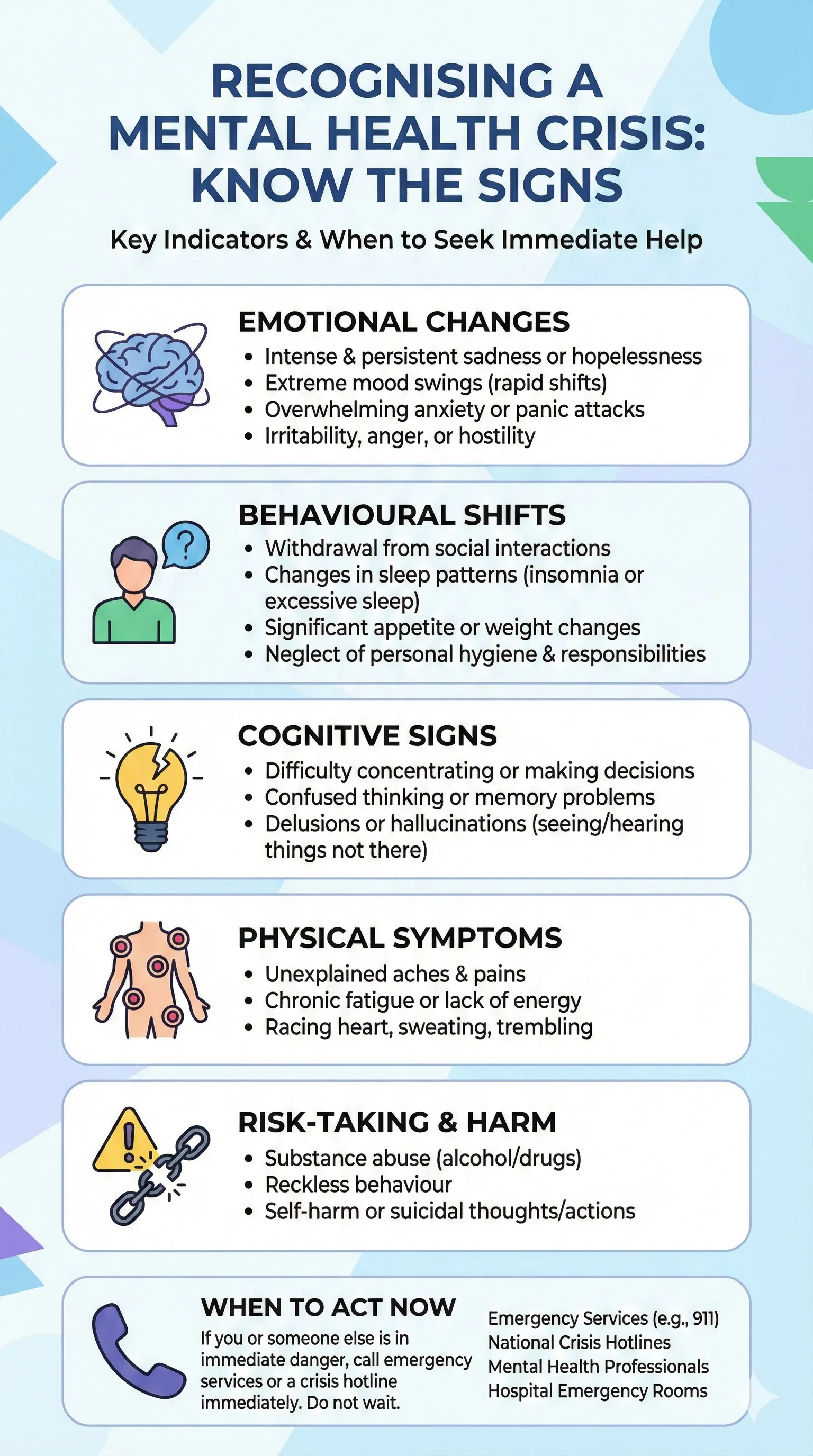
Recognising a Mental Health Crisis: Know the Signs
A mental health crisis isn't always dramatic—it's any situation where someone feels overwhelmed, unsafe, or unable to cope. Common signs include suicidal thoughts, severe anxiety or panic, hallucinations, extreme mood swings, or substance misuse escalating to harm. For Māori and Pasifika communities, cultural disconnection or whānau breakdown can intensify these.
In New Zealand, around 100 people access crisis mental health services daily, highlighting the scale of need. Rural Kiwis, rangatahi (youth), and those in remote areas often face fragmented support, making early recognition vital. If you're unsure, err on the side of caution—help is designed to meet you where you are.
Financial Strain and Mental Health: A Kiwi Reality
Money worries top the list of crisis triggers for many households. With living costs rising—think power bills, rent hikes, and KiwiSaver dips—financial stress fuels 40% of mental health presentations. IRD debts, WINZ delays, or job loss via economic shifts can push anyone over the edge. ACC claims for stress-related injuries are up, yet claims processing waits average 20 days, compounding distress.
Practical tip: If finances are the spark, contact MoneyTalks (0800 345 123) alongside mental health lines—they offer free budgeting advice integrated with wellbeing support.
Immediate Help: 24/7 Helplines and Crisis Lines
For instant, confidential support, New Zealand's helplines are your first port of call—no waitlists, no referrals needed.
- 1737—Need to Talk? Freecall or text 1737 anytime. Trained counsellors provide listening support, safety planning, and referrals. Available in te reo Māori via Rongoā ki runga i te waea.
- 0800 LIFELINE (0800 543 354) or text 'HELP' to 4357. 24/7 crisis counselling with a focus on suicide prevention.
- Youthline: 0800 376 633, text 234, or online chat. Tailored for under-25s navigating exams, relationships, or identity crises.
- What's Up? Kidsline for tamariki: 0800 543 754 (5pm-8pm weekdays, 10am-2pm weekends).
- Kaupapa Māori Services: Tū Rangatira (0800 887 333) for trauma-informed, whānau-centred support.
These lines handled over 500,000 calls in 2025, with wait times under 30 seconds on average. Pro tip: Save numbers in your phone now—during a crisis, every second counts.
Emergency: When to Call 111
If there's immediate danger to life—like suicide attempts, violence, or psychosis—dial 111 without hesitation. From June 2026, in Canterbury, Auckland, Bay of Plenty, and Counties Manukau, mental health professionals will co-respond with police to 111 mental distress calls. This $28 million Budget 2025 initiative shifts from a "criminal justice response" to health-led care on the spot.
"It's not right that, when a concerned mum, dad, friend or colleague calls 111 looking for a mental health response, they receive a criminal justice response." — Mental Health Minister Matt Doocey
Expect streamlined access to services, fewer Mental Health Act compulsions, and reduced ED or police station visits, based on Wellington pilots. Six more regions follow soon.
Local Crisis Assessment Teams (CATs) and Emergency Departments
Every Te Whatu Ora district runs Crisis Assessment Teams (CATs) for face-to-face evaluation. Call your local team via Healthline (0800 611 116) or head to your nearest ED. In 2025/26, targets aim for shorter MH&A-related ED stays, with data showing progress in urban centres.
- Auckland: Tāmaki CAT (09 623 9933 after hours).
- Wellington: Capital & Coast CAT (0800 936 944).
- Christchurch: Canterbury DHB CAT (0800 503 467).
- Rural? Districts like Tairāwhiti offer flexible, whānau-inclusive models.
New protocols mandate 60-minute police-to-ED handovers and 30-minute transfers from custody under the Mental Health Act. For addictions intertwined with crises, find services via Healthpoint or alcohol/drug helplines.
Emerging Supports: Co-Response Teams and National System Push
By 30 June 2026, 10 co-response teams nationwide will transform 111 responses, building on pilots cut in 2018 but revived with $28 million. Te Hiringa Mahara calls for a national crisis system by mid-2026: 24/7 phone support, consistent pathways, and culturally safe options like peer-led cafés and kaupapa Māori hubs.
Additional investments total $61.6 million for peers in EDs, crisis cafés, and acute alternatives. Suicide Prevention Action Plan 2025-2029 sets up regional crisis services in six areas by June 2026. Lived experience workforces—peers with personal recovery stories—are expanding, especially for youth and rural Kiwis.
Access & Choice Services: Free Primary Support
Funded by Te Whatu Ora, Access & Choice (A&C) offers free initial mental health sessions. IPMHA, Youth, Pacific, and Kaupapa Māori streams cover 80% of activity, with full data integration by 2026/27. Call 0800 443 332 or visit health.govt.nz for your local provider—no GP referral needed in most cases.
Financial Lifelines During a Crisis
Mental health crises hit wallets hard—lost wages, therapy costs, meds. Here's Kiwi-specific relief:
- WINZ: Apply for Emergency Benefit or Hardship Assistance online or via 0800 559 009. Mental health qualifies for priority processing.
- KiwiSaver Hardship Withdrawals: For serious illness, including mental health, via your provider—up to $5,000 tax-free if certified.
- StudyLink: Student Allowance sickness payments if uni stress triggers crisis.
- ACC: Cover for mental injury from trauma (e.g., assault); claim online, sensitivity training for MH cases improving.
- IRD: Non-recovery of penalties if mental health impacts compliance—call 0800 227 774.
Budgeting tip: Use Sorted.org.nz tools alongside helplines for integrated money-mentality plans.
Longer-Term Recovery: Building Resilience
Post-crisis, prevention targets emphasise early intervention via primary MH&A services. Join support groups via Family Services Directory, or apps like Spark Your Mātauranga for Māori wellbeing. Workplace EAPs cover many Kiwis—check with HR.
For addictions, district alcohol/drug services are free; gambling via 0800 654 655.
FAQ
What do I do if I'm in crisis right now?
Call or text 1737 immediately—it's free, 24/7, and anonymous. For life-threatening situations, dial 111.
Are these services free for all Kiwis?
Yes, publicly funded helplines, CATs, and A&C are free. Some therapies may have co-pays; check WINZ for aid.
What if I'm Māori or Pasifika?
Access kaupapa Māori services via 1737 or Tū Rangatira (0800 887 333). Pacific options through A&C workstreams.
Help for kids or youth?
Youthline (0800 376 633/text 234) or What's Up? (0800 543 754). Schools have counsellors via RTLB.
When will co-response teams be everywhere?
First four regions by 30 June 2026; 10 total nationwide soon after.
How does financial stress link to crises?
It triggers 40% of cases—use MoneyTalks (0800 345 123) with MH lines for dual support.
Your Next Steps: Take Action Today
Don't wait for rock bottom. Save 1737 in your phone, talk to a whānau member, or book an A&C appointment. Track progress with a wellbeing journal, and if finances bite, hit WINZ or IRD pronto. Our system's imperfect but improving—$28 million in co-response teams and national reforms signal real change.
Seek professional advice for your situation. This isn't financial advice—consult a counsellor or advisor. Together, we can turn the tide on New Zealand's mental health crisis.
Related Articles

Industry Bodies and Professional Associations NZ
Whether you're launching a business, advancing your career, or navigating financial regulations, industry bodies and professional associations in New Zealand offer invaluable support. These organisati...

Emergency Benefit NZ: When You Have No Other Options
When you're struggling financially and don't qualify for other benefits, the Emergency Benefit might be your lifeline. It's a discretionary payment designed for Kiwis in genuine hardship who've exhaus...

Unpaid Internships NZ: Are They Legal?
Unpaid internships are a common pathway for students and graduates to gain work experience in New Zealand, but there's often confusion about whether they're actually legal. The short answer is: unpaid...

Estate Administration NZ: Managing Someone's Affairs After Death
Losing a loved one is one of life's toughest challenges, and stepping in to manage their estate can feel overwhelming. In New Zealand, estate administration—the process of handling someone's affairs a...