Subletting Your Rental: Rules and Risks in NZ

Subletting your rental property can be an attractive option when life circumstances change—whether you're relocating temporarily, sharing costs, or managing financial pressures. However, in New Zealan...
Sarah covers personal finance, tax, and KiwiSaver topics for Lifetimes NZ. She focuses on making money management straightforward and practical for everyday Kiwis.
Subletting your rental property can be an attractive option when life circumstances change—whether you're relocating temporarily, sharing costs, or managing financial pressures. However, in New Zealand, subletting isn't as simple as finding someone to take over your lease. There are specific legal requirements, potential risks, and obligations you need to understand before you hand over the keys to someone else. This guide walks you through the rules, responsibilities, and practical steps to sublet legally and safely.
What is Subletting?
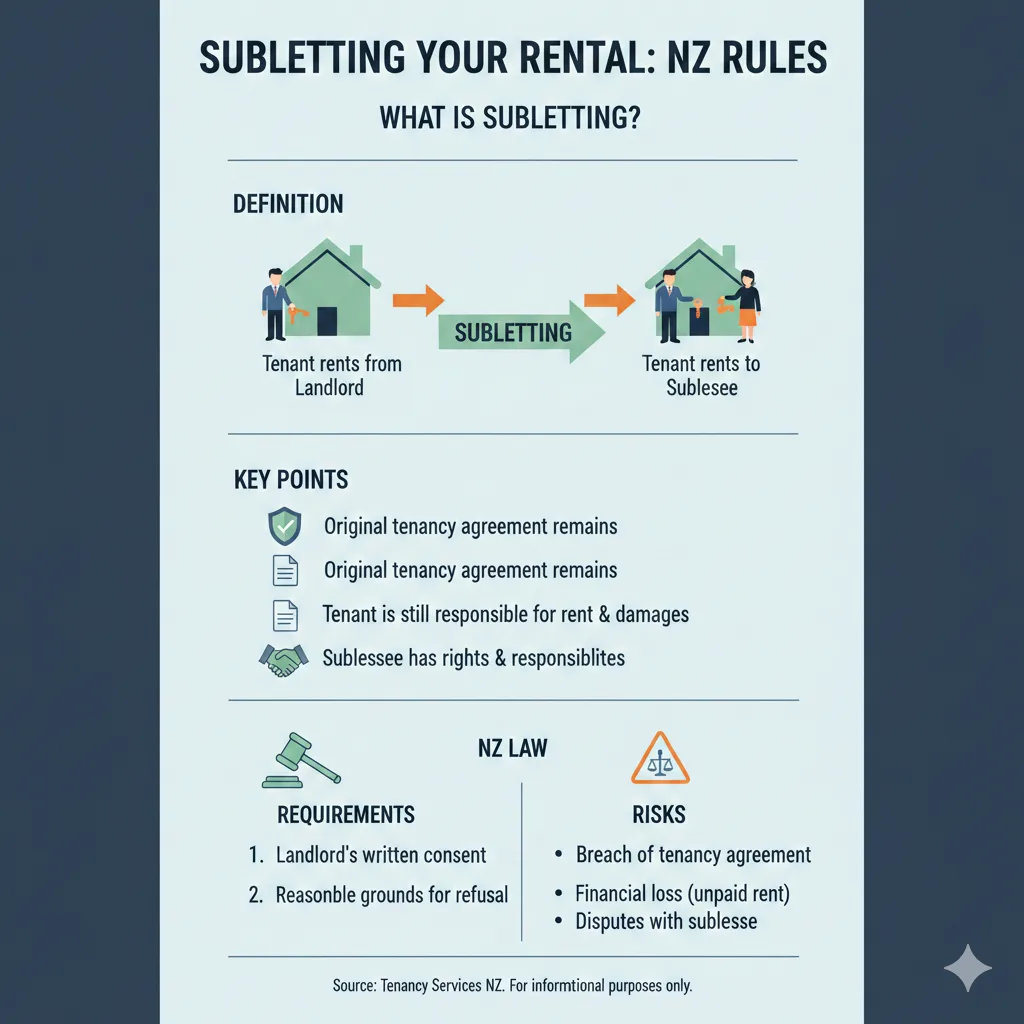
Subletting occurs when a tenant rents out their rental property, or part of it, to another person—known as a sub-tenant. When you sublet, you become a sub-landlord, taking on landlord responsibilities while still remaining a tenant under your original tenancy agreement. This means two tenancy agreements exist simultaneously: one between you and your landlord, and another between you and your sub-tenant.
It's important to understand that subletting is different from assigning a tenancy. With subletting, you retain your original tenancy agreement and remain responsible to your landlord. With assignment, you'd be transferring your entire tenancy to someone else.
The Legal Requirements for Subletting in New Zealand
You Must Get Your Landlord's Written Consent
The most critical rule: you cannot sublet without your landlord's written permission. The Residential Tenancies Amendment Act 2020 gave tenants the right to sublet unless their tenancy agreement explicitly forbids it. However, even if your agreement doesn't mention subletting, you still need written consent from your landlord.
The good news is that landlords cannot unreasonably withhold consent. If your landlord refuses without valid reason, you can apply to the Tenancy Tribunal to approve the subletting or end the tenancy. However, landlords can impose reasonable conditions—for example, if their insurance policy requires higher premiums for sublet properties, they can reasonably ask you to cover those costs.
Check Your Tenancy Agreement First
Before approaching your landlord, review your tenancy agreement carefully. Some agreements explicitly prohibit subletting. If yours does, you cannot sublet, and attempting to do so is an unlawful act. If your agreement is silent on subletting, you have the right to request consent.
Pro tip: Submit your sublet request in writing, outlining your plans for finding a suitable sub-tenant. This creates a clear record and shows you're taking the process seriously.
A Written Subletting Agreement is Essential
Once you have landlord consent, you must sign a written residential tenancy agreement with your sub-tenant. This sub-tenancy agreement is subject to all the same rules as a standard tenancy and should include:
- The duration of the sublet
- The rent amount and payment terms
- Any special conditions or house rules
- Responsibilities for maintenance and repairs
- Bond arrangements
The New Zealand government provides a standard subletting agreement template through the Residential Tenancy Agreement Builder, which you should use to ensure compliance.
Your Obligations as a Sub-Landlord
Once you sublet, you take on all the legal obligations of a landlord. This includes:
- Maintaining the property in a healthy, safe, and fit condition
- Ensuring the property meets healthy homes standards
- Respecting your sub-tenant's right to quiet enjoyment
- Handling disputes fairly and following proper procedures for any breaches
- Managing bond deductions appropriately
Importantly, you remain liable to your original landlord for any breaches. If your sub-tenant damages the property, fails to pay rent, or violates the tenancy agreement, you're responsible for addressing it. Your original landlord can hold you accountable.
The Financial and Legal Risks
Penalties for Illegal Subletting
If you sublet without your landlord's written consent, you're committing an unlawful act and face serious consequences. You could be liable for a financial penalty of up to $1,000, plus compensation to your landlord. Some sources reference penalties up to $1,500, depending on circumstances.
Insurance and Property Issues
Landlords often include subletting conditions because their insurance policies may not cover sublet properties. If your landlord's insurance doesn't permit subletting, they can reasonably include a clause prohibiting it. Attempting to sublet in this situation could void their insurance coverage, leaving both of you exposed.
Your Ongoing Responsibility
Even if your sub-tenant pays rent directly to you, you're still responsible for paying your landlord on time. If your sub-tenant defaults on rent, you can't simply stop paying your landlord—you must cover the shortfall or face eviction proceedings against yourself.
Holiday Subletting and Temporary Arrangements
There's one exception to the standard subletting rules: holiday subletting. If you're subletting for holiday purposes (such as through Airbnb or similar platforms), the Residential Tenancies Act doesn't apply, and you don't need a formal residential tenancy agreement.
However, you still need your landlord's written consent for holiday subletting. Many landlords specifically prohibit short-term holiday rentals in their agreements, so check carefully. If your agreement doesn't mention it, request written permission before listing your property on any platform.
Protecting Yourself: Practical Steps
Before You Sublet
- Review your tenancy agreement for any subletting restrictions
- Contact your landlord in writing with details of your subletting plans
- Wait for written consent before proceeding further
- Understand any conditions your landlord attaches to their consent
- Check your landlord's insurance requirements and budget for any additional costs
When You Sublet
- Use a formal subletting agreement from the government template
- Collect a bond from your sub-tenant (up to the same amount as your own bond)
- Keep detailed records of all communications, payments, and maintenance issues
- Conduct a thorough property inspection before the sub-tenant moves in
- Make it clear you remain the primary tenant and are responsible for the original tenancy
If There's a Problem
If your sub-tenant breaches the agreement, follow proper procedures. Send a written 14-day Notice to Remedy (delivered by letterbox, email, or fax), giving them time to fix the issue. If they don't comply, you can pursue formal action through the Tenancy Tribunal, just as a landlord would.
Frequently Asked Questions
Can my landlord refuse to let me sublet?
Yes, but only if your tenancy agreement explicitly forbids it, or if they have reasonable grounds (such as insurance restrictions). They cannot refuse unreasonably. If you believe they're being unreasonable, you can apply to the Tenancy Tribunal.
Do I need to use a formal agreement template?
While not legally mandatory, it's strongly recommended. The government's Residential Tenancy Agreement Builder provides a compliant template that protects both you and your sub-tenant. Using a formal agreement reduces disputes and demonstrates good faith.
What happens if my sub-tenant doesn't pay rent?
You remain responsible for paying your landlord, even if your sub-tenant defaults. You'll need to pursue the sub-tenant for unpaid rent through the Tenancy Tribunal. In the meantime, you're liable for the shortfall.
Can I sublet individual rooms in a flatting situation?
This depends on your tenancy agreement. Some agreements specifically prevent subletting of individual rooms to protect the landlord's control over who lives in the property. Check your agreement, and if it's silent, seek written consent from your landlord before subletting a room.
What about Airbnb and short-term rentals?
Holiday subletting doesn't require a formal residential tenancy agreement, but you absolutely need written landlord consent. Many landlords prohibit short-term rentals entirely. Before listing your property, confirm your agreement allows it and get written permission.
What if I sublet without permission?
You're committing an unlawful act and face penalties up to $1,000, plus potential compensation to your landlord. Your landlord can also evict you for breaching the tenancy agreement. It's never worth the risk.
Key Takeaways
Subletting can be a practical solution when circumstances change, but it requires careful planning and strict adherence to New Zealand's rental laws. The essential rule is simple: always get written landlord consent before subletting. Use a formal agreement, understand your responsibilities as a sub-landlord, and keep detailed records. If you're unsure about any aspect of subletting—whether your agreement permits it, what conditions are reasonable, or how to handle disputes—it's worth seeking advice from Tenancy Services or a legal professional.
Taking the time to do things properly protects you, your landlord, and your sub-tenant, and helps you avoid costly penalties and legal complications down the track.
Related Articles

Industry Bodies and Professional Associations NZ
Whether you're launching a business, advancing your career, or navigating financial regulations, industry bodies and professional associations in New Zealand offer invaluable support. These organisati...

Emergency Benefit NZ: When You Have No Other Options
When you're struggling financially and don't qualify for other benefits, the Emergency Benefit might be your lifeline. It's a discretionary payment designed for Kiwis in genuine hardship who've exhaus...

Unpaid Internships NZ: Are They Legal?
Unpaid internships are a common pathway for students and graduates to gain work experience in New Zealand, but there's often confusion about whether they're actually legal. The short answer is: unpaid...

Estate Administration NZ: Managing Someone's Affairs After Death
Losing a loved one is one of life's toughest challenges, and stepping in to manage their estate can feel overwhelming. In New Zealand, estate administration—the process of handling someone's affairs a...