Special Needs Support NZ: Resources for Parents

Raising a child with special needs in New Zealand comes with unique challenges, but you're not alone—there's a wealth of support tailored for Kiwi families right here in Aotearoa. From government-fund...
Aroha writes about parenting, education, and family life in Aotearoa. She covers school choices, childcare, family benefits, and practical advice for raising a family in New Zealand.
Raising a child with special needs in New Zealand comes with unique challenges, but you're not alone—there's a wealth of support tailored for Kiwi families right here in Aotearoa. From government-funded services to community resources, this guide breaks down the essential **special needs support NZ: resources for parents** to help your tamariki thrive.
Understanding Special Needs Support in New Zealand
In Aotearoa, special needs support encompasses a range of services for children with disabilities, learning differences, or health conditions that impact daily life. The refreshed New Zealand Disability Strategy 2026-2030, launched by Minister for Disability Issues Louise Upston, sets a clear vision with five priority areas: education, employment, health, housing, and justice. This strategy, led by Whaikaha – Ministry of Disabled People, aims to empower disabled people and tāngata whaikaha Māori through targeted actions and annual progress reporting.
Disability Support Services (DSS), part of the Ministry of Social Development, supports around 50,000 disabled people and their whānau, plus equipment for 100,000 more. Recent 2026 updates include fairer assessments from mid-February and more flexible funding choices from April, giving families greater control.
Key Changes in 2026 for Families
- Fairer assessments: Consistent nationwide processes for new applications or reassessments, considering whānau needs.
- Flexible funding: Simplified rules from April 2026, letting you decide how to best use funds.
- Equipment refresh: Enable New Zealand is updating suppliers for assistive tech like wheelchairs and rehab equipment.
These changes build on community feedback from 2025 and the 2024 Independent Review, stabilising the system for sustainable support.
Education Resources for Children with Special Needs
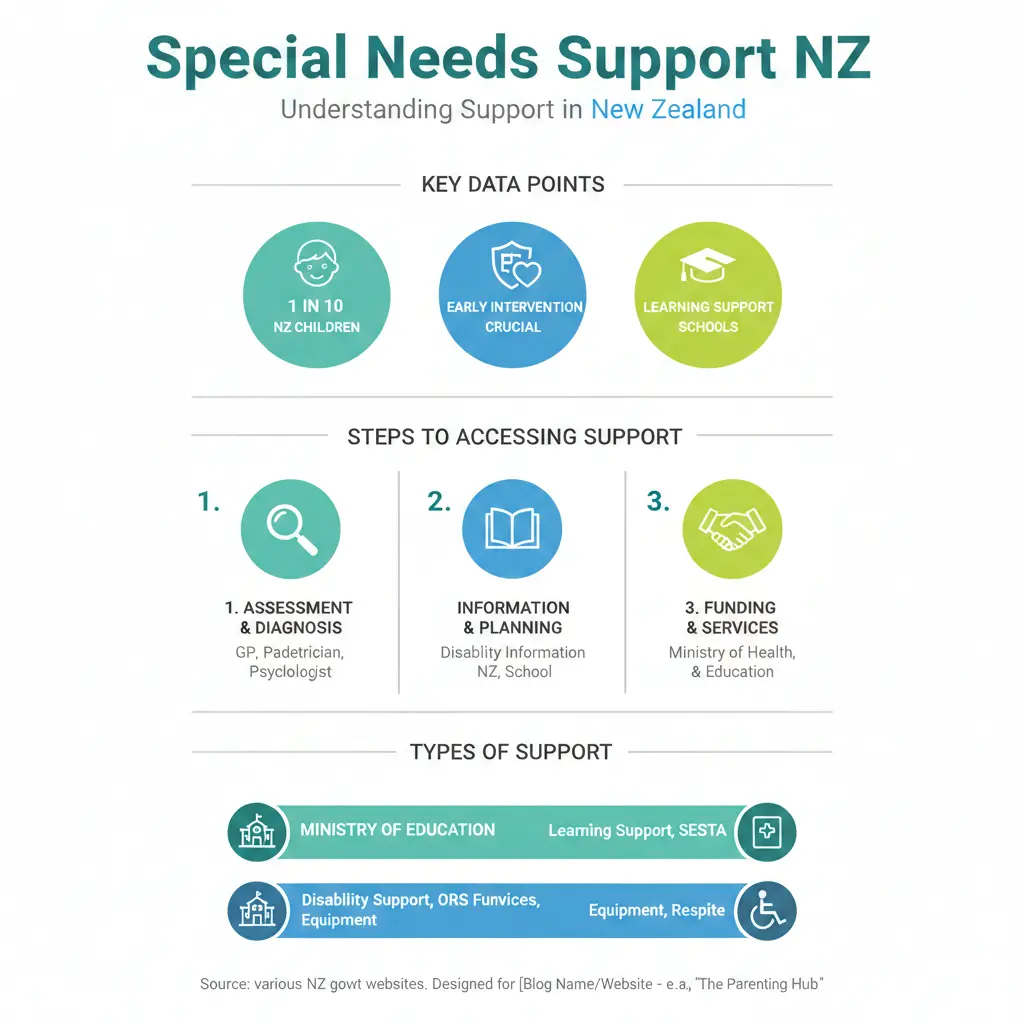
Every child has the right to attend their local school or kura, with tailored learning support available through the Ministry of Education. Schools access collaborative teams including early intervention teachers (EITs), teacher aides, speech-language therapists, psychologists, and more.
In-School Learning Support Coordinators (LSCs)
LSCs are experienced teachers helping kids get support earlier and easing access for families. By 2028, all Years 1-8 schools and kura will have one, with rollout underway in 2026.
Resource Teachers: Learning and Behaviour (RTLB)
RTLBs work across schools from Year 2, supporting teachers, leaders, and students with learning or behaviour needs.
Early Learning and Intervention
For pre-schoolers, the Early Intervention Service (EIS) provides factsheets and support. Free Incredible Years programmes build parents' skills in social-emotional learning, with a specific autism version.
Practical tip: Contact your school's Learning Support Coordinator or RTLB first. If not enrolled, reach out to the Ministry of Education for enrolment help.
Health and Disability Equipment Support
Enable New Zealand delivers assistive technology, home modifications, and advice to enable everyday independence. Their contact centre handles queries via email, phone, or NZ Relay.
Needs Assessment and Service Coordination (NASC) services are your gateway—your first stop for DSS-funded supports like equipment lists (EMS, MRES) and power wheelchairs.
Whaikaha oversees broader strategy implementation, with alternate formats like audio, Braille, and NZSL available for the 2026-2030 Disability Strategy.
Financial Help for Disabilities
Govt.nz lists allowances, subsidies, and loans. Key options include:
- Carer Support: Respite for full-time carers (over 4 hours/day unpaid care), like breaks or purchases (e.g., noise-cancelling headphones).
- Job Support Funds: Workplace mods like ramps or aids via Work and Income.
- Special Needs Grants: One-off emergency payments through WINZ.
- Emergency Benefit: If ineligible for other benefits.
For KiwiSaver, IRD, or ACC interactions, check eligibility as a carer—some supports integrate with these.
Community and Whānau-Focused Organisations
Choices NZ helps people with disabilities live independently, offering personalised guidance. They connect families to local services across the motu.
Your local NASC or Enabling Good Lives site is the starting point for whānau-centred support. Providers like these ensure culturally responsive help, especially for Māori whānau under tāngata whaikaha frameworks.
Actionable Steps to Access Support
- Identify your Needs Assessment Service Coordinator (NASC) via disabilitysupport.govt.nz.
- Contact Enable NZ for equipment: call their centre or search documents online.
- Speak to your school about LSCs, RTLB, or EIS.
- Apply for financial aid through Work and Income (WINZ) or MSD.
- Explore Whaikaha's strategy dashboards for updates.
Employment and Transition Support for Older Kids
As tamariki grow, the Mainstream Employment Programme offers 1-year funding for wages, training, and equipment via MSD. This bridges school to work, aligning with the Disability Strategy's employment goal.
Parents can access Carer Support for breaks during transitions, ensuring whānau wellbeing.
FAQ: Common Questions on Special Needs Support NZ
Q1: How do I start accessing disability support for my child?
A: Contact your local NASC or DSS provider— they're your first point for assessments and services.
Q2: What equipment can Enable NZ provide?
A: Assistive tech, rehab equipment, home mods, and lists like power wheelchairs—check their refreshed 2026 supplier panel.
Q3: Are there free parent training programmes?
A: Yes, government-funded Incredible Years for social-emotional skills and autism, plus EIS factsheets.
Q4: What financial help is available via WINZ?
A: Carer Support, Special Needs Grants, Job Support Funds, and more—apply if facing disability-related costs.
Q5: How does the 2026 Disability Strategy affect my family?
A: It prioritises education and health with actions for better access; check Whaikaha for progress dashboards.
Q6: What if my child isn't at school yet?
A: Talk to your early learning service about EIS, or Ministry of Education for enrolment support.
Next Steps for Kiwi Parents
Take that first step today—reach out to your NASC, school LSC, or Enable NZ. Track the 2026 DSS changes for fairer access and more control. Join whānau networks via Choices NZ for peer support. With these resources, you're empowered to create a good life for your child, aligned with Aotearoa's commitment to inclusion. Stay updated via official sites, and remember: small actions lead to big changes for your family.
Related Articles

Screen Time Guidelines for Kiwi Kids
Ever caught your little one glued to a tablet, eyes wide and fingers flying? In Aotearoa, where Kiwi kids spend more screen time than most—up to 42 hours a week for teens—it's time to hit pause and re...

School Zones NZ: How They Work and Why They Matter
Choosing the right school for your tamariki can feel like navigating a map of coloured zones—literally. In Aotearoa, **school zones NZ** dictate where your child is guaranteed a spot, helping prevent...

Best Playgrounds in Christchurch: Family Guide
Christchurch has some of the best family playgrounds in Aotearoa, offering everything from award-winning attractions to hidden gems perfect for a weekend adventure. Whether you're looking for thrillin...

Kids Sports NZ: Costs and Options by Age
Getting your kids active in sports is one of the best gifts you can give them as a Kiwi parent—building fitness, teamwork, and lifelong habits. But with rising costs biting into household budgets, und...