How to Save Money on Groceries in NZ

With grocery prices continuing to climb in 2026, Kiwis are feeling the pinch at the checkout.Saving money on groceries in NZ doesn't mean sacrificing quality or variety—it's about smart strategies tai...
Sarah covers personal finance, tax, and KiwiSaver topics for Lifetimes NZ. She focuses on making money management straightforward and practical for everyday Kiwis.
With grocery prices continuing to climb in 2026, Kiwis are feeling the pinch at the checkout.Saving money on groceries in NZ doesn't mean sacrificing quality or variety—it's about smart strategies tailored to our local supermarkets, seasons, and deals. Whether you're shopping for a family or flying solo, these practical tips can shave dollars off your weekly shop while keeping your meals tasty and nutritious.
Understand New Zealand's Supermarket Landscape
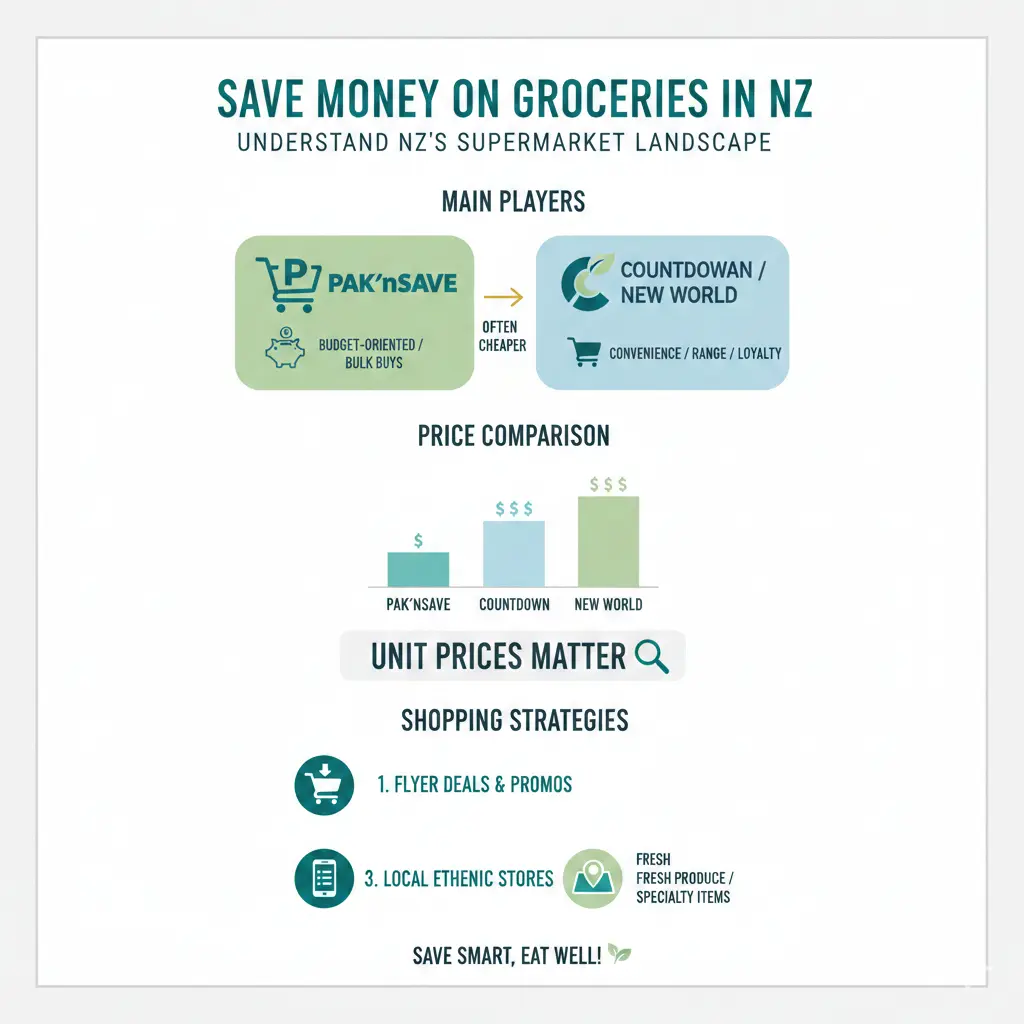
To save big, know where to shop. New Zealand's major chains offer different vibes and prices, so pick based on your needs.Pak'nSave reigns as the budget king with the lowest prices overall, often 20-30% cheaper than premium options like New World.
Pak'nSave: Your Go-To for Bargain Hunting
- Warehouse-style stores with basic layouts—you bag your own groceries to cut costs.
- Best for bulk buys, families, and essentials like milk, bread, and meat.
- Large pack sizes and fewer fancy brands keep prices rock bottom.
Countdown (Woolworths NZ): Balanced Convenience
- Moderate prices with modern stores, online delivery, and the Onecard loyalty program for fuel and grocery discounts.
- Great for urban Kiwis doing weekly shops or needing quick delivery.
- More weekly discounts in 2026 make it competitive.
New World: Quality When You Need It
- Premium fresh produce, bakery, and specialties, but highest prices.
- Clubcard perks help, though a similar shop at Pak'nSave can save $30 weekly.
- Ideal for gourmet or organic items, but compare specials first.
Other Smart Options
- Fresh Choice and SuperValue: Locally owned, similar to New World but smaller—support your community.
- The Warehouse: Cheap pantry staples, snacks, and frozen goods.
- Farmers' markets: Fresh, local produce on weekends—cheaper and supports growers.
- Asian supermarkets like Lim Chhour or Tai Ping: Bargain rice, spices, veggies, and frozen dumplings.
Pro tip: Compare prices across chains using their weekly catalogues or apps. Pak'nSave often wins for staples, but mix in Countdown specials.
Master Meal Planning and Budgeting
Planning is your first line of defence against overspending. Kiwi households can cut grocery bills by 20-30% with a solid plan.
Set a Realistic Budget
Track your spending for a week—average families spend $150-250 on basics. Use free tools like Excel or apps to allocate, say, $100-150 weekly per person. Factor in 2026 price spikes on items like meat and dairy.
Plan Meals Around What You Have
- Check fridge and pantry first to avoid duplicates.
- Build a weekly menu: Monday mince, Tuesday chicken stir-fry.
- Shop with a strict list—don't go hungry to dodge impulse buys.
Embrace Seasonal Eating
New Zealand's seasons dictate prices—summer tomatoes are $3-4/kg, winter $8-12/kg. Summer: berries, zucchini, corn. Winter: kiwifruit, cabbage, root veggies. Fresher, tastier, and cheaper—plus it cuts food miles.
Proven Money-Saving Tips for 2026
Here are actionable ways Kiwis are stretching their dollars amid rising costs.
1. Hunt Specials and Buy in Bulk
Supermarkets slash 40-50% off regularly—stock non-perishables like pasta and canned goods. Use loyalty apps for personalised deals.
2. Grab Reduced-to-Clear
Late afternoon, check markdowns on meat, bread, and produce—save 50% or more. Freeze extras to zap waste.
3. Choose Store Brands and Odd Produce
Pam's and HomeBrand match name brands for less. 'Odd fellows'—misshapen fruit and veg—are discounted but perfect.
4. Cook from Scratch
Pre-made meals cost a fortune. Basic ingredients like rice from Asian shops or bulk flour make cheaper curries, soups, and bakes.
5. Leverage Loyalty and Community
- Scan Onecard or Clubcard every shop.
- Join Facebook groups for NZ grocery hauls, recipes, and alerts.
- Food co-ops or buying clubs split bulk costs.
6. Grow Your Own Herbs and Veg
Balcony pots for herbs, lettuce, tomatoes thrive here. Saves $5-10 weekly on basics.
7. Shop Ethnic for Staples
Rice, noodles, spices 30-50% cheaper at Lim Chhour or Indian stores.
| Item | Pak'nSave Avg (2026) | New World Avg (2026) | Saving Tip |
|---|---|---|---|
| Milk (2L) | $3.20 | $3.80 | Buy store brand |
| Chicken Breast (1kg) | $12.50 | $15.00 | Reduced-to-clear |
| Rice (5kg bag) | $10 (Asian shop) | $15 | Ethnic supermarkets |
Tackle Food Waste Like a Pro
Kiwi households toss $1,500 worth of food yearly. Freeze leftovers, use veg scraps for stock, and apps like Too Good To Go for surplus.
Online and App Savvy Shopping
New World and Countdown deliver for a fee—handy for busy whānau. Price comparison apps show cheapest stores for your list.
Next Steps to Slash Your Grocery Bill
Start small: Plan this week's meals around your pantry, hit Pak'nSave for staples, and sign up for loyalty cards. Track savings monthly—you could pocket an extra $50-100. Combine with WINZ budgeting tools or KiwiSaver smarts for full financial wins. Shop smarter, eat better, and keep more cash for what matters.
Frequently Asked Questions
Sources & References
- 1
-
2
Tips for Grocery Shopping on a Budget — rhinosolutions.co.nz — rhinosolutions.co.nz
-
3
A Quick Guide to Food Shopping and Groceries in New Zealand — wisemove.co.nz — www.wisemove.co.nz
-
4
Grocery Shopping in NEW ZEALAND | What To Expect — YouTube — www.youtube.com
-
5
Best Cheap Groceries in NZ 2026 – Where Prices Dropped — artbeat.org.nz — www.artbeat.org.nz
-
6
Goodbye Cheap Groceries — NZ Shoppers Spot New Price Spike in 2026 — diltakeaways.co.nz — www.diltakeaways.co.nz
Related Articles

The "No-Spend" Month: How One Kiwi Saved $2;000 in 30 Days
Imagine looking at your bank account at the end of the month and seeing an extra $2,000 staring back at you—all because you said "no" to impulse buys, takeaways, and those sneaky coffee runs. That's e...

How to Calculate Your Take-Home Pay with the NZ Salary Calculator
Ever wondered why your bank account doesn't match that shiny new job offer? You're not alone—many Kiwis scratch their heads over the gap between gross salary and actual take-home pay. With New Zealand...

Budgeting for Beginners: The "50/30/20 Rule" Adjusted for NZ Salaries
Struggling to make your Kiwi paycheck stretch further? You're not alone—many of us feel the pinch from rising rents, grocery bills, and that tempting flat white habit. But what if a simple rule could...

How to Travel the World on a NZ Salary
Ever dreamed of sipping cocktails on a Thai beach or exploring the ancient ruins of Machu Picchu, all while earning a solid Kiwi wage? With New Zealand's average monthly salary hitting 5,666 NZD in 20...