How to Make an Offer on a House in NZ

Imagine spotting the perfect Kiwi bach or family home in your dream suburb—spacious backyard for the kids, close to the beach or top schools. Your heart races, but now comes the nerve-wracking part: m...
James writes about the New Zealand property market, renting, home ownership, and housing costs. He breaks down complex property topics into practical advice for renters and buyers.
Imagine spotting the perfect Kiwi bach or family home in your dream suburb—spacious backyard for the kids, close to the beach or top schools. Your heart races, but now comes the nerve-wracking part: making an offer. In New Zealand's fast-moving property market, getting this right can mean securing your future home or watching it slip away to another buyer.
Whether you're a first-home buyer tackling KiwiSaver withdrawals or an investor navigating 2026's market shifts, knowing how to make an offer on a house in NZ is crucial. This guide walks you through every step, from preparation to sealing the deal, with practical tips tailored for Kiwis. We'll cover conditional vs unconditional offers, multi-offer scenarios, and essential legal protections, all based on current practices.
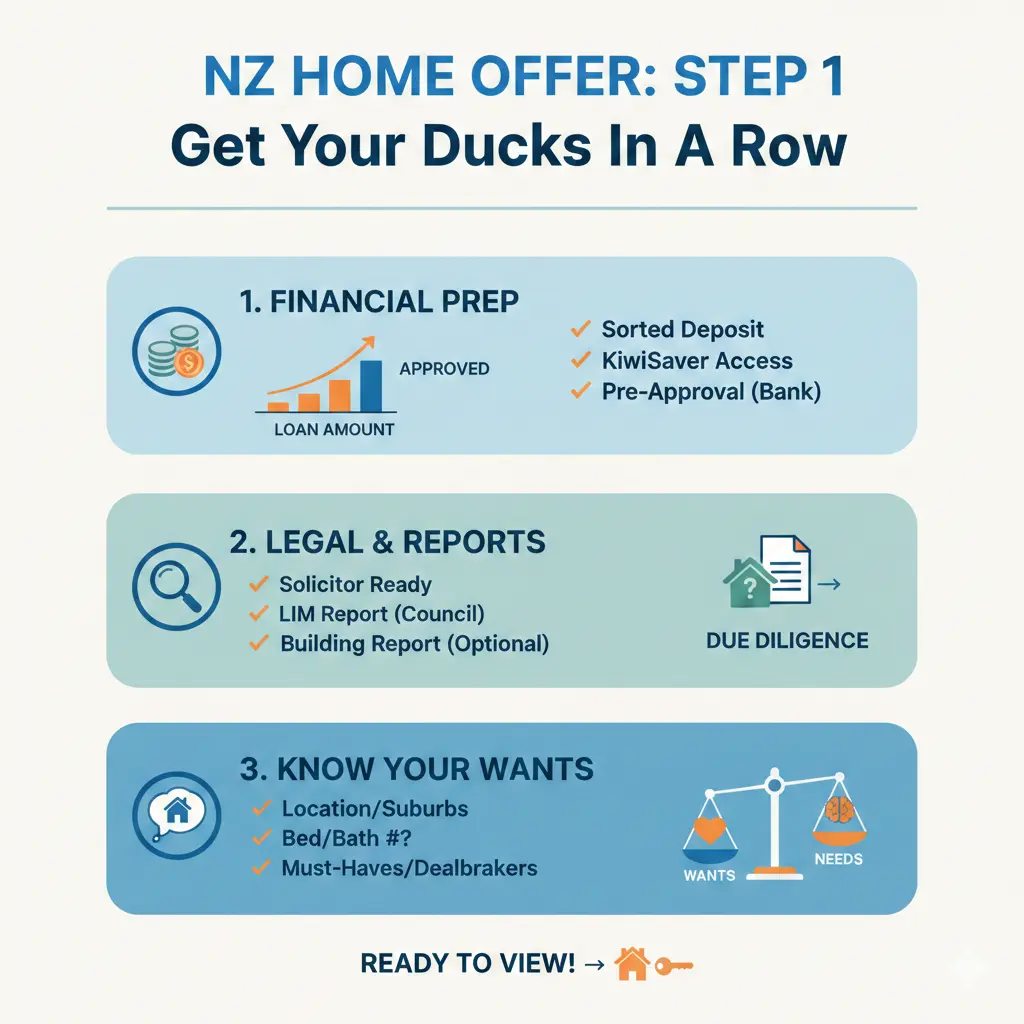
Step 1: Get Your Ducks in a Row Before Viewing Properties
Don't fall in love with a house until your finances are rock-solid. In 2026, with interest rates stabilising but deposits still a hurdle for many first-home buyers, pre-approval is non-negotiable—especially for auctions.
Secure Finance Pre-Approval
Contact your bank, building society, or a mortgage broker early. Brokers shop around multiple lenders, often at no cost to you since they earn commissions from lenders. Provide your financials: income proof, KiwiSaver balance, and any First Home Grant eligibility via Kāinga Ora.
- Tip: Haggle on rates and incentives—cash contributions or overseas holidays are common in competitive lending.
- Most first-home buyers borrow with under 20% deposits, so explore low-deposit options like Kāinga Whenua loans.
Assemble Your Team
Your lawyer or licensed conveyancer is your MVP—they handle the Sale and Purchase Agreement (APA) and advise on offers. Engage them before viewing properties; they'll explain sale methods like deadline sales, tenders, auctions, or negotiations.
Also line up a builder for pre-purchase inspections (NZS 4306 standard) and insurance quotes. Lenders won't finalise loans without insurance in place.
Step 2: Research and Evaluate the Property Thoroughly
Rushing an offer without due diligence is a recipe for regret. In NZ, properties sell via various methods, each demanding different strategies.
Understand Sale Methods in NZ
| Method | How It Works | Best Strategy |
|---|---|---|
| Advertised Price | Fixed price; offers above may be considered. | Offer close to asking, with conditions if needed. |
| Deadline Sale/Tender | Confidential offers by deadline; vendor picks best. | Strong conditional offer; know competition. |
| Auction | Unconditional bidding; 10% deposit on win. | Pre-approval essential; bid to your limit. |
| Negotiation | Back-and-forth offers. | Start low, build with evidence like comparables. |
Check council LIM reports (free online) for consents, restrictions, and issues like height limits affecting views. Compare the floor plan to the actual layout during viewings.
Conduct Essential Checks
- LIM and Title Search: Lawyer handles this for $300–500; reveals restrictions or disputes.
- Pre-Purchase Building Report: Hire an accredited inspector (e.g., member of NZ Property Institute). Costs $800–$1,200; flags issues like leaky homes or Dux Quest piping.
- Plumbing/Electrical: Specialist checks for hidden nasties.
- Valuation: Lender requires this pre-settlement.
Example: Jamie discovered costly Dux Quest piping via her inspection. Her plumber quoted repairs, which she factored into an unconditional tender offer—securing the home.
Step 3: Crafting Your Offer – Conditional or Unconditional?
Now the fun (and strategy) begins. Offers are via standard REINZ/REAA APA forms, drafted by your lawyer.
Conditional Offers: Your Safety Net
Most Kiwi buyers start here for protection. Common conditions (with 10–15 day timeframes):
- Finance approval.
- Satisfactory building inspection.
- Lawyer's review (legal).
- Sale of your current home.
- LIM/title searches.
Conditions protect you but can lose out in hot markets. Vendors prefer fewer/no conditions.
Unconditional Offers: Go Big or Go Home
Riskier but stronger—commit without outs. Ideal if pre-approved, inspected, and confident. Common at auctions (mandatory) or multi-offer scenarios.
Pro Tip: In 2026, with first-home buyers borrowing high (low deposits, high LVRs), condition finance heavily—lenders need reports and insurance first.
Multi-Offer Situations
Hot properties attract multiples. Vendors select best overall: price + conditions + settlement speed. A clean $800k unconditional might beat $820k with three conditions.
Present your 'best and final' via lawyer—only one shot usually.
Step 4: Submitting the Offer and Negotiations
Your lawyer emails the APA to the vendor's agent. Include deposit (usually 5–10%, held in trust).
Negotiation Tactics
- Price: Base on recent sales (use OneRoof or TradeMe Property data), minus repairs.
- Settlement: Offer quick (20–30 days) if cash-strong.
- Chattels: List inclusions (curtains, stoves).
- Counter-Offers: Respond promptly; know your walk-away point.
Foreign buyers (post-2026 visa changes) need OIO consent—make offers conditional on this ($2,040–$3,500 fee).
Step 5: After Acceptance – Satisfy Conditions and Prepare for Settlement
Offer accepted? Celebrate briefly, then act fast.
Meet Conditions
Finance: Submit building report/insurance. Fail? Lose deposit (but negotiate release).
Legal Review
Lawyer scrutinises APA for compliance. Negotiate changes.
Pre-Settlement Checklist
- Final valuation and lender docs.
- Insurance (lender-mandated).
- Pre-settlement inspection: Check chattels, condition.
- Arrange moving/power transfer.
Settlement typically 3–4 weeks post-acceptance; funds transfer electronically.
Common Pitfalls to Avoid When Making an Offer
- No Pre-Approval: Can't bid at auction.
- Skipping Inspections: Hidden defects cost thousands.
- Emotional Bidding: Stick to budget.
- Ignoring Lawyer: DIY offers risk invalid terms.
- Forgetting OIO: Overseas buyers face fines.
Next Steps to Secure Your Dream Home
Ready to make your move? Start with pre-approval today, engage a lawyer, and bookmark council sites for LIMs. Track listings on TradeMe or realestate.co.nz, and attend open homes armed with questions. In NZ's 2026 market, preparation wins properties—stay patient, strategic, and informed. Your new home awaits!
Frequently Asked Questions
2. How much deposit do I need?
4. What if there are multiple offers?
6. Do foreigners need special approval in 2026?
Sources & References
- 1
-
2
Prepare to make an offer - Consumer Protection — www.consumerprotection.govt.nz
-
3
Explainer: Foreigners will be able to buy New Zealand homes from... — www.oneroof.co.nz
-
4
Buying property in New Zealand in 2026 - Smart Currency Exchange — www.smartcurrencyexchange.com
-
5
Buying property in New Zealand — www.immigration.govt.nz
-
6
Buying Your First Home in NZ in 2026? Watch This First - YouTube — www.youtube.com
Related Articles
First Home Grant NZ: How to Get Up to $10000
Buying your first home is one of the biggest financial decisions you'll make, and the New Zealand government wants to help. The First Home Grant puts up to $10,000 directly towards your deposit, makin...

Why 2026 is the Hardest Year to Buy a Home (and How to Beat the Odds)
Imagine standing at the edge of the property ladder in 2026, eyeing your dream home while prices hover stubbornly high, listings pile up, and buyer confidence wavers. For Kiwis, this year feels toughe...

Buying Your First Home in 2026: A Step-by-Step NZ Checklist
Imagine standing in your own Kiwi bach or cosy family home, keys in hand, after years of renting. In 2026, with interest rates stabilising and first-home schemes still strong, buying your first home i...

Selling Your Home? 10 Low-Cost Renovations That Add $50k in Value
If you're planning to sell your home in New Zealand, you don't need to break the bank with a complete renovation to attract buyers and boost your sale price. The good news? Some of the most effective...