Overcoming High Competition: How to Stand Out with 2026 NZ Applications
Imagine scrolling through SEEK or Trade Me Jobs, only to see 100-200+ applications flooding in for that perfect role in Auckland or Wellington—many from offshore talent snapping up Kiwi opportunities....
Priya writes about immigration pathways, job searching, and building a career in New Zealand. She covers visa options, CV writing, interview preparation, and workplace culture for newcomers and locals alike.
Imagine scrolling through SEEK or Trade Me Jobs, only to see 100-200+ applications flooding in for that perfect role in Auckland or Wellington—many from offshore talent snapping up Kiwi opportunities. With unemployment easing to 4.7% in 2026 but competition surging, standing out in your job applications NZ requires smart, targeted strategies to cut through the noise and land interviews.
In this guide, we'll unpack the 2026 job market realities and share practical tips to make your stand out job search a success. From tailoring CVs to leveraging Kiwi networks, you'll get actionable advice tailored for New Zealanders chasing roles in high-demand sectors like IT, healthcare, and construction.
Understanding the 2026 NZ Job Market: Why Competition is Fiercer Than Ever
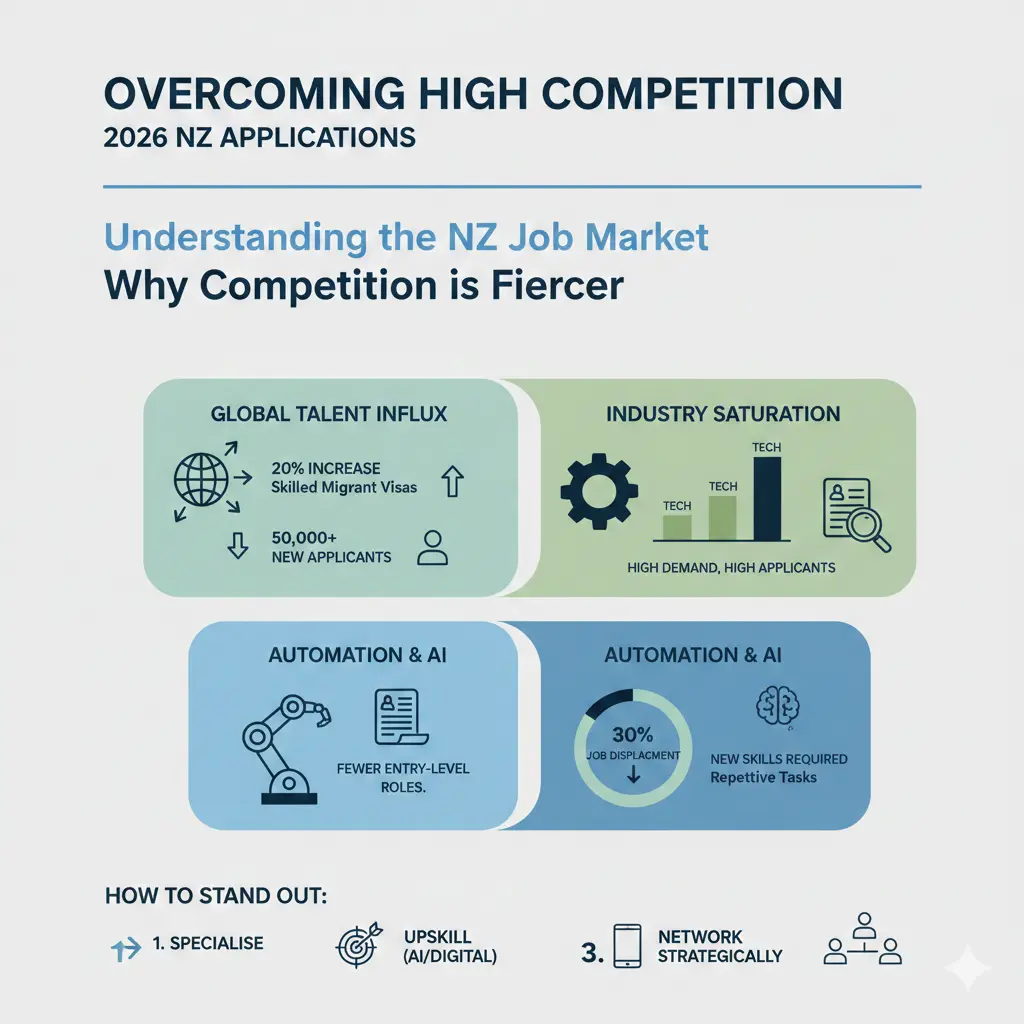
New Zealand's job market is rebounding after a tough 2025, with job ads on SEEK and Trade Me trending up—especially in construction (+13%), banking (+31%), and agriculture thanks to a 12% export rebound. Yet, employment growth remains modest at 0.3%, concentrated in major cities and South Island hotspots like Canterbury and Otago/Southland, where tourism and construction listings are up 10-15% with rising wages.
Unemployment, which peaked at 5.3% (160,000 people) in September 2025, is forecast to drop to 4.7% (140,000 people), but job ads are still 20-30% below 2022 peaks. This means 100-200+ applications per role in competitive spots like Auckland and Wellington. Add offshore talent via easier visa pathways—like reduced work experience from three to two years for skilled migrants starting March 2025—and local Kiwis face stiffer rivalry.
High-Demand Sectors and Green List Opportunities
Highly skilled roles dominate growth: professional services, IT, management, technical specialists, healthcare, and finance. MBIE forecasts strong employment gains in business services (7,600 jobs/year) and construction (5,600/year) to 2026, with highly skilled occupations adding 27,400 workers annually.
In-demand jobs include registered nurses, general practitioners, teachers, ICT professionals, accountants, specialised software developers, and executive assistants. The Green List fast-tracks visas for 200+ occupations like secondary school teachers, site foremen, social workers, and veterinarians—Tier 1 for straight-to-residence, Tier 2 for work-to-residence. Lower-skilled growth lags at 1.2% annually, favouring drivers and labourers.
- Healthcare: Nurses and GPs top shortages, with dropping practitioner ratios per 100,000 people.
- IT & Tech: ICT managers and developers, boosted by AI upskilling (over 50% of employers investing).
- Construction & Trades: Site foremen and technicians amid residential booms.
Key Strategies to Stand Out in Your Job Applications NZ
To beat the surge, ditch generic applications. Focus on differentiation that showcases your Kiwi edge—local knowledge, networks, and adaptability to our unique market.
1. Craft a Tailored CV and Cover Letter That Speaks Kiwi
With 100+ applicants, recruiters spend seconds scanning. Customise for each job: mirror the ad's language, quantify achievements (e.g., "Boosted team sales 20% via targeted campaigns"), and highlight NZ-specific skills like ACC compliance or KiwiSaver savvy.
Pro Tip: For tertiary grads, lead with relevant projects or internships—e.g., "Led AI prompt engineering project at uni, aligning with 2026 upskilling trends." Keep CVs to 2-3 pages, use clean formats, and include a LinkedIn profile optimised with NZ keywords like "Wellington IT specialist."
- Research the employer: Reference their recent wins, like a construction firm's Canterbury project.
- Use action verbs: "Orchestrated," "Optimised," "Delivered."
- Address gaps: Explain career breaks with positives, e.g., "Upskilled in data analysis during 2025 slowdown."
2. Master the Stand Out Job Search: Beyond SEEK and Trade Me
Don't rely solely on public boards—80% of jobs fill via networks. Target niche sites:
- Seek.co.nz & TradeMe Jobs: Set alerts for Green List roles.
- LinkedIn: Connect with 500+ NZ recruiters; post "Open to work" banners tailored to sectors like healthcare.
- Industry-Specific: Hays for accounting/IT, Education Gazette for teaching, or govt.jobs for public sector.
Leverage free resources: Careers NZ for CV templates, or WINZ job workshops. South Island? Check local councils in Otago for less competitive listings.
3. Build a Personal Brand and Network Like a Pro
In 2026, soft skills and AI augmentation rule—emphasise stakeholder comms, prompt engineering, and green jobs focus. Update LinkedIn weekly with NZ insights, e.g., "Thoughts on MBIE's 2026 forecasts for construction growth."
Attend events: Auckland Chamber networking, Wellington tech meetups, or virtual MBIE webinars. Join Kiwi groups like Women in IT NZ or Māori business networks for insider tips.
"Over 50% of employers seek AI-augmented talent—show how you blend tech with Kiwi ingenuity."
4. Ace Interviews and Follow Up Strategically
Prepare for behavioural questions: "Tell us about adapting to 2025's slowdown." Use STAR method (Situation, Task, Action, Result). Research salary benchmarks—e.g., median $60,000 in agriculture.
Post-interview, email thanks referencing specifics: "Excited about your Otago expansion aligning with my local experience." Track applications in a spreadsheet: role, date, follow-up.
5. Upskill for 2026's Edge: Free and Low-Cost Options
Match demand: Coursera's free AI courses, or Te Pūkenga for trades. KiwiSaver members can access employer training funds. Target Green List skills like telecommunications technician.
Common Pitfalls to Avoid in NZ Job Hunts
- Generic templates: Always customise.
- Ignoring offshore competition: Highlight local ties, e.g., "5+ years in Auckland retail."
- Neglecting visas: If sponsoring, note minimum wage $23.50/hour from April 2025.
- Overlooking regions: Head south for 10-15% less competition.
Next Steps to Launch Your Stand Out Job Search
Today, audit your CV against a dream job ad, update LinkedIn, and apply to three tailored roles. Track progress weekly, network monthly, and upskill quarterly. With modest 0.3% growth but high demand in key sectors, persistence pays off—Kiwis who differentiate land the roles. Visit Careers NZ or MBIE for personalised support, and turn that competition into your opportunity.
Frequently Asked Questions
Sources & References
-
1
Job Search Strategies for 2026 | Career Solutions NZ — www.careersolutions.co.nz
-
2
Medium to long-term employment outlook: Looking ahead to 2026 — www.mbie.govt.nz
-
3
The 2026 list of most in demand jobs in New Zealand for skilled workers — www.pssremovals.com
-
4
Most In-Demand Jobs In New Zealand 2026 - Hays NZ — www.hays.net.nz
-
5
The Future of Work in NZ: What to Expect in 2026 - Findwise — findwise.co.nz
Related Articles

Using Case Converters for Professional NZ Emails
This article references the following sources for accuracy and further reading:

Highest Paying Jobs in NZ 2026: Industries That are Desperate for Staff
If you're considering a career change or planning your next move in the New Zealand job market, you'll want to know where the money is—and more importantly, where employers are actively hiring. The go...

The Perfect NZ CV: A Free Template for 2026 Job Seekers
Your CV is your first chance to impress employers and land that job interview you're after. Whether you're a school leaver, career changer, or experienced professional, having a well-crafted CV tailor...

Best Recruitment Agencies for Tech Jobs in NZ
Searching for your next tech role in New Zealand's buzzing job market? With Kiwi tech hubs like Auckland, Wellington, and Christchurch leading the charge in cloud computing, cybersecurity, and softwar...