Highest Paying Jobs in NZ 2026: Industries That are Desperate for Staff

If you're considering a career change or planning your next move in the New Zealand job market, you'll want to know where the money is—and more importantly, where employers are actively hiring. The go...
The Lifetimes NZ editorial team curates, fact-checks, and updates guides on personal finance, property, health, immigration, legal, business, and lifestyle topics relevant to Lifetimes NZ readers. Articles are produced with AI assistance and reviewed by the editorial team before publication.
If you're considering a career change or planning your next move in the New Zealand job market, you'll want to know where the money is—and more importantly, where employers are actively hiring. The good news? Several sectors are offering impressive salaries whilst desperately seeking skilled workers. Whether you're early in your career or looking to pivot, understanding which industries are hungry for talent can help you position yourself for better pay and job security.
The Current State of High-Paying Jobs in New Zealand
The average salary in New Zealand in 2026 is approximately NZD $65,853 annually, but the top professions significantly outpace this figure. Salaries for high-paying roles can exceed NZD $200,000, with some specialist positions reaching well beyond that threshold. What's driving this demand? An ageing population, digital transformation, large-scale infrastructure projects, and a genuine shortage of skilled professionals across key sectors.
The sectors leading the charge are healthcare, information technology, engineering, construction, and finance. These aren't just well-paying industries—they're desperate for staff, which means better negotiating power for you and more opportunities to advance quickly.
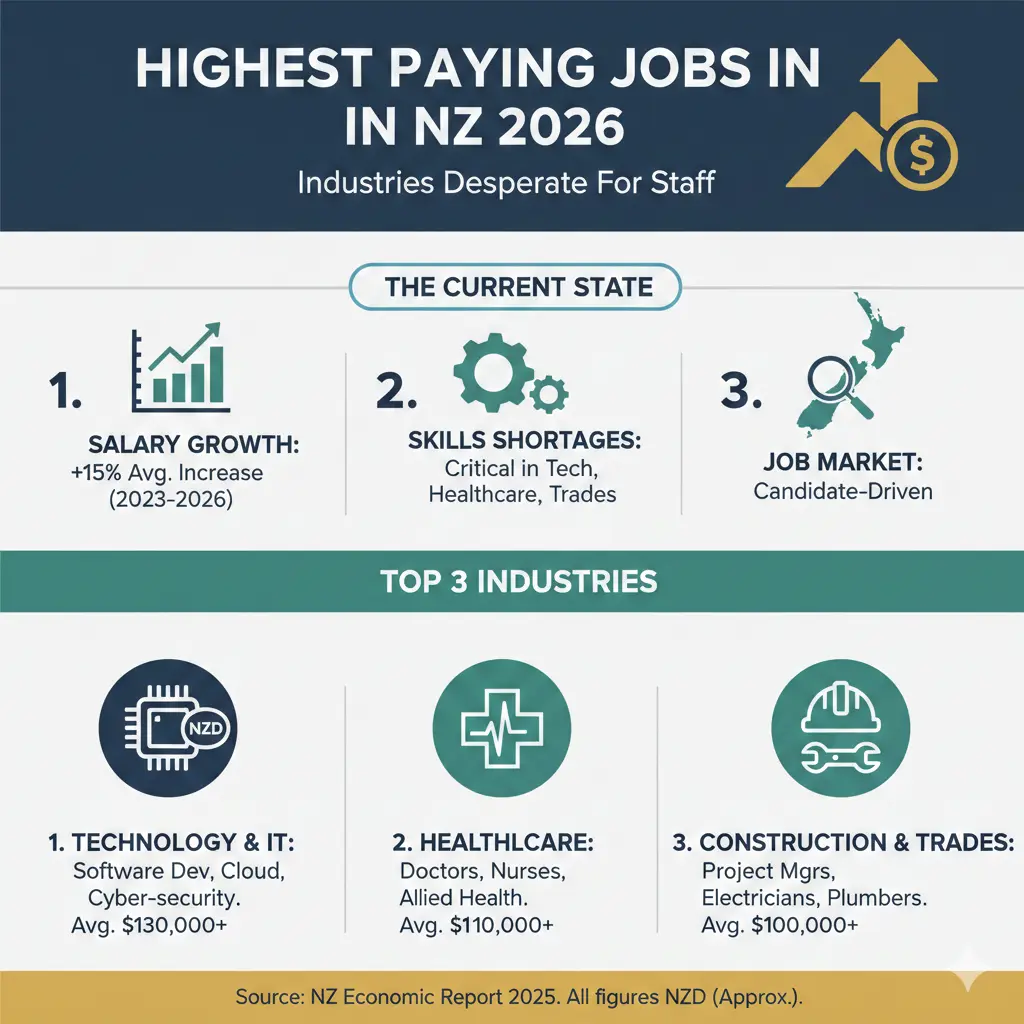
Healthcare: The Highest-Paying Sector
Healthcare professionals consistently rank among New Zealand's highest earners, and it's easy to see why. With an ageing population and ongoing shortages, the demand is relentless.
Specialist Medical Professionals
Surgeons and specialist doctors are among the highest earners in the country. If you're willing to invest the years in medical training, the financial rewards are substantial. Diagnostic and interventional radiologists, for example, can earn upwards of NZD $240,000 per year with experience, though even those early in their careers can expect well above NZD $150,000.
To practise as a medical specialist in New Zealand, you'll need relevant registration with the Medical Council of New Zealand. The path is competitive but rewarding.
Other Healthcare Roles in Demand
Beyond surgeons, several other healthcare specialties are in critical demand:
- Thoracic medicine specialists
- Urologists
- Vascular surgeons
- Veterinarians
These roles offer excellent earning potential and job security, though they require significant qualifications and registration with the appropriate professional bodies.
Information Technology: The Fastest-Growing Sector
If you're not keen on a decade of medical training, IT offers an excellent alternative for high earners. IT Managers are among New Zealand's top earners, overseeing IT infrastructure, cybersecurity, and digital innovation.
In-Demand IT Specialisations
The technology sector is evolving rapidly, and employers are investing heavily in specific skill areas:
- Cybersecurity specialists – With digital transformation accelerating, organisations are pouring resources into protecting their systems and data
- AI and machine learning engineers – As AI adoption accelerates, skills in machine learning, data analytics, and AI-driven product development are in high demand
- Data analysts – Organisations increasingly rely on data-driven decision-making
The advantage of IT roles? You don't necessarily need a university degree. Many high-paying IT positions reward skills and experience over formal qualifications, and there's a strong culture of upskilling and reskilling in the sector.
Engineering and Construction: Building New Zealand's Future
Construction Project Managers are vital to New Zealand's ongoing infrastructure boom, with large-scale housing and infrastructure projects underway across the country. These roles command excellent salaries whilst keeping projects on time and on budget.
Engineering Specialisations
Engineering managers lead technical teams in civil, mechanical, and electrical fields, ensuring project success and driving innovation in national infrastructure. Civil engineers typically earn around NZD $100,000 annually, with experienced civil engineering managers reaching NZD $160,000.
If you're starting out, draughtspersons can earn up to NZD $70,000, rising to NZD $110,000 with years of experience.
Skilled Trades in High Demand
Don't overlook the skilled trades—they're in desperate demand and offer excellent earning potential:
- Composite technicians
- Metal fabricators
- Electric line mechanics
- Plastics technicians
- Sheet metal trades workers
- Automotive electricians (NZD $24–$44 per hour)
These roles often don't require university degrees, and apprenticeships provide a clear pathway to solid income.
Finance and Executive Management
Financial Managers are responsible for financial planning and analysis, guiding organisational decision-making and ensuring long-term fiscal health. These roles offer competitive salaries and are particularly well-paid in larger organisations.
At the very top, executive positions like CEOs and Managing Directors can earn upwards of NZD $600,000, though these naturally require significant experience and expertise.
Emerging High-Demand Sectors for 2026
Beyond the traditional high-paying industries, several emerging sectors are creating new opportunities:
Sustainability and Green Technology
New Zealand's commitment to sustainability is driving demand for green technology experts, environmental scientists, and renewable energy specialists. As the country moves toward its climate goals, these roles will become increasingly valuable.
Healthcare Technology
The healthcare sector is embracing telemedicine and digital health technologies, creating opportunities for tech-savvy healthcare professionals who can bridge medicine and technology.
Regional Salary Differences Matter
Salaries in Auckland and Wellington are often higher than in other regions, reflecting the higher cost of living and concentration of major employers. If you're flexible on location, considering roles in these centres could boost your earning potential. However, remote and hybrid work models are increasingly common, offering more flexibility.
What Employers Are Looking For
High-paying jobs aren't just about having the right qualification—employers want professionals who can demonstrate:
- Continuous learning and upskilling, particularly in AI, cybersecurity, and sustainability
- Adaptability and the ability to navigate shifting industry demands
- A strong digital presence and professional network
- Commitment to wellbeing and work-life balance (increasingly valued by employers)
Interestingly, international experience is highly valued if it matches industry standards, so you don't necessarily need purely local New Zealand experience to land a top role.
How to Position Yourself for High-Paying Roles
If you're aiming for the top salaries, here's what you should be doing:
- Embrace lifelong learning – Continuously upskill in high-demand areas like AI, cybersecurity, and sustainability
- Network strategically – Leverage LinkedIn and professional events to connect with industry leaders
- Build a digital presence – Highlight your expertise and achievements online
- Target growth industries – Focus on sectors with sustained demand: IT, healthcare, and sustainability
- Customise your applications – Tailor your CV and cover letter to each role
- Seek professional guidance – Consider working with recruitment agencies who specialise in your field
Your Next Steps
The New Zealand job market in 2026 offers genuine opportunities for those willing to develop in-demand skills. Whether you're drawn to healthcare, technology, engineering, or emerging sectors like green technology, there's a pathway to a high-paying career.
Start by identifying which sector aligns with your interests and strengths. Then, commit to continuous learning in areas where employers are desperate for talent. Network actively, build your digital presence, and don't be afraid to consider roles outside your immediate region—remote work and relocation packages can open doors to better opportunities.
The professionals earning NZD $200,000+ aren't necessarily more talented than anyone else—they're simply in the right roles, at the right time, with the right skills. That could be you.
Frequently Asked Questions
Sources & References
- 1
-
2
The 2026 list of most in demand jobs in New Zealand for skilled workers — www.pssremovals.com
-
3
Highest Paying Jobs in New Zealand: Top Careers & Salaries — www.studies-overseas.com
-
4
Best jobs in New Zealand for 2026 — www.randstad.co.nz
-
5
The ten highest paying professions in New Zealand — www.hays.net.nz
Related Articles

Using Case Converters for Professional NZ Emails
This article references the following sources for accuracy and further reading:

The Perfect NZ CV: A Free Template for 2026 Job Seekers
Your CV is your first chance to impress employers and land that job interview you're after. Whether you're a school leaver, career changer, or experienced professional, having a well-crafted CV tailor...

Best Recruitment Agencies for Tech Jobs in NZ
Searching for your next tech role in New Zealand's buzzing job market? With Kiwi tech hubs like Auckland, Wellington, and Christchurch leading the charge in cloud computing, cybersecurity, and softwar...

How to Use Seek & LinkedIn Effectively for the NZ Market
Finding your next job in New Zealand doesn't have to mean endlessly scrolling through job boards hoping something catches your eye. Whether you're a recent graduate, making a career change, or looking...