How to Use Seek & LinkedIn Effectively for the NZ Market
Finding your next job in New Zealand doesn't have to mean endlessly scrolling through job boards hoping something catches your eye. Whether you're a recent graduate, making a career change, or looking...
Priya writes about immigration pathways, job searching, and building a career in New Zealand. She covers visa options, CV writing, interview preparation, and workplace culture for newcomers and locals alike.
Finding your next job in New Zealand doesn't have to mean endlessly scrolling through job boards hoping something catches your eye. Whether you're a recent graduate, making a career change, or looking for your next role, knowing how to leverage Seek and LinkedIn effectively can dramatically improve your chances of landing interviews—and ultimately, the job you want. These two platforms dominate the NZ job market, but using them strategically is what separates successful job seekers from those who get lost in the crowd.
Why Seek and LinkedIn Matter for Kiwi Job Seekers
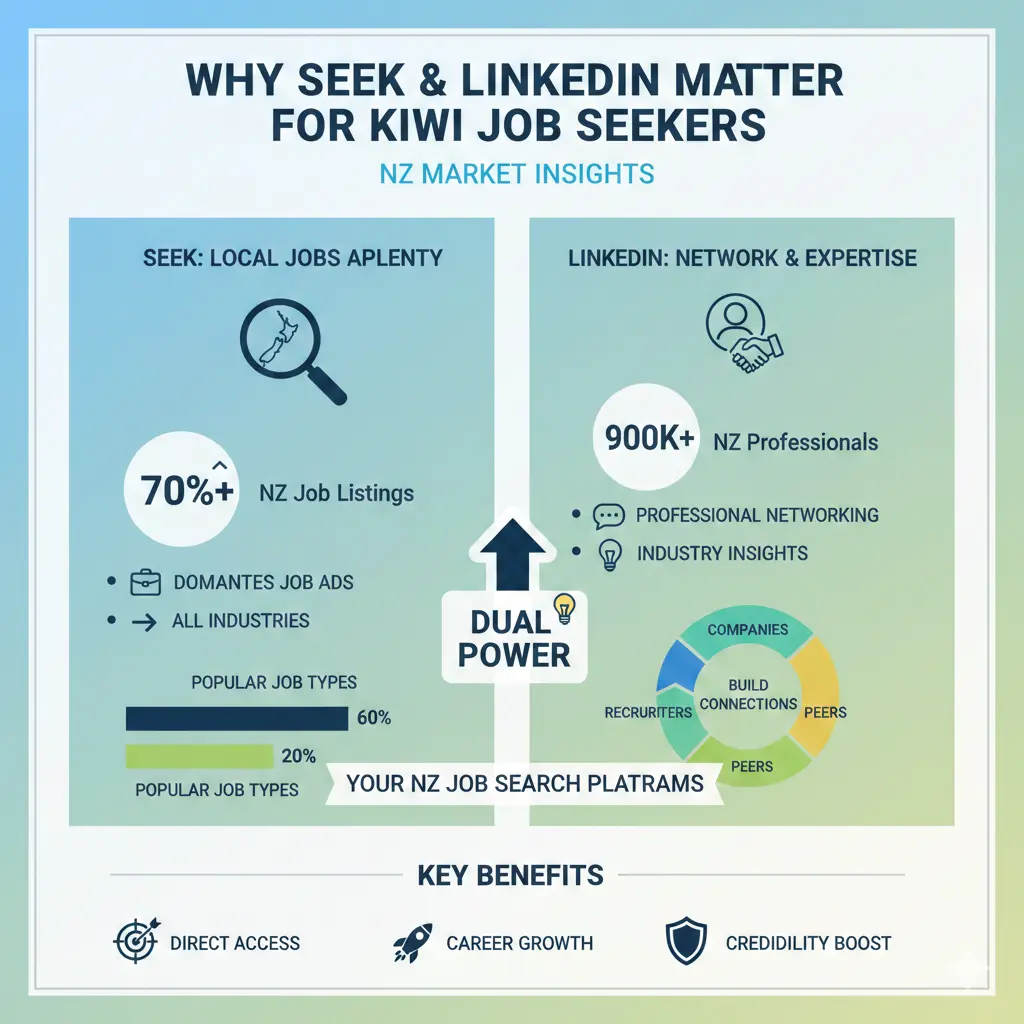
Seek is New Zealand's largest job portal, making it the first place most recruiters post vacancies. LinkedIn, meanwhile, offers real-time job postings with built-in networking opportunities that let you connect directly with hiring managers. Together, these platforms give you access to the majority of advertised roles in the country. However, simply uploading your CV and waiting isn't enough—you'll need a strategic approach to stand out.
The good news? Both platforms offer advanced filtering tools, salary insights, and features designed to help you find roles that genuinely match your skills and career goals. The challenge is knowing how to use these tools effectively and understanding what recruiters are actually looking for.
Mastering Seek for Maximum Visibility
Set Up Your Profile Properly
Your Seek profile is your first impression, so make it count. Start by uploading a professional photo—recruiters are more likely to click on profiles with clear headshots. Write a compelling headline that goes beyond just your job title. Instead of "Marketing Manager," try "Digital Marketing Manager | Content Strategy | Social Media Campaigns." This tells recruiters exactly what you specialise in.
Your profile summary should be concise but powerful. Aim for 100-150 words that highlight your key achievements, not just your responsibilities. Use specific numbers where possible—"Increased social media engagement by 45%" is far more compelling than "Managed social media channels."
Use Advanced Filters Strategically
Seek's advanced filters are one of its strongest features. Rather than browsing all jobs in your industry, use filters to narrow down by:
- Location (Auckland, Wellington, Christchurch, or remote)
- Salary range (set a realistic minimum based on your experience)
- Job type (full-time, part-time, contract)
- Experience level (entry-level, mid-level, senior)
- Industry sector
This approach saves time and ensures you're only looking at relevant opportunities. More importantly, it helps you understand what the market is offering in your field right now.
Set Up Saved Searches and Alerts
One of Seek's best features is the ability to save searches with instant notifications. Create 3-5 saved searches based on different job titles or combinations of skills you're interested in. For example, if you're open to several roles, you might save searches for "Content Writer," "Communications Specialist," and "Marketing Coordinator." Whenever a new job matches your criteria, you'll be notified immediately—and you'll be among the first to apply.
Timing matters. Jobs on Seek get filled quickly, so applying within the first few hours significantly improves your chances of getting an interview.
Craft Applications That Get Noticed
Don't just submit your generic CV to every job. Take 10-15 minutes to customise your application for each role. Reference specific details from the job description and explain why you're genuinely interested in that particular company. Many employers use applicant tracking systems (ATS) that scan for keywords, so mirror language from the job posting in your cover letter and CV.
Seek also lets you add a cover letter directly in the application. Use this space to tell a brief story about why you're interested in the role—hiring managers read these and they do make a difference.
Leveraging LinkedIn for Networking and Opportunities
Optimise Your LinkedIn Profile
Your LinkedIn profile is essentially your professional online resume, and it's often the first thing recruiters check. Make sure your headline is clear and keyword-rich—recruiters search LinkedIn using specific terms, and your headline needs to match what they're looking for.
Use a professional headshot (the same one from Seek works well) and write a compelling "About" section. LinkedIn's algorithm favours profiles with complete information, so fill in all sections: work experience, education, skills, and recommendations.
Add a custom URL to your profile (linkedin.com/in/yourname) and include it on your CV. This makes it easy for recruiters to find you and shows you're serious about your career.
Activate Job Alerts on LinkedIn
LinkedIn shows roles the moment recruiters upload them, giving you a real-time advantage. Set up job alerts with specific titles, industries, and locations. You can customise how often you receive alerts—daily, weekly, or as they come in. For competitive roles, daily or real-time alerts are essential.
Use LinkedIn's Easy Apply Feature Strategically
LinkedIn's Easy Apply button lets you submit applications with just a few clicks. While this is convenient, don't let it tempt you to apply carelessly. Treat LinkedIn applications the same way you'd treat Seek applications—personalise them when possible and only apply to roles you genuinely want.
One advantage of LinkedIn: many applications include a message box where you can write a brief note to the hiring manager. Use this to briefly explain why you're interested in the role. A personal touch can help your application stand out.
Network Actively on LinkedIn
LinkedIn isn't just a job board—it's a networking platform. Actively engage with content in your industry by liking, commenting, and sharing posts from companies you're interested in. Follow hiring managers and recruiters in your field. When you apply for a role, you might already have a connection or shared contact, which can help your application get noticed.
Don't be afraid to send connection requests to people in your industry with a personalised message. Something like "Hi [Name], I'm interested in [industry/role] and would love to connect and learn from your experience" often gets positive responses.
The Hidden Job Market: Going Beyond Job Boards
Here's a fact that might surprise you: up to 30 percent of IT roles in New Zealand never get posted on Seek or LinkedIn. Instead, they appear directly on company career pages. While this statistic focuses on IT, the principle applies across most industries—many employers prefer to avoid job board fees or want to keep their hiring pool smaller.
This means the smartest job seekers go directly to company websites in their target industries. Identify 10-15 companies you'd genuinely like to work for, visit their career pages regularly, and set up alerts if they offer them. Some companies announce roles through their newsletter or social media before posting them on job boards.
You can also reach out to companies directly, even if they don't have a role advertised. A thoughtful email to a hiring manager or team lead expressing your interest and asking about upcoming opportunities can sometimes lead to interviews before the role is even posted publicly.
Practical Tips for Success on Both Platforms
Keep Your CVs Fresh
Update your CV at least monthly with new achievements, projects, or skills. This signals to algorithms on both platforms that you're an active job seeker. When you update your Seek profile, it often bumps you up in search results.
Use Keywords Strategically
Both Seek and LinkedIn use algorithms to match job seekers with opportunities. Research keywords in your industry and include them naturally throughout your profile. If you're in marketing, use terms like "digital marketing," "content strategy," "SEO," and "social media management." The more your profile matches what recruiters are searching for, the more visible you'll be.
Monitor Salary Insights
Seek provides salary insights and company reviews, which are invaluable for understanding what you should be earning in your field and what companies are actually like to work for. Use this information when negotiating salary offers and deciding which roles to pursue.
Check Company Reviews
Both platforms feature company reviews from current and former employees. Read these carefully—they give you insight into company culture, management style, and work-life balance. This helps you decide whether a company is genuinely a good fit for you.
Be Consistent Across Platforms
Use the same professional photo, similar wording in your headlines, and consistent information across Seek and LinkedIn. This makes it easier for recruiters who might find you on both platforms to recognise you and remember you.
Next Steps: Take Action Today
You now have the tools and strategies to use Seek and LinkedIn effectively. Here's what to do right now:
- Update your Seek and LinkedIn profiles with a professional photo and compelling headline
- Create 3-5 saved searches on Seek with instant notifications enabled
- Set up job alerts on LinkedIn based on your target roles and locations
- Identify 10-15 companies you'd like to work for and check their career pages
- Spend 30-60 minutes today applying to roles that genuinely interest you
Job searching takes time and persistence, but with a strategic approach to Seek and LinkedIn, you'll dramatically improve your chances of landing interviews and finding the right role for you. The key is consistency, customisation, and staying active on both platforms. Good luck with your job search!
Frequently Asked Questions
Sources & References
-
1
Where to Find Top IT Jobs in New Zealand in 2026 — Industry Connect — industryconnect.org
Related Articles

Using Case Converters for Professional NZ Emails
This article references the following sources for accuracy and further reading:

Highest Paying Jobs in NZ 2026: Industries That are Desperate for Staff
If you're considering a career change or planning your next move in the New Zealand job market, you'll want to know where the money is—and more importantly, where employers are actively hiring. The go...

The Perfect NZ CV: A Free Template for 2026 Job Seekers
Your CV is your first chance to impress employers and land that job interview you're after. Whether you're a school leaver, career changer, or experienced professional, having a well-crafted CV tailor...

Best Recruitment Agencies for Tech Jobs in NZ
Searching for your next tech role in New Zealand's buzzing job market? With Kiwi tech hubs like Auckland, Wellington, and Christchurch leading the charge in cloud computing, cybersecurity, and softwar...