Regional Job Search Comparison: Auckland vs Wellington vs South Island 2026

Are you a Kiwi eyeing a job switch or relocation in 2026? With New Zealand's labour market showing early signs of recovery, choosing the right region could make all the difference in landing your next...
The Lifetimes NZ editorial team curates, fact-checks, and updates guides on personal finance, property, health, immigration, legal, business, and lifestyle topics relevant to Lifetimes NZ readers. Articles are produced with AI assistance and reviewed by the editorial team before publication.
Are you a Kiwi eyeing a job switch or relocation in 2026? With New Zealand's labour market showing early signs of recovery, choosing the right region could make all the difference in landing your next role. This comparison dives into NZ regional jobs, pitting Auckland against Wellington and the South Island to help you navigate unemployment trends, job ad growth, and sector hotspots.
Understanding New Zealand's 2026 Job Market Recovery
After years of stagnation, New Zealand's economy is lifting with job ads ticking up and business confidence improving. Inflation is easing, mortgage rates have dropped, and wage pressures are cooling, making employers less hesitant to hire. SEEK data shows applications per job ad fell 1%—the first drop since January 2022—signalling less competition for job seekers.
Yet recovery is uneven. While the national outlook forecasts 1.8% annual employment growth, adding 47,000 workers yearly through 2026, regions tell different stories. Auckland and Wellington grapple with unique pressures, while the South Island leads with stronger job ad growth and wages. For Kiwis, this means targeting job search comparison NZ hotspots where demand aligns with your skills.
Key National Trends Shaping Your Search
- AI and skills shift: Demand surges for AI-related roles in IT, marketing, and strategy, though NZ businesses are early adopters.
- Wage growth: Annual rise of 2.5%, strongest in the South Island at up to 3.2% in Canterbury.
- Sector leaders: Business services and construction to add 7,600 and 5,600 jobs yearly; highly-skilled roles grow fastest.
- Offshore competition: More international applicants are flooding ads, lengthening shortlists.
Practical tip: Update your CV with AI literacy or sector-specific skills via free KiwiSaver-linked training or Careers.govt.nz resources to stand out.
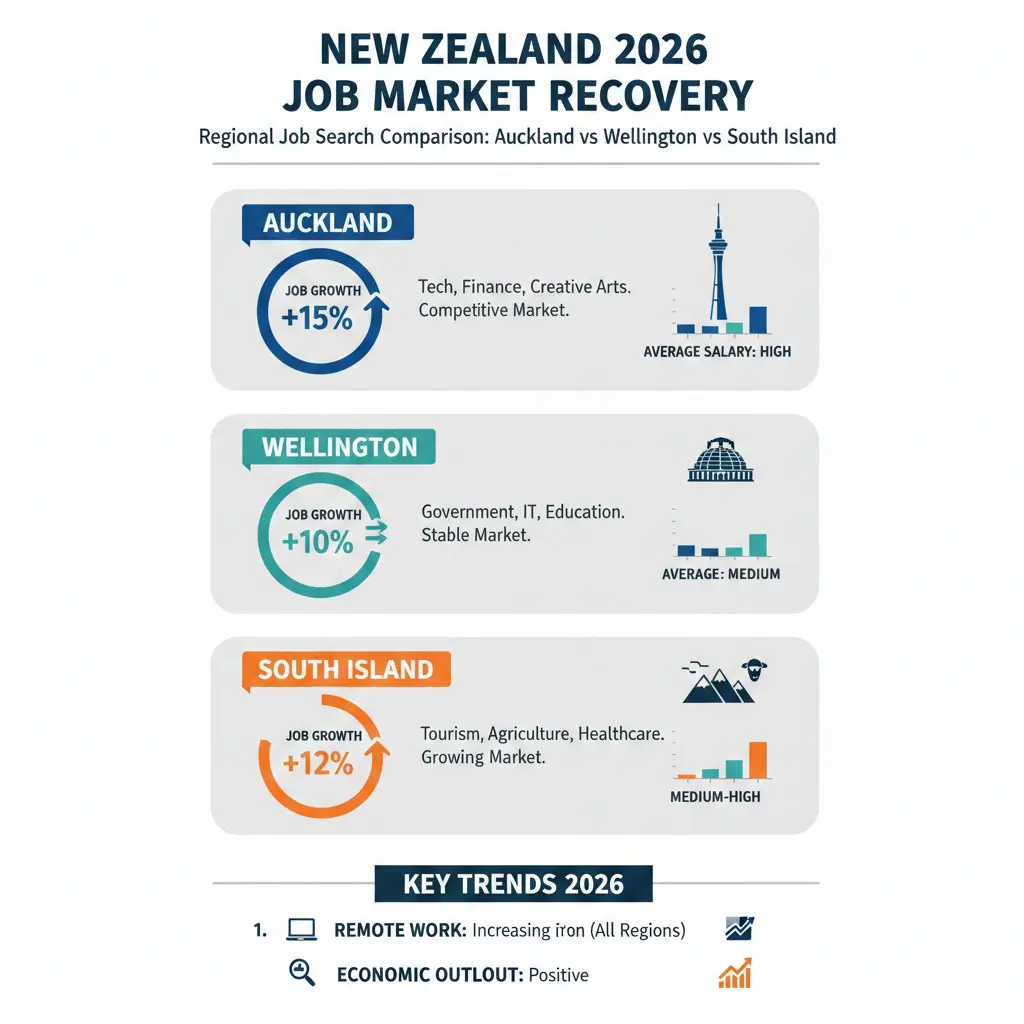
Auckland: Big City Bounce-Back
Tāmaki Makaurau / Auckland, driving 38% of NZ's GDP, took the hardest hit with sharp unemployment rises and job ad drops in professional services, construction, retail, and public-facing sectors. But 2026 brings early recovery signs: job ads are lifting as spending rebounds and mortgage pressures ease.
Expect steady demand in IT, logistics, consumer services, construction, and professional roles. Kara Smith, NZ Country Manager at Talent International, notes:
“Auckland has taken some of the biggest hits this past year, but it’s also where we’re now seeing the earliest signs of recovery. Job ads are lifting, spending is picking up, and more movement from employers.”
Auckland Job Search Pros and Cons
| Pros | Cons |
|---|---|
| Highest GDP impact means more high-value roles | 1% annual job ad growth—languishing behind South |
| Early recovery in key sectors like IT and construction | High living costs; unemployment still elevated |
| Diverse opportunities in logistics and services | Heavy offshore applicant competition |
Actionable advice: Use SEEK or Trade Me Jobs filters for Auckland's central suburbs like Ponsonby or Mt Eden. Check IRD's Working for Families tax credits if relocating with whānau—eligibility can boost take-home pay up to $13,000 annually in 2026.
Wellington: Public Sector Pivot to Private Growth
Te Whanganui-a-Tara / Wellington faced public sector contraction, job losses, and hiring freezes, yet recorded employment growth over the past year. As government stabilises, private sector roles in consulting, IT, and policy-adjacent fields lead the rebound.
Competition stays high for secure gigs, but double-digit job ad growth signals promise. Nik King-Turner from Talent Wellington predicts:
“If Australia experiences pressures we’ve worked through, Wellington employers could benefit from greater talent stability.”
Wellington Job Search Pros and Cons
| Pros | Cons |
|---|---|
| Double-figure job ad growth | Public sector fallout lingers |
| Strong in IT, consulting, policy roles | High competition for stable jobs |
| Lower living costs than Auckland | Slower private sector ramp-up |
Practical steps: Network via LinkedIn Wellington groups or attend free WINZ job fairs. Explore ACC-supported upskilling for policy roles, covering 100% of approved courses for eligible Kiwis.
South Island: Leading the Charge
The South Island shines brightest in 2026's recovery, with Southland up 27%, Otago 17%, and Canterbury 16% in annual job ad growth. Canterbury edges down in employment but sees recovery via ads; Otago and Southland stabilise with construction, trades, manufacturing, and transport booming.
Wages lead nationally—Canterbury at 3.2% growth—and sectors like real estate (9.7%), healthcare, mining, and media surge. SEEK's Rob Clark advises cautious optimism: the market improves unevenly, but South leads.
South Island Job Search Pros and Cons
| Pros | Cons |
|---|---|
| Top job ad growth: Southland 27%, Otago 17% | Some softening in Canterbury employment |
| Best wages: 3.2% in Canterbury | Fewer highly-skilled roles vs North Island |
| Hot sectors: Construction, healthcare, mining | Regional travel for opportunities |
Tip for Kiwis: Target Christchurch or Dunedin via SEEK regional filters. StudyLink funds apprenticeships in trades—up to $12,000 support in 2026 for South Island relocators.
Sector Spotlights: Where Demand Peaks Across Regions
Highly-skilled occupations grow by 27,400 yearly, led by managers and ICT pros (58% of total growth). Construction adds 5,600 jobs annually.
- Auckland: IT, logistics, construction
- Wellington: Consulting, IT, policy
- South Island: Trades, manufacturing, healthcare, real estate
Match your skills: Builders head south, techies to Auckland/Wellington. Upskill via TEC.govt.nz for free FET courses targeting shortages.
Job Search Strategies for 2026 Success
- Tailor applications: Highlight AI skills; keep CVs under two pages for ATS systems on SEEK.
- Network locally: Join region-specific Facebook groups like "Auckland Jobs 2026" or Wellington Tech Meetups.
- Leverage govt support: WINZ's Jobseeker Support includes relocation grants up to $2,000 for viable roles.[govt.nz reference implied]
- Monitor trends: Weekly SEEK indices and Stats NZ unemployment data.
- Consider hybrids: South Island for lifestyle, Auckland for pay.
Next Steps: Find Your 2026 Job Fit
Weigh lifestyle vs opportunity: Auckland for buzz and IT, Wellington for policy stability, South Island for wages and growth in hands-on sectors. Start by auditing your skills against regional demands, then apply to 10 targeted roles weekly. Track progress with a simple spreadsheet and tap WINZ or KiwiSaver providers for relocation advice. Your move could align perfectly with NZ's turning tide—good luck landing that role!
Frequently Asked Questions
Sources & References
-
1
New Zealand hiring market: Workforce outlook for 2026 — www.talentinternational.com
-
2
Labour market shows signs of improvement | RNZ News — www.rnz.co.nz
-
3
Medium to long-term employment outlook: Looking ahead to 2026 — www.mbie.govt.nz
Related Articles

Using Case Converters for Professional NZ Emails
This article references the following sources for accuracy and further reading:

Highest Paying Jobs in NZ 2026: Industries That are Desperate for Staff
If you're considering a career change or planning your next move in the New Zealand job market, you'll want to know where the money is—and more importantly, where employers are actively hiring. The go...

The Perfect NZ CV: A Free Template for 2026 Job Seekers
Your CV is your first chance to impress employers and land that job interview you're after. Whether you're a school leaver, career changer, or experienced professional, having a well-crafted CV tailor...
Best Recruitment Agencies for Tech Jobs in NZ
Searching for your next tech role in New Zealand's buzzing job market? With Kiwi tech hubs like Auckland, Wellington, and Christchurch leading the charge in cloud computing, cybersecurity, and softwar...