Top Job Search Strategies for New Zealand's 2026 Recovery Market

As Kiwis, we've weathered a tough few years in the job market, but 2026 is bringing welcome signs of recovery. With job ads up 7% on platforms like SEEK and early GDP growth returning to pre-COVID lev...
The Lifetimes NZ editorial team curates, fact-checks, and updates guides on personal finance, property, health, immigration, legal, business, and lifestyle topics relevant to Lifetimes NZ readers. Articles are produced with AI assistance and reviewed by the editorial team before publication.
As Kiwis, we've weathered a tough few years in the job market, but 2026 is bringing welcome signs of recovery. With job ads up 7% on platforms like SEEK and early GDP growth returning to pre-COVID levels, now's the time to sharpen your job search 2026 NZ strategies amid rising competition in this NZ job market recovery.
Whether you're in Auckland's bustling professional scene or eyeing opportunities in Canterbury's construction boom, this guide equips you with practical steps tailored to New Zealand's unique landscape. From leveraging local resources like WINZ and Seek to upskilling for AI-driven roles, you'll find actionable advice to land your next role faster.
Understanding New Zealand's 2026 Job Market Recovery
The NZ job market recovery is underway, but it's gradual and uneven. After two slow years, job ads have ticked up nationally, with most regions reporting growth last month, signalling a shift from stagnation. BNZ data shows SEEK listings surging 7% year-on-year, though unemployment lingers at 5.3%—a nine-year high expected to peak at 5.5% early this year.
Employment is forecast to grow modestly at 0.3% in 2026, adding around 80,000 jobs, driven by stabilising inflation and rising business confidence. Auckland and Wellington lead the charge, with Auckland's 38% GDP contribution fuelling demand in IT, logistics, and construction once spending rebounds. South Island spots like Canterbury and Otago show resilience, with 10-15% rises in tourism and construction listings, offering less competition.
Key Sectors Booming in 2026
- IT and Professional Services: Surging demand for AI skills in data analysis, prompt engineering, and strategy roles. Over 50% of employers are upskilling staff here.
- Construction and Logistics: Strongest growth projected, adding thousands of roles annually as business investment returns.
- Consumer Services and Tourism: Easing mortgage pressures boost discretionary spending, lifting retail and hospitality in regions like Otago.
- Business Services: Managers and highly-skilled pros to see 27,400 annual increases, focusing on advertising, PR, sales, and ICT.
Lower-skilled roles grow slower at 1.2% annually, with drivers and labourers leading, but high competition means standing out is key.
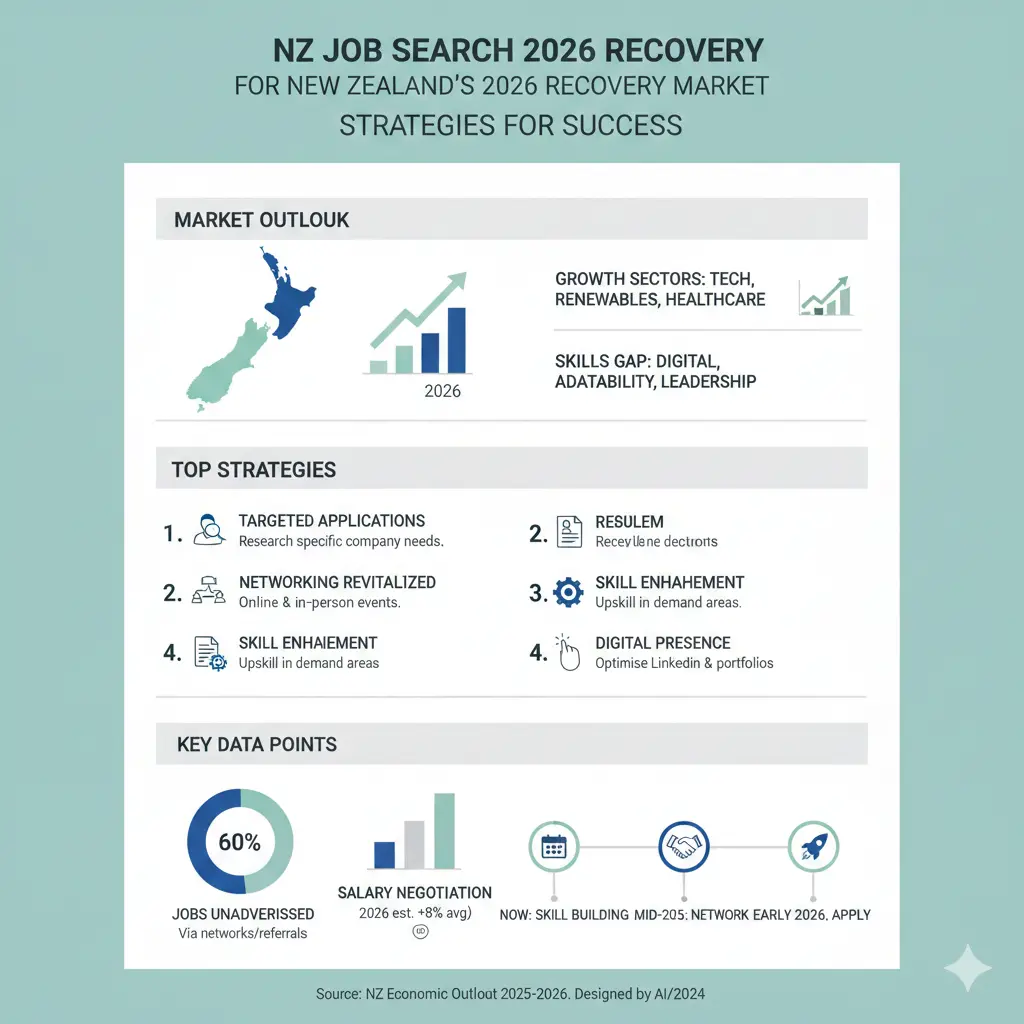
Top Job Search Strategies for 2026
In this job search 2026 NZ environment, rising candidate activity means you need targeted tactics. Here's how to navigate high competition effectively.
1. Optimise Your Online Presence for Kiwi Recruiters
With job ads rebounding, tailor your Seek and LinkedIn profiles for NZ keywords like "AI prompt engineering Auckland" or "construction Taupō". Update your CV to highlight transferable skills—recruiters spend seconds scanning.
- Use Seek's advanced filters for regional roles; set alerts for Wellington policy-adjacent jobs amid public sector stabilisation.
- Build a LinkedIn network: Connect with 10 Kiwi recruiters weekly in your sector. Personalise invites mentioning mutual NZ connections.
- Claim a custom Seek profile and add a professional photo—profiles with photos get 21x more views.
2. Leverage Government and Local Resources
Don't overlook free Kiwi tools. WINZ offers Jobseeker support, including CV workshops and interview prep tailored to 2026 trends. Register for their online job board and attend virtual fairs.
KiwiSaver members, check employer matching incentives—many firms highlight these in 2026 ads to attract talent. For migrants or returnees, Immigration NZ's skill shortage lists prioritise IT and construction visas.
"Auckland has taken some of the biggest hits, but it’s also where we’re now seeing the earliest signs of recovery. Job ads are lifting."
3. Upskill for AI and High-Demand Roles
AI is reshaping NZ jobs—businesses are early adopters, trimming entry-level but boosting data and comms skills. Enrol in free platforms like Coursera (Google Data Analytics cert) or Otago Polytechnic's short AI courses.
- Identify gaps: Use Stats NZ's occupation data for 2026 forecasts—target ICT managers growing fastest.
- Certify quickly: WINZ funds eligible training; aim for 4-6 week courses in prompt engineering.
- Showcase: Add projects to GitHub or a portfolio site, e.g., "AI-optimised logistics model for NZ supply chains".
4. Network Smart in a Competitive Market
With unemployment at 5.3%, personal connections trump applications. Attend Auckland Chamber events or Wellington ICT forums—virtual options via Eventbrite.
- Join NZ-focused groups: Recruiters.co.nz or regional Facebook jobs pages for insider tips.
- Informational interviews: Message alumni on LinkedIn—"As a fellow Kiwi in construction, advice for Otago roles?"
- Track progress: Use a spreadsheet for 20 weekly outreaches; follow up politely after 7 days.
5. Master Applications and Interviews
Craft cover letters addressing NZ specifics, like "Eager to contribute to Canterbury's 10% construction uptick". Practice behavioural interviews focusing on resilience from recent downturns.
For salary talks, reference Talent International's 2026 guide—expect modest gains but stability in high-demand fields. Negotiate KiwiSaver contributions or ACC flexibility.
6. Target Regional Opportunities
| Region | Hot Sectors | Competition Level |
|---|---|---|
| Auckland | IT, Logistics | High |
| Wellington | Consulting, Policy | Medium-High |
| Canterbury | Construction, Tourism | Medium |
| Otago/Southland | Tourism, Stabilising roles | Low-Medium |
Consider relocating—Taranaki lags, but Central North Island like Taupō shows unemployment drops.
Common Pitfalls to Avoid in 2026
- Generic applications: Always localise for NZ spelling, references (e.g., IRD number readiness).
- Ignoring soft skills: AI elevates stakeholder comms and adaptability.
- Burnout: Limit to 5 apps/day; balance with WINZ-mandated job search logs.
Next Steps to Launch Your Job Search Today
Start by updating your Seek profile and setting 10 networking goals this week. Register with WINZ for support, target one upskill course, and apply to 5 regional roles outside your postcode. Track progress monthly—2026's recovery rewards the proactive Kiwi. You've got this; the upturn is here.
Frequently Asked Questions
Sources & References
-
1
New Zealand hiring market: Workforce outlook for 2026 — www.talentinternational.com
-
2
Medium to long-term employment outlook: Looking ahead to 2026 — www.mbie.govt.nz
-
3
New Zealand economy “subdued” going into 2026 — www.wsws.org
-
4
Why the Job Market Recovery is a Triumph for NZ Workers — blackarrow.co.nz
-
5
Job Search Strategies for 2026 | Career Solutions NZ — www.careersolutions.co.nz
-
6
BNZ: NZ economy set for 'better, not good' 2026 as confidence surges — www.mpamag.com
- 7
Related Articles

Using Case Converters for Professional NZ Emails
This article references the following sources for accuracy and further reading:

Highest Paying Jobs in NZ 2026: Industries That are Desperate for Staff
If you're considering a career change or planning your next move in the New Zealand job market, you'll want to know where the money is—and more importantly, where employers are actively hiring. The go...

The Perfect NZ CV: A Free Template for 2026 Job Seekers
Your CV is your first chance to impress employers and land that job interview you're after. Whether you're a school leaver, career changer, or experienced professional, having a well-crafted CV tailor...
Best Recruitment Agencies for Tech Jobs in NZ
Searching for your next tech role in New Zealand's buzzing job market? With Kiwi tech hubs like Auckland, Wellington, and Christchurch leading the charge in cloud computing, cybersecurity, and softwar...