Body Corporate Fees NZ: What Apartment Buyers Must Know

Buying an apartment in New Zealand means more than just securing your dream home—it's joining a shared community with ongoing costs that can make or break your budget. Body corporate fees, often overl...
The Lifetimes NZ editorial team curates, fact-checks, and updates guides on personal finance, property, health, immigration, legal, business, and lifestyle topics relevant to Lifetimes NZ readers. Articles are produced with AI assistance and reviewed by the editorial team before publication.
Buying an apartment in New Zealand means more than just securing your dream home—it's joining a shared community with ongoing costs that can make or break your budget. Body corporate fees, often overlooked by first-time buyers, fund everything from insurance to maintenance, and understanding them is crucial before signing on the dotted line.
In 2026, with apartment prices climbing in cities like Auckland and Wellington, these fees average between $4,000 and $6,000 annually, but can soar higher in premium buildings or older complexes needing repairs. We'll break down what apartment buyers must know about body corporate fees in NZ, from how they're calculated to hidden pitfalls and smart strategies to protect your finances.
What is a Body Corporate in New Zealand?
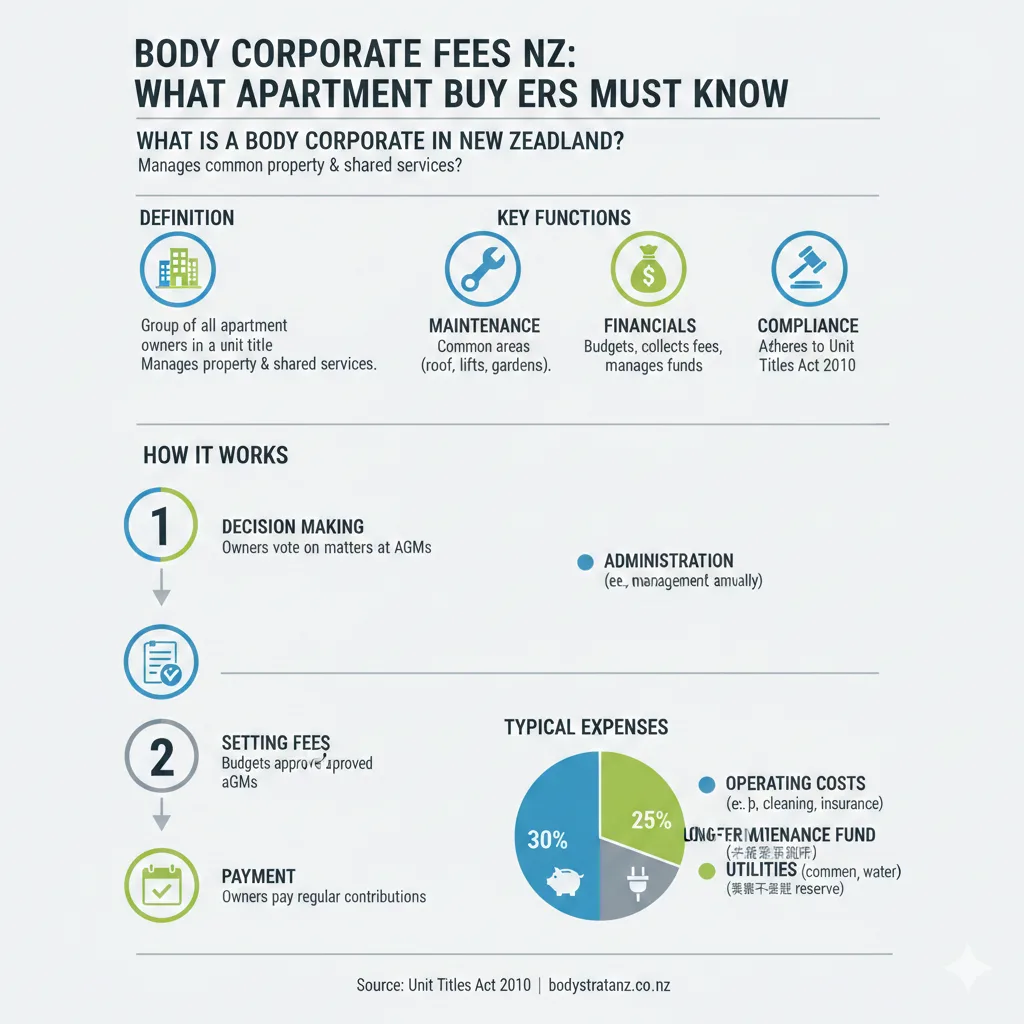
A body corporate is the legal entity that owns and manages the common property in unit title developments, such as apartment blocks. Governed by the Unit Titles Act 2010, it ensures shared spaces—like lifts, hallways, roofs, and gardens—are maintained for all owners.
When you buy an apartment (a unit title property), you automatically become a member. This gives you voting rights at meetings but also obliges you to pay levies. The body corporate, often run by an elected committee and professional managers, handles day-to-day operations and long-term planning.
Key Responsibilities of the Body Corporate
- Managing finances, including building insurance and levies collection.
- Maintaining common areas: cleaning, gardening, and repairs.
- Setting rules for residents, like noise limits or pet policies.
- Holding an Annual General Meeting (AGM) to approve budgets and major decisions.
Transparency is key—always request the latest minutes and financial statements before buying.
How Body Corporate Fees Are Calculated and Paid
Body corporate fees, also called levies or contributions, cover the building's operational costs. They're based on an annual budget approved at the AGM, divided among owners according to their "ownership interest"—typically proportional to unit size or floor area.
Average Body Corporate Fees in NZ (2026)
Fees vary widely by location, building type, and amenities. Here's a snapshot:
| Location/Building Type | Average Annual Fee | Factors Influencing Cost |
|---|---|---|
| Auckland City apartments | $2,500–$8,500 | Size, location, amenities like gyms or pools |
| General NZ unit titles | $4,000–$6,000 | Shared facilities, building size |
| Premium buildings | Over $10,000 | Extensive amenities, prime locations |
| Older buildings (10+ years) | Higher due to repairs | Weathertightness, earthquake strengthening |
The budget factors in yearly expenses (insurance, utilities, cleaning), inflation adjustments, and planned works. One-off costs might lead to special levies.
Payment Frequency and Methods
Most bodies corporate collect fees in 1–2 instalments annually to minimise admin costs, though up to four is common. Some opt for quarterly or monthly via direct debit for better cash flow.
- Instalment split example: First payment 60% of total, remainder in 20–40% tranches.
- Payment options: Direct debit, online banking, credit card (with surcharge), or EFTPOS.
Late payments can incur penalties, and unpaid levies become a charge on your title, complicating sales.
What's Included in Body Corporate Fees?
These fees fund essential shared services, giving you peace of mind without individual outlays. Typical breakdown:
- Insurance: Comprehensive cover for the building, land, and common improvements.
- Maintenance: Common area cleaning, gardening, building washes, and repairs.
- Utilities: Water, power for shared spaces.
- Administration: Management fees, compliance, accounting, and AGM costs.
- Long-term fund: Sinking fund for major future works like painting or lift upgrades (required under Unit Titles Act).
"Body corporate fees cover all the regular costs of managing and maintaining the common areas of your property."
Factors That Drive Up Body Corporate Fees
Not all fees are equal—here's what to watch for as an apartment buyer:
Building Age and Condition
Older apartments (10+ years) often face weathertightness issues or earthquake strengthening, hiking fees. Budget for potential remediation.
Amenities and Location
Gyms, pools, or concierge in central Auckland or Wellington? Expect premiums. Prime spots like Auckland CBD add insurance and maintenance costs.
Energy Efficiency and Insurance
Modern, efficient buildings may lower long-term fees, but high-risk areas (earthquake-prone) inflate insurance.
Pro tip: Review the last three years' budgets for trends—rising fees signal trouble.
Hidden Costs and Special Levies: What Buyers Must Know
Beyond standard fees, surprises lurk:
- Special levies: For unforeseen major repairs, like roof replacement—can hit thousands per unit.
- Sinking fund shortfalls: Inadequate reserves mean emergency hikes.
- Rule restrictions: Limits on renovations, pets, or rentals that affect usability.
For investors, fees slash yields. Example: Auckland CBD two-bed apartment ($650k purchase, $650/week rent) sees net yield drop from 5.2% gross to 3.04% after $5,200 fees plus other costs.
Tax note: Levies are deductible for rental properties—keep records for IRD claims. Always consult a tax advisor or visit ird.govt.nz.
How to Check Body Corporate Fees Before Buying
Due diligence saves heartache. Actionable steps for Kiwi buyers:
- Request LIM and project information memorandum: Reveals fees, disputes, and works.
- Ask for last AGM minutes and budgets: Spot trends and approvals.
- Review financial statements: Check sinking fund health and arrears.
- Attend an AGM if possible: Gauge committee competence.
- Get a building inspection: Flags issues driving future levies.
- Compare with similar properties: Use real estate agents for benchmarks.
Engage a lawyer specialising in property law to review body corporate docs.
Tips for Managing and Minimising Body Corporate Costs
- Vote wisely at AGMs for efficient budgeting and competitive tenders.
- Opt for direct debit to avoid surcharges.
- For investors: Factor fees into cashflow forecasts; furnished rentals boost yields.
- Push for energy upgrades to cut utilities long-term.
- If fees spike unreasonably, challenge via the Tenancy Tribunal or body corporate dispute process.
FAQ: Common Questions on Body Corporate Fees NZ
1. How much are typical body corporate fees for apartments in NZ?
Averages $4,000–$6,000/year, but $2,500–$8,500 in Auckland, higher for premium builds.
2. Can body corporate fees increase suddenly?
Yes, via special levies for repairs or AGM-approved budgets. Review sinking funds to anticipate.
3. Are body corporate fees tax-deductible?
Yes, fully for investment properties. Retain records for IRD.
4. How often do I pay body corporate levies?
Usually 1–2 instalments yearly, decided at AGM; some quarterly.
5. What if I can't pay my levies?
Contact the manager early—plans exist, but unpaid fees lien your title.
6. Do body corporates control my apartment use?
They set reasonable rules for common areas, compliant with laws like the Human Rights Act.
Next Steps for Apartment Buyers
Armed with this knowledge, prioritise body corporate due diligence in your search. Chat with your real estate agent about fee benchmarks, grab the LIM report early, and crunch numbers with a financial advisor. Platforms like Trade Me Property list fees upfront—use them wisely.
Remember, affordable fees today don't guarantee tomorrow's stability. Seek professional advice tailored to your situation; this isn't financial advice. Happy house hunting—your Kiwi dream pad awaits.
Related Articles

Industry Bodies and Professional Associations NZ
Whether you're launching a business, advancing your career, or navigating financial regulations, industry bodies and professional associations in New Zealand offer invaluable support. These organisati...

Emergency Benefit NZ: When You Have No Other Options
When you're struggling financially and don't qualify for other benefits, the Emergency Benefit might be your lifeline. It's a discretionary payment designed for Kiwis in genuine hardship who've exhaus...

Unpaid Internships NZ: Are They Legal?
Unpaid internships are a common pathway for students and graduates to gain work experience in New Zealand, but there's often confusion about whether they're actually legal. The short answer is: unpaid...

Estate Administration NZ: Managing Someone's Affairs After Death
Losing a loved one is one of life's toughest challenges, and stepping in to manage their estate can feel overwhelming. In New Zealand, estate administration—the process of handling someone's affairs a...