Buy Now Pay Later NZ: Hidden Costs and Dangers

Imagine splurging on the latest smartphone or a stylish outfit online, only to discover later that those painless instalments have piled up into a debt mountain you can't climb. Buy Now Pay Later (BNP...
Sarah covers personal finance, tax, and KiwiSaver topics for Lifetimes NZ. She focuses on making money management straightforward and practical for everyday Kiwis.
Imagine splurging on the latest smartphone or a stylish outfit online, only to discover later that those painless instalments have piled up into a debt mountain you can't climb. Buy Now Pay Later (BNPL) services like Afterpay, Laybuy, and Klarna have exploded in popularity across New Zealand, promising interest-free shopping bliss. But beneath the convenience lurks a web of hidden costs and dangers that could trap Kiwis in cycles of debt.
With the BNPL market in New Zealand projected to hit nearly NZ$2 billion by 2026, growing at a compound annual growth rate (CAGR) of 16.7% from 2023, it's no wonder so many are tempted. Yet, as millennials and Gen Z—our biggest users—embrace this short-term financing for everything from fashion to groceries, experts warn of rising risks. This article uncovers the hidden pitfalls of Buy Now Pay Later NZ, from sneaky fees to regulatory gaps, and arms you with practical tips to stay safe.
What is Buy Now Pay Later in New Zealand?
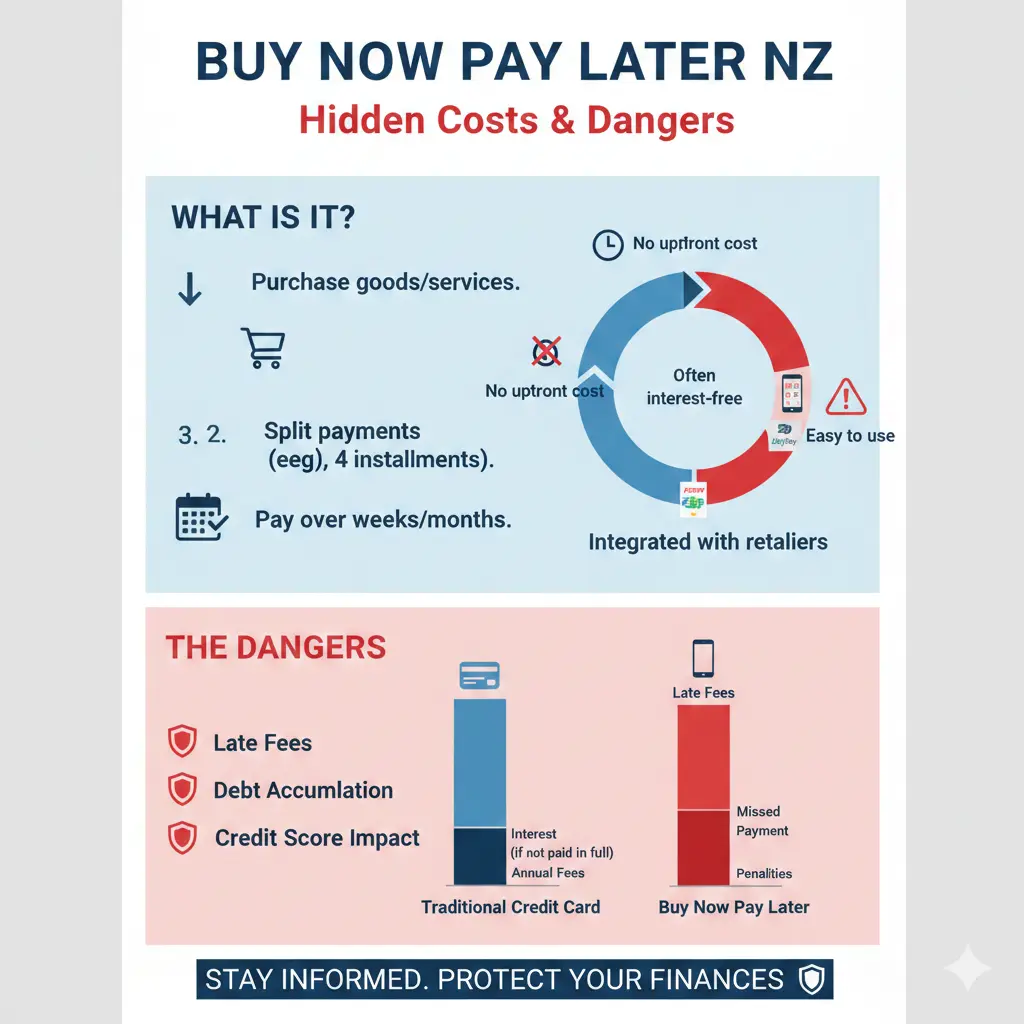
Buy Now Pay Later lets you purchase goods immediately and pay in instalments over weeks or months, often without interest if you stick to the schedule. Popular providers in NZ include Afterpay, Laybuy (before its 2024 collapse), Gem, Q Card, and global entrant Klarna, which launched its 'Pay in 4' service here in 2021.
These services are integrated seamlessly into e-commerce sites, appealing to tech-savvy Kiwis who shop online. In 2023, the NZ BNPL market was valued at around USD 1.83 billion (roughly NZ$3 billion), with forecasts predicting explosive growth to USD 23.70 billion by 2030 at a staggering 36.9% CAGR. Much of this boom comes from merchants boosting sales by offering flexible payments, reducing cart abandonment.
How BNPL Works: A Kiwi Perspective
- Sign-up: Quick online approval, often without a credit check for smaller amounts.
- Instalments: Typically four payments over six weeks, e.g., $200 item = $50 weekly.
- No interest: If paid on time—but late fees kick in fast.
- Limits: Starts low (e.g., $500 with Afterpay) but rises with good behaviour.
While convenient for budgeting big buys like electronics (which dominate 35.94% of BNPL revenue globally), the ease masks accumulating risks when multiple plans overlap.
The Rise of BNPL in New Zealand: By the Numbers
New Zealand's BNPL sector is booming, driven by post-pandemic online shopping and squeezed household budgets. Transaction values are set to reach NZ$2.7 billion by 2026, while gross merchandise value could hit US$2.4 billion by 2029. Gen Z (47.4% of users) and millennials (40.6%) lead adoption, twice as likely as baby boomers to juggle multiple loans.
Here's a snapshot of NZ BNPL growth:
| Year | Market Value (USD Billion) | Growth Driver |
|---|---|---|
| 2023 | 1.83 | Post-COVID e-commerce surge |
| 2024 | ~1.42 (payments) | 16.8% annual rise |
| 2026 | NZ$2.7 (transactions) | 16.7% CAGR |
| 2030 | 23.70 | 36.9% CAGR |
Usage is spreading: 25% of users now buy groceries with BNPL, up from 14% last year, and 23% juggle three or more active loans. But with Laybuy's dramatic 2024 failure—leaving thousands of Kiwis out of pocket—the sector's fragility is clear.
Hidden Costs of Buy Now Pay Later NZ
BNPL isn't free money. While headline "no interest" grabs eyes, the fine print reveals costs that can exceed credit cards.
Late Fees: The Sneaky Sting
Miss a payment? Expect $10-$15 fees per instalment, capped at $60-$120 per plan in NZ. Afterpay charges $10 for the first missed payment, another $10 a week later. Stack multiple plans, and fees snowball—Laybuy users reported hundreds in charges before its collapse.
"BNPL is widely popular... but with the pandemic adversely affecting disposable income, demand for short-term finance has increased, heightening debt risks."
Merchant Fees Passed to You
Providers charge retailers 4-8% per transaction, often inflating product prices. That "bargain" dress? Priced higher to cover BNPL costs, eroding your savings.
Overlimit and Account Lock Fees
Exceed your limit? Plans pause until cleared, halting new purchases. Some charge review fees.
No Consumer Protections (Yet)
Unlike credit cards under the Credit Contracts and Consumer Finance Act (CCCFA), most BNPL evaded regulation until recent changes. In November 2022, the Minister proposed bringing BNPL under CCCFA to curb debt traps, with 2026 rules mandating disclosures, affordability checks, and fee caps.
Dangers and Risks: Why BNPL Can Backfire
BNPL encourages impulse buys, masking spending. Users are 12% more likely to face bankruptcy, 43% higher lien rates, and 118% more landlord disputes.
Debt Accumulation and Multiple Plans
40% of young users never overlap loans, but 23% run three+, leading to payment chaos. One Kiwi Reddit thread detailed juggling five Afterpay plans, totalling $2,000, with fees pushing it to $2,500.
Credit Score and Financial Health Impact
Hard inquiries or payment defaults now hit credit files under 2026 rules. BNPL users under 35 (53%) outpace credit card users (35%), but defaults rise with living costs.
Provider Insolvency: Laybuy's Lesson
Laybuy's 2024 collapse froze accounts, delaying refunds amid administration. Customers waited months, highlighting zero FSCS-like protection (unlike banks).
Psychological Traps
Splitting $400 into $100 chunks feels harmless, boosting spending by 20-30% per studies. Groceries on BNPL? That's essentials becoming debt.
New Zealand Regulations: What's Changing in 2026?
Responding to BNPL's rise, the government moved fast. From 2026, BNPL falls under CCCFA, requiring:
- Affordability assessments before approval.
- Clear fee and default disclosures.
- Hardship provisions via providers or Financial Mentors.
- Credit reporting for defaults over $150.
Commerce Commission oversees compliance. Until fully implemented, check providers' terms rigorously.
Real Kiwi Stories: BNPL Gone Wrong
Take Sarah from Auckland: Used Afterpay for Christmas hauls, missed shifts due to illness, racked $200 fees. "It started small, but snowballed," she shared on Sorted.org.nz forums.
Or Mike in Christchurch, post-Laybuy: "Lost $300 in limbo—had to borrow from family." These tales echo global trends where BNPL fuels 33% annual usage rises but triples financial stress.
Practical Tips: How to Use BNPL Safely in NZ
BNPL isn't evil—use it wisely:
- Budget First: Only buy what you'd pay cash for. Use tools like Sorted's budget planner.
- One Plan at a Time: Avoid overlaps; track via apps or spreadsheets.
- Set Reminders: Auto-payments prevent fees.
- Check Total Cost: Compare with credit cards (avg 19.5% interest but CCCFA protections).
- Seek Help Early: Contact WINZ, MoneyTalks (0800 345 123), or CAB if struggling.
- Shop Alternatives: KiwiSaver withdrawals for hardship or no-interest overdrafts from banks.
Disclaimer: This isn't personalised financial advice. Consult a certified adviser or visit ird.govt.nz for tax implications.
Stay in Control: Your Next Steps
Buy Now Pay Later NZ offers flexibility, but hidden costs and dangers like fees, debt spirals, and insolvency risks demand caution. With 2026 regulations tightening the net, now's the time to review your plans. Track spending, prioritise essentials, and build an emergency fund—aim for 3-6 months' expenses in a high-interest saver.
Resources for Kiwis:
- Sorted.org.nz – Free budgeting tools.
- MoneyTalks – 0800 345 123 for debt help.
- Commerce Commission – Report issues.
- IRD – Tax on BNPL earnings (rare).
Smart shopping beats regret. Pause before you pay later.
Frequently Asked Questions
Sources & References
-
1
New Zealand's BNPL Market to Reach Nearly $2 Billion in 2026 — australiaasiaforum.com.au
-
2
New Zealand Buy Now Pay Later Business and Investment Opportunities Databook 2024 — www.businesswire.com
- 3
-
4
New Zealand Card Payments Market to be Valued $67.1b in 2026 — asianbankingandfinance.net
- 5
Related Articles

Industry Bodies and Professional Associations NZ
Whether you're launching a business, advancing your career, or navigating financial regulations, industry bodies and professional associations in New Zealand offer invaluable support. These organisati...

Emergency Benefit NZ: When You Have No Other Options
When you're struggling financially and don't qualify for other benefits, the Emergency Benefit might be your lifeline. It's a discretionary payment designed for Kiwis in genuine hardship who've exhaus...

Unpaid Internships NZ: Are They Legal?
Unpaid internships are a common pathway for students and graduates to gain work experience in New Zealand, but there's often confusion about whether they're actually legal. The short answer is: unpaid...

Estate Administration NZ: Managing Someone's Affairs After Death
Losing a loved one is one of life's toughest challenges, and stepping in to manage their estate can feel overwhelming. In New Zealand, estate administration—the process of handling someone's affairs a...