Citizenship vs Permanent Residency NZ: Key Differences

Imagine arriving in New Zealand on a resident visa, building a life here with your whānau, only to wonder: should I aim for permanent residency next, or go straight for citizenship? For many Kiwis and...
The Lifetimes NZ editorial team curates, fact-checks, and updates guides on personal finance, property, health, immigration, legal, business, and lifestyle topics relevant to Lifetimes NZ readers. Articles are produced with AI assistance and reviewed by the editorial team before publication.
Imagine arriving in New Zealand on a resident visa, building a life here with your whānau, only to wonder: should I aim for permanent residency next, or go straight for citizenship? For many Kiwis and newcomers alike, understanding the nuances between citizenship vs permanent residency NZ can mean the difference between secure borders and full belonging. This guide breaks it down clearly, with practical steps tailored to our New Zealand context.
Understanding Resident Visas: Your First Step to Staying in Aotearoa
Before diving into permanent residency or citizenship, most pathways start with a resident visa. This visa lets you live, work, study, and access publicly funded health and disability services in New Zealand indefinitely. However, it comes with conditions, often requiring you to spend time in the country—typically at least 184 days per year for the first two years.
Resident visas are granted under the Immigration Act 2009, administered by Immigration New Zealand. Examples include the Skilled Migrant Category Resident Visa or Straight to Residence Visa for those with in-demand skills. While it offers stability, it's not unconditional: serious wrongdoing can lead to revocation and deportation.
Key Rights and Limitations of a Resident Visa
- Live, work, and study indefinitely in New Zealand.
- Access social services like healthcare.
- Buy property once settled (after meeting conditions).
- Potential eligibility for jury service or New Zealand Defence Force careers.
- Travel conditions: You must return before your 'expiry date for travel' or risk losing resident status.
If you're on a resident visa, check your conditions via your RealMe account on the Immigration New Zealand website to ensure compliance.
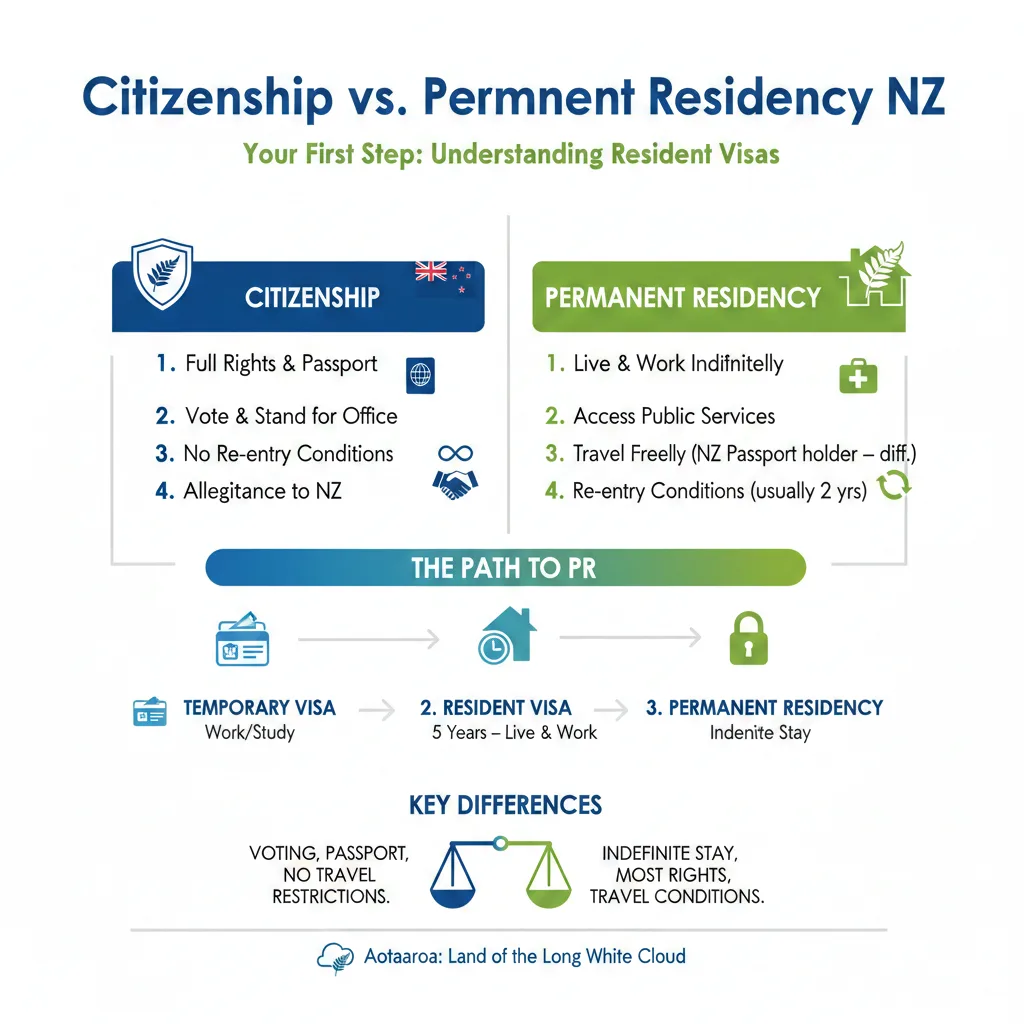
Permanent Residency: Removing the Travel Strings
A Permanent Resident Visa builds on your resident visa by lifting travel restrictions. You can live in New Zealand permanently and travel in and out indefinitely without conditions. Unlike the resident visa, it has no expiry on re-entry, giving you true flexibility for overseas trips or family visits.
Eligibility typically requires holding a resident visa for at least two years and meeting commitment criteria, such as spending a minimum of 184 days in New Zealand each year during that period. Immigration New Zealand outlines five ways to prove commitment, including time spent here and ties to the community.
How to Qualify for Permanent Residency in 2026
- Hold a resident visa for 2+ years: Time counts from your first arrival on that visa.
- Meet section 49 conditions: Usually 184 days per year for two years.
- Demonstrate commitment: Options include living here, owning property, employing locals, or family ties.
- Apply online: Fees apply (around NZ$315 as of 2026); processing takes 1-3 months.
For investors, pathways like the Active Investor Plus Visa can fast-track to permanent residency after three or four years, with investments from NZ$350,000 creating jobs. Spouses and dependent children under 24 can join. Once granted, your previous resident visa becomes obsolete, but citizenship offers even more.
New Zealand Citizenship: The Ultimate Commitment
New Zealand citizenship elevates you from resident to full member of the nation, granting unbreakable rights. No deportation risk, even for serious offences (short of citizenship deprivation), and access to a powerful Kiwi passport. It's the gold standard for long-term security and global mobility.
Citizenship recognises a deeper bond with Aotearoa, providing national identity, security of tenure, and exclusive privileges. In 2026, applications are processed via Department of Internal Affairs, with presence requirements strictly enforced.
Citizenship Requirements in 2026
To apply, you generally need:
- A resident visa (or indefinite stay right) for the last five years.
- At least 1,350 days total presence in New Zealand over those five years.
- At least 240 days (about eight months) in each of those years.
- Good character, basic English, and knowledge of te Tiriti o Waitangi.
Australian citizens or permanent residents qualify after five years' presence without a resident visa. Processing takes 6-12 months; the fee is NZ$470.20 for adults.
Citizenship vs Permanent Residency NZ: Side-by-Side Comparison
Both statuses allow indefinite living, working, and studying, but citizenship unlocks doors permanent residency can't. Here's a clear breakdown:
| Aspect | Permanent Residency | Citizenship |
|---|---|---|
| Live/Work/Study | Yes, indefinitely | Yes, indefinitely |
| Travel Freedom | In/out NZ anytime | In/out NZ anytime + NZ passport |
| Deportation Risk | Possible for serious crimes | No (protected status) |
| NZ Passport | No | Yes – visa-free to 190+ countries |
| Consular Help Abroad | Limited | Full access to embassies |
| Vote/Run for Office | No | Yes (Parliament, local gov) |
| Australia Access | Visitor visa needed | Special Category Visa automatic |
| Scholarships/Sports | Limited | Full eligibility (e.g., Olympics) |
| Time to Obtain | After 2 years resident visa | After 5 years presence |
Permanent residency suits those wanting travel flexibility without full commitment. Citizenship is ideal for families planning forever in NZ or frequent international travel.
Financial Implications: Taxes, Benefits, and KiwiSaver
Both permanent residents and citizens pay the same taxes via IRD—progressive rates from 10.5% to 39% (2026 thresholds: $15,600-$70,000 at 17.5%, over $180,000 at 39%). You're eligible for KiwiSaver from day one on a resident visa, with employer contributions up to 3%.
Citizens access citizen-only scholarships and subsidies, plus ACC coverage is identical. WINZ benefits like Jobseeker require 2+ years' residency for most newcomers. Permanent residents can't vote in elections affecting these policies—citizens can.
"Citizenship provides full economic and social rights, including a New Zealand passport and Australia access."
Tip: Use the IRD's tax calculator (ird.govt.nz) to model your situation. Always consult a licensed adviser for personalised advice—this isn't financial advice.
Pathways and Practical Tips for Kiwis and Newcomers
Whether through skilled migration, investment, marriage, or study:
- Skilled workers: Straight to Residence if on Green List (e.g., nurses, engineers).
- Investors: Permanent residency after 3-4 years via business visas, faster with NZ$350k+ investment.
- Family: Partnership visas lead to residency after 2 years, citizenship via marriage after 5+ years together.
- Students: Post-study work visas bridge to residency.
Actionable steps:
- Log into Immigration NZ account to check visa status.
- Track presence days with an app or spreadsheet—critical for both PR and citizenship.
- Book citizenship seminar (free via DIA).
- Seek a Licensed Immigration Adviser (lia.org.nz).
FAQ: Common Questions on Citizenship vs Permanent Residency NZ
1. Can I apply for permanent residency straight away?
No, you need a resident visa for at least 2 years first, meeting presence conditions.
2. Does permanent residency protect against deportation?
Not fully—serious crimes can still lead to revocation, unlike citizenship.
3. How long until citizenship after permanent residency?
Presence is key: typically 5 years total as resident, including 1,350 days.
4. Can my family get citizenship too?
Dependents under 24 can apply with you if included in original visa.
5. What's the cost in 2026?
Permanent Resident Visa: ~NZ$315. Citizenship: NZ$470.20 adults, plus biometrics.
6. Do Australians need residency first?
No, they can apply for citizenship after 5 years' presence.
Next Steps: Secure Your Future in New Zealand
Review your visa today via immigration.govt.nz. If you've hit two years, apply for permanent residency to unlock travel freedom. Dreaming of a Kiwi passport? Start logging those presence days toward citizenship—it's your ticket to voting, representing NZ abroad, and worry-free living. Consult Immigration NZ or a licensed adviser, and remember: this guide informs but seek professional advice for your circumstances. Kia kaha—your Aotearoa journey awaits.
Useful Tools
Related Articles

Working Multiple Jobs NZ: Tax and Legal Considerations
Juggling multiple jobs can boost your income, but it's crucial to understand the tax implications and legal requirements that come with working more than one role in Aotearoa. Whether you're a contrac...

Name Changes NZ: Legal Process and Costs
Considering a fresh start with a new name? Whether it's after marriage, divorce, or simply embracing a personal transformation, changing your name in New Zealand is straightforward but requires follow...

Holiday Home Tax Rules NZ: Private Use and Rental
Own a bach in Coromandel or a holiday home in Queenstown? You're not alone—many Kiwis cherish these escapes, but renting them out while enjoying personal use can trip you up on tax rules. Getting the...

Industry Bodies and Professional Associations NZ
Whether you're launching a business, advancing your career, or navigating financial regulations, industry bodies and professional associations in New Zealand offer invaluable support. These organisati...