Partnership Visas NZ: Bringing Your Partner

Imagine finally being able to build a life together in Aotearoa with the person you love, sharing barbecues in the backyard, tramping through Fiordland, or simply waking up to the same Kiwi sunrise ev...
Priya writes about immigration pathways, job searching, and building a career in New Zealand. She covers visa options, CV writing, interview preparation, and workplace culture for newcomers and locals alike.
Imagine finally being able to build a life together in Aotearoa with the person you love, sharing barbecues in the backyard, tramping through Fiordland, or simply waking up to the same Kiwi sunrise every day. For many Kiwis in genuine partnerships with someone from overseas, a Partnership Visa NZ makes this dream a reality, letting your partner join you here to live, work, and thrive.
Whether you're married, in a civil union, or sharing a committed de facto relationship, bringing your partner to New Zealand through sponsorship is straightforward if you meet the criteria. In this guide, we'll walk you through everything you need to know about Partnership Visas NZ: Bringing Your Partner – from eligibility and evidence requirements to timelines, costs, and step-by-step application tips tailored for Kiwis in 2026.
Understanding Partnership Visas in New Zealand
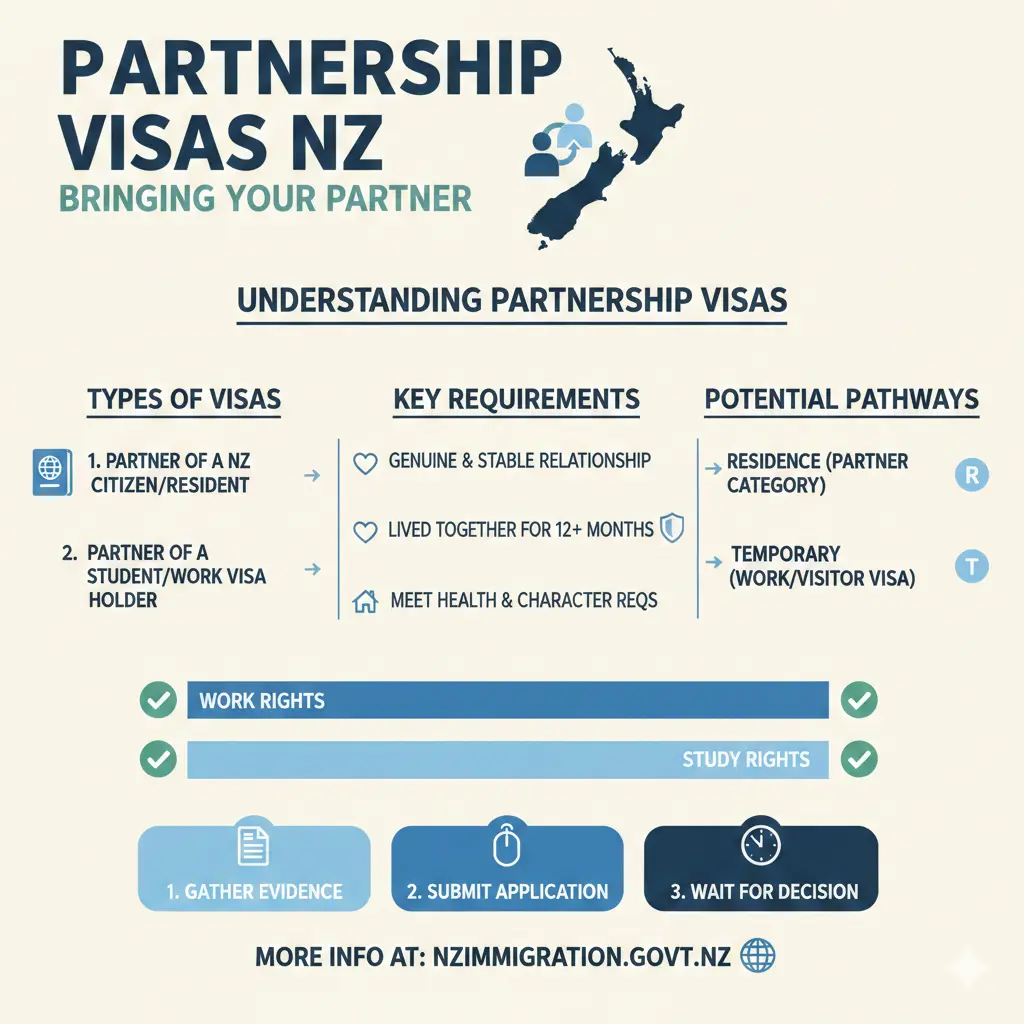
Partnership visas allow the partner of a New Zealand citizen, resident, or certain visa holder to live and work in Aotearoa. These visas recognise that family unity is a core value here, and Immigration New Zealand (INZ) processes thousands of applications each year to reunite couples.
There are several types depending on your situation:
- Partner of a New Zealander Work Visa: For partners of NZ citizens or residents. Grants open work rights and matches your sponsor's status duration, often initially temporary.
- Partner of a New Zealand Resident Visa: Leads to indefinite stay, work rights, and access to healthcare and social services. After two years, you can apply for permanent residency.
- Partner Work Visa: For partners of work visa holders, with expanded open work rights since December 2024 for those meeting new wage thresholds like NZD 25.29 per hour in key sectors.
- Visitor or Student Partner Visas: Limited options if your partner is studying at lower levels, without work rights unless on the Green List.
These visas ensure your partner can contribute to our communities – from working in high-demand sectors like healthcare to enjoying everyday Kiwi life.
Key Differences: Temporary vs Residence Pathways
Temporary visas offer immediate entry and work rights, while residence pathways require proving a stable relationship of at least 12 months' cohabitation. Living together evidence is crucial for residence applications.
Eligibility Criteria for Sponsoring Your Partner
To sponsor your partner, you must be a New Zealand citizen or resident (or hold an eligible visa), aged 18 or older (or 16-17 with parental consent), and not closely related to your applicant.
Your partner must:
- Be in a genuine and stable relationship with you – marriage or civil union alone isn't enough; INZ assesses credibility holistically.
- Have lived together for at least 12 months for residence visas (exceptions for separations with evidence).
- Meet health and character requirements, including police certificates and medical exams.
- Be aged 18+ (or 16-17 with consent) and plan to live together in NZ.
- Show financial support capability – typically NZD $4,200 for basic living expenses, or proof from you as sponsor.
If you're on a work visa yourself, check expanded partner rights: open work visas now available if you earn above median wage thresholds or in Green List roles.
"Immigration New Zealand considers partnership visa applications very carefully... [requiring] a range of documentation to demonstrate [the] relationship meets requirements."
Proving a Genuine and Stable Relationship
INZ officers scrutinise relationships subjectively, often requesting interviews, home visits, or extra docs. Focus on four pillars: living together, financial ties, social recognition, and commitment.
Required Evidence
Gather a mix of these for a strong case:
- Living together: Rental agreements, joint tenancy, utility bills, or letters from landlords confirming 12+ months cohabitation.
- Financial commitments: Joint bank accounts, shared loans, life insurance nominations, or household bills in both names.
- Social proof: Photos (100+ over time), travel itineraries, invites to events as a couple, affidavits from family/friends.
- Communications: Messages, emails, or call logs showing daily interaction, especially during separations.
- Future plans: Statements on why NZ, job searches, or property viewings.
For de facto couples, emphasise exclusivity and duration. Same-sex and opposite-sex relationships are treated equally.
Tip for Kiwis: Use NZ-specific examples like joint AA membership, Spark bills, or photos from Matariki celebrations to localise your evidence.
Financial and Funds Requirements
Show you (or your partner) can support yourselves without public funds. Minimum: NZD $4,200 for short stays, covering food, travel, and essentials.
- Sponsor income: No strict minimum, but evidence of stable job (e.g., IRD payslips) helps.
- Alternatives: Accommodation offer from you, or family support letters.
- 2026 updates: Aligned with rising living costs; check INZ for exacts per visa type.
Step-by-Step Application Process
Applying online via INZ's portal is fastest – paper forms slow things down. Here's how:
- Check eligibility: Use INZ's online wizard at immigration.govt.nz.
- Gather docs: Passports, relationship evidence, sponsor's Partnership Support Form, police/medical certs.
- Complete form: INZ 1145 for work visas or specific residence apps.
- Pay fees: Expect NZD $700–$4,000+ depending on type (2026 rates); add biometrics (~NZD $200).
- Submit online: Upload via RealMe account; track progress.
- Biometrics/Interview: If required, attend VFS Global or NZ embassy.
- Decision: Temporary visas: 1–3 months; residence: 6–12 months.
Practical tip: Apply from offshore if possible – onshore apps face stricter rules. Use a licensed adviser if complex (find via iaa.govt.nz).
Timelines, Costs, and Processing Times in 2026
Processing varies:
| Visa Type | Median Time | Cost (NZD) |
|---|---|---|
| Partner Work Visa | 4–8 weeks | $700–$1,495 |
| Resident Visa (Straight to Residence) | 9–12 months | $4,020 |
| Partner of Resident | 6–9 months initial | $3,310 |
Times from 2026 data; delays possible for incomplete apps. Premium options unavailable for partnerships.
Post-approval: Two-year work period before permanent residency if conditions met.
Common Challenges and How to Overcome Them
Avoid refusals by addressing these:
- Insufficient evidence: Submit 200+ pages; explain gaps (e.g., COVID separations).
- Health/Character: Get chest X-rays early; disclose all history.
- Funds shortfalls: Sponsor letter with bank statements.
- Interviews: Prepare consistent stories; practise together.
Appeal refusals via Immigration and Protection Tribunal if eligible.
Next Steps: Get Your Partner Here Today
Start by visiting immigration.govt.nz to use their visa finder tool and download forms. Gather evidence now – it's the make-or-break factor. If needed, consult a licensed immigration adviser to boost success rates. Once approved, help your partner settle: register for IRD number, explore KiwiSaver, and connect with local communities. Your whānau is almost complete – kia kaha!
Frequently Asked Questions
Sources & References
-
1
Partner of New Zealand Resident Visa - World Visa Consultants — worldvisagroup.com
-
2
NZ Spouse Visa Eligibility and Funds Requirement 2026 - YouTube — www.youtube.com
-
3
Partnership visas :: Immigration New Zealand — www.immigration.govt.nz
-
4
Work Rights for Partners of Work Visa Holders to be Expanded — www.fragomen.com
-
5
New Zealand Partner Visa: Eligibility & Requirements — www.expertsforexpats.com
-
6
Working here if your partner is in NZ — www.govt.nz
-
7
Partnership Visas Guide NZ | New Zealand Immigration Partners — www.nzimmigrationpartners.com
Related Articles

Sponsoring Family Members to NZ: Visa Options
Bringing whānau closer together is a dream for many Kiwis, whether it's your parents enjoying Kiwi summers or a sibling joining you for a fresh start. In 2026, New Zealand offers several visa pathways...

Dependent Child Visas NZ: What Parents Need to Know
Bringing your children to New Zealand as a Kiwi citizen, resident, or temporary visa holder can feel like navigating a maze, but the right dependent child visa makes family reunification smoother. Whe...