PhD Funding NZ: Scholarships and Living Costs

Pursuing a PhD in New Zealand is an achievable dream, even for those worried about the financial burden. With fully-funded scholarships covering tuition fees and generous living stipends, many Kiwis a...
The Lifetimes NZ editorial team curates, fact-checks, and updates guides on personal finance, property, health, immigration, legal, business, and lifestyle topics relevant to Lifetimes NZ readers. Articles are produced with AI assistance and reviewed by the editorial team before publication.
Pursuing a PhD in New Zealand is an achievable dream, even for those worried about the financial burden. With fully-funded scholarships covering tuition fees and generous living stipends, many Kiwis and international students can complete their doctorates without accumulating significant debt. This guide explores the funding options available, what you'll actually need to live on, and how to secure the support that'll let you focus on your research rather than your bank balance.
Understanding PhD Funding in New Zealand
New Zealand universities offer some of the most comprehensive doctoral funding packages in the Southern Hemisphere. Unlike undergraduate degrees, most PhD positions come with built-in financial support that covers tuition and provides a living stipend. The key is knowing where to look and understanding what each scholarship actually covers.
The funding landscape has expanded significantly for 2026, with universities recognising that doctoral researchers need genuine financial security to produce quality work. Whether you're a domestic student or coming from overseas, there are multiple pathways to fully-funded study.
Major PhD Scholarships Available in 2026
University of Auckland Doctoral Scholarships
The University of Auckland offers one of the most generous packages on offer. For 2026, their doctoral scholarships provide a tax-free stipend of $35,468 per annum, with annual CPI adjustments to keep pace with inflation. This is paid on top of full tuition fee coverage, making it one of the most attractive options for New Zealand-based researchers.
Wellington Doctoral Scholarships
Te Herenga Waka Victoria University of Wellington's Wellington Doctoral Scholarship is designed for graduates of any university planning to enrol full-time for a PhD. The package includes full tuition fee coverage for three years and an annual stipend of NZ$32,000. What sets this scholarship apart is its triple intake system—applications are processed in March, July, and November, giving you multiple chances to apply each year.
The university emphasises research potential over grades alone, looking for alignment with their strengths in sustainability, indigenous studies, and tech-driven solutions. You'll typically need a first-class Honours or Master's degree with a significant research component.
Māori Health Research PhD Scholarships
If you're a New Zealand citizen or permanent resident of Māori descent, the Health Research Council offers dedicated support. These scholarships provide three years of personal support up to $30,000 per annum, plus full tuition fees, up to $10,000 in research working expenses, and a $5,000 tikanga allowance. You'll need to be enrolled full-time for a research-based doctorate, though part-time study can be considered.
Manaaki New Zealand Scholarships
The government-backed Manaaki New Zealand Scholarship Programme opens for tertiary applications on 1 March 2026, closing on 31 March 2026. These scholarships are available to international students from developing countries and cover various levels of study, including doctorates.
What PhD Funding Actually Covers
When universities advertise "fully-funded" scholarships, it's important to understand exactly what that means. Most comprehensive packages include:
- Tuition fees: 100% coverage for your entire doctoral programme (typically three years)
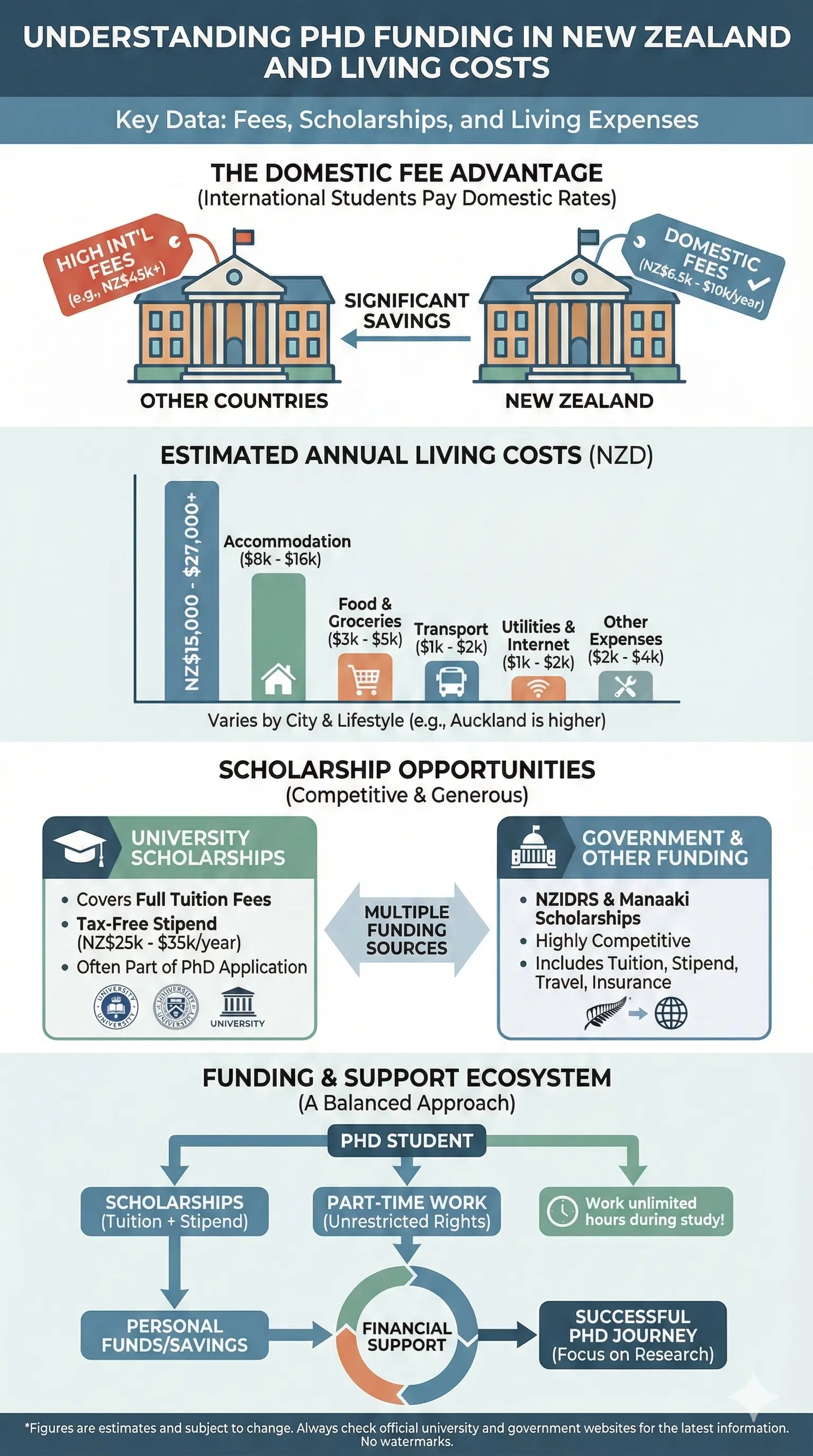
- Living stipend: Tax-free annual payment (usually $30,000–$35,000) paid monthly
- Research expenses: Some scholarships include funds for conference travel, research materials, and lab access
- Additional allowances: Certain scholarships (like the Māori Health Research award) include extra support for specific purposes
What they typically don't cover: accommodation deposits, health insurance for international students, or flights home. You'll need to budget for these separately.
Living Costs for PhD Students in New Zealand
Understanding your actual living expenses is crucial for budgeting. According to research into student living costs, the estimated annual living cost ranges from NZ$26,700 to NZ$32,000. This breaks down roughly as:
- Rent: $200–$300 per week ($10,400–$15,600 annually)
- Food and groceries: $80–$120 per week ($4,160–$6,240 annually)
- Utilities (power, internet, water): $30–$50 per week ($1,560–$2,600 annually)
- Transport: $20–$40 per week ($1,040–$2,080 annually)
- Personal expenses and entertainment: $40–$60 per week ($2,080–$3,120 annually)
The good news? The standard PhD stipend of $30,000–$35,000 per annum covers these essentials comfortably. You won't need to work part-time to survive, though international students do have the right to work up to 20 hours per week during the academic year if they choose to.
Additional Support and Part-Time Work Options
Many PhD students supplement their income through teaching or research assistant roles within the university. These positions often pay $25–$30 per hour and can be fitted around your research schedule. Some universities also offer scholarships specifically for tutoring support.
If you're an international student, check your visa conditions carefully. Most student visas allow part-time work, but there are restrictions on hours and the types of work permitted. Your university's international student office can advise on what's available to you.
How to Apply for PhD Scholarships
Step 1: Choose Your University and Programme
Research universities that align with your research interests. New Zealand has eight universities, each with different strengths. Visit their websites and connect with potential supervisors before applying.
Step 2: Prepare Your Documents
Most applications require:
- Verified transcripts from previous degrees
- A research proposal (typically 1,000–2,000 words) outlining your question, methodology, and significance
- Two or three academic references from people who can vouch for your research capability
- English proficiency evidence (IELTS Academic 6.5 minimum, with no band below 6.0, or equivalent TOEFL scores)
Step 3: Submit Your Application
Most universities integrate scholarship applications into their PhD admission process—there's no separate form to complete. Apply through the university's online portal, ensuring you meet all deadlines. Remember that universities like Victoria Wellington have multiple intake dates, so you'll get several chances per year.
Step 4: Prepare for Interviews
Shortlisted candidates typically face interviews with the scholarship committee and potential supervisors. Be ready to discuss your research vision, why you've chosen this university, and how your work aligns with their research strengths.
FAQ: PhD Funding Questions Answered
Do I need to repay my PhD scholarship?
No. Scholarships are grants, not loans. You don't repay them. However, some scholarships may have conditions—like publishing your research or working in New Zealand for a set period afterwards. Check the specific terms of your award.
Can I apply for multiple scholarships at once?
Yes, you can apply to different universities and their various scholarship schemes simultaneously. However, you can only accept one full scholarship. If you're offered multiple awards, you'll need to choose which to take.
What if I'm a domestic student without a first-class Honours degree?
While most scholarships prefer strong academic records, universities also value research potential, work experience, and demonstrated passion for your field. A solid Master's degree or relevant professional experience can strengthen your application. Contact the university directly about your specific situation.
Are there scholarships specifically for women or underrepresented groups?
Yes. Several universities offer targeted scholarships for women in STEM, Pacific students, and other groups. The GCSB Women in STEM Scholarship at Massey University is one example. Check individual university websites for these opportunities.
How long does the PhD funding last?
Most scholarships cover three years, which is the standard duration for a New Zealand PhD. If your research requires longer, you may need to seek additional funding or work part-time to support yourself.
Can international students access the same funding as domestic students?
Most university scholarships are open to both domestic and international students, though some (like the Māori Health Research award) are restricted to New Zealand citizens or permanent residents. International-specific scholarships like Manaaki also exist. Always check eligibility criteria carefully.
Getting Started With Your PhD Journey
Pursuing a PhD in New Zealand is financially viable when you know where to look. With stipends covering your living costs and full tuition support, you can dedicate yourself entirely to your research. The key is starting early: research universities and supervisors, prepare a compelling research proposal, and submit applications well before deadlines.
Begin by visiting university websites directly—Te Herenga Waka Victoria University of Wellington, University of Auckland, and University of Otago all have comprehensive scholarship information. If you're Māori, explore the Health Research Council's offerings. For international students, the Manaaki New Zealand Scholarship Programme opens in March 2026.
Your PhD is an investment in your future and New Zealand's research capability. With the right funding in place, you can focus on the work that matters: advancing knowledge in your field.
Related Articles

Working Multiple Jobs NZ: Tax and Legal Considerations
Juggling multiple jobs can boost your income, but it's crucial to understand the tax implications and legal requirements that come with working more than one role in Aotearoa. Whether you're a contrac...

Name Changes NZ: Legal Process and Costs
Considering a fresh start with a new name? Whether it's after marriage, divorce, or simply embracing a personal transformation, changing your name in New Zealand is straightforward but requires follow...

Holiday Home Tax Rules NZ: Private Use and Rental
Own a bach in Coromandel or a holiday home in Queenstown? You're not alone—many Kiwis cherish these escapes, but renting them out while enjoying personal use can trip you up on tax rules. Getting the...

Industry Bodies and Professional Associations NZ
Whether you're launching a business, advancing your career, or navigating financial regulations, industry bodies and professional associations in New Zealand offer invaluable support. These organisati...