Separation and Divorce NZ: Financial Steps to Take

Separating or divorcing in New Zealand can feel overwhelming, especially when it comes to sorting out your finances. But taking the right steps early can protect your future, secure your assets, and h...
Sarah covers personal finance, tax, and KiwiSaver topics for Lifetimes NZ. She focuses on making money management straightforward and practical for everyday Kiwis.
Separating or divorcing in New Zealand can feel overwhelming, especially when it comes to sorting out your finances. But taking the right steps early can protect your future, secure your assets, and help you regain control during this challenging time.
Whether you're in the early stages of separation or heading towards divorce, understanding the financial implications under New Zealand law is crucial. The Property (Relationships) Act 1976 generally divides relationship property 50/50, but proactive planning ensures a fair outcome tailored to your situation. This guide outlines practical financial steps for Kiwis, drawing on current 2026 processes, costs, and resources.
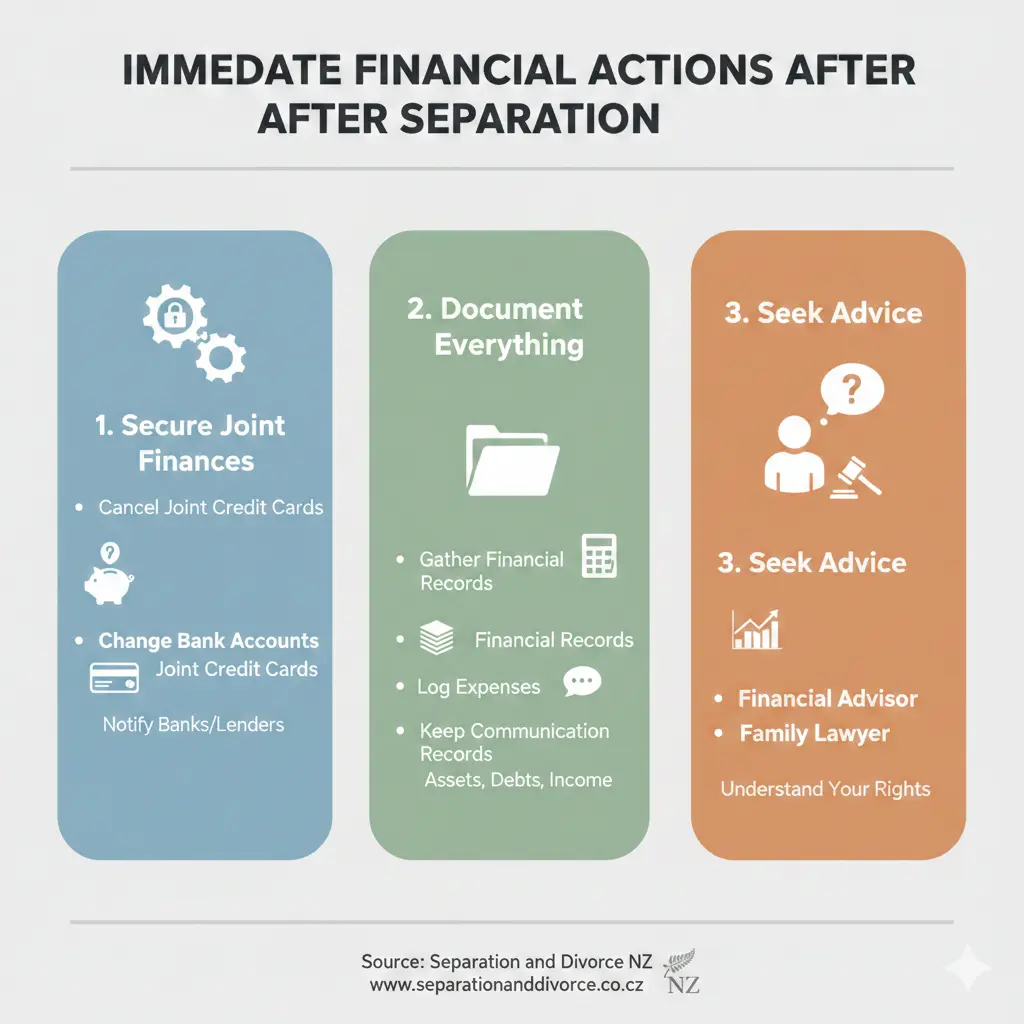
Immediate Financial Actions After Separation
The moment separation hits, protect your finances first. Delaying can lead to complications like unauthorised withdrawals or mounting joint debts.
Secure Your Accounts and Income
- Block joint access: Contact your bank to freeze joint accounts and credit cards to prevent your ex-partner from making transactions without your knowledge.
- Redirect income: Ensure your salary, benefits, or other income goes into a sole account only you control. Notify your employer immediately if needed.
- Set up alerts: Enable transaction notifications on all accounts for real-time monitoring.
- Open new accounts: Start fresh with a personal transaction account or credit card in your name alone. Update automatic payments and direct debits accordingly.
Gather Essential Financial Documents
Compile records promptly—these prove your assets, debts, and income for agreements or court. Request statements for the past seven years where possible.
- Bank and credit card statements
- Tax returns from IRD
- KiwiSaver balances and investment accounts
- Mortgage, loan, and utility bills
- Insurance policies and superannuation details
- Pay slips and benefit entitlements from WINZ
Pro tip: Use this checklist to stay organised. It not only aids property division but also supports applications for maintenance or child support.
Understanding Property Division in NZ Separations
Under the Property (Relationships) Act, most assets and debts acquired during your relationship are relationship property, split equally unless you agree otherwise. Act within 12 months of separation (or divorce) to initiate proceedings.
Classifying Your Assets and Debts
| Type | Examples | Division Rule |
|---|---|---|
| Relationship Property | Family home, joint cars, KiwiSaver contributions during relationship, furniture | Generally 50/50 split |
| Separate Property | Pre-relationship assets, inheritances, personal injury compensation | Stays with owner |
| Relationship Debt | Mortgage, joint loans for family use | 50/50 responsibility |
| Personal Debt | Gambling, individual spending | Remains with the individual |
Note: A separation agreement doesn't release you from creditors for joint debts—remain vigilant until resolved.
Options for the Family Home
Your home is often the biggest asset. Common paths include:
- Sell and split proceeds 50/50
- One buys out the other (refinance mortgage)
- Offset against other assets
- Keep joint ownership temporarily, e.g., until kids finish school
For binding custom divisions, create a contracting out agreement under Section 21. Both parties need independent legal advice, and lawyers must certify it. Costs: $1,500–$3,500.
Drafting a Separation Agreement
A written separation agreement clarifies asset splits, debts, child care, and pet custody—avoiding court. It must be signed, witnessed by lawyers, and both get independent advice to be enforceable.
Register it as a consent order in Family Court for legal weight. This covers:
- Date of separation
- Property and debt division
- Child care arrangements
- Joint debt repayments (e.g., mortgage)
If amicable, sort it yourselves; otherwise, seek mediation via Family Dispute Resolution (FDR). Eligible Kiwis may get FDR funding based on income.
Managing Debts and Ongoing Payments
Don't let joint liabilities linger. Review mortgages, utilities, and car payments immediately.
- Share fairly: Agree who pays what via your separation agreement.
- Notify providers: Update WINZ, power companies, and lenders of your new circumstances.
- Refinance if buying out: The buyer assumes full mortgage responsibility.
Warning: You're still jointly liable to creditors until debts are transferred or paid.
Maintenance and Child Support
Spousal Maintenance
Temporary support helps the disadvantaged partner become self-supporting. Factors include relationship length, earning capacity, and child care roles.
- Interim maintenance: Up to six months via fast Family Court application.
- Ongoing: Based on needs, income, and lifestyle—ends with new relationship.
Child Support
IRD assesses via formula, factoring care arrangements and incomes. Voluntary agreements possible unless on benefits. Use the IRD calculator for estimates.
Update Your Will, KiwiSaver, and Insurance
- Will: Review or draft a new one—separation revokes prior spouse nominations.
- KiwiSaver: Relationship contributions split 50/50; update beneficiaries.
- Insurance: Check life, health, and contents policies. Notify ACC if relevant.
- Beneficiaries: Update super accounts and endowments promptly.
Costs of Separation and Divorce in 2026
Keep expenses low with amicable processes. Here's a breakdown:
| Service | Cost Range |
|---|---|
| Court filing (joint/sole) | $211.50 / $224.50 |
| DIY divorce | $250–$400 |
| Lawyer paperwork | $800–$2,000 |
| Separation agreement | $1,500–$3,500 |
| Contested property | $5,000–$30,000+ |
| Complex (property + custody) | $20,000–$80,000+ |
DIY where possible via justice.govt.nz forms. FDR or mediation cuts costs.
Divorce Application Process
After two years separated (one year NZ resident), apply to Family Court. Steps:
- Confirm eligibility
- Joint or sole application
- Complete forms (marriage cert, separation proof)
- Pay fee
- File online/at court
- Await dissolution order (4–6 weeks uncontested)
Frequently Asked Questions
Next Steps and Professional Advice
Start with securing accounts and gathering documents today. Contact Community Law for free initial advice, or find a family lawyer via lawsociety.org.nz. If low-income, check WINZ or legal aid eligibility.
Disclaimer: This is general information, not personalised advice. Consult a qualified lawyer or financial advisor for your situation. Tax and benefit rules can change—verify with IRD or WINZ.
Sources & References
Getting a Divorce in New Zealand — docuserve.co.nz
Divorce FAQ NZ 2026 — lawyerfinder.co.nz
Expat Divorce in New Zealand — expatriatelaw.com
Five Steps to Help Through Financial Separation — westpac.co.nz
Maintenance: Financial Support from Your Ex-Partner — communitylaw.org.nz
What Happens When Your Relationship Breaks Up? — lawsociety.org.nz
Separating from Your Spouse or Partner — govt.nz
Related Articles

Industry Bodies and Professional Associations NZ
Whether you're launching a business, advancing your career, or navigating financial regulations, industry bodies and professional associations in New Zealand offer invaluable support. These organisati...

Emergency Benefit NZ: When You Have No Other Options
When you're struggling financially and don't qualify for other benefits, the Emergency Benefit might be your lifeline. It's a discretionary payment designed for Kiwis in genuine hardship who've exhaus...

Unpaid Internships NZ: Are They Legal?
Unpaid internships are a common pathway for students and graduates to gain work experience in New Zealand, but there's often confusion about whether they're actually legal. The short answer is: unpaid...

Estate Administration NZ: Managing Someone's Affairs After Death
Losing a loved one is one of life's toughest challenges, and stepping in to manage their estate can feel overwhelming. In New Zealand, estate administration—the process of handling someone's affairs a...