New Zealand Travel Insurance: What You Need and How to Choose a Policy

Picture this: You're hiking the Tongariro Crossing, marvelling at New Zealand's stunning volcanic landscapes, when a sudden twist of an ankle leaves you needing urgent medical care. Without the right...
Sarah covers personal finance, tax, and KiwiSaver topics for Lifetimes NZ. She focuses on making money management straightforward and practical for everyday Kiwis.
Picture this: You're hiking the Tongariro Crossing, marvelling at New Zealand's stunning volcanic landscapes, when a sudden twist of an ankle leaves you needing urgent medical care. Without the right New Zealand travel insurance, that dream trip could turn into a financial nightmare with bills running into the tens of thousands.
While our world-class healthcare system is a lifeline for Kiwis and residents, visitors face full out-of-pocket costs for treatment. That's why understanding what you need in New Zealand travel insurance and how to pick the best policy is essential for anyone planning an adventure here—whether you're a working holiday maker, a family visitor, or an international explorer. Let's break it down so you can travel with confidence.
Is Travel Insurance Mandatory for New Zealand?
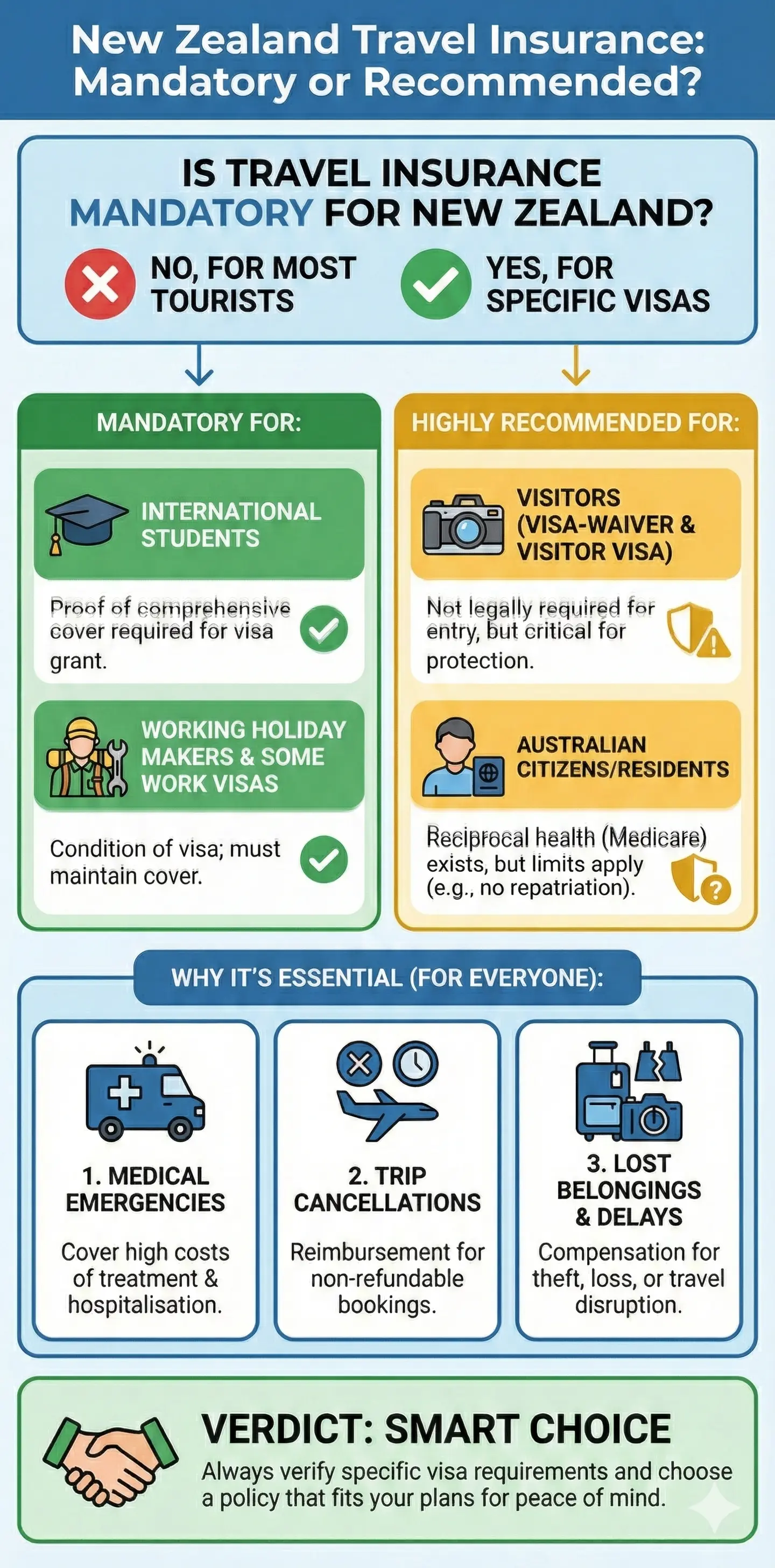
No, travel insurance is not required for entry into New Zealand for most visitors. Unlike some destinations with strict visa conditions mandating coverage, Immigration New Zealand doesn't demand it upfront.
However, certain visa categories—like some working holiday or student visas—may require proof of insurance as a condition. Always check your specific visa requirements on the official Immigration New Zealand site before booking.
Why You Still Need It: The Real Costs of Getting Sick or Injured
New Zealand's public health system, funded through taxes and ACC levies, offers free or subsidised care to residents—but tourists pay the full whack. A simple emergency room visit can cost $1,500+, while hospital stays, surgery, or air ambulances skyrocket into five or six figures.
Domestic health insurance from overseas often excludes international travel, leaving you exposed. Prepaid trips to our pricey paradise—a two-week jaunt can set you back $3,000–$5,000—also risk cancellation losses from illness, family emergencies, or delays.
What Does New Zealand Travel Insurance Cover?
A solid policy protects both your health and your wallet. Here's what to look for in comprehensive coverage tailored to Kiwi adventures.
Core Medical Protections
- Emergency medical treatment: Hospitalisation, surgery, urgent care, prescriptions, and doctor visits.
- Evacuation and repatriation: Medevac flights (potentially $50,000+ from remote spots like Fiordland) and return home if needed.
- 24/7 assistance: Telemedicine and emergency hotlines for immediate help.
Trip Protection Essentials
- Cancellation, interruption, or delay: Reimburses non-refundable flights, hotels, tours, or events if illness, weather, or family issues strike.
- Baggage and personal effects: Up to $30,000 for loss, theft, or damage, often with $2,500–$5,000 per item limits.
- Rental car excess: Covers collision damage waivers for exploring in a hire car.
Bonus: Look for adventure add-ons covering bungy jumping, skiing at Queenstown, or tramping—our adrenaline playground demands it.
How to Choose the Right New Zealand Travel Insurance Policy
With so many options, selecting the best policy boils down to your trip details, budget, and risks. Follow these steps for a smart choice.
Step 1: Assess Your Needs
- Trip length and activities: Short city breaks need less than multi-week South Island roadies with heli-hiking.
- Age and health: Policies for over-65s or pre-existing conditions cost more—declare them upfront to avoid claim denials.
- Group travel: Family plans often save money and bundle kids for free.
Step 2: Compare Key Features
| Feature | What to Check | Why It Matters for NZ |
|---|---|---|
| Medical Limit | At least $500,000–$1 million | Covers evacuations from remote areas like Stewart Island. |
| Excess/ Deductible | $0–$500 | Lower excess means less upfront payment at Kiwi hospitals. |
| Cancellation Cover | 100% of trip cost | Protects pricey long-haul flights to Aotearoa. |
| COVID-19 | Full medical and cancellation | Though restrictions are gone, pandemics can return. |
Step 3: Shop Smart and Buy Early
Costs vary: Expect $4–$10 per day for basic cover, more for high limits or adventure sports. Use comparison sites, but verify with providers. Buy before your NZeTA application (required for visa-waiver visitors).
Pro tip: KiwiSaver or ACC won't cover visitors—don't rely on them. For working holidays, check plans like Uni-Care's NZ Visitor Plan for work-and-travel combos.
Common Pitfalls to Avoid
- Ignoring excesses: They can hit $1,000+.
- Not declaring high-value items: List cameras or bikes separately.
- Assuming domestic policies cover you: They rarely do.
- Skipping pre-existing condition waivers: Apply early.
Practical Tips for Kiwis Recommending or Buying Travel Insurance
If you're a Kiwi hosting overseas whānau or heading offshore yourself (wait, this is inbound—but tips apply universally):
- Advise visitors to get quotes online instantly—most providers offer tweaks for NZ-specific risks.
- For expats returning home: Check if your policy covers "home country" visits.
- Keep policy docs digital and share emergency contacts with travel buddies.
FAQ: New Zealand Travel Insurance Questions Answered
1. Do I need travel insurance to visit New Zealand?
No, it's not mandatory, but highly recommended due to high medical costs for non-residents.
2. How much does New Zealand travel insurance cost?
Typically $4–$10 per day, depending on age, trip length, and coverage—shop around for the best deal.
3. Does it cover adventure activities like bungy or skiing?
Many do, but confirm—add sports packs for Queenstown extremes or Milford Track hikes.
4. What about COVID-19 coverage?
Most modern policies include it for medical and cancellation, post-2022 restriction lifts.
5. Can I use my home country's health insurance in NZ?
Rarely—overseas plans exclude NZ, so get dedicated travel cover.
6. Is there insurance for working holiday visas?
Yes, plans like NZ Visitor cover work, medical, and luggage for visa holders.
Next Steps: Secure Your Peace of Mind Today
Don't leave it to chance—grab quotes from reputable providers now, read the fine print, and tick insurance off your pre-departure list alongside your NZeTA and passport check. A small premium today could save you a fortune tomorrow, letting you focus on what matters: creating epic Kiwi memories.
Travel safe, and kia kaha!
Related Articles

Common Mistakes Tourists Make in New Zealand (and How to Avoid Them)
Ever spotted a tourist lost on a one-lane bridge or slathering on sunscreen too late after a Fiordland hike? As Kiwis, we've seen it all – from overpacked campers scraping corners to freedom campers c...

Understanding New Zealand’s Biosecurity Rules: What You Can and Can’t Bring In
New Zealand's biosecurity system is one of the world's strictest, designed to protect our unique ecosystem and $61.4 billion food and fibre export industry[1]. Whether you're returning home from overs...

Travelling New Zealand with a Disability: Accessible Transport, Stays and Activities
New Zealand's breathtaking landscapes and adventure spirit are open to everyone, including Kiwis and visitors with disabilities. Whether you're dreaming of gliding over Queenstown on a zipline or soak...

Driving in New Zealand: Road Rules, Safety Tips and Scenic Routes for Visitors
Whether you're a Kiwi heading out on a road trip across the North Island or showing visitors around the stunning South Island, knowing the ins and outs of driving in New Zealand keeps everyone safe an...